
Zung Jung Mahjong Strategy: Winning Plays & Hand-Building
Last updated: Nov 23, 2026
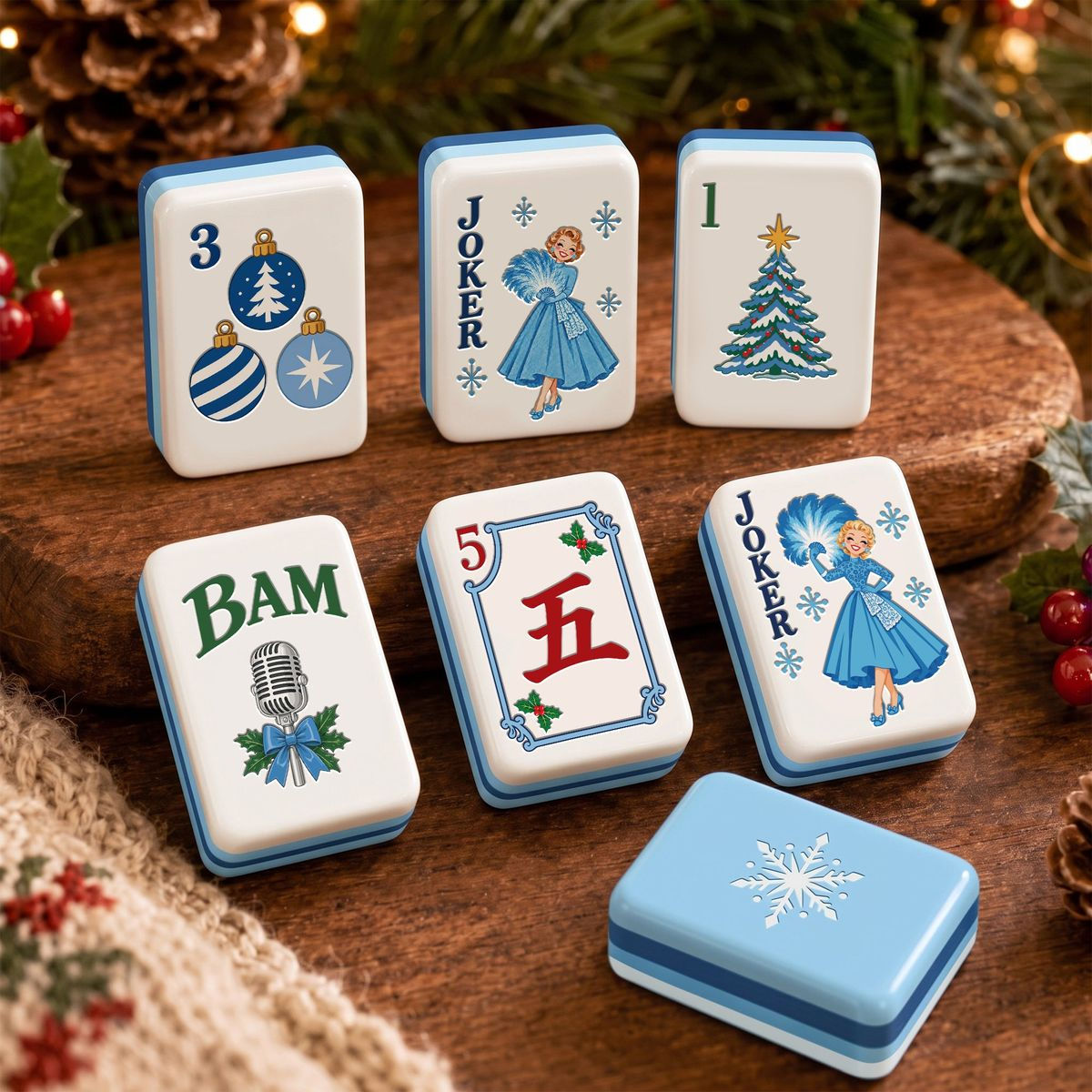
Zung jung (or "honor" mahjong in Chinese variants and some American sets) centers on hands built from winds (N, E, W, S) and dragons (Red, Green, White). In American mahjong, these hands typically require two or three pung/kong melds of honors plus suited tiles, or all-honor combinations if the year's card includes them. Strategy differs sharply from suited hands: honor tiles appear in only one copy per suit (no number variation), so you need exact matches; you must memorize which honors remain in play; you cannot build a sequence from 1-2-3 honors. Most zung jung wins come from recognizing when the discard pile offers consecutive honors others don't expect, or when you've already collected enough to commit to the hand. Winners track which players hold which honors, avoid early discard of critical tiles, and pivot to safer hands if the first four draws don't promise a quick win. From our best-selling mahjong sets, players with crisp tile markings and smooth-stacking acrylic find zung jung easier to read mid-game.
Zung jung mahjong—building hands around winds and dragons—rewards patience and tile memory. We break down the decision points that separate defensive players from winners.
Why Are Honors Harder to Read Than Suited Tiles?
Honor tiles (winds and dragons) don't follow a numerical order like 1–9 Bams, so your brain can't "see" a pattern. With Dots you can spot 3-4-5 instantly; with North-East-West-South you must consciously match shape and label. This slows your counting. In zung jung play, most mistakes come from misreading a Red Dragon as a Green Dragon under table light, or forgetting which East tile you discarded two rounds ago. Keep your own tiles well-separated, rotate them so the label faces you directly, and glance at the discard wall frequently. Honor tiles also appear less often than suited tiles in early draws—because there are fewer honor types—so zung jung hands sometimes require more draws to complete than mixed hands.

When Should You Commit to a Zung Jung Hand?
Commit only if your first four draws (after Charleston and wall-draw) give you at least one complete pung or the first two tiles of a kong in honors. If you see East-East in your rack and the card shows an East pung as part of a winning hand, that's a green light. If your first hand has no honors at all, don't chase one—pivot to suited tiles. Most players who lose on zung jung hands do so because they held one honor tile (say, one Red Dragon) and discarded high-value suited tiles hoping to draw two more Red Dragons later. The odds don't favor that play; the discard pile shows your opponents played Red Dragons or held them back. Watch the discards: if no Red Dragons have been discarded after two rounds, either they're in someone's hand or still in the wall—either way, competition is fierce. Commit early or fold the hand.
How Do You Read Your Opponents' Honor Strategies?
The discard pattern tells the story. If Player 2 discards East in round one but then holds Green Dragons in round two, they're chasing Green but not East—they passed on the honor sequence. If Player 3 discards West, West, West (the same honor three times), they're either signaling they don't need West, or they drew duplicates and had to shed them. In zung jung play, watch who picks from the wall versus the discard pile: a player calling a discard in round three is likely close to a win, and if they call a Green Dragon, all other Green Dragons just became risky for you to hold. Never throw a tile into the discard pile that completes someone else's pung. If you suspect Player 1 holds North-North, and you have a third North, discard it early—before they pung it. This is called "eating the tile" in some circles: you remove it from play by discarding it yourself when you suspect it's dangerous.
What Tile Sequence Should You Discard in Zung Jung Hands?
Discard highest-value suited tiles first, then dragons, then winds. This follows the priority of play: suited melds are easier to complete (more numbers, more variety), so you keep them; dragons and winds are rarer and more contested, so you hold only what you'll use. If your opening hand after Charleston is:
East, East, East (a complete pung)
Red Dragon, Red Dragon (a partial pung)
7 Bam, 8 Bam, 9 Bam (a partial suited pung)
Your discard order should be:
Discard the 7 Bam, 8 Bam, 9 Bam first (they're high-index suited tiles and easy to replace).
Then shed any suited tiles you don't have duplicates of.
Keep East (pung complete) and Red Dragon (two of three).
If you cannot build a second honor pung within two draws, pivot: discard the Red Dragons and commit to the East pung plus a suited hand. Zung jung hands win on completed kongs (four identical honors) or multiple pungs; single-pung honor hands almost never win because the card doesn't favor them—always confirm on the current-year card before betting on a one-pung honor hand.
How Do Jokers Change Zung Jung Play?
Jokers are your wild card in zung jung, but they have strict limits: you can use jokers in a pung, kong, quint or sextet of honors, but never in a single tile or a pair. If you need a fourth tile to complete a White Dragon kong, a joker can fill it. This means jokers are most valuable in zung jung when you already hold three of an honor and want to go out fast. But here's the trap: many zung jung hands on the card don't permit jokers in honor melds—read your hand definition on the current card carefully. Some hands require "natural" pungs (all four tiles identical, no substitutes). If you use a joker in a Red Dragon pung but the card says "Red Dragon pung, natural," your hand is void. This is why we always double-check the card before placing a joker.
A practical decision framework for zung jung joker use:
Scenario | Your Move | Why |
3 Green Dragons + 1 Joker, card allows jokers | Complete the kong, call it. | Kong closes the hand fast; joker is legal. |
3 North + 1 Joker, card says "natural North pung" | Do not use joker; discard it. | Joker invalidates the hand; worthless. |
2 East + 1 Joker in rack, no East in discard pile | Discard the joker; chase East from wall. | A joker won't complete East pung; odds favor wall draw. |
4 Red Dragons + 1 joker (hand complete) | Mahjong with natural tiles only. | Joker is redundant; don't expose it. |
How jokers work in American mahjong explains the legal boundaries in detail.

Common Zung Jung Mistakes—And How to Avoid Them
Mistake 1: Holding a single honor tile hoping to draw two more. Solution: Never hold a single honor unless you have four of the same suit left in the wall (rare). If you're holding North-North and see two North tiles discarded, that hand is dead; discard your North pair immediately.
Mistake 2: Discarding an honor tile too late. If you decide a wind or dragon pung won't complete, discard it by round two. Discarding it in round four signals to opponents that you just gave up, and they'll know your hand doesn't include that honor. By contrast, early discards look natural and defensive.
Mistake 3: Misreading the card. Many zung jung hands on the card require specific suit combinations (e.g., East pung + Green Dragon pung + 1 suited pung). Read the full definition before committing. If the card says "East, Green, 7 Bam" and you're building East, Red, and Dots, you're chasing the wrong hand. Refer to how to read the mahjong card before every game.
Mistake 4: Ignoring the wall count. In American mahjong, the wall contains 152 tiles. If 80 have been drawn and no one has called a discard honor you need, that honor is likely in someone's hand or will never appear. Mentally track: how many rounds until dead wall? Can you realistically complete in that time? If not, pivot.
🀄 Shop best-selling mahjong sets →
Reading the Current Year's Card for Honor Hands
Every spring, the National Mah Jongg League releases a new card with all legal hands for that year. Honor-heavy hands are clustered in sections; find them by looking for hands labeled with multiple wind or dragon symbols. Not every year's card includes the same honor hands—2026 may emphasize East-West pairs, while the previous year favored North-South. This means your zung jung strategy must adapt yearly. When you receive the new card, highlight all honor hands you want to study. Play practice rounds focusing only on those hands for two weeks. This builds your mental map of which honor combinations are legal and which are traps. Many players study the card passively; winners study it actively—they test themselves: "Can I build East-East-East with a Red Dragon pung?" They flip the card and verify before play. This habit prevents mid-game surprises.
What Tile Markings Matter Most for Zung Jung?
Honor tiles need high contrast between mark and background. If your set has a faded green or a blurry red, you'll misread tiles during play, especially under poor light or when tiles are stacked. Our best-selling mahjong sets use crisp acrylic with bold engravings—thick enough that the tile symbol reads instantly from three feet away. For zung jung play specifically, consider a set with distinct wind symbols (North as a clear vertical line, East as a clear horizontal mark, etc.) so you never confuse direction mid-hand.
What You'll Need
A quality set with readable honors is the first step. Pair it with a non-slip mat so tiles don't slide during heavy honor play, and mahjong racks with pushers to organize your hand clearly—mixed suits and honors stay separated when you use a rack. A mahjong mat also protects your tiles from spilling and speeds play by giving every player a defined zone.
🎁 See our most-loved mahjong sets & accessories →
Before You Sit Down: A Zung Jung Readiness Checklist
[ ] Read the current-year card and highlight all honor-heavy hands.
[ ] Play two practice rounds focusing on honor hands only.
[ ] Verify your set's honor tiles are legible under your playing light.
[ ] Review the "common mistakes" section above and commit to avoiding at least two.
[ ] During the Charleston, track which honors pass through your hand—this hints at opponents' strategies.
[ ] Before each hand, decide: Am I chasing zung jung or a mixed hand? Don't waver mid-game.
[ ] If you discard an honor, note the round and player—use it to read their hand later.
✨ Find your Mahstead set — free US shipping →

FAQ
Can you build a zung jung hand with only three honors (no suited tiles)?
Yes, but only if the current-year card includes an all-honor hand—most years it does not. Always check the card first. If it does allow it, the hand requires either three complete pungs of honors or a pung plus a pair plus a kong, depending on the card's layout.
What's the difference between zung jung and a "winds-and-dragons" hand in Chinese mahjong?
American zung jung uses the same four winds and three dragons (Red, Green, White), but American rules forbid chows (sequences)—you can only expose pungs, kongs, and quints. Chinese variants allow sequences of honors in some house rules. In American play, honor hands must be built from matched sets only.
Should I always discard suits before honors?
No—discard high-value suits and low-probability honors first. If you hold one North and see two North tiles already discarded, that North is dead weight. Discard it even if you have six of a suit. Prioritize: live honors > low-value suits > dead honors > high-value suits.
How do I know if an honor hand on the card uses natural tiles or allows jokers?
Read the hand definition text. If it says "natural pung," jokers are forbidden. If it doesn't mention "natural," jokers are typically allowed in that pung or kong. When in doubt, ask the scorekeeper or refer to how to read the mahjong card.
If I'm building a zung jung hand and someone discards a tile that would complete my hand, can I call it immediately?
Yes—in American mahjong, you can call ("mah" or "mahjong") any discard that completes your hand, even if it's not your turn. However, verify on the card first that your hand definition matches the tiles you're calling. One mismatch and your call is void.
How many rounds should I chase a zung jung hand before pivoting to a safer hand?
Two rounds maximum. If by the end of round two (eight tiles drawn and four discarded per player) you don't have at least one honor pung started, discard your honor tiles and chase a suited hand. Holding marginal honors past round two wastes draws and signals weakness to opponents.


View More
View More
View More
