
Wright-Patterson Mahjong Cheat Sheet: Rules, Hands & Quick Reference
Last updated: Nov 23, 2026
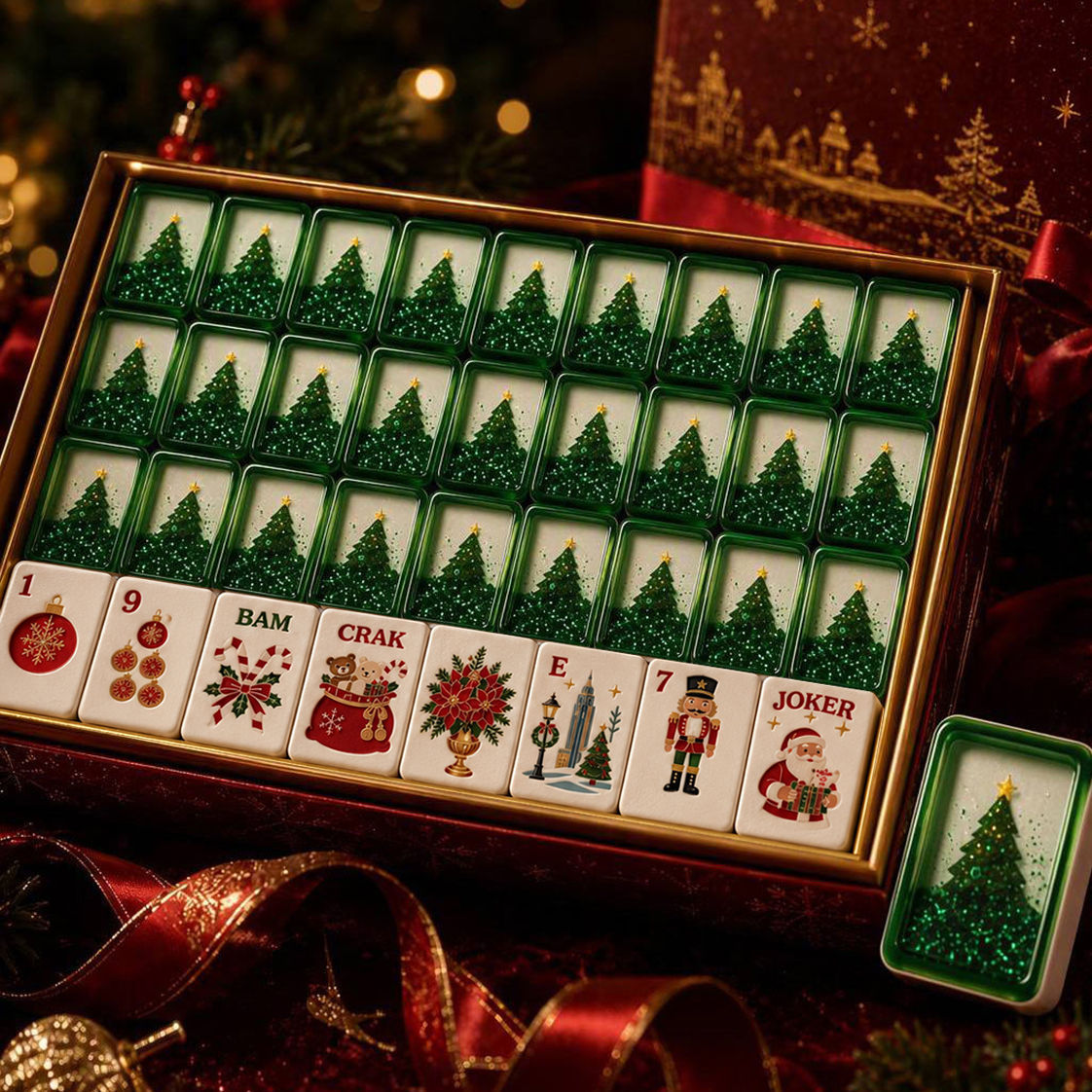
Wright-Patterson mahjong is an American variant that uses the same 152-tile set as standard American play but with simplified hand recognition and faster rounds. Games are played with the current year's National Mah Jongg League card (issued each spring), though Wright-Patterson players often create local house-card adaptations showing 40–60 common hands instead of the full League card. A complete set from Mahstead includes 160 acrylic tiles, standard play uses all 152 tiles plus 8 jokers, and a typical four-player game lasts 30–45 minutes. The core appeal: no Charleston tile-passing ritual, looser hand definitions, and emphasis on speed over the strict pattern-matching of competitive American play—making it ideal for casual military and social clubs where players want quick rounds and social fun.
What makes Wright-Patterson different from standard American mahjong?
Wright-Patterson strips away the formal Charleston and hand-card rigidity that competitive American players follow. Instead of holding players to the exact patterns on the National Mah Jongg League card, Wright-Patterson tables allow flexible interpretations: a "pung hand" might accept any three matching tiles, and "open hands" (exposed pungs and kongs) are called and played much more permissively. No shuffled tile exchange before play means faster setup; the East player typically deals directly. This variant thrives at military community centers, officer clubs, and informal gatherings where people prioritize camaraderie and pace over scoreboard precision.

How do you read a Wright-Patterson house card?
A Wright-Patterson house card (created locally by clubs or printed informally) usually displays 40–80 winning hands in a grid or list format, far simpler than the full League card's hundreds of patterns. Each hand entry shows the tile combination (e.g., "Three 5 Bams + quint of Dragons + joker hand") and sometimes a point value. To read it: scan the left column for your hand type (like "Pungs" or "Mixed"), match your tiles to the listed pattern, check that you have exactly one exposed meld or that your hand qualifies as "concealed," and verify your winning tile completes the pattern. Unlike the League card, which uses strict notation codes, a house card uses plain language. Download or print your club's card before each session, or ask the scorekeeper for a laminated copy you can reference during play—especially if you're new to the table.
What tiles do you need, and how do you count a winning hand?
A complete Wright-Patterson game uses all 152 tiles: 108 tiles across three suits (Bams, Craks, Dots) numbered 1–9 in sets of four, plus 16 Winds, 12 Dragons (Red, Green, White), 8 Flowers, and 8 Jokers. To count a hand, total the point value assigned to each meld on your house card, then add bonuses for "all concealed," "limit hands," or "all honors" if your table rules apply. Most Wright-Patterson games award bonus points for hands requiring no exposed melds (all tiles in hand at win) or for rare patterns. A typical winning hand scores 20–60 points depending on complexity; limit hands (worth the maximum table allows) end the hand immediately. Check your club's card before the game: some tables cap points at 30, others at 50 or higher.
🀄 Shop best-selling mahjong sets →
How do Charleston and dealing differ in Wright-Patterson play?
Wright-Patterson typically skips the Charleston—the formal pre-game tile exchange that standard American players perform. Instead, the dealer (East) shuffles all 152 tiles face-down and draws them directly into racks without the multi-round swap ritual. This saves 5–10 minutes per game and appeals to players who want quick turnovers. Some military clubs do use a simplified one-pass Charleston where players exchange tiles once in each direction rather than three passes per direction, but this varies by venue. Always ask your host whether they follow full Charleston, a short version, or none at all before you sit down. If you're hosting Wright-Patterson at home, decide your Charleston rule at setup so no one wastes time mid-game on clarification.

What are common beginner mistakes and how do you avoid them?
New Wright-Patterson players often forget they are no longer bound by the rigid hand patterns on an official League card—and freeze up trying to match an exact pattern. Fix: get a copy of your club's house card early, study 5–10 simple hands, and ask the scorekeeper about bonuses before your first turn. A second trap: mistaking an exposed pung for a "called" hand. In Wright-Patterson, you declare your hand when you have it and win immediately; you do not wait for a discard or announce "pung" mid-turn. Fix: listen carefully when others declare, and ask the East player (dealer) to explain the winning condition on your first hand. Finally, players sometimes add jokers incorrectly: jokers replace one tile in a meld (never act as a wild extra tile), and you cannot use a joker in a single tile or a pair. Fix: keep jokers to the side of your rack as you build, and only slot them into complete melds right before you declare.
Mistake | What Happens | How to Avoid It |
Trying to match League card patterns | Hand rejected; slower game | Use only your club's house card before play starts |
Calling "pung" but staying in the game | Confusion about timing; might declare early | Declare only when hand is complete and you own winning tile |
Placing joker in a pair or single tile | Illegal hand; penalty or replay | Jokers go only in pungs, kongs, quints, or sextets—never pairs |
Adding extra tiles beyond 152 | Illegal tile count; hand void | Use exactly 152 tiles + 8 jokers; spares stay in the box |
Forgetting to ask about table bonuses | Missed points; lower final score | Ask East player what bonus rules apply before round 1 |
Quick setup checklist for hosting a Wright-Patterson game
Before your first game, confirm these with your group:
House card: Do you have a printed or digital copy showing all valid hands for this session?
Tile count: Verify you have exactly 152 tiles plus 8 jokers (never mix in spares during play).
Charleston rule: Will you do a full Charleston, skip it, or use a one-pass shortcut?
Bonus scoring: Does your table award bonuses for "all concealed" or "limit hands"?
Seating order: Who is East (dealer/scorekeeper), South, West, North? Decide before shuffling.
Point cap: Is there a maximum hand value (e.g., 30 points = limit), or do all hands count as marked?
Discard protocol: Do players place discarded tiles in the center and call the tile number, or in a personal row?
Draw order: After East deals, does South draw first, or does the person to East's left?
Write or print these rules on a sheet and leave it on the table for reference. If a question arises mid-game, pause briefly, check the card, and move on—consistency beats speed.
🎁 See our most-loved mahjong sets & accessories →
What equipment makes hosting easier?
If you host Wright-Patterson regularly, invest in a few key items. A mahjong mat with a center grid and numbered discard zones keeps tiles organized and stops loud clattering on a hard table; acrylic tiles on a fabric mat are quieter and faster to handle than wood. Racks with pushers let players hold their 13 tiles upright and organized, reducing fumbling and misdeals; pushers make drawing tiles one at a time smoother and faster. A durable travel bag or case protects your tiles during transport to club meetings or friends' homes. For a welcoming table, consider engraved sets with humorous or personalized designs—they spark conversation and make your game feel intentional. All Mahstead sets ship free across the US, so you can have equipment ready before your first hosting night.
How do you teach a newcomer to Wright-Patterson in one sitting?
Start by explaining that Wright-Patterson is American mahjong made casual: faster rounds, looser hand patterns, no formal Charleston. Hand the player your club's house card and ask them to pick one simple hand—like "Three Pungs + Honor Pair"—and show them three examples of tiles that satisfy it. Deal a practice round with all four seats filled (or use stand-in hands), walk through East's initial draw, show one player forming a meld, then expose a pung so they see what "open" looks like. Let them ask questions before the first real round starts, and pair them with an experienced player as their partner or table-mate for the first three games. After 45 minutes of play, most newcomers understand the rhythm. Emphasize that they can reference the house card at any time without penalty—speed comes after confidence.
✨ Find your Mahstead set — free US shipping →

FAQ
Is Wright-Patterson mahjong an "official" variant recognized by the National Mah Jongg League?
No. Wright-Patterson is a house variant created and maintained by military clubs and local groups. The National Mah Jongg League publishes the official American card each spring, but Wright-Patterson players adapt it or create their own cards for speed and simplicity. Always check which rules your club uses.
Do I need a different tile set for Wright-Patterson versus standard American mahjong?
No. Both use the same 152-tile set with 8 jokers. The difference is in hand patterns and house rules, not the tiles themselves. Any quality American set works for both variants.
What's the fastest way to learn a new Wright-Patterson house card?
Focus on 5–10 most common hands first (often pungs, honor pairs, and mixed sequences). Play those hands repeatedly over 3–4 sessions, then gradually explore rarer patterns. Asking the scorekeeper for a laminated card or a text copy to study at home speeds up learning.
Can I play Wright-Patterson with fewer than four players?
Most Wright-Patterson clubs expect four players, but some venues adapt rules for three or two. Ask your host whether they have shorthand rules for smaller groups before sitting down.
Should I keep the extra tiles that come with a 160-tile set in my game box?
Yes, but never add them to play. Extra tiles are spares for replacements if a tile cracks or gets lost. Store spares separately so you always use exactly 152 playing tiles plus 8 jokers per game.
How do I find a Wright-Patterson game near me?
Contact military recreation centers, officer clubs, or veterans' organizations in your area. Community centers and libraries sometimes post mahjong schedules. Ask if they host Wright-Patterson specifically, as some venues prefer standard League-card American mahjong or Chinese variants.


View More
View More
View More
