
Why Poker Players Love Mahjong: Strategic Depth Meets Social Play
Last updated: Nov 23, 2026
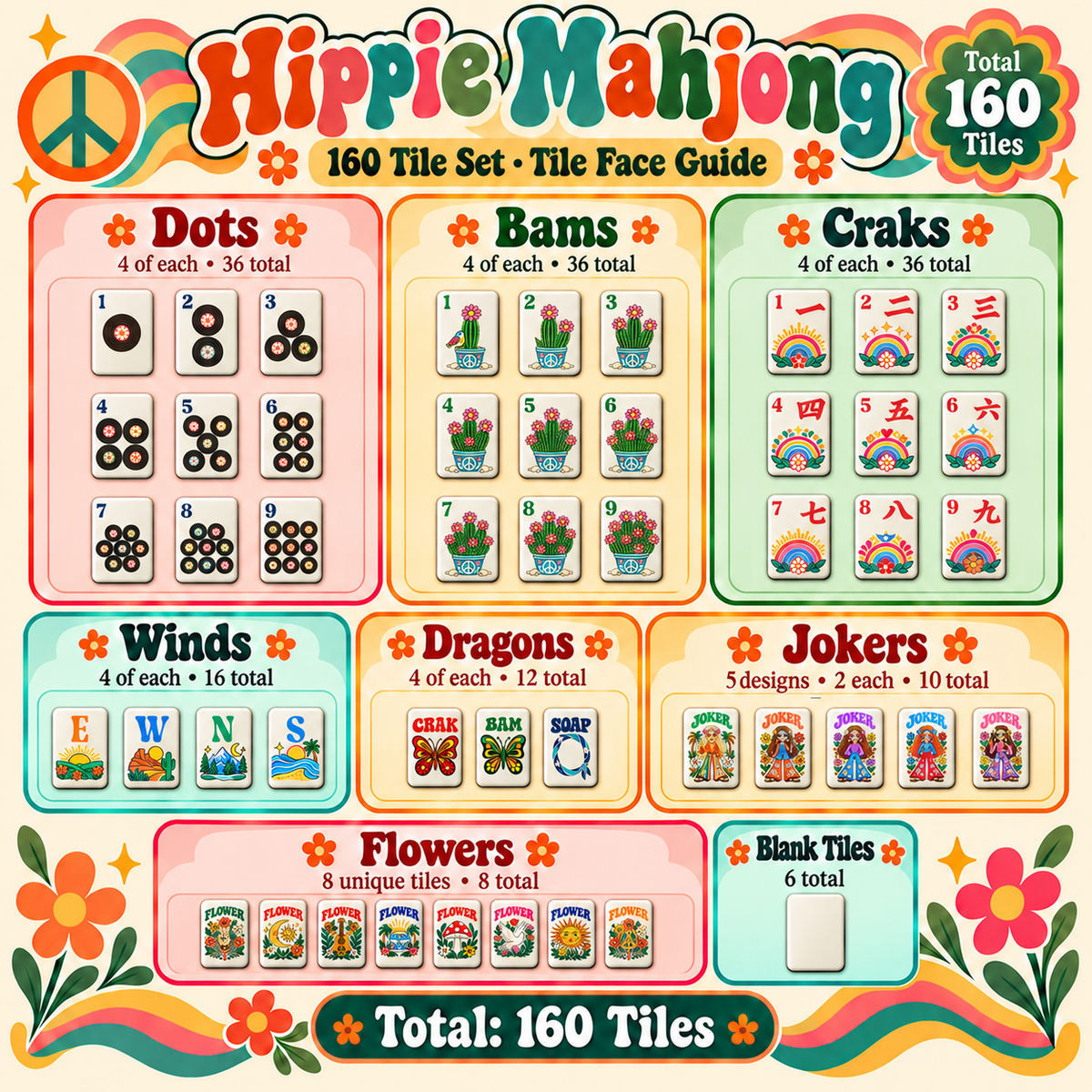
Poker players gravitate to mahjong because both demand reading opponents, managing incomplete information, and making calculated risks under time pressure. Where poker rewards hand strength and bet timing, mahjong layers in tile memory, sequence probability, and the hidden Charleston exchange. A 152-tile American mahjong set from our best-selling collection costs the same as a tournament entry and lasts decades. The core appeal: every decision—discards, exposures, call timing—carries hidden stakes. Unlike poker's randomness over hours, a mahjong hand plays in 15–25 minutes, cycling through rapid probability recalculation. Poker tells translate directly: hesitation, discard patterns, and call consistency reveal tile reads. Bluffing exists here too: holding honor tiles forces others to guess whether you're building or stalling. The skill curve is steep but learnable in four weeks, and social play requires no money—only attention.
Poker and mahjong both reward disciplined decision-making under uncertainty. We've watched dozens of poker regulars at our Dallas games pick up American mahjong within a month and immediately see why the transfer works. Here's what makes mahjong the thinking player's perfect complement to card games—and how to begin.
Why Do Poker Players See Mahjong as a Natural Fit?
Poker teaches you to track incomplete information, assign probability weights to opponent holdings, and act decisively on incomplete data. Mahjong demands the exact same skill set. In both games, you discard information (your downcard, a tile from your hand), opponents react to it, and you infer meaning from their response. A hesitation before discard, a quick pick-up, a delayed call—these are mahjong tells identical to poker tells. The strategic loop is identical: gather data → calculate likelihood → make the move → read the reaction. You already know how to do this.
🀄 Shop best-selling mahjong sets →

What Probability Skills Transfer Directly From Poker?
In poker, you estimate pot odds and hand equity. In mahjong, you calculate tile counts. After four players have each discarded six tiles, you know 24 tiles are gone. If you need a 5 Bam and three are visible, one remains. The math is simpler than equity calculation—it's pure counting—but the mindset is identical: know the odds before you call. One key difference: in American mahjong, you have no betting round, so probability reading is silent and internal. You don't announce your confidence; you either call or you don't. This trains an even sharper intuition than poker because you have no bet sizing to hide behind. The best poker players we've taught notice this immediately: your read must be cleaner because no money conveys your conviction.
How Does Hand Management Work Differently in Mahjong Than in Poker?
Poker hand management means knowing when to fold marginal holdings and when to stay in. Mahjong hand management means knowing when to lock in a pung or kong, when to hold dead weight, and when to discard your hand's foundation to stay safe. Here's the critical difference: in poker, your hand strength is independent. In mahjong, hand strength is contextual—it depends on which tiles remain in play. A pair of White dragons might be worthless if two Whites are already exposed in kongs. This forces a new discipline: you must weight your holding against visible play, not just your cards. Poker trains you to block this out ("my hand vs. their range"). Mahjong demands you turn it on. The transition takes one or two games. After that, the constraint becomes an advantage. You're reading the wall, not just your opponents.
What Does Bluffing Look Like in Mahjong?
Poker bluffing works because other players don't see your hand. Mahjong bluffing works because other players don't see your intention. If you hold a tile others believe you need, they'll discard away from it. But if you hold a tile you don't need—or claim not to need—you force them to guess. Holding a 7 Crak while building a pung in Bams means the 7 signals a false lead. Experienced players will discard toward it; you might call and embarrass them, or you might let it pass and build safety later. This is deeper than poker bluffing because it requires tile memory and pattern recognition, not just confidence. The best bluff in mahjong happens when your discards tell a true story for eight turns, then break the pattern once. Poker players master this within three games because the responsibility for narrative is the same.
Skill | Poker Version | Mahjong Version | Transfer Difficulty |
Reading tells | Bet sizing, reaction time, eye contact | Discard speed, pause length, call hesitation | Low—tells map directly |
Probability calculation | Pot odds, hand equity | Tile count, remaining suit density | Low—math is simpler |
Opponent modeling | Tight/loose/aggressive player types | Conservative/aggressive discard patterns | Medium—fewer data points |
Risk management | Bet control, pot commitment | Kong tempo, exposure timing | High—no numerical stakes to anchor decisions |
Hand narrative | Betting sequence | Discard sequence | Medium—both require consistency |
Poker players recognize all five immediately, even if risk management feels abstract at first.

What Skills Does Mahjong Teach That Poker Doesn't Strengthen?
Poker is fundamentally a heads-up game (even in multiplayer). Mahjong is quadrilateral. You manage four opponents simultaneously, each with different tile reads, discard patterns, and kong tempos. You must track which player is dangerous in what suit, which player telegraphs safety tiles, and which player is likely to expose high-value combinations. This isn't optional; every call decision depends on table position and opponent type. A tile safe against West may be lethal against South. Poker trains you to think about "the table" only at the strategic level; mahjong forces you to execute it tactically on every turn. The second skill is spatial memory. You must visually track 24 exposures (sometimes more with kongs and quints) while holding 14 tiles and reading a printed hand card. This is pure cognitive load that poker doesn't demand. After two weeks, this becomes automatic—your visual cortex rewires—but it's a real gulf at first.
🎁 See our most-loved mahjong sets & accessories →
How Long Does It Take a Poker Player to Become Competent at Mahjong?
We've timed this across dozens of card game professionals. Reading the mahjong basics takes 90 minutes. Understanding hand combinations and the yearly card takes three to four games (2–3 hours of play). Becoming dangerous—making + EV calls and reading opponents—takes four to six weeks of weekly play. Reaching expert level (consistent winning, strong table image, nuanced bluffing) takes 18–24 months, same as poker. The acceleration curve is steep because poker thinking already primes your decision-making. You're not learning strategy; you're learning the rule set and then applying your existing toolkit. The biggest hurdle is not the rules; it's accepting that you cannot bet and therefore cannot control the emotional rhythm of the table. That adjustment takes one or two evenings.
Why Is American Mahjong Specifically Suited to Poker Players?
American mahjong differs from Chinese and Hong Kong variants in one key way: you must follow the yearly National Mah Jongg League card. This is a constraint—but it's also a defense against endless house rule chaos. Poker players love this because it means consistent, published rules. You know exactly what hands are legal, what exposures count as valid, and what the scoring matrix is. There's no "house ruling" your way around a read. The second advantage is the Charleston—the pre-game tile exchange we detail in our Charleston guide. This is a 60-second strategic negotiation before the hand begins, a micro-game that poker players instinctively understand: you're trying to gather information and manipulate the starting position without revealing your intent. Chinese mahjong has no equivalent. For poker players who like structure alongside ambiguity, American mahjong is the ideal frame.
What Should Poker Players Know Before Their First Game?
Jokers are not wildcards in the way you expect. In poker, a joker substitutes for any card. In American mahjong, a joker (called a "Joker" tile in the set) substitutes for any one tile in an exposed pung, kong, or quint—but never in a pair, and never as a single concealed tile. This will feel restrictive. It is. It's also the rule. Come to the table with this locked in.
You cannot call for a tile on your own turn. In poker, you act on your turn. In mahjong, you pick a tile from the wall, and then other players can call to take it. If nobody calls, your turn completes and play moves on. This means the best tile for your hand might never reach your hand. Adapt to this. It creates a different temporal pressure than poker.
The hand card is law, not guidance. The printed card shows all legal winning combinations for the year. Your hand must match exactly. A 2-4-6-8 sequence might look logical, but if it's not on the card, it doesn't win. Poker players trained to recognize pattern miss this on turn one. Memorize the card sections before you play.
Discards are visible forever. In poker, a discarded hand is gone. In mahjong, your discard pile and every other player's discard pile remains on the table for the entire hand. You can see 24 tiles clearly. This is the resource that poker players find most alien—and most powerful once they adjust. Use it ruthlessly.
What to Check Before You Buy
Before purchasing a set, confirm it has 160 tiles (152 playing tiles plus spares), acrylic construction for durability, and a carrying case. American mahjong is not a casual game; the pieces take abuse. If you're hosting weekly games, invest in a durable set from our best-selling collection and a quality mahjong mat to protect the tile surface and make shuffling faster. A mat also signals to your table that you take the game seriously—which matters for managing play tempo and read quality. If you travel to games, add a mahjong bag or case to protect your investment. Check the tile size before buying; if you have vision constraints, acrylic tiles display characters larger and clearer than bamboo or bone on comparable sets. Ask yourself honestly: do I want to host, or just play at others' tables? Hosting demands a mat, a good case, and a backup set of dice. Playing as a guest requires only the tiles and the willingness to read the wall.
✨ Find your Mahstead set — free US shipping →

FAQ
Can I play mahjong for money like I play poker?
Yes, American mahjong is often played for stakes (commonly a point system converted to dollars at game end), but it's also widely played socially for no money. Most poker players enjoy the competitive version first, then decide. The skill differential creates natural outcome variance, similar to poker.
Do I need to memorize the entire mahjong card before my first game?
No. Learn the most common winning patterns (two kongs + two pungs, three kongs + one pung, etc.) and reference the card during play. Within three games, you'll internalize the high-frequency combinations. Memorization is a 6-week project, not a prerequisite.
How does table image work differently in mahjong than in poker?
In poker, your image is built over hours through betting patterns. In mahjong, it's built through discard patterns and call timing over a single hand (15–25 minutes). You can't hide; everyone sees your discards. This means your table image resets on each hand, but it also means reads are sharper and deeper within that hand.
What if I'm the only poker player at the table?
Mahjong tables are typically welcoming. Most players enjoy teaching. Arrive early, admit you're new, ask for a slow first hand, and absorb. Your poker discipline and reading instinct will be obvious within three hands; the group will calibrate. Beginners are not a problem; passivity is.
Can I use my existing poker chips or scorepad for mahjong?
Poker chips work for score-keeping (tracking points or scores), but mahjong's scoring is built into the card and hand type, not bet increments. A printed scoresheet designed for mahjong (often included with quality sets) is clearer. Poker-style scorekeeping obscures the game's actual score structure.
Is there a limit to how many people can play mahjong?
Standard American mahjong is four-player only. Three-player and two-player variants exist but are less common and follow different rules. If you host groups larger than four, you'll need multiple tables, which poker players understand well. We offer guidance on two- and three-player rules if your group needs them.


View More
View More
View More
