
Why Mahjong Is Trending in 2026 — The Real Reasons
Last updated: Nov 23, 2026
Mahjong is trending because it fills a genuine social and mental void in an increasingly isolated, screen-heavy world. Players gather weekly at homes, community centers, and cafes to play American, Chinese, Hong Kong, and Riichi variants—each offering hours of focused play without devices. The game demands memory, strategic thinking, and constant communication, making it a wellness practice and a confidence builder. Gen Z rediscovery through social media combined with older generations reclaiming cultural traditions has broadened its appeal across age, geography, and background. The rise reflects a shift away from passive entertainment toward active, face-to-face connection. A complete American set contains 152 playing tiles plus 8 jokers and can be learned in an afternoon; players typically spend 1–2 hours per game. Mahstead and other retailers now stock design-forward, travel-ready sets in acrylic and bamboo, making the barrier to entry lower than ever.
Mahjong's surge across North America, Europe, and Asia in 2026 isn't random—it answers a real hunger for slow, social play. We've watched our weekly games grow from a handful of regulars to a waiting list. Here's what's actually driving the trend, and how you can tap into it.
What happened to make mahjong go mainstream?
Mahjong never left, but its audience expanded. For decades, it was strongest among Asian and Jewish communities in North America, plus established player networks in Asia and Australia. Around 2020–2022, younger players discovered the game through social platforms, design-forward retailers, and word-of-mouth in creative industries. TikTok, Instagram, and YouTube tutorials accelerated awareness, but the real shift came when people realized mahjong solved a specific problem: how to spend three hours with friends without staring at phones. The game is inherently social, turn-based, and requires full attention.

Why does mahjong offer what other games don't?
Mahjong forces presence in a way chess, cards, or board games don't. Players sit at one table, call tiles aloud, pass hands in ritual sequences, and negotiate every play. There's no single dominant player, no downtime waiting for your turn (all players play simultaneously or in quick rotation depending on variant), and no way to half-pay attention. The rules are learnable but not trivial—memory and pattern recognition matter—which keeps adult brains engaged without frustration. American mahjong, the most common variant in the US, uses the National Mah Jongg League card, which changes every spring, so play never stales. Chinese variants like Riichi demand rapid calculation. Every flavour scratches a different itch, which is why one person plays American while their partner prefers Hong Kong. That variety has no equal in mainstream games.
How is wellness linked to the mahjong boom?
Therapists and gerontologists now recommend mahjong for cognitive health. Studies cited in player communities point to the game's impact on memory retention, hand-eye coordination, and stress reduction. But the wellness angle goes beyond neuroscience: the ritual itself is therapeutic. The rhythmic shuffling, the tactile click of tiles, the routine of a weekly game, and the unspoken permission to spend an evening focused on one thing—these create a reset button that matches meditation or yoga for many players. We've heard newcomers say "mahjong is the first time in months I forgot about email." Hosting a weekly game has become a form of community care, especially for older players and those managing isolation. The game is accessible to players aged 8 to 95 (with rule variants for kids and accessibility options like larger tiles for low vision), so it bridges generations in ways few activities do.
What role does cultural reclamation play?
Gen Z and millennial players—many with Asian heritage—are returning to or discovering mahjong as a way to connect with family history and cultural identity. Playing the same game their grandmothers played, often at the same table, carries emotional weight. At the same time, non-Asian players learn the game as cultural guests, creating intergenerational and cross-cultural tables that didn't exist a decade ago. This isn't tokenism; it's genuine respect for the game's depth and beauty. Retailers now stock sets designed by independent makers and small studios, some with art reflecting player identities and inside jokes, which has transformed mahjong from "grandmother's game" to "a game I claim." The cultural pride isn't manufactured—it's real, and it's visible in every new player who brings their own set to the table.

How does the design explosion fuel the trend?
Ten years ago, your mahjong set options were limited: plastic tournament sets or traditional bone and bamboo pieces (expensive, fragile). Today, acrylic sets come in dozens of colors and finishes, engraved with family names, business logos, or custom art. Travel-ready options with portable mats and cases mean you can host a game anywhere. This democratization of design—and the ability to personalize—makes mahjong feel contemporary instead of old-fashioned. Players now buy sets the way they'd buy sneakers: as an expression of taste. When your set is beautiful and yours, you play more often. Our best-selling mahjong sets reflect this shift—bright acrylics, clean engravings, and cases designed for actual use, not storage. The barrier to entry isn't "have you played before?" anymore; it's "do you like how this set looks?"
🀄 Shop best-selling mahjong sets →
What separates trending from a fad?
Fads peak fast and vanish. Mahjong is trending because the infrastructure is real. Community centers across North America now run beginner classes. Libraries hold open-play nights. Online communities span time zones, with Discord servers and forums dedicated to each variant. Retailers report sustained growth, not a spike-and-crash. Schools are adding mahjong to their activity offerings. Player counts in tournament leagues are stable or rising. Most telling: new players who learned two years ago are still playing. They've graduated to hosting their own games. A fad is a moment; mahjong in 2026 is a practice becoming an institution.
Who's playing, and how do I find my people?
Player Profile | Entry Point | Best Variant | How to Start |
Artist/creator (any age) | Design, aesthetics | American or Chinese | Buy an acrylic set; join a beginner meetup |
Retiree or empty-nester | Tradition, connection, cognitive exercise | American (most accessible rules) | Community center class or synagogue game |
Parent seeking family activity | Multigenerational play, screen-free time | Simplified American (younger players) or Riichi (kids 10+) | Host a home game; teach one person at a time |
Gen Z/millennial seeking community | Cultural identity, TikTok discovery | Riichi or Hong Kong (faster, trendier) | Social media group or university club |
Game enthusiast | Strategy, new ruleset | Taiwanese, Hong Kong, or Riichi | Join an online league; travel to tournaments |
To find players in your area: check community centers, public libraries, and synagogues (many have standing games). Search Meetup or Facebook for "[Your City] Mahjong" or "[City] Mah Jongg." College boards often list game clubs. If nothing exists, post a "looking for players" message on Reddit's r/mahjong or a local subreddit—new tables start from want ads every week. Expect a learning curve of 2–4 weeks before you're comfortable; expect to love it after month two.
🎁 See our most-loved mahjong sets & accessories →
What do you actually need to start playing?
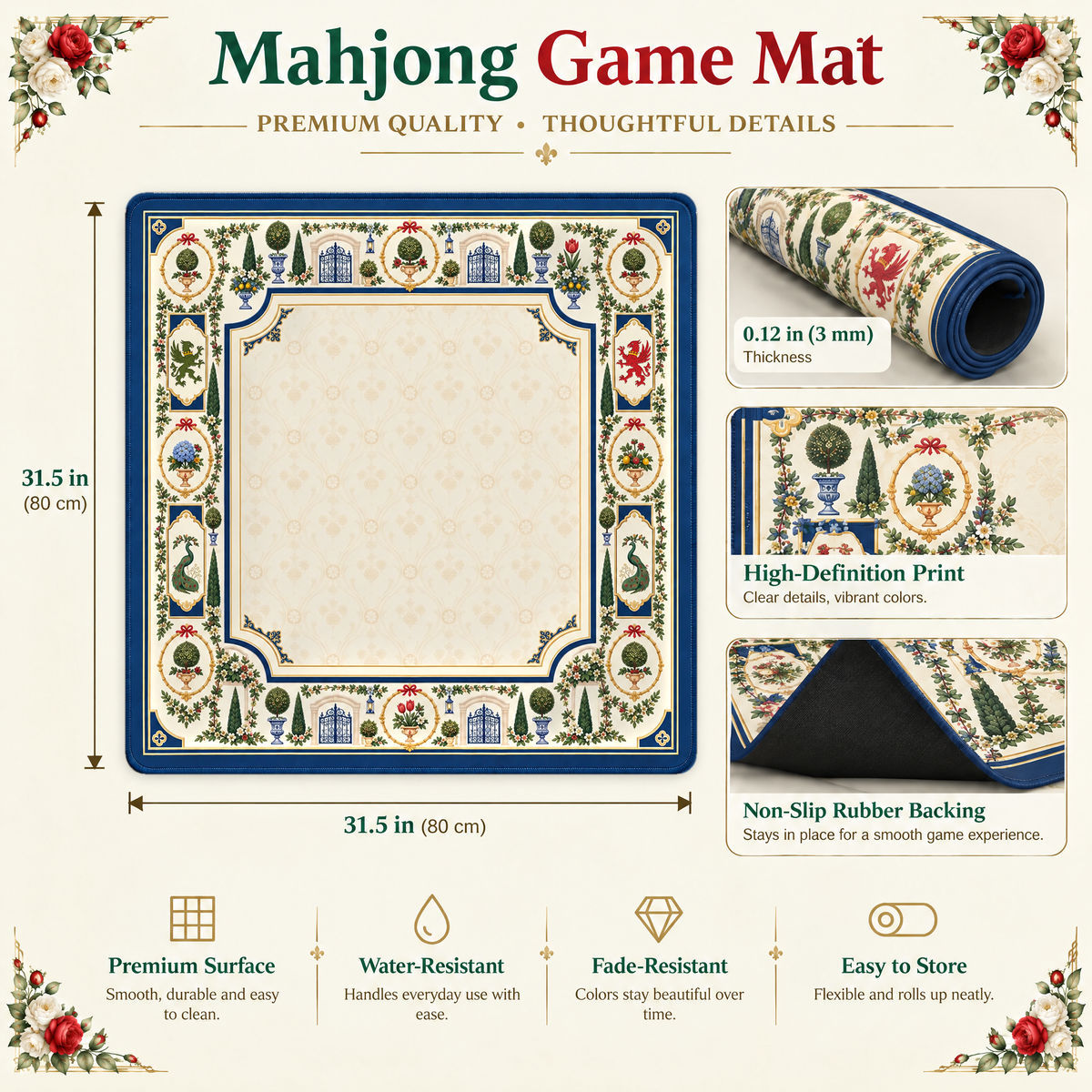
A complete American mahjong setup includes a set (152 tiles, 8 jokers, and a rack), a mat, a cloth bag, and the current year's National Mah Jongg League card. You don't need an expensive set to learn. A basic acrylic set and a mat are enough for a weekly home game. If you're hosting often, invest in mahjong racks with pushers—they let players manage their tiles cleanly and speed up play. For travel, a padded travel bag or case protects your set and keeps everything in one place. If you're serious, add a mahjong mat to protect your furniture and dampen the tile click (which matters if you play after 8 p.m. and have neighbors). For Chinese variants, you may need different tiles or dice—check the rules for your specific variant before buying.
What to check before you buy:
Tile count: American mahjong always uses 152 tiles + 8 jokers in play. A 160-tile set includes spares; never add spares to the game.
Tile size: Standard American tiles are about 1 inch × 0.75 inches. Larger tiles (1.25") suit low-vision players or those with arthritis.
Material: Acrylic is durable and lightweight; bamboo/bone feels premium but chips more easily. Choose based on where you'll play.
Face vs. back: Ensure tiles have clear markings (especially for Bams, Craks, and Dots) and a uniform back design to prevent cheating.
Variant compatibility: American, Chinese, Hong Kong, Riichi, and Taiwanese games use different tile sets and rules. Confirm your set matches your chosen variant.
Shipping and returns: Buy from retailers offering free US shipping (like Mahstead) and clear return policies in case the set doesn't suit your group's aesthetic.
✨ Find your Mahstead set — free US shipping →

FAQ
Is mahjong hard to learn?
No. American mahjong takes 2–4 hours to grasp if taught by a player. The Charleston (tile-passing ritual) and hand-reading (matching your tiles to the card) are the main skills. Practice is key, not innate ability.
Why are there so many variants, and which should I play?
Each variant evolved in a different region with different rules, tiles, and scoring. American is simplest for English speakers; Riichi is fastest; Hong Kong demands most calculation. Join an existing group and play their game first—you can learn others later.
Do I need an expensive set to enjoy the game?
No. Beginners often use basic acrylic sets. A beautiful set makes hosting more fun, but a $20 set and a $200 set play identically. Upgrade once you're confident you'll play weekly.
How long does a game of mahjong take?
American: 45 minutes to 2 hours, depending on how fast your group plays. Chinese/Riichi: 20–40 minutes. A typical game night is 3–4 hours with breaks and conversation.
Can you play mahjong with fewer than four people?
Yes. 2 and 3-player mahjong rules exist and are standard in some regions, though 4-player is the classic format. Check which variant your group prefers.
What's the difference between American mahjong and other variants?
American uses a card showing legal hands and no sequences (chows). Chinese/Riichi/Hong Kong allow sequences and self-drawn wins. Each variant feels like a different game—same tiles, different logic.


View More
View More
View More
