
Why Kids Love Mahjong: Teaching Strategy & Patience Young
Last updated: Nov 23, 2026
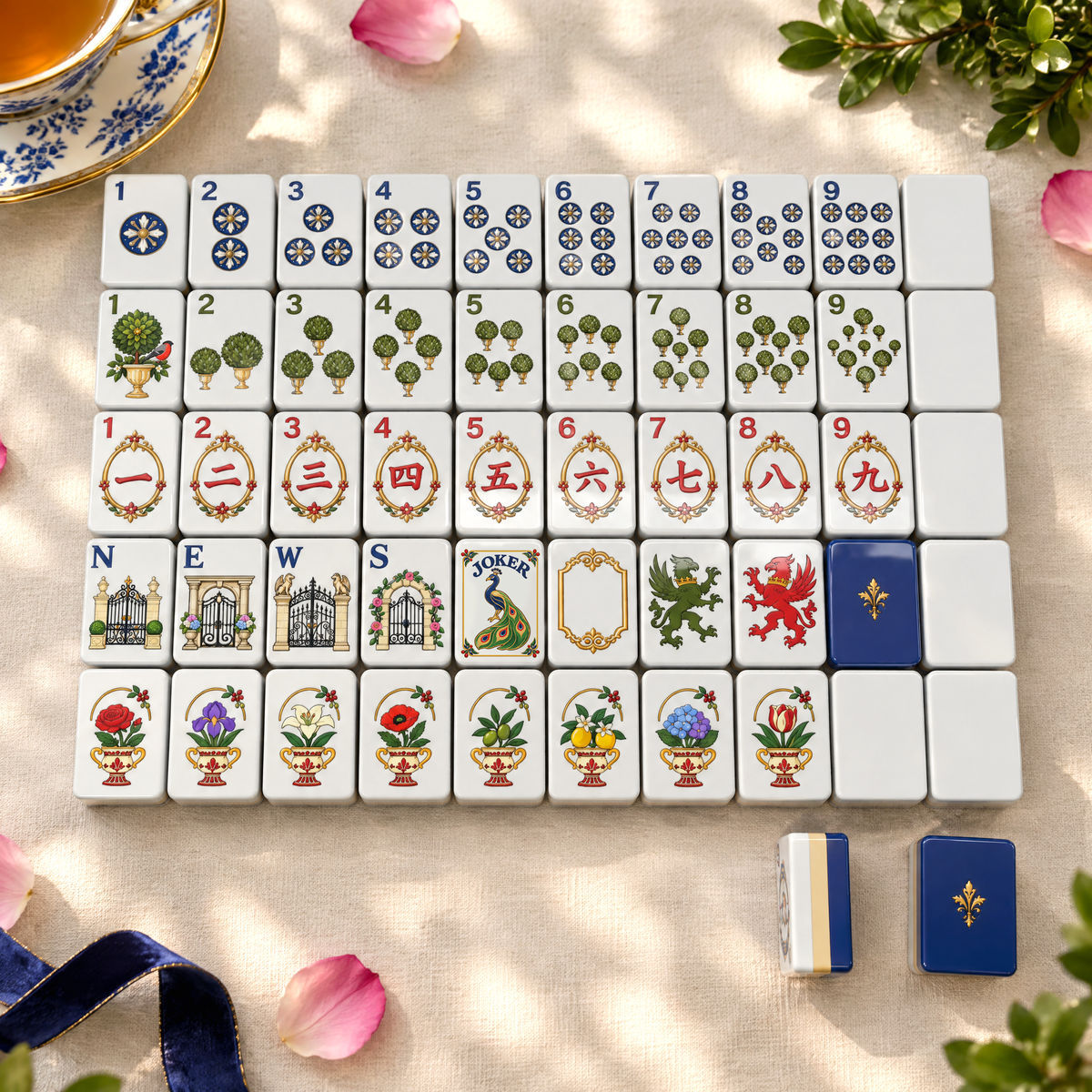
Kids love mahjong because it combines visual pattern-matching with active decision-making in a social setting—no screens required. The game teaches probability, memory, and delayed gratification; rounds last 20–40 minutes, holding young attention spans. American mahjong uses 152 tiles across three suits (Bams, Craks, Dots), winds, dragons, and jokers; players build hands by drawing and discarding, exposed sets earn points, and the National Mah Jongg League card determines valid hands. Unlike fast-paced card games, mahjong rewards careful observation: children learn to read opponents, manage a rack, and calculate risk. Mahstead's best-selling acrylic sets use bright, durable tiles that won't splinter, making them ideal for young players building motor control and confidence.
What makes mahjong so appealing to kids?
Mahjong works for kids because it treats thinking as play. Each round is a puzzle: find matches, keep your hand hidden, remember what others discarded. Children see immediate cause-and-effect—"I threw a 3 Dot, now my friend picked it up"—and feel the weight of choices. The game also welcomes mixed ages; a seven-year-old plays by the same rules as a teenager or parent, so the table stays balanced. Acrylic tiles are satisfying to hold and shuffle; the click-clack rhythm becomes part of the ritual kids anticipate. Most important: mahjong requires talking and eye contact, not isolation, so kids feel part of a team or rivalry, not alone with a device.

How do kids learn the rules without getting bored?
Start with the shapes, not the names. Show kids the three suits by color and symbol: Bams (sticks), Craks (cracks), Dots (circles). Let them group tiles by suit on a mat before playing, so their hands get familiar with the weight and size. Then teach the simplest rule: you need three or four of the same tile to make a set (called a pung or kong). Play one practice round with the National Mah Jongg League card open on the table; kids can see which hands are valid this season. Don't enforce speed—let them ask "Can I use this?" and work through the card together. After round two, kids usually "get" the rhythm: draw, discard, listen for calls, remember what was thrown. Patience matters more than mastery early on; one slow game teaches more than ten lectures.
What are the real brain benefits kids actually gain?
Kids playing mahjong develop pattern recognition at the tile level: distinguishing 3 Dots from 3 Craks trains visual discrimination. They also practice working memory—holding a mental image of which tiles are gone and what their opponents might want. The game builds strategic thinking: "If I throw this tile, will my friend complete their hand faster?" forces kids to weigh consequences before acting. Social observation improves too; children learn to read body language (does that player lean forward when you discard?) and poker-like bluffing (don't react when you almost have a win). Studies on turn-based games show kids who play develop better impulse control; mahjong's wait-your-turn structure naturally enforces this. The scoring math also introduces quick arithmetic in a low-pressure setting, because kids want to know who won and by how much.
What equipment do kids actually need to start?
A standard American mahjong set contains 152 tiles, 8 jokers, and 8 flower tiles—everything needed for a four-player game. Kids under ten benefit from acrylic tiles (lighter and less likely to chip if dropped) over bone and bamboo, which are fragile. A rack with pushers is essential for kids; it holds tiles upright and the pusher helps small hands slide tiles without dropping them. A mat prevents tiles from sliding off a wooden table and makes cleanup faster—kids are more likely to want a rematch if setup feels quick. The National Mah Jongg League card (issued each spring) is mandatory for American mahjong; print or laminate a copy so kids can reference it without fear of spilling juice on the original. For travel games at grandparents' houses or vacations, a padded bag keeps tiles from rattling in the car and makes kids feel ownership over their own set.
🀄 Shop best-selling mahjong sets →

How do you pick the right mahjong set for a child-friendly game?
Feature | Why It Matters for Kids | What to Check |
Tile Material | Acrylic won't splinter if dropped; bone/bamboo feel fancy but chip easily. | Look for smooth edges, solid color (not painted-on images that rub off). |
Tile Size | Tiles ≥1 inch wide fit kids' hands; tiny tiles cause frustration and loss. | Test a sample tile in your palm; if your pinky can't grip it, it's too small. |
Brightness | High-contrast colors (red, black, green on white) help young eyes distinguish suits fast. | Avoid faded or muddy colors; tiles should "pop" under normal table light. |
Carrying Option | Kids more likely to play again if setup/cleanup is fast and setup feels special. | A bag or case turns the set into "my game"—kids take ownership. |
Joker Count | Sets come with 8 jokers standard; extra jokers (in spare tiles) let kids play if tiles wear unevenly. | Confirm spare jokers exist before buying; this ensures long-term durability. |
Acrylic sets from our best-selling collection score high on all counts: bright, durable, and light enough for small hands to manage without fatigue during three or four back-to-back rounds.
What mistakes do parents make when teaching kids mahjong?
The biggest mistake is enforcing speed. Kids need time to think; rushing them turns strategy into anxiety. A child who feels hurried will avoid the game next time. Another error: skipping the Charleston (the tile-passing ritual before play starts). The Charleston seems fussy, but it teaches fairness and builds anticipation—kids enjoy the ritual more than adults do. Don't overwhelm them with scoring on day one; let kids play two rounds to understand draws and discards, then add scoring in round three. Also avoid mixing rule sets: if you teach American mahjong (what this article assumes), stick with American rules; switching to Chinese mahjong mid-game confuses beginners. Finally, don't assume kids will love it instantly. Some kids need three games before they "click"—that's normal. The payoff (a child asking "Can we play again tomorrow?") is worth the patient ramp-up.
🎁 See our most-loved mahjong sets & accessories →
What to Check Before You Buy
Tile count: Confirm the set contains exactly 152 tiles plus jokers (your playing set never changes size).
Material feel: Hold a sample tile or watch a video of someone shuffling the exact set you're buying; acrylic should feel smooth and light.
Contrast: Look at the suit symbols and numbers in good light; if you can't tell a 3 Crak from a 3 Dot at arm's length, the print is too faint.
Rack fit: If buying a rack, confirm tiles slide smoothly; a sluggish pusher defeats the purpose.
Mat condition: Check for peeling seams; a mat used by kids takes impact, so buy one with reinforced edges.
Bag closure: If including a bag, make sure zippers glide and pockets are sized for tile sorting.
Why Mahstead Sets Work for Kids
Mahstead's mahjong sets are engineered for durability and clarity. Acrylic tiles hold their print after hundreds of shuffles, and the bright colorways make it easy for young eyes to spot a match. Custom engraving options let families personalize their set—a child's name or inside joke on the bag turns a game into a keepsake they'll remember into adulthood. Sets ship flat-packed to avoid tile loss in transit; each set is checked before packing. Free shipping across the US means families don't pay extra to bring mahjong home.
✨ Find your Mahstead set — free US shipping →

FAQ
What is the best age to teach a child mahjong?
Kids aged 7–8 typically grasp pattern recognition and turn-taking well enough to follow American mahjong. Younger children (5–6) can learn tile matching in simplified games but may lack focus for a full four-player round. Older kids (9+) pick up strategy and scoring fast. Start with your child's interest, not age; some kids are ready at six, others at ten.
Do kids need to memorize the mahjong card?
No. The National Mah Jongg League card sits open on the table during play. Kids reference it to check if their hand is valid; over time, common hands become familiar, but memorization isn't required or expected. New cards come out each spring, so even veteran players check the card regularly.
How long does a game take with kids?
A single round typically lasts 15–25 minutes when kids are learning; experienced kids or adults play faster (12–18 minutes). A full game is usually three or four rounds, so expect 45–90 minutes total. Kids with shorter attention spans can play one or two rounds and still feel they've completed a game.
Can two kids play mahjong together?
Yes, but American mahjong is designed for four players. Two-player variants exist and use simplified rules, but the standard game feels flat with only two. If you have two kids, invite a parent or grandparent to make a four-person table, which is ideal.
What if a child is frustrated because they never win?
This is normal in learning; winning depends partly on luck (tile draw), not just skill. Play a few rounds before keeping score, so kids get comfortable with the mechanics. When scoring starts, celebrate small wins (completing one set, calling tiles) rather than focusing on who won the round. Also rotate the starting player (dealer) each round—the dealer's position changes luck, and kids learn that everyone gets a turn at advantage.
Are there mahjong sets designed specifically for kids?
Not officially—mahjong tile sizes and rules are standardized. What helps kids is a bright, durable set (acrylic over bone), a rack with a pusher for small hands, and a mat to prevent sliding. Mahstead's acrylic sets meet all these needs; some buyers engrave their sets with a child's name to personalize the experience and build pride in ownership.


View More
View More
View More
