
Glitter Mahjong Travel Set: What to Choose for Portability
Last updated: Nov 23, 2026
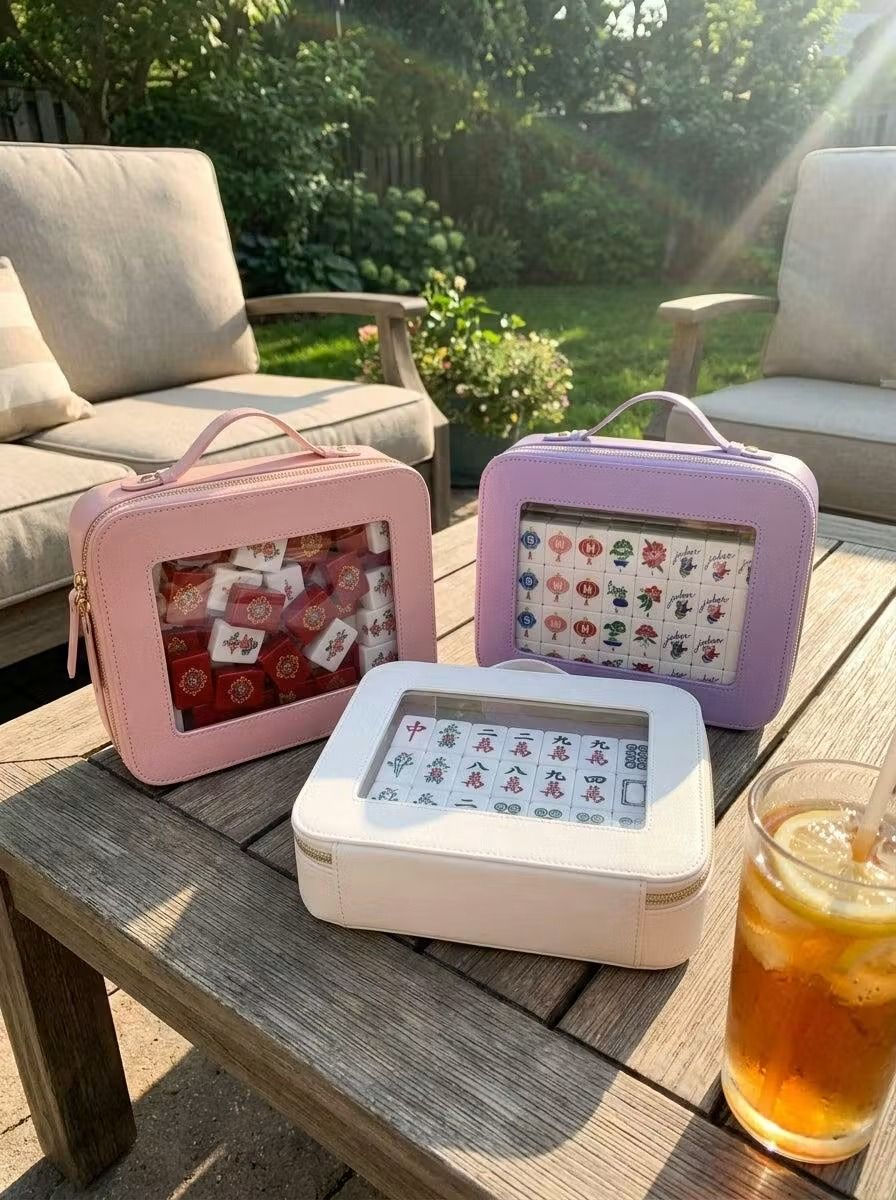
A glitter mahjong travel set is a 160-tile American mahjong set with sparkle or metallic finishes, designed to fit into a carrying bag or case for play away from home. These sets include the standard 152 playing tiles (three suits, winds, dragons, flowers, jokers) plus spare pieces. Weight ranges from roughly 2–4 pounds depending on acrylic thickness and case material. Cost varies by design and case quality; see current price on the product page. The key trade-off: glitter tiles catch light beautifully but can show fingerprints faster than matte finishes, and smaller carrying cases save space but may cramp storage for a full rack. Mahstead's acrylic travel sets use durable, stain-resistant materials designed to handle repeated packing and unpacking without tile cracking or fading.
A glitter mahjong travel set combines portability with visual flair—but not all compact designs carry equally well, store the same way, or protect tiles from damage on the move. We've tested dozens of these sets across weekly games at different venues, and the difference between a set that thrives in a car, a suitcase, or a tote bag often comes down to tile finish, case design, and what extras you're willing to carry. If you're hosting games outside your usual space or bringing tiles to a vacation home, here's what actually matters.
🀄 Shop best-selling mahjong sets →
What makes a travel set different from a standard home set?
A travel set prioritizes compact storage and portability without sacrificing tile quality or game completeness. Standard American mahjong sets contain 160 tiles (152 in play, plus spares) and typically weigh 3–4 pounds in an acrylic format. A travel variant fits into a fabric or hard case measuring roughly 13–16 inches across, meaning it nests neatly in a car seat, under a plane seat, or in a closet. The tiles themselves—acrylic, bamboo, or resin—remain the same size; the difference is the carrying solution and often a lighter case material. Many travel sets skip bulky wooden racks in favor of lightweight plastic pushers or fold-flat metal stands, saving 2–3 pounds overall.
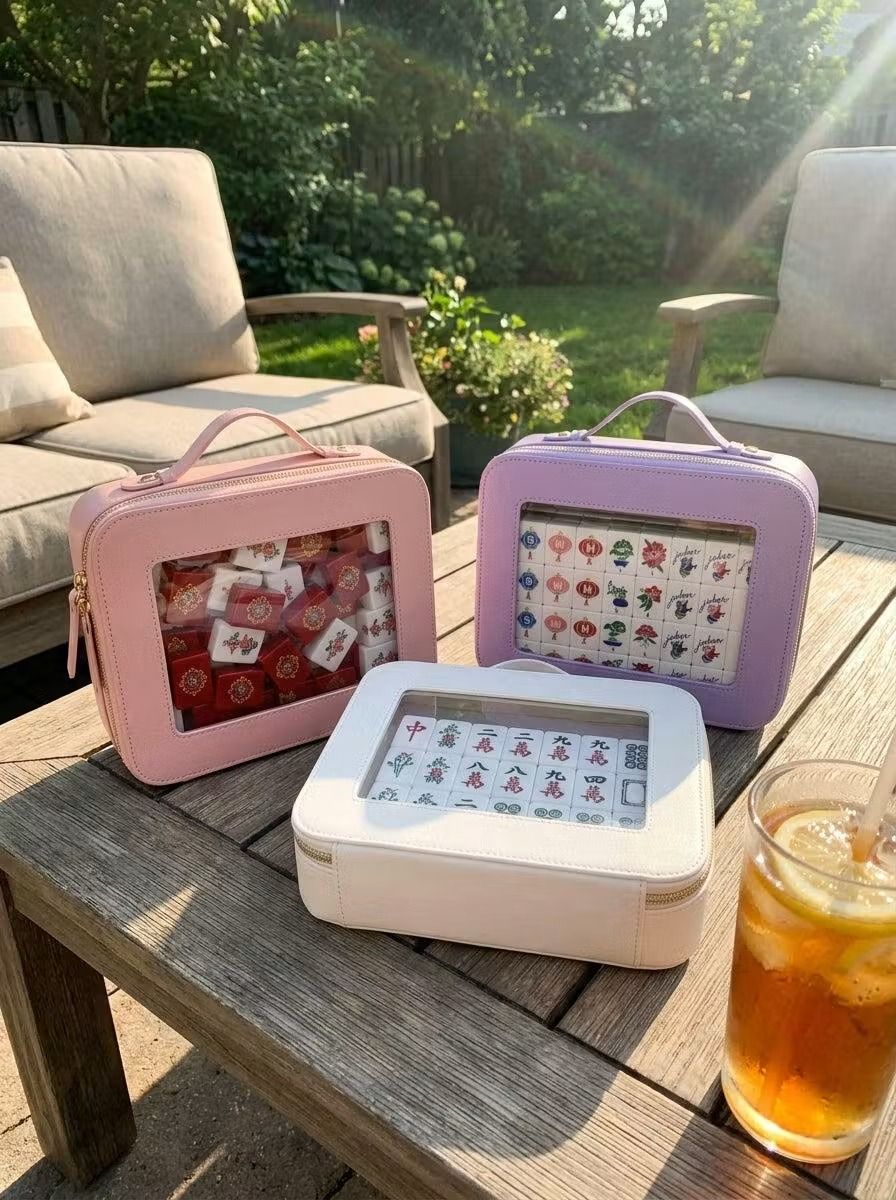
Should you pick glitter, matte, or metallic finishes for travel?
Glitter and metallic tiles look stunning during gameplay but require more care between games. Glitter catches dust and fingerprints visibly; matte finishes hide grime longer and are easier to wipe clean during travel. Metallic (chrome or gold-plated acrylic) sits in the middle—elegant and forgiving. If you're packing a set into a car or checking it on a flight, a matte finish reduces the temptation to polish tiles mid-game and speeds cleanup afterward. That said, if you love the visual impact and don't mind a quick wipe-down before each game, glitter absolutely works; just pack microfiber cloths in your bag. Many of our best-selling mahjong sets come in mixed finishes (glitter dragons, matte suits), letting you choose aesthetic intensity.
🎁 See our most-loved mahjong sets & accessories →
Hard case vs. fabric bag: which protects tiles better?
Case Type | Best For | Weight | Tile Protection | Durability |
Hard shell (polycarbonate/ABS) | Airport travel, high impact risk, humid climates | 1.5–2 lbs (case only) | Excellent; shock-absorbs bumps | Scratches visible; lasts 5–10 years |
Padded fabric (canvas/nylon) | Car games, short trips, repeated handling | 0.3–0.8 lbs (case only) | Good; cushioning prevents tile collisions | Depends on fabric; canvas outlasts nylon |
Stackable plastic carrier | Frequent packing/unpacking, minimal footprint | 0.5–1 lb (case only) | Fair; tiles shift if overpacked | Functional, not durable |
Hard cases win if you're flying, loading a boat, or storing tiles in a garage. Fabric wins for weight and ease of setup at a friend's house. We've found that the best portable setup pairs a padded fabric bag with a travel-focused mahjong bag or case—one that has built-in tile compartments, so loose pieces don't rattle during transit. Glitter tiles in a fabric bag often look freshest because you're not compressing them under hard plastic, which can dull sparkle over time.

Do you need racks and pushers in a travel set?
Not always—and omitting bulky racks is the main weight savings in a portable setup. American mahjong requires racks to hold your hand of 13 tiles upright and visible only to you; jokers can't be hidden there, so two-handed pushers become essential when jokers enter play. For travel, you have three options: (1) include lightweight plastic racks and pushers, adding ~1 pound; (2) bring foldable metal stands or compact wooden racks designed for travel; (3) skip racks and use your lap or the table edge, which works for casual, slower-paced games but isn't tournament-friendly. Most players we know compromise: they pack one set of pushers and two lightweight racks, enough for the primary player and one partner. If you're a serious player hosting formal games on the road, invest in dedicated mahjong racks with pushers that disassemble; they add minimal space and preserve game integrity.
How do you prevent glitter tiles from scratching or fading in transit?
Glitter acrylic is durable but not scratch-proof, especially if tiles tumble against each other during bumpy car rides. Use a fabric tile organizer or silicone dividers inside your case to separate tiles by suit and honor pieces. Never overstuff the bag; tiles should fit snugly but not under pressure. Store the set in a cool, dry place away from direct sunlight, which can fade metallic and glitter coatings over months. Pack a microfiber cloth and a small bottle of acrylic cleaner (or just water and white vinegar) to restore shine before each game. If tiles do scratch, light surface marks don't affect gameplay, but deep gouges can harbor dirt; a gentle acrylic-safe polish restores clarity. For extended storage between trips—say, six months or more—keep the set in its case indoors; garage or car trunk storage risks humidity damage and color fading.
✨ Find your Mahstead set — free US shipping →
What to check before you buy a glitter travel set
Verify tile count: Confirm the set includes 152 playing tiles (36 per suit, 16 winds, 12 dragons, 8 flowers, 8 jokers) plus any spares.
Weigh the case alone: Ask the seller for case weight without tiles; under 1 pound is ideal for frequent travel.
Test compartment design: Loose tiles in one big pouch shift and collide; subdivided compartments (by suit, by honor type) reduce noise and scratching.
Check for racks and pushers: Confirm whether they're included and whether they're travel-sized (disassemble or fold flat).
Ask about the mat: A portable mahjong mat isn't always included; many travel players buy a compact, roll-up mat separately to define the play area.
Read about cleaning: Does the set come with a cloth? Are tiles sealed to resist staining? Acrylic accepts fingerprints; matte finishes are more forgiving than high-gloss glitter.
Confirm tile material: Acrylic is lighter and less likely to crack; resin and bone are heavier but warmer to the touch.
Return or exchange policy: Travel sets take a beating; ensure the seller will replace broken tiles or a damaged case.
Decision Checklist | Question | Your Answer |
Weight | Is the packed set under 5 lbs? | ☐ Yes ☐ No |
Case | Does it have padded compartments or dividers? | ☐ Yes ☐ No |
Tiles | Are all 152 playing tiles present, glitter or matte? | ☐ Yes ☐ No |
Racks | Are they travel-friendly (lightweight, collapsible)? | ☐ Yes ☐ Skipping them |
Extras | Is a cloth, mat, or dice included? | ☐ Yes, ___ ☐ No |
Sealing | Are tiles sealed against stains? | ☐ Yes ☐ Unknown |
Return | Can you exchange broken pieces or the case? | ☐ Yes ☐ No |
Our experience: a glitter travel set works best when the case has internal structure (pockets, dividers, or egg-crate foam) rather than one loose compartment. Loose tiles jam together and dull faster. If the seller offers a choice between flat tiles (loose) or organized compartments, pick compartments every time, even if it costs a bit more—the reduced breakage and easier setup pay for itself in one or two trips. We've found Mahstead's travel collections typically include curated carrying solutions that prevent tile migration, so arrival looks almost as fresh as departure.

FAQ
Can I use a glitter mahjong set for serious tournament play?
Yes, if the tiles meet League standards (correct size, count, and suit symbols). Glitter finish doesn't affect gameplay legality; check that all 152 tiles are present and the jokers are clearly marked. Matte finishes photograph better in competition photos, but glitter won't disqualify you.
How often should I clean glitter tiles during travel?
Wipe tiles with a dry microfiber cloth before each game and after cleanup. If they're visibly dusty, use a barely damp cloth; never soak acrylic. Deep cleaning (water + mild soap) every 2–3 trips keeps sparkle bright without wearing the coating.
Will glitter tiles feel different in my hand than matte ones?
Surface texture is nearly identical once tiles are played; glitter is a cosmetic layer on acrylic. The weight and balance are the same. Some players report that glitter catches light during gameplay, making tile identification slightly faster, but others find it distracting. Test both if possible.
Can I fit a travel mahjong set and a portable mat in a carry-on bag?
Usually yes. A compact travel case (under 2 lbs) plus a roll-up mat (under 1 lb) totals roughly 3 lbs and fits in a small backpack or tote. Hard cases take more room but are safer for checked luggage. Confirm airline weight limits; most allow 7–10 lbs in a personal item.
What's the difference between a 160-tile travel set and a 152-tile one?
American mahjong always uses exactly 152 tiles in play. A 160-tile set includes 8 spare tiles (extra jokers or blanks) packed separately—never added to the game. Travel sets sold as 160-tile sets still play with 152 tiles; the extra pieces are replacements for travel wear and tear. No 152-tile set exists; the minimum is 160 tiles (152 play + 8 spares).
Do I need to buy a special mat for a travel game, or can I use any flat surface?
Any flat, clean surface works—a table, a bed, even a yoga mat laid flat. A dedicated mahjong mat provides four quadrants, scoring corners, and a non-slip surface that organizes play and speeds setup, especially outdoors or on a boat. Portable mats roll or fold into a bag and weigh under 1 pound.


View More
View More
View More
