
Why Is the 1 Bam a Bird in Mahjong?
Last updated: Nov 23, 2026
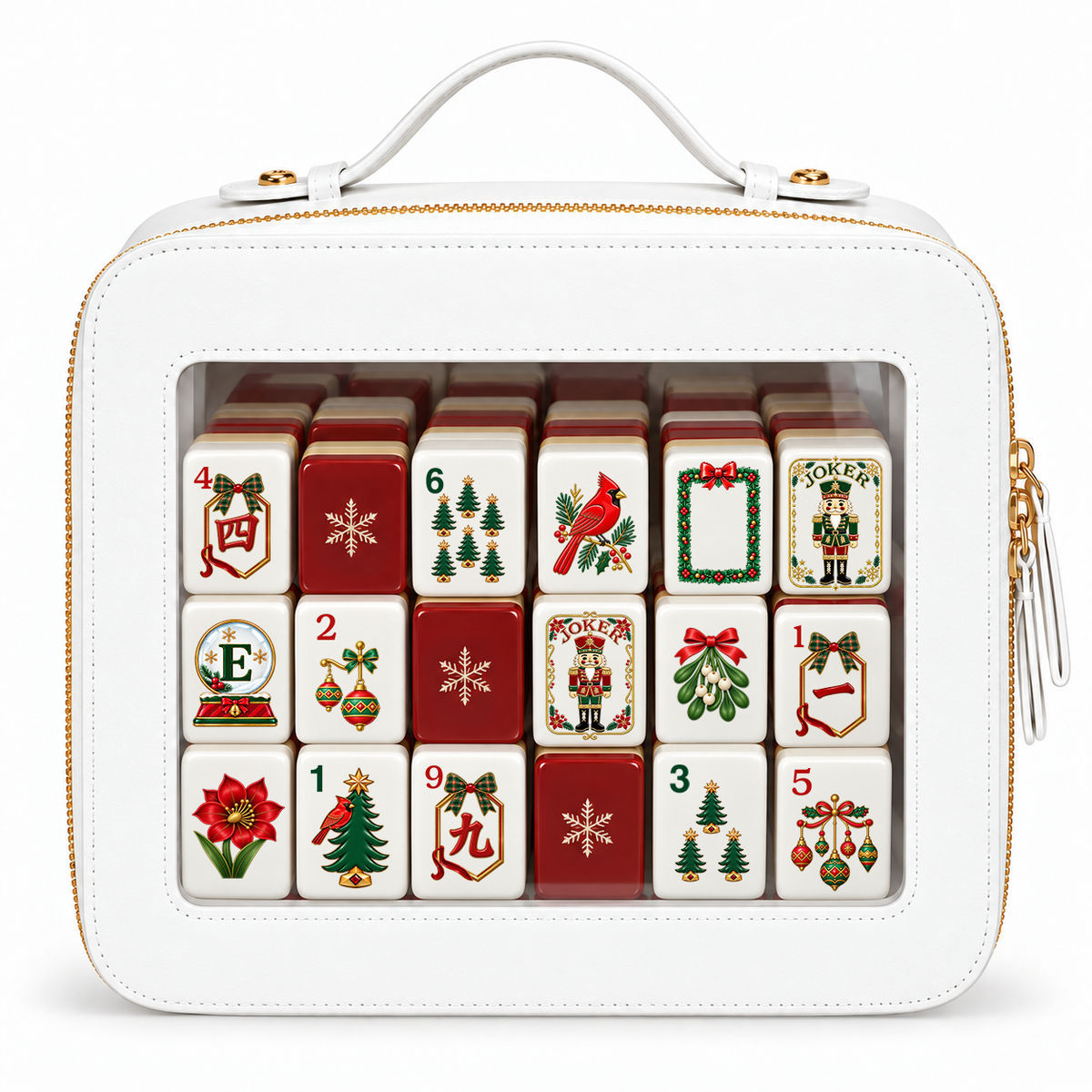
The 1 Bam shows a bird because early Chinese mahjong tile-makers used a pheasant or crane image as a decorative alternative to a single dot, both to distinguish it visually and to honor symbolic meaning—birds represented freedom, luck, or auspiciousness in Chinese art. When American mahjong standardized its tile design in the early 20th century, this convention stuck; the bird became the defining mark of the 1 Bam, appearing on every tile from classic Catalin sets to modern acrylic versions. The bird serves a practical purpose too: at a glance across a crowded table, players instantly recognize the 1 Bam without confusion, which matters when you're tracking a fast-paced hand. Mahstead's best-selling mahjong sets all feature the traditional bird image, honoring this heritage while adding modern clarity and durability to every tile.
The 1 Bam tile displays a bird instead of a pip, making it instantly recognizable at the table. This quirk has roots in mahjong's Chinese origin and remains a beloved feature in American sets today.
Where did the bird design originate?
The bird on the 1 Bam traces back to Chinese mahjong's early days, when artisans hand-carved tiles from bone, bamboo, or ivory. A single dot looked plain and could blur at a distance; a bird—typically a pheasant or crane—caught the eye and carried symbolic weight in Chinese culture, where birds symbolized freedom, transcendence, and good fortune. When mahjong arrived in the West in the 1920s, American manufacturers preserved this iconography, and it became standard across every modern set, from Catalin to acrylic. The bird is not arbitrary—it's a deliberate design choice that survived a century of play because it works visually and culturally.

How does the bird help you spot tiles quickly?
At the table, speed matters. When you're reading your hand during the draw phase or scanning a discard pile for a call, your eye needs to land on the right tile in milliseconds. The bird on the 1 Bam creates a visual anchor—it's the only tile in the Bam suit that doesn't show dots, so your brain recognizes it instantly, even in poor light or from across a table. Compare this to the 1 Crak or 1 Dot, which show a single pip that can blur or be missed; the bird stands apart. This practical advantage means fewer hesitations, fewer misreads, and smoother gameplay. Players who study the current year's NMJL card benefit even more because they can map the bird into their pattern-matching mental model faster.
Why do newer acrylic sets still include the bird?
Modern tile manufacturers, including Mahstead, continue the bird design because it serves both tradition and function. A best-selling mahjong set reflects what experienced players expect and rely on; changing the 1 Bam to a plain dot would confuse established players and break decades of muscle memory. Acrylic tiles allow for finer detail than older materials, so the bird image emerges crisp and durable under play. Engraved sets with custom titles or motifs often incorporate the bird as a signature element, reinforcing the authenticity of the game. The bird has become so iconic that removing it would feel wrong—it's the mahjong equivalent of a queen's face on a playing card.
What about regional variants—do they keep the bird?
Hong Kong, riichi (Japanese), and Chinese mahjong each have distinct tile sets, and not all preserve the American 1 Bam bird convention. Chinese sets often show the character "万" (wan, meaning ten thousand) on Bam tiles, with the 1 represented as a simple stylized character rather than a pheasant. Riichi mahjong uses kanji characters and symbols that bear no resemblance to Western birds. Hong Kong sets may show traditional Chinese numerals or decorative motifs instead. American mahjong, however, is defined by the NMJL card and the tile format—including the bird—that originated from early 20th-century Catalin tile design. If you travel to play or study other variants, expect different iconography; the bird is distinctly American.

How should you care for tiles with bird designs?
The bird image, especially on acrylic tiles, can scratch or fade if tiles are handled carelessly during shuffling, stacking, or storage. Use a padded mahjong mat or cloth surface when playing to reduce friction between tiles. When sorting your hand, place tiles gently face-down on the rack rather than dragging them across hard tabletops. Store your set in a protective bag or case to shield tiles from dust, humidity, and accidental impacts. Acrylic tiles are more resistant to wear than painted Catalin, but the bird engraving—whether carved or printed—benefits from respect. If a tile's bird becomes hard to see, it's a sign to inspect the full set for wear and consider refreshing it, especially if you host weekly games.
🎁 See our most-loved mahjong sets & accessories →
A quick decision framework: which set features matter to you?
When shopping for a set with a clear, attractive bird on the 1 Bam, consider your play environment and hands-on habits.
Feature | Serious home players | Travel/casual players | Beginners |
Tile clarity (bird visibility) | Critical—sharp image, high contrast | Important—must read across a table | Essential—helps identify suits fast |
Material durability | Acrylic preferred; fine details last years | Acrylic/resin; balance beauty & portability | Any; focus on feel & weight first |
Rack compatibility | Check pushers work smoothly | Standard racks; no fussy fits | Standard racks; comfort matters |
Case/storage | Padded bag or hard case recommended | Soft drawstring bag OK | Drawstring or zipper bag fine |
The bird is a constant across quality sets—what varies is fit, finish, and how the design is executed (crisp acrylic engraving vs. softer paint). Choose based on how often you play and how much tile detail matters to your game rhythm.
✨ Find your Mahstead set — free US shipping →
What to check before you buy
Before ordering a set, verify the bird is clearly visible on the product photo—it should stand out as a distinct shape, not a smudge. If you host weekly games, opt for acrylic with fine engraving because it resists wear and the bird stays legible through hundreds of plays. Ask whether the set includes racks with pushers and a mat; a good mat protects tiles and gives you a quiet, friction-controlled play surface. If the set ships with a bag, confirm it's padded—loose tiles tumbling in a thin sack can scratch the bird image and other tile faces. Check the total tile count: Mahstead sets contain 160 tiles, which means 152 playing tiles plus spares; that's standard and correct. Don't assume every set has the same bird quality—compare close-up images or order from makers known for crisp detail and durability.
🀄 Shop best-selling mahjong sets →

FAQ
Why is the bird only on the 1 Bam and not the 1 Crak or 1 Dot?
The bird convention emerged from early Chinese tile design and became standardized in American mahjong on the 1 Bam specifically. The 1 Crak and 1 Dot retained single-pip designs because the bird was distinctive enough alone and adding birds to all three suits would create visual clutter.
Can I play American mahjong with a set that has the 1 Bam bird worn off?
Technically yes, because you identify the tile by its position and context, but it's harder and slower. The bird is a visual aid; without it, you rely entirely on pip count and suit color, which increases errors and slows gameplay, especially for newer players.
Does the bird affect the tile's weight or balance?
No. Whether the bird is engraved, painted, or inlaid, it doesn't materially change the tile's weight or balance. The bird is purely a surface design and doesn't hollow out or thicken the tile.
If I'm learning mahjong, should the bird help me memorize the 1 Bam?
Absolutely. The bird is a memory hook—instead of "one dot," think "the bird tile." This mnemonic speed helps you recognize it faster during hand-sorting and play. Many beginners use the bird as their anchor for learning all 152 tiles.
Do online or digital mahjong apps include the bird on the 1 Bam?
Most do, though the image quality and design vary. American mahjong apps typically preserve the bird to match physical tile conventions. If you switch between digital and in-person play, the bird consistency helps you stay oriented.


View More
View More
View More
