
Riichi Mahjong Tenpai Rules: What It Means and When You Can Win
Last updated: Nov 23, 2026
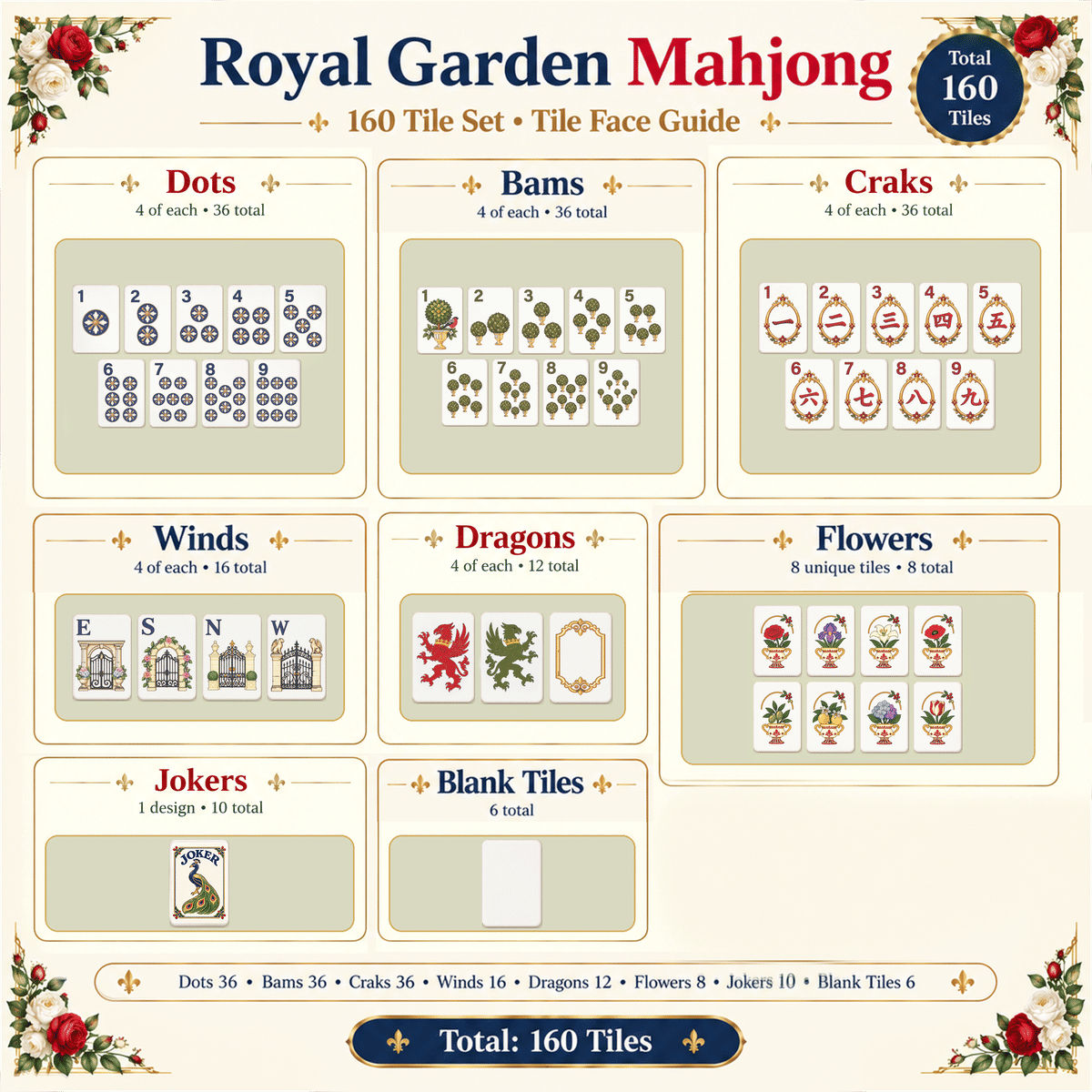
Tenpai in riichi mahjong means your hand is complete except for exactly one tile—you are waiting (tenpai). Once tenpai, you may declare riichi: you freeze your hand, announce your waiting tile(s) to the table, and cannot change your hand. If any player discards a tile that completes your hand, you win immediately and score a riichi bonus. Tenpai is checked against the riichi-specific hand patterns (mentsu groups of three, tatsu pairs, eye pairs); unlike American mahjong, riichi allows chows (1-2-3 sequences) and requires melds to be identical suit or honor sequences, not cross-suit combinations. You cannot riichi with fewer than two concealed groups; the declaration costs 1,000 points and is lost if you win or are overtaken by another player's declaration.
Tenpai (waiting) in riichi mahjong is the moment your hand needs exactly one more tile to win. It's the threshold where strategy shifts: you stop collecting and start declaring. Unlike American mahjong—which draws from a fixed annual card and has no riichi mechanic—riichi is a real-time declaration that locks your hand and awards bonus points if you win. We'll walk you through how tenpai works, when to declare riichi, common mistakes, and how this rule reshapes the entire game.
What does tenpai actually mean in your hand?
Tenpai (待牌) translates to "waiting for a tile." Your hand has 13 tiles (before your draw), and you need one more specific tile—or sometimes one of several tiles—to complete a standard winning pattern. The win consists of four mentsu (groups of three: pung, kong, or chow) plus one eye pair (two identical tiles). Once you have four complete groups and fourteen tiles total, you've won (agari). Tenpai is the 13-tile state just before that. You cannot win without reaching tenpai first.

How do you recognize when you are tenpai?
Tenpai is the state where your hand, plus one specific tile from the wall or discard, forms a legal winning hand. Mentally remove one tile from your hand; if the remaining 12 can form four complete mentsu (three-tile groups), you're tenpai. For example: if you hold three 1 Craks, two 2 Craks, three 3 Craks, three 5 Dots, three 6 Dots, three 7 Dots, and two Red Dragons—you're tenpai waiting for the Red Dragon. If you hold two 1 Craks, three 2 Craks, three 3 Craks, three 4 Craks, and four more tiles of connected numbers or honors, you might be tenpai waiting for a 1 Crak (to form 1-2-3 chow with your pair) or a 4 Crak (to form 2-3-4 chow). Tenpai is not a binary yes-or-no: many hands have multiple waiting tiles (multi-mentsu waits). Identifying your wait(s) correctly is essential before you declare riichi, because you're committing your hand.
What are the two types of tenpai waits you need to know?
Single wait (tanki): You're waiting for one specific tile. Example: you have three Reds and 12 other tiles that form four perfect groups; only a Red Dragon completes your hand. Single waits are rare and strong because the other players know exactly what you need and can block it easily.
Multi-tile wait (ryanmen, kanchan, penchan): You can win off two or more different tiles. A ryanmen (open-end wait) happens when you have 1-2 of a suit and need either a 3 (to make 1-2-3) or you have 8-9 and need a 7 (to make 7-8-9). A kanchan (middle wait) is 1-3 of a suit; you need a 2. A penchan (edge wait) is 1-2 and needs a 3, or 8-9 and needs a 7. Multi-tile waits are safer because more tiles complete your hand, but they're also lower-scoring (unless combined with bonuses like riichi or all-terminals).
Wait Type | Tiles You Need | Safety | Examples |
Single (tanki) | One tile only | Low (easy to block) | Waiting for one Red Dragon |
Ryanmen | Two tiles (open ends) | High | Holding 1-2 Bam, need 3; or 8-9 Crak, need 7 |
Kanchan | One tile (middle) | Medium | Holding 1-3 Dot, need 2 |
Penchan | One tile (edge) | Medium | Holding 1-2 Bam, need 3; or 8-9 Dot, need 7 |
When can you declare riichi and what does it cost?
You declare riichi only when you're tenpai and your hand meets two conditions: (1) you must have at least two concealed mentsu (groups you haven't melded yet)—you cannot riichi if you've already exposed three or more groups; (2) your hand must be a "standard" win shape (no special hand like all honors or all terminals, unless the table rules permit it). Once tenpai with these conditions met, you announce "riichi" to the table, push 1,000 points forward as a stake, and freeze your hand—you cannot change your melds or add tiles to existing groups. If you win within a few turns, you collect the riichi stake plus a bonus. If someone else wins or you draw the last tile without winning (draw/exhaustive), your riichi stake is forfeited. Declaring riichi early telegraphs your wait to other players, who will discard carefully; declaring riichi late (close to the end of the wall) is more dangerous because fewer tiles remain to complete your hand.
What is the difference between tenpai in riichi versus other mahjong games?
American mahjong has no tenpai or riichi mechanic; you draw and discard tiles, and your hand must match one of the legal patterns on that year's National Mah Jongg League card by the time the wall is exhausted or someone declares mahjong. In American mahjong, you cannot declare mid-game; you either complete a legal hand or you lose.
Chinese (classical) mahjong uses a similar tenpai concept—you're one tile away and waiting—but has no riichi penalty or bonus. You simply declare you're waiting, and your opponents know to block you. Hong Kong mahjong is faster; tenpai waits are mostly multi-tile for speed. Japanese riichi mahjong uniquely combines tenpai with a declared riichi state: the 1,000-point stake and the win bonus create a high-risk, high-reward moment that fundamentally changes strategy. In riichi, being tenpai is not designed to win; in American mahjong, reaching your legal hand is the goal, and there's no intermediate "waiting" state.
🀄 Shop best-selling mahjong sets →

How do hand patterns affect whether you can declare riichi?
Riichi mahjong recognizes "standard" and "special" hand patterns. A standard win is four mentsu plus one eye pair—any combination of chows, pungs, or kongs. As long as you're tenpai in a standard pattern with two concealed groups, you can riichi. Special patterns (all honors, all terminals, seven pairs, thirteen unique honors) have their own tenpai states and may or may not allow riichi depending on house rules; most competitive play allows riichi for all patterns except those explicitly banned. The key constraint: if you've already exposed three or more melds (by declaring pung, kong, or chow), you enter furiten—you lose your ability to declare riichi and your win scores drop. Furiten is riichi mahjong's way of penalizing passive play and aggressive blocking.
Common mistakes when counting tenpai and declaring riichi
Miscounting your melds: Beginners often think they're tenpai when they're actually shanten (two tiles away). Recount: do your 12 remaining tiles form four complete, non-overlapping mentsu? If not, you're not tenpai yet.
Declaring riichi with insufficient concealed groups: If you've already melded three groups, you cannot riichi. Count your concealed groups before announcing.
Misidentifying multi-tile waits: A hand can have three or four different winning tiles; you must know all of them. If you think you're waiting for only one tile but your hand actually wins on two, you may miss an opportunity to score bonuses or misread the table's defensive strategy.
Declaring riichi too early: If the wall still has 30+ tiles, declaring riichi telegraphs your hand. Opponents will block your wait tiles ruthlessly. Declare late only if you're confident in your wait or if the table is slow.
Ignoring the riichi forfeit: If you declare riichi and the hand ends in a draw or someone else wins, you lose your 1,000-point stake. Don't riichi unless your tenpai is strong and the wait is reasonably safe.
🎁 See our most-loved mahjong sets & accessories →
Step-by-step: confirming tenpai before you declare riichi
Count your mentsu: List every completed group (chow, pung, kong) in your hand.
Identify your remaining tiles: Set aside tiles that don't fit any group yet.
Test each potential winning tile: For each tile you think completes your hand, ask: "If I draw this tile, can I form four mentsu plus one eye pair?"
Verify multi-tile waits: Does your hand win on more than one tile? List all of them.
Check concealed group count: How many of your mentsu are unrevealed (not exposed to the table)? If fewer than two, you cannot riichi.
Check hand pattern: Is your hand a standard win pattern (four mentsu + eye), or a special pattern? Confirm local rules allow riichi for your pattern.
Announce riichi: Push your 1,000-point stake forward, announce clearly, and freeze your hand.
What to check before you declare riichi
Your wait is truly multi-tile or very safe: Single-tile waits are easy for opponents to block; riichi only if your odds justify the 1,000-point stake.
Wall count: How many tiles remain? If fewer than five, a draw is likely; riichi may be wasted. If more than 20, you have time but opponents can block more easily.
Opponent discards: Which tiles have been discarded already? If three or four of your waiting tiles are gone, your riichi is much weaker.
Table attitude: Is the table aggressive (lots of melds and quick pace) or passive? Aggressive tables make riichi riskier; passive tables reward safe, declared waits.
Your score: If you're winning or far ahead, riichi may be unnecessary. If you're far behind, riichi is your best chance to score big.
✨ Find your Mahstead set — free US shipping →
If you're learning riichi mahjong, having a set with clear tile markings—like our best-selling mahjong sets—helps you count menstu and waits faster. Engraved or colored tiles reduce the mental load so you can focus on strategy rather than tile-spotting.

FAQ
Can you declare riichi if you have one concealed group and three exposed melds?
No. You need at least two concealed mentsu to declare riichi. If you've already exposed three or more groups, you've entered furiten and cannot riichi; your winning hand will score without bonuses.
What happens if you declare riichi and then draw a tile that doesn't complete your hand?
Your hand remains frozen. You discard a tile (usually the one you drew, or any tile that doesn't break your mentsu), and play continues. Your 1,000-point riichi stake stays in the pool until someone wins or the hand draws.
If you're waiting for a 5 Crak and an opponent discards it, do you have to take it and win?
Yes. Once tenpai and riichi is declared, if your winning tile is discarded (called ron), you must win immediately. You cannot pass or decline.
Can you declare riichi on a special hand like all-terminals?
It depends on house rules. Most competitive play (Mahjong Soul, tournaments) allows riichi on all standard patterns. Some casual games ban riichi on all-honors or all-terminals. Confirm with your group before the game starts.
If you're tenpai waiting for three different tiles, which one counts as your "official" wait?
All three tiles complete your hand; there is no single "official" wait. If any of the three is discarded, you win. This is called a three-tile wait and is the strongest tenpai state—opponents must avoid all three tiles.
How is tenpai different from "one away" in American mahjong?
American mahjong has no tenpai state or intermediate declaration. Your hand must match a legal pattern on the card; you either win or you don't. Riichi mahjong's tenpai is a playable intermediate state where you announce and freeze your hand for bonus scoring.


View More
View More
View More
