
Why Do You Build Walls in Mahjong? The Rule Explained
Last updated: Nov 23, 2026
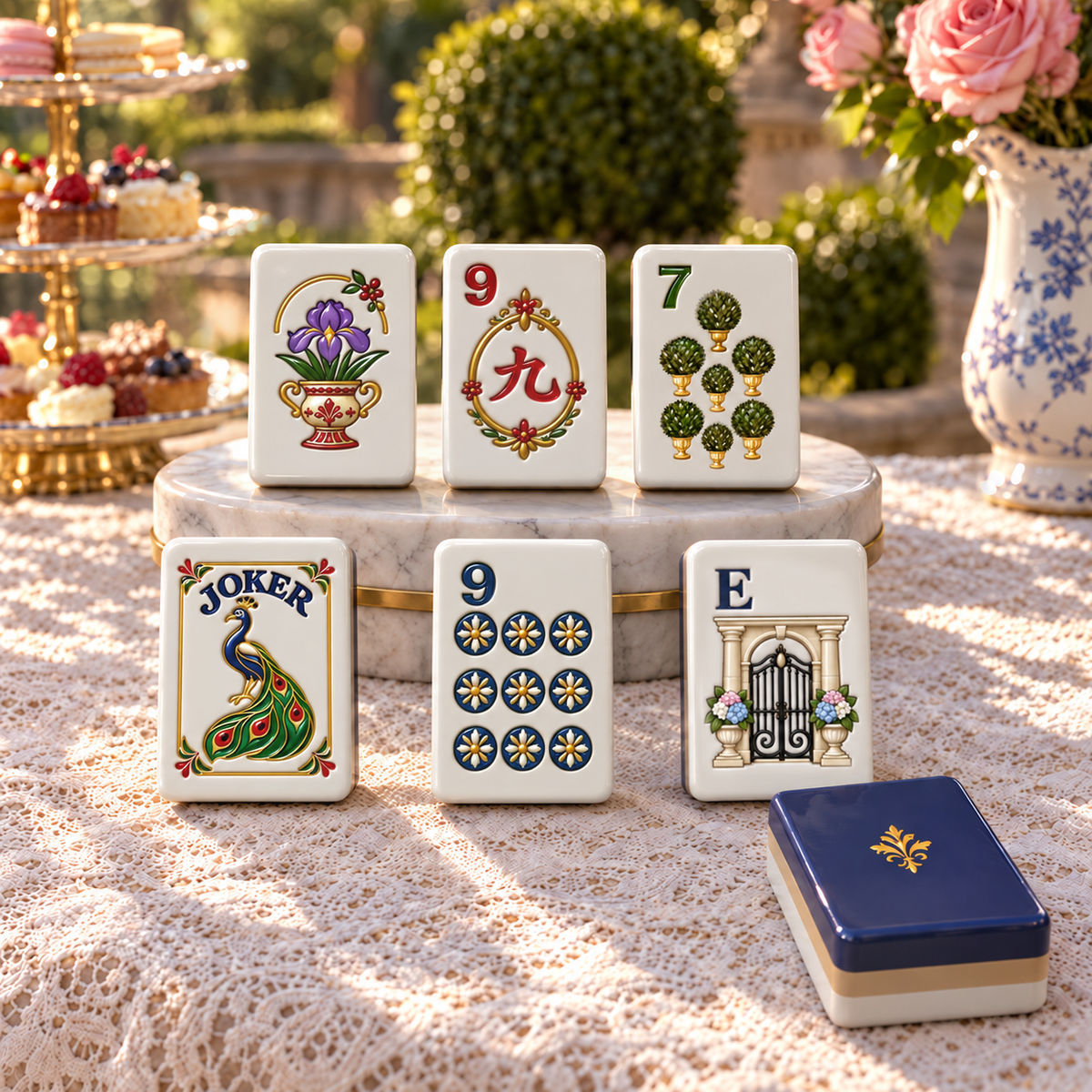
In American mahjong, you build a wall to control which tiles enter play in random order. Before each hand, all four players cooperate to arrange the full 152-tile set (plus eight jokers) into a wall—typically a long rectangle divided into four sections, one per player. You don't build it to "block" opponents; you build it so the dealer can break it at a random point (determined by dice), and players draw from that break in clockwise order. The wall ensures no player pre-selects their tiles and keeps the luck balanced. The wall-building process takes about 30 seconds after the Charleston (the tile-passing ritual). American mahjong requires this setup; Chinese and Hong Kong variants use shorter walls or a shuffled draw pile, making American play slower but fairer.
What exactly is the mahjong wall, and when do you build it?
The wall is a rectangular structure of tiles stacked two high, built face-down before play starts. You construct it after the Charleston ends and before the dealer breaks it to begin tile distribution. Each player builds their section: typically 34 pairs of tiles arranged in a line, creating one long wall around the table. The dealer then rolls two dice, adds the results, counts around the wall, and "breaks" it at that point—the break is where drawing begins. Building the wall randomizes tile distribution: since no one knows where the break will land, no player can predict their hand's contents before play starts. This is the core mechanic that prevents collusion and keeps American mahjong competitive.

How do you physically build the wall?
Start with all 152 tiles plus eight jokers face-down and shuffled. Each player takes 34 pairs (68 tiles) and stacks them in front of themselves, two high and two deep (creating a line 34 tiles long and two tiles tall). You end up with one continuous wall around the table, usually in a rough rectangle. Arrange it so the wall is stable and all players can see it clearly. The dealer then picks up two dice and rolls them. Add the results together—this determines where to break the wall. Count that many pairs around the wall starting from the right edge of the dealer's wall section, moving to the dealer's right (counterclockwise in direction, but clockwise in turn order for drawing). The pair at that count is where you make the break: this is called the "break point." Everything after this point is where players draw from, going in order. This ensures the starting hand composition is random and no one can game the system by sorting their tiles in advance.
How does the wall work after it's been broken?
Once the dealer identifies the break point and removes two tiles from just after the break to form their initial hand, play proceeds by drawing from immediately after the break point in a set sequence. The dealer draws two tiles, then the player to the dealer's left draws two tiles, then the next player draws two tiles, and finally the player to the dealer's right draws two tiles. This completes one "round" of drawing. Then the dealer draws two more, and the cycle repeats until each player has 13 tiles, and the dealer has 14 (the dealer always has one extra). After that, each player draws one tile from the wall at the top of their turn and discards one tile to the center. When someone claims a discard (or draws a tile that completes a winning hand), that hand ends. The wall dictates when tiles run low—if the wall depletes and no one has won, the game ends in a draw. This prevents hands from dragging on indefinitely.
How do walls work in other mahjong variants?
Chinese and Hong Kong mahjong use shorter, less formal walls: 34 tiles per player stacked one high, not two. After shuffling, players draw directly from their own section—there's no dealer break-point ritual. Play is faster, but it requires more trust that tiles were truly shuffled; American rules, by contrast, codify the break to eliminate any suspicion. Riichi (Japanese) mahjong uses a draw pile instead of a wall structure: tiles are arranged in a line face-down, and players draw from one end. Taiwanese mahjong also uses a shorter wall. Two- and three-player American mahjong adapts the wall by excluding one or two players and adjusting tile counts per hand—the wall principle remains, but fewer sections exist. Understanding American's wall ritual is one reason why learning how to play American mahjong requires practice with a group: the ritual is part of the social experience, and fumbling it the first time is normal and expected.
🀄 Shop best-selling mahjong sets →

Common mistakes when building the wall
Stacking the wrong height: Some beginners stack the wall one tile high or three high. American rules require exactly two tiles high—this ensures the dealer can easily see all 34 pairs and makes the break point clear. Mixing shuffled and unshuffled tiles: If you don't shuffle thoroughly before each player takes their 34 pairs, certain tile types clump together and the randomization fails. Shuffle face-down for at least 20 seconds per round. Miscount at the break: After rolling dice, many players lose count while counting pairs around the wall. Prevent this by having one player count aloud while another watches: "One, two, three…" If you lose count, stop, reset, and recount. Breaking at the wrong direction: The dealer rolls dice, counts from the right edge of their wall section, and counts toward their right (which is the player to the dealer's left). Some players count to their left by mistake, making the wall break at the opposite point. Agree on direction before the first hand: "Dealer's right, toward the player to the dealer's left." Forgetting to remove the two opening tiles: After breaking the wall, the dealer takes two tiles from just after the break point—this step is often forgotten, and new players accidentally leave those tiles in the wall. This throws off the draw sequence and causes confusion later. Mark the break clearly with a finger or a tile rack pushed up against it.
🎁 See our most-loved mahjong sets & accessories →
Comparison: Wall building across setup types
Aspect | American Mahjong | Chinese Mahjong | Riichi (Japanese) |
Wall height | Two tiles | One tile | N/A (draw pile) |
Tiles per player section | 34 pairs | 34 pairs | 34 tiles |
Randomization method | Dice break-point count | Direct section draw | Draw pile draw |
Setup time | ~30 seconds | ~20 seconds | ~15 seconds |
Shuffle required? | Yes, before wall build | Yes, before draw | Yes, before game |
Trust level needed | Low (ritualized) | Medium (relies on shuffle) | Medium (relies on shuffle) |
Competitive advantage from wall knowledge | None (break is random) | Slight (depends on which section you draw from) | None (order is shuffled) |
American mahjong's wall method is the most formally structured: the dice-driven break ensures that not even the dealer knows where tiles will come from. Chinese mahjong trusts the initial shuffle more and plays faster. Riichi eliminates the wall structure entirely in favor of a single shuffled draw pile. Each method works within its own game—choose the variant based on how much ritual you enjoy and how much time you have.
What to check before you buy
When shopping for a mahjong set to build walls regularly:
Tile count: Confirm you have exactly 152 playing tiles plus spare jokers. Sets marked "160-tile" include extras for emergencies—you use only 152 per game, so you're covered.
Tile thickness: Thicker acrylic tiles (about ⅛ inch) are easier to stack two high without tipping. Thin tiles wobble and slow wall-building.
Tile surface finish: Slightly textured tiles grip each other better than slick gloss finishes, reducing wall collapses.
Racks and pushers: A full set of four mahjong racks with pushers lets players organize their hands without building walls by hand, saving time and fatigue in longer game sessions. Pushers keep tiles aligned.
Mat: A dedicated mahjong mat with a felt or rubber surface prevents tiles from sliding when you break the wall, keeping your wall stable and your game steady.
Storage: After multiple wall builds per night, tiles can chip. A good mahjong bag or case keeps tiles protected between games.
Experienced players often invest in heavier sets and mats because wall integrity matters—a collapsed wall can end a game early or cause disputes about which tiles were drawn.
✨ Find your Mahstead set — free US shipping →

FAQ
Do you have to build the wall in American mahjong, or can you draw from a pile like Chinese mahjong?
Yes, the wall is required in American mahjong. It's part of the official rules and ensures fairness. You cannot substitute a draw pile or hand-shuffle method; the wall structure with dice-determined break point is what makes American mahjong distinct and prevents collusion.
What happens if the wall collapses or someone loses count during wall building?
Stop, acknowledge it happened, and rebuild. Reset all tiles face-down, shuffle again, and have each player rebuild their 34-pair section. It adds a minute or two, but it's faster and fairer than trying to salvage a partial wall. If you lose count at the break point, start the count over from the dealer's right edge.
Can you reuse the wall structure from the previous hand?
No. After each hand ends, you must shuffle all tiles face-down again and rebuild the wall from scratch. Reusing stacks introduces bias—tiles are never in truly random order, and eventually patterns emerge that favor certain hands or players.
How many tiles should be in the wall for a 160-tile set?
Always exactly 152 tiles (the standard game). A 160-tile set contains the 152 tiles you play with plus extra jokers and blanks for spares. You never add the spares to the wall; they stay off the table as backups if tiles are lost or damaged.
If I'm playing with fewer than four players, do I build a smaller wall?
Yes. For two- and three-player mahjong, the tile count and wall size are reduced to account for fewer players. The principle remains the same—you still build a wall and use dice to break it—but the structure is scaled down.
Is the wall building ritual the same in all American mahjong games, or can groups customize it?
The core rule (152 tiles, two high, dice-determined break) is standard across all American mahjong. Some groups use verbal counts instead of silent counting, or place a marker tile at the break point instead of using a finger. These variations are cosmetic and don't change fairness—what matters is that the break is randomized and no player sees tiles before drawing.


View More
View More
View More
