
Who Invented Mahjong: History and Origins Explained
Last updated: Nov 23, 2026
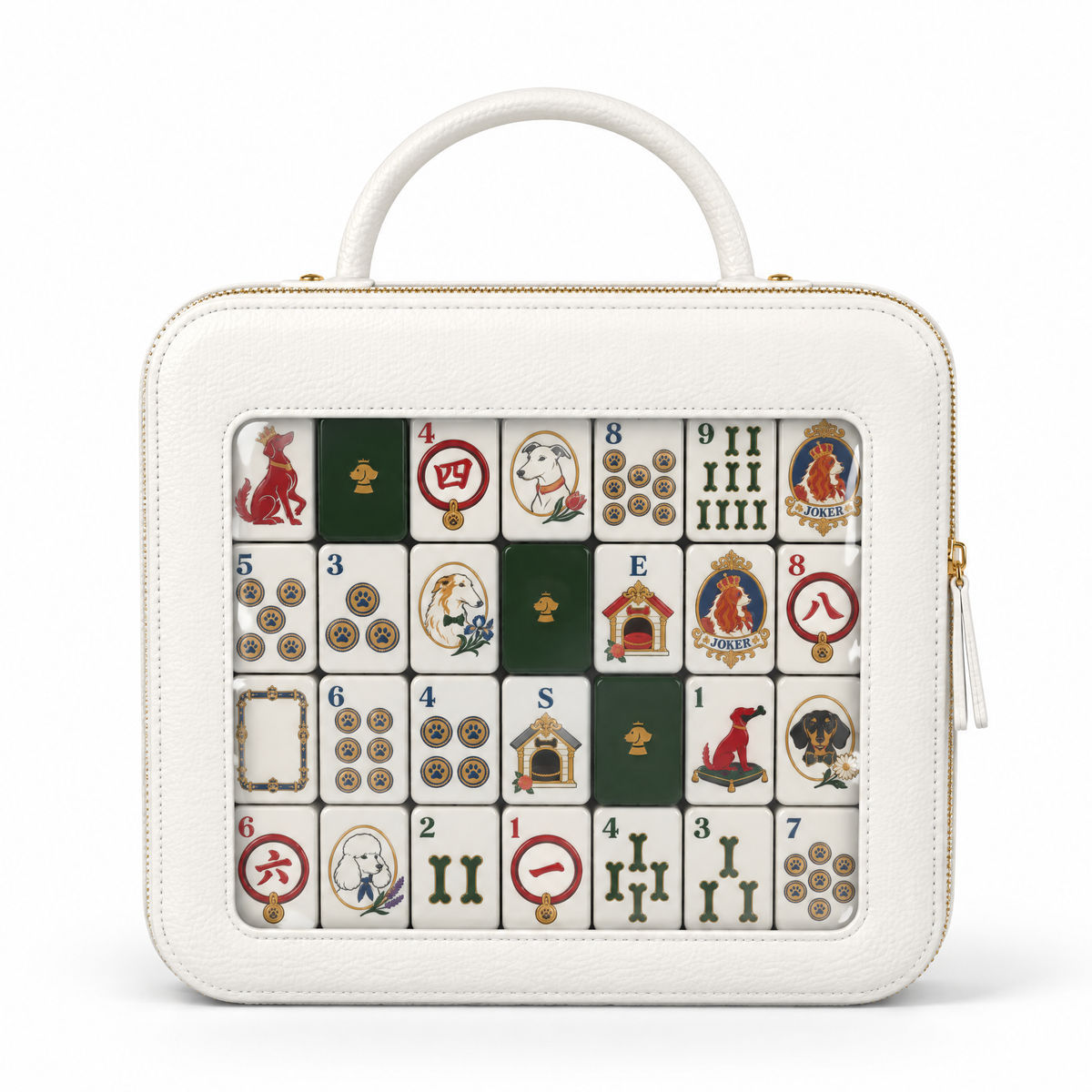
Mahjong was invented in China during the 1800s, likely between 1850–1920, evolving from card games popular among the Chinese upper classes. No single inventor is credited; instead, it emerged as a collective refinement of existing gambling games using tiles rather than paper cards. The game traveled to Shanghai, then Japan and the West via traders and immigrants in the early 1900s. By the 1920s, mahjong exploded across America as a parlor game. The National Mah Jongg League standardized American mahjong rules in 1937, creating the version we know today: 152 playing tiles (108 suited tiles, 16 winds, 12 dragons, 8 flowers, 8 jokers) played with the annual League card. Chinese and Hong Kong variants retain older tile counts and rules. Whether you play American, Chinese, or Riichi mahjong, our best-selling American sets come ready to host a game with clear tiles, sturdy racks, and free US shipping.
Mahjong has no single inventor—it was born from a 19th-century collision of Chinese card traditions, silk-trade wealth, and a desire for a tile-based game that felt fresh yet familiar. That collaborative emergence is part of mahjong's enduring charm: no patent, no founder's name, just a game that took root wherever it landed and adapted to local tastes.
Where did mahjong actually come from?
Mahjong originated in China during the 1800s, most likely in the mid-Yangtze River region. Historians point to existing Chinese card games (especially one called Donkey or Madiao) as the spiritual ancestors—games that relied on melds, discards, and luck. Rather than reinvent from scratch, enthusiasts reimagined these games using tiles, which were easier to handle, less fragile, and arguably more elegant. The tiles themselves drew from dominoes and Chinese numeral systems already centuries old. By the late 1800s, mahjong had settled into recognizable form among wealthy merchant families in Shanghai and nearby cities.

How did mahjong reach the West?
Mahjong arrived in America chiefly through three routes: Chinese immigrant communities (especially in California), Western traders returning from China with tiles and rule books, and wealthy Americans who encountered the game during visits to Shanghai. The 1920s saw an explosive fad. Department stores stocked mahjong sets; newspapers ran how-to columns; mahjong clubs opened in living rooms and country clubs across New York, Los Angeles, and Dallas. The craze was so intense that tile manufacturers couldn't keep up with demand. By 1930, interest had peaked, then settled into a steady base of serious players—a pattern that continues today. Understanding this social history explains why American mahjong remains distinct: American players adopted, standardized, and cherished the game in a way that shaped its own ruleset.
🀄 Shop best-selling mahjong sets →
What's the difference between Chinese and American mahjong?
Chinese mahjong (and its variants—Hong Kong, Taiwanese, Riichi) evolved in China and kept closer to older rulesets. Chinese sets typically contain 144 tiles (no flowers or jokers); the game uses open melds (chows—sequences like 1-2-3—can be called), and scoring is based on point multipliers rather than a fixed hand card. American mahjong, standardized by the National Mah Jongg League in 1937, uses 152 tiles (including 8 flowers and 8 jokers), forbids chows, and requires all hands to match the annual League card. That card changes every spring, forcing American players to learn new combinations yearly. Jokers in American mahjong are wild tiles that can substitute for any tile in a meld, but never stand alone or form a pair. The rigid hand structure makes American mahjong more tactical: you're solving a puzzle each round rather than building freely. Both are equally valid and deeply rewarding; the choice depends on your table's preference.
Why did American mahjong become so different?
When mahjong arrived in the 1920s West, American players faced a problem: the original Chinese rules were complex, varied wildly by region, and seemed to favor intuition over system. American players—many of whom were educated, competitive, and accustomed to bridge (a game with standardized bidding and scoring)—wanted clarity, fairness, and a level playing field. The National Mah Jongg League, founded to settle disputes and promote the game, published the first standardized American rulebook in 1937 and introduced the hand card—a printed reference of all legal winning combinations for that season. This was revolutionary. Suddenly, every table played the same game. Luck still mattered, but skill and memory became paramount. The hand card also meant the game could never stagnate: a new card every year kept it fresh for returning players. This deliberate standardization is why American mahjong feels structured compared to Chinese variants, and it's also why learning to read the annual card is essential for new American players.

How has mahjong evolved since its invention?
Mahjong has fractured into distinct regional traditions, each with its own tile count, melds, and scoring. Chinese mahjong remains the closest to the 19th-century original and is played in mainland China, Taiwan, and Hong Kong with slight rule differences. Japanese Riichi mahjong emphasizes speed and psychological play. American mahjong, as noted, prioritizes the hand card and the annual refresh. In recent decades, mahjong has experienced a cultural renaissance, especially in the West. Younger players (many inspired by the 2018 film Crazy Rich Asians) have embraced the game, leading to new tournaments, online platforms, and a flood of artfully designed sets. The core mechanic—collecting like tiles into melds, reading your opponents, adapting to luck—has remained unchanged for over 150 years. What has changed is accessibility: tiles are now manufactured in acrylic and available with custom engravings, mats are designed for travel, and racks with pushers make the game ergonomic and fast. We've seen tile quality and design sophistication leap forward, especially with engraved sets that celebrate titles, names, or inside jokes among your group.
🎁 See our most-loved mahjong sets & accessories →
A quick comparison: How the major mahjong variants differ
Aspect | Chinese | Hong Kong | Japanese (Riichi) | American |
Tile count | 144 | 144–152 | 136 | 152 |
Flowers included | No | Sometimes | No | Yes (8) |
Jokers/Wild tiles | No | Sometimes | No | Yes (8, required) |
Melds allowed | Chows + pungs + kongs | Chows + pungs + kongs | Chows + pungs + kongs | Pungs, kongs, quints, sextets only—no chows |
Hand structure | Build freely | Build freely | Build freely | Must match printed annual hand card |
Scoring | Point multipliers (1x–8x+) | Point multipliers | Point multipliers | Fixed points per hand, no multipliers |
Turn speed | Slow to moderate | Moderate | Very fast (time pressure) | Moderate |
Learning curve | Moderate | Moderate | Steep (rules dense) | Steep at first, then intuitive |
Best for | Social, long games | Social, flexible play | Competitive, speed | Competitive, puzzle-solving |
The table shows why a beginner should pick one variant and stick with it for a full season. Switching mid-year is confusing and defeats the purpose of mastering the hand card or ruleset.
What to check before you buy a set to learn mahjong
Decide your variant first. American mahjong requires the current year's National Mah Jongg League card (issued every spring). If you're in a group, ask what they play—don't guess.
Confirm tile count and composition. American sets must have exactly 152 playing tiles. Some older or import sets have 144 (Chinese) or 136 (Riichi). Wrong count = frustration.
Check for clarity and size. Tiles should be thick enough not to bend, and characters legible from arm's length. Acrylic tiles are durable and easy to clean; bamboo and bone are traditional but fragile.
Test the rack fit. Racks come in standard and compact sizes. If you have small hands or a crowded table, a compact rack with pushers saves space and reduces tile shuffling accidents.
Ensure you have all eight jokers. American mahjong cannot be played without them. Some budget sets skimp here; verify the joker count before purchase.
Ask about spares. A 160-tile set includes spare jokers or blank tiles beyond the 152 in play, useful for losses or practice.
✨ Find your Mahstead set — free US shipping →
What you'll need to host your first American mahjong game
If you're starting from scratch, a complete best-selling set includes tiles, racks, and often a bag. Add: the current year's National Mah Jongg League hand card (order from the League or download from their website), a mat to protect your table, and a scoring sheet. If your group is five or more, you'll rotate who sits out each round. If you're serious, a padded travel bag or case makes setup and takedown painless, especially if you host weekly. For a group gift or commemorative set, personalized engraved sets with your group name or year create a keepsake and a conversation starter at every game.

FAQ
Did one person invent mahjong?
No. Mahjong emerged gradually in 19th-century China from existing card games, refined by many players and merchants over decades. No single inventor is credited—it evolved collectively, much like chess or bridge.
Is mahjong Chinese or American?
Both. Mahjong originated in China; the American variant (standardized by the National Mah Jongg League in 1937) adapted Chinese rules for Western players by introducing the hand card and forbidding sequences. Each is authentic to its culture.
Can I play Chinese mahjong with an American set?
Not easily. American sets have 152 tiles with flowers and jokers; Chinese sets typically have 144 without. The tile counts and melds don't align. Use the right set for your variant.
When was the hand card introduced in American mahjong?
The National Mah Jongg League printed the first standardized hand card in 1937 and has issued a new one every spring since. It's the backbone of American play.
What year should I use for my first American mahjong game?
The most recent year's card, issued each spring. Old cards are not valid in League play and can confuse new players. Check the League website for the current card.
Why do American mahjong sets have eight jokers?
Jokers are wild tiles essential to American mahjong strategy. The game cannot be played fairly without all eight. They substitute for any tile in a meld but never stand alone.


View More
View More
View More
