
Where to Play Mahjong in Virginia Beach: Clubs, Groups & Getting Started
Last updated: Nov 23, 2026
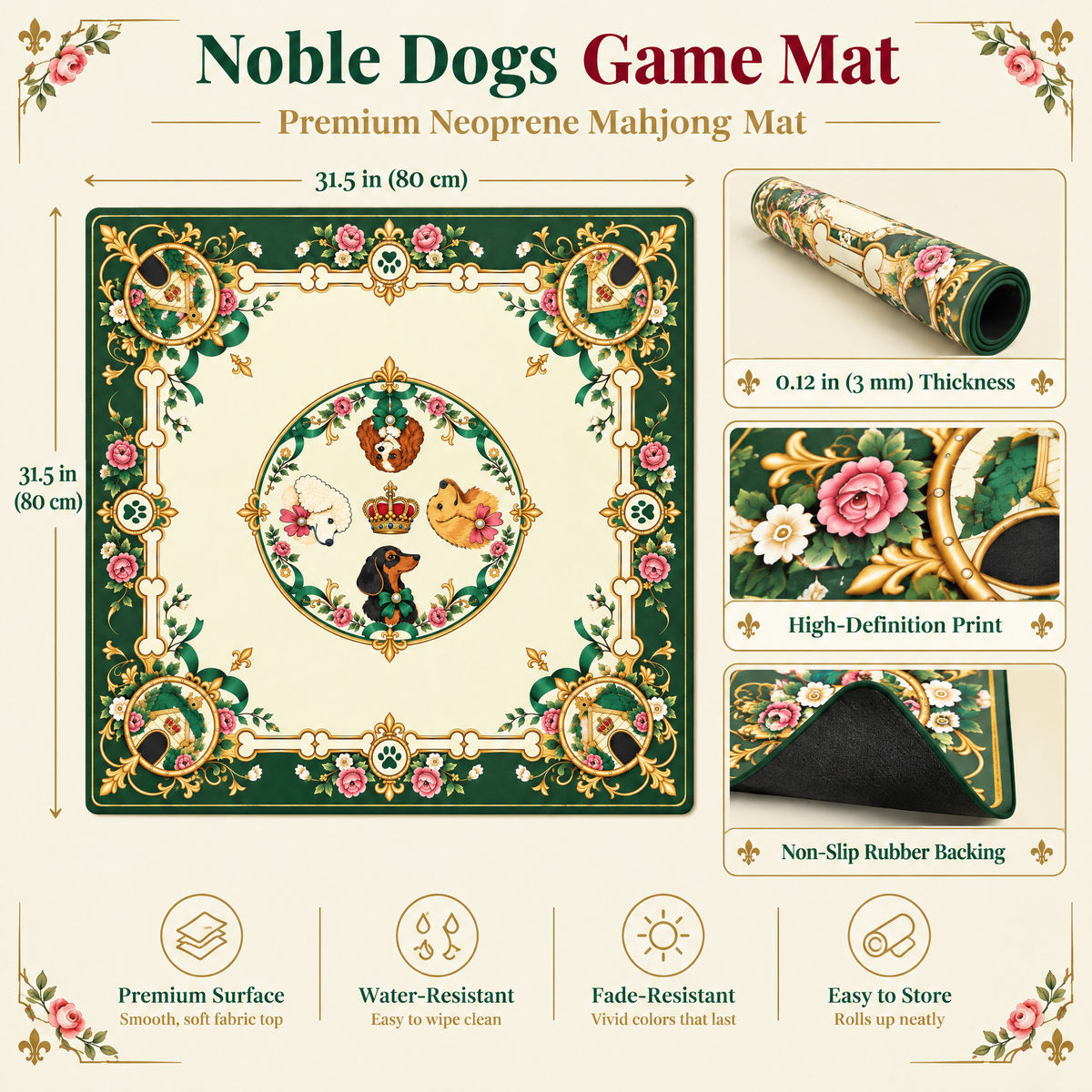
Virginia Beach players find games through community centers (check your local Parks & Recreation department and branch libraries), senior centers, and informal meetup groups posted on social platforms and Nextdoor. Games range from casual Saturday afternoon sessions to structured league play; most welcome beginners to intermediate players. A typical American mahjong game takes 1–2 hours per round and uses a 160-tile set with mats, racks, and pushers. Starting your own group requires one best-selling mahjong set, a mat, and understanding the mahjong for beginners rules. Cost depends on set quality; expect to invest in one reliable set and learn the annual card before joining established games.
Virginia Beach's mahjong community spans retirees, working professionals, and newcomers drawn to the game's blend of strategy, luck, and social connection. Whether you're hunting an existing group or ready to host your own weekly game, the path forward depends on your comfort level, schedule, and whether you want to travel or play locally. Here's how to navigate the scene and set yourself up to actually play—not just buy equipment and wonder what comes next.
Where do most Virginia Beach players gather?
Community centers and senior recreation programs remain the backbone of casual mahjong in the Hampton Roads region. Contact your local Parks & Recreation office (neighborhoods like Oceanfront, Downtown, Great Neck, and Kempsville each have satellite centers) and ask about drop-in games or registered groups. Library branch programs—especially the main downtown location—often host or maintain bulletin boards listing regular meetups. Many groups meet monthly or weekly with no membership fee; bring your own set or share a house set.

What about synagogues and country clubs?
Synagogues in the Virginia Beach area historically support mahjong through ladies' groups and interfaith game nights. Country clubs (both public-play and private) occasionally host tournaments or casual Thursday games; call your club's social committee or events coordinator directly. These venues vary wildly in openness to newcomers; some welcome walk-ins, others operate closed groups. Phone first—don't assume a club has an open table.
How do I find informal games on Nextdoor or meetup sites?
Search Nextdoor for "mahjong Virginia Beach" and filter by "activities" or "games." Meetup.com sometimes lists regional mahjong groups; Facebook groups (search "mahjong Hampton Roads" or "mahjong Virginia") are often more active than the platform admits. Post a query: "Looking for a beginner mahjong game in VB—experienced players, 2–3 hours, Tuesday or Saturday?" Expect responses within days. Vetting is on you—ask about house rules, speed of play, and whether they use an annual National Mah Jongg League card (non-negotiable for American mahjong).
Should I start my own group if I can't find a game?
Yes. Most thriving groups began with one player texting four friends. You'll need one reliable 160-tile American mahjong set, a mat (to protect your table and keep tiles from sliding), racks with pushers (so tiles don't scatter mid-hand), and the current year's official card. A mahjong mat creates a neutral playing surface; racks let everyone see their tiles clearly and play faster. Host a Saturday afternoon (2–4 p.m. is standard) or a weeknight; consistency matters more than frequency. Start with two experienced players and two beginners, or four newcomers with one teaching. Learn the basics first so you can explain the Charleston, the card, and what makes a legal hand.

What equipment do I actually need to start?
Item | Why it matters | Who needs it |
160-tile American mahjong set | Holds all tiles for one complete game; 8 jokers allow flexibility in hand building | Host or regular player |
Mahjong mat | Protects table, keeps tiles from sliding, creates designated play area | Everyone (especially if playing on unpadded surfaces) |
Racks with pushers | Holds your 13 tiles upright; pushers help move tiles without knocking them over | Optional but highly recommended for comfort |
Current year's card | Defines legal hands for American mahjong; changes annually each spring | Essential—you cannot play without it |
Dice (pair) | Determines East, seating, and initial tile draw; standard accessory in all sets | Included with most quality sets |
If you're hosting weekly, invest in a solid set with clean printing (tiles should be legible after 50 games), a cushioned mat, and sturdy pushers; our best-selling collection balances durability and value. If you travel to games, a compact travel bag or case keeps everything safe and portable.
🀄 Shop best-selling mahjong sets →
What mistakes do Virginia Beach hosts make?
Forgetting the annual card. Every spring, the National Mah Jongg League issues a new card defining that year's legal hands. Old cards are worthless. Hosts who skip this step waste everyone's time—hands no one can call don't exist. Download or print the current card before your first game and post it at the table.
Playing with incomplete or mixed sets. A 160-tile set contains exactly 152 playing tiles plus spares. If you've borrowed a set from someone, verify it's complete: 108 tiles in three suits (Bams, Craks, Dots: numbers 1–9, four of each), 16 winds, 12 dragons, 8 flowers, 8 jokers. Missing even two tiles breaks the game.
Not explaining the Charleston. The Charleston—passing tiles before play begins—confuses beginners but is non-negotiable in American mahjong. Spend five minutes walking through the exchange: each player passes right, then left, then across, then optional pass-backs. Write down the sequence on a notecard.
Mixing house rules with league rules. Some groups adopt local variations (joker limits, special bonuses). That's fine—decide upfront and write them down. Ambiguity mid-game kills the mood.
Choosing a mat carelessly. Not all mats suit all tables. A thin fabric mat slides on glass or varnished wood; a neoprene or rubber-backed mat grips better. Check our guide on how to choose a mahjong mat to match your table surface.
🎁 See our most-loved mahjong sets & accessories →
What to check before you buy or join a game
Verify the group uses the current year's card. Ask directly in your first message; if they're vague, move on.
Ask the speed of play. Do they rush through discards, or take time to study the card? Pace matters for enjoyment.
Confirm house rules in advance. Some groups allow flexible joker use; others are strict. Know before you sit down.
Check if you need to bring a set or if one is provided. Don't assume.
Test your set at home first. Shuffle the tiles, build a rack, verify nothing sticks or cracks under normal use. A 160-tile set from a maker who hand-checks quality saves regret later.
Bring a notepad and pen. Tracking scores and house rules in writing prevents disputes.
Starting a game or joining one in Virginia Beach requires more intention than it did a decade ago, but the reward—a weekly ritual with friends, strategy, and conversation—is irreplaceable. The barrier is low: one set, one mat, one evening, and one person brave enough to say "Let's try this."
✨ Find your Mahstead set — free US shipping →

FAQ
Can I play American mahjong with a Chinese or Hong Kong set?
No. Chinese and Hong Kong mahjong use different tiles, hand compositions, and rules. American mahjong requires a 160-tile set with Bams, Craks, Dots, winds, dragons, flowers, and jokers specific to American play.
Do all Virginia Beach groups use the same house rules?
No. Some groups are strict National Mah Jongg League rule-followers; others adopt local variations on joker limits, bonus hands, or scoring. Always ask which version the group plays before joining.
What's the minimum number of players for a game?
Standard American mahjong needs four players. Some groups play 2 or 3 player variants on special occasions, but four is the baseline.
How long does a beginner need to study before joining a game?
Most newcomers are ready after one or two practice rounds at home (1–2 hours) plus watching a teaching video. Understanding the Charleston, reading the card, and knowing what counts as a legal hand is enough; strategy deepens over weeks.
Should I buy an expensive set or a budget set to start?
Buy a mid-range 160-tile set with secure tile printing and clear numbers. A very cheap set will frustrate you with unreadable tiles or pieces that warp; an ultra-premium set makes sense only if you host 40+ games a year.


View More
View More
View More
