
Where to Buy a Mahjong Travel Bag: A Buyer's Guide
Last updated: Nov 23, 2026
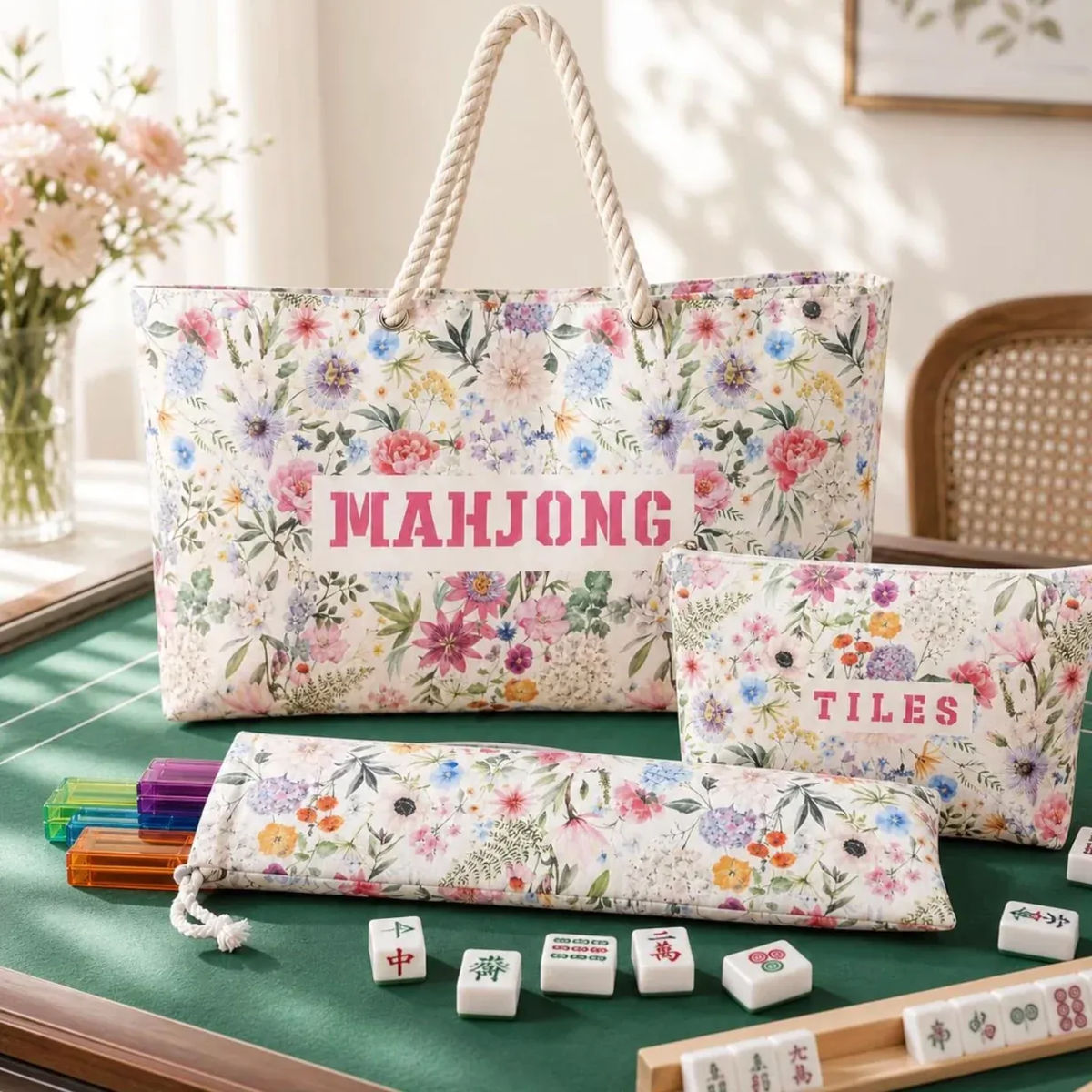
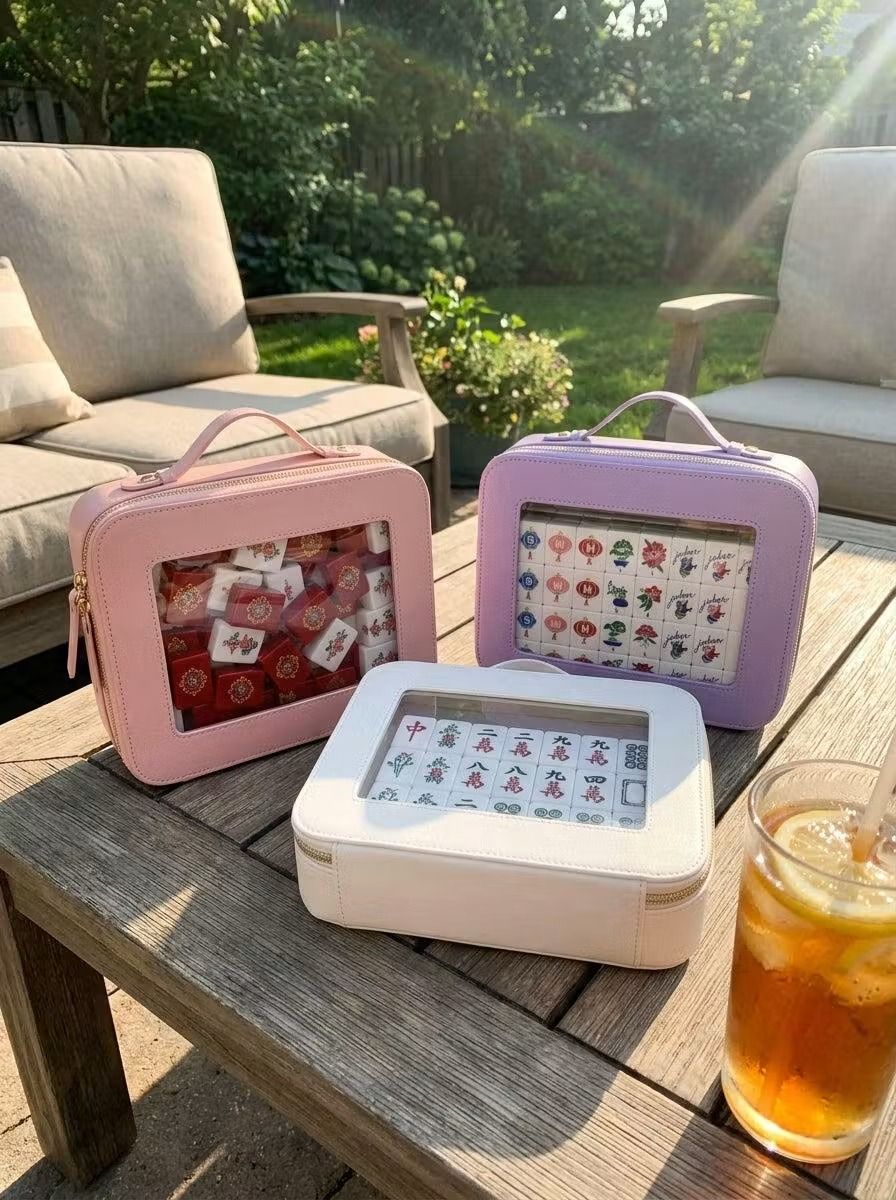
A mahjong travel bag is a protective carrying case designed to hold a full American mahjong set (152 playing tiles plus 8 jokers, or a 160-tile set with spares), racks, pushers, and often the current year's card. Most bags accommodate sets with acrylic tiles and can hold additional accessories like dice or a mat. You can buy them directly from specialty mahjong retailers like Mahstead, which ships across the US with no shipping charge. Quality travel bags range in style from padded soft-sided totes to hard-shell cases; the right choice depends on how often you travel, whether you want a bag that doubles as a host gift, and how much protection your tiles need. Before ordering, confirm internal dimensions match your set's footprint, check that compartments fit racks with pushers, and verify the bag's weight if you'll carry it frequently.
What size and shape do you actually need?
Most American mahjong sets fit in a footprint roughly 10–12 inches long and 5–7 inches wide when tiles are stacked. A travel bag must have an internal cavity at least that deep, plus room for racks and the season's National Mah Jongg League card. Soft-sided bags typically compress slightly, letting you fit a full set plus accessories in about 14 × 8 × 6 inches of usable space. Hard cases demand more precision—measure your acrylic set's box first, or contact the retailer with your tile material to confirm fit before ordering.
🀄 Shop best-selling mahjong sets →

Soft-sided tote vs. hard-shell case—which travel style is right for you?
Travel bag type | Best for | Protection level | Carry comfort | Why choose it ---|---|---|---|--- Soft-sided padded tote | Weekly local games, casual travel | Moderate; protects from dust and light impacts | Lightweight; shoulder strap options | Easy to pack in a car; fits awkward spaces; doubles as a game-day accessory Hard-shell case | Flights, road trips, frequent travel | High; rigid frame resists crushing, impacts | Heavier; handle or rolling options | Maximum tile security; stacks in luggage; professional look; lasts years Insulated or rigid-foam tote | Protecting vintage or precious sets | Very high; foam absorbs shock | Medium weight; often wheeled | Ideal if your set is a gift or heirloom; overkill for casual play
Soft-sided bags suit players who host weekly games locally and toss the bag in a car; they're compact and weigh little. Hard-shell cases protect tiles during air travel and stacking in vehicle trunks, but they're bulkier at home. Choose the soft-sided option if convenience trumps protection; pick hard-shell if your set is expensive or you travel often.
What features should you compare before ordering?
Check these details on the product page or by contacting the retailer:
Internal compartments: Do separate pockets hold racks, pushers, dice, and the card? Loose tiles shifting during transit risk cracked acrylic.
Tile cavity depth: Measure your set's stacked height and add ½ inch; confirm the bag matches or exceeds that.
Material: Padded nylon resists water better than canvas; vinyl zippers last longer than plastic ones on travel bags used weekly.
Carry handles or straps: Soft bags should have reinforced handles; hard cases benefit from wheels or a retractable handle if you'll toss them in overhead luggage.
Exterior pockets: Handy for a pen, notepad, or spare jokers during travel; not essential but useful.
Weight: Soft bags typically weigh 1–2 pounds empty; hard cases 3–5 pounds. If you carry it to every game, that matters.
🎁 See our most-loved mahjong sets & accessories →

How do you know if a bag will fit YOUR set?
This is the most common mistake: ordering a travel bag without confirming it fits your specific tiles. Here's how to avoid it:
Measure your current set's box (length × width × height in inches).
Note your tile material: Acrylic tiles are standard; bamboo or bone sets may be wider. Ask the bag seller if unsure.
Ask the retailer directly if you're ordering from a new vendor: "Does this bag fit a 160-tile acrylic American mahjong set?" Include approximate set dimensions if you have them.
Request internal compartment photos if the listing doesn't show them; you need to see where racks and pushers go.
Check return policy: Reputable retailers allow returns or exchanges within 30 days if the fit is wrong—this protects you.
For engraved acrylic mahjong sets with custom artwork or personalized designs, the footprint is identical to standard acrylic sets, so any bag rated for American mahjong should work. If you've never owned a set or are buying one for the first time, order a best-selling set with your bag, or ask the retailer to confirm they ship together.
Where to buy: online retailers and what to expect
Most mahjong travel bags come from specialty shops that understand American mahjong standards. Mahstead, a Dallas-based retailer, designs acrylic sets and matching travel bags with free US shipping, so you can order a set and bag together knowing they'll fit. Other specialty mahjong shops often carry travel cases too; look for vendors that describe internal dimensions, show compartment photos, and accept returns.
General sporting goods retailers sometimes stock mahjong bags, but their sizing may be vague. Avoid ordering from sellers who don't specify "American mahjong" or won't confirm fit before checkout.
What to check before you buy:
Does the seller guarantee the bag fits a 160-tile American mahjong set?
Are internal dimensions listed in inches or centimeters?
Will they accept a return if it doesn't fit your tiles?
Is shipping cost waived, or is it a flat fee?
Do they include care instructions (for soft bags, spot-clean nylon; for hard cases, wipe with a damp cloth)?
✨ Find your Mahstead set — free US shipping →
Why pairing your bag with the right set matters
When you buy a travel bag, think about what you're protecting. If you're buying your first set, pair it with a bag designed for the same format: American mahjong (152 tiles + 8 jokers, always). Avoid bags labeled "universal" or "multi-game"—they often don't fit the American set's standard depth. If you already own a set, take its box dimensions to the shop before ordering a bag. For mahjong mats or racks with pushers, confirm the bag has room for both the set and one additional item; most soft-sided totes can hold a rolled mat plus racks, but hard cases may need extra space.
If you're buying a travel bag as a gift for a player who already has a set, ask them (or someone who knows their collection) what they own before ordering—a bag that doesn't fit is a frustration, not a surprise.
🀄 Shop best-selling mahjong sets →
FAQ
Can I fit a mahjong mat inside a travel bag along with my tiles and racks?
Most soft-sided padded totes can hold a rolled mat, tiles, and racks together. Hard-shell cases have fixed cavities designed for tiles and racks only; a mat rolls more easily in a separate sleeve or flat against the case exterior. Confirm compartment layout on the product page before ordering.
What's the difference between a mahjong travel bag and a regular small luggage bag?
Mahjong travel bags have internal padding and compartments sized for tile sets, racks, and pushers—they keep tiles from shifting and cracking. Generic luggage bags lack these features and tile stacks may slide during travel. Always buy a bag marketed for mahjong to guarantee fit and protection.
Do I need a hard-shell case if I only play at home and occasionally host at a friend's house?
No. A soft-sided padded tote is plenty for weekly local transport. Hard cases are worth the cost only if you fly with your set, throw it in car trunks regularly, or store a vintage or high-value collection.
How do I clean and store a mahjong travel bag between games?
Soft bags: wipe the exterior with a damp cloth monthly; spot-clean stains with mild soap on a small cloth, then air-dry. Hard cases: wipe the exterior and interior with a slightly damp cloth, dry completely, and store in a cool, dry closet. Never store a damp bag—mold can damage tiles and zippers.
Can I buy a travel bag without a mahjong set, or do I have to order them together?
You can buy a travel bag alone if you already own a set. If you're new to mahjong, order a set and bag together so the retailer can confirm the fit before shipping. Many shops sell both separately.
What if the bag I order doesn't fit my set?
Check the seller's return or exchange policy—most allow 30-day returns if the fit is wrong. Contact the retailer with photos of your set in the bag, and request a replacement or refund. Always order from vendors that accept returns.


View More
View More
View More
