
When to Choose Year Hands in American Mahjong
Last updated: Nov 23, 2026
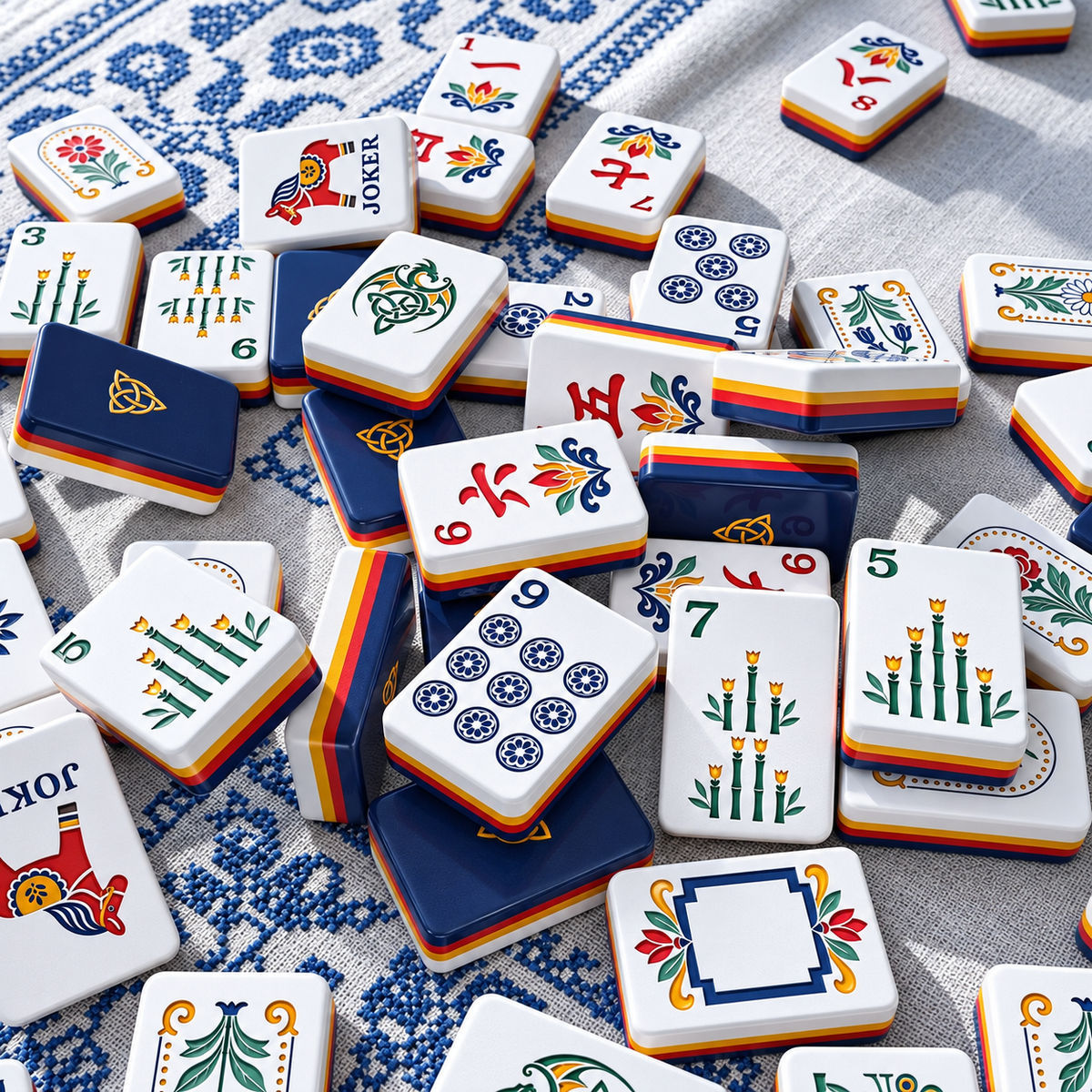
Year hands are hands printed on the current year's National Mah Jongg League card that include a year designation in their pattern notation. You choose a year hand when the tiles you've drawn and received during the Charleston directly match one of those patterns, giving you a clear, defined target. The decision rests on three factors: whether the hand is achievable with your current tile inventory, whether you can complete it before other players win, and whether the scoring justifies the effort versus switching to a backup hand. American mahjong requires you to play only hands from the active card—there are no off-card hands—so you'll always be choosing from available year patterns. The timing depends on the draws; if your opening hand and Charleston don't align with any year hand, you pivot to another hand type on the card immediately. We recommend reading the card closely to spot your options before discarding begins, and keeping best-selling mahjong sets on your table so tile faces are clear and you never miss a pattern match. 🀄 Shop best-selling mahjong sets →
What exactly is a "year hand" on the card?
Year hands are hands that carry a year number in their pattern label, distinguishing them from hands labeled by suit, number, or other markers. On the current card, you'll see hands organized into rows and columns; year hands typically appear in dedicated sections. They're identified in notation by a year prefix—for example, a hand might be labeled "2026-X" or use the year as part of its pattern code. The National Mah Jongg League card changes every spring, so the year hands available shift annually; what counted as a year hand in 2025 won't appear on the 2026 card. The practical difference is that year hands often contain specific numeric or suit requirements that make them easier to memorize and spot during live play.

How do you know if a year hand is right for your draw?
Check your tiles against the card's year hand section immediately after the Charleston ends. Write down every hand you could theoretically complete with your current 14 tiles, accounting for the jokers you hold. Year hands, like all hands in American mahjong, require exposed melds (pungs, kongs, or higher) plus a pair; you cannot build a hand with concealed sequences. If you have, for instance, three matching tiles (a pung), two jokers, and a pair, scan year hands for patterns that use exactly those components. If no year hand matches, move to other hand categories on the card and pick your best option. The rule of thumb: only pursue a year hand if you can name the exact tiles you need to draw and reasonably expect them within the next few turns.
When should you abandon a year hand and switch?
Abandon a year hand if another player is close to winning or if you haven't seen the tiles you need after four or five turns of play. American mahjong is fast; hesitation costs you the game. Watch the discard pile for clues about what's available. If someone else is collecting the same suit or you see all four copies of a critical tile already discarded, your year hand is dead—switch immediately. A year hand is also worth dropping if a different hand type on the card becomes suddenly possible through lucky draws. We've seen players cling to year hands hoping for a miracle while easier hands slip away; the game rewards flexibility. Keep a clear mat and racks with pushers so you can rearrange and re-evaluate your options in real time without losing track.
🎁 See our most-loved mahjong sets & accessories →
What's the difference between year hands and other hand types?
Hand Type | How It's Named | Difficulty | When to Play It |
Year hand | By year (e.g., "2026-A") | Moderate | When drawn tiles match exactly |
Consecutive run | By number sequence (1-2-3, etc.) | Moderate | When you collect a full numeric sequence |
Suit-heavy | By suit name (Bam, Crak, Dot) | High | When suited tiles dominate your draw |
Dragon/Wind hand | By dragon or wind tile focus | Moderate | When honors accumulate naturally |
Joker-heavy | Explicitly labeled on card | High | When you need multiple jokers to complete |
Year hands are neither easier nor harder than other categories; they just have a different organizational logic. Some players find year hands memorable because the year label anchors the pattern in memory. Others prefer suit-heavy hands because suits feel more intuitive. The scoring and difficulty depend on the specific tiles involved, not the hand's label. Choose the hand type based on your actual draw, not preference.

How do you read the year hand section of the card?
Learn how to read the card by finding the year hand section (usually printed on a distinct portion of the card). Each year hand is listed with a notation showing tile requirements: numbers, suits, joker slots, and pair designation. For example, a pattern might show "3 Bam, 3 Crak, 3 Dot pung + Joker + Joker + pair of Red Dragons." Read left to right, row by row. Cross-reference your hand against the notation; if your tiles match the pattern exactly, you have a valid year hand. If they don't match, move to the next option. Many players print or laminate a current card to keep at the table; some use digital versions. The key is legibility—you must see tile faces clearly to avoid costly errors. Our engraved tile sets use large, bold characters so you'll never misread a tile face or a card line during play.
Should you plan your year hand before the Charleston or adapt after?
Plan loosely before; adapt decisively after. Before the Charleston, scan the card and note 2–3 year hands that appeal to you based on your opening hand. This gives you a target direction during tile exchanges. However, the Charleston will often deliver something unexpected, so don't lock into a choice. After the Charleston ends, re-evaluate completely. Your opening hand plus Charleston tiles may point to an entirely different year hand—or no year hand at all. The players who win consistently are those who assess the board fresh after the Charleston, not those who cling to pre-game predictions. Keep your card visible and your options fluid. American mahjong rewards adaptability; rigid strategies lose.
What to Check Before You Buy Tiles for Year Hand Practice
Tile legibility: Ensure characters are large enough to read without straining during active play.
Set completeness: Confirm you have all 152 playing tiles plus jokers; incomplete sets make practice unreliable.
Card currency: Verify you're using the current year's National Mah Jongg League card; last year's card patterns won't match this year's hands.
Mat setup: Use a play mat so tiles stay organized and you can spot patterns quickly without confusion.
Organized storage: Keep your set in a bag or case between sessions; bent or lost tiles corrupt every future game.
✨ Find your Mahstead set — free US shipping →
Why Year Hands Matter for Game Strategy
Year hands are one path to victory; they're not mandatory but they're efficient if circumstances align. Many experienced players treat year hands as a first-line option because they're defined and memorable. Newer players often overlook year hands on the card, scanning instead for suit-heavy or dragon patterns they recognize. Learning to spot year hands early gives you more options at the table. It also trains your eye to scan the full card systematically, improving your overall card-reading speed. We recommend building this skill in low-pressure home games before playing in clubs or tournaments. The repetition—playing with the same set, the same current card, the same group—cements the patterns in memory. Year hands then become intuitive, not a deliberate choice but an instinctive spot.

FAQ
Can you play a year hand that uses all jokers?
No. In American mahjong, jokers cannot form a single tile, a pair, or complete a pung/kong on their own. They fill gaps in existing melds or replace specific tiles within a pattern. A year hand using jokers must also use real tiles; jokers are supplements, never the foundation.
What if two players are both pursuing the same year hand?
Speed determines the winner. Whoever completes and declares the hand first wins the game. Both players are watching the same discard pile, so if the tiles you need are discarded, your hand dies and you shift strategy. This dynamic encourages quick decision-making and flexibility.
How many year hands are typically on the current card?
The quantity varies by year. The National Mah Jongg League card is printed fresh each spring with updated patterns. We recommend counting the year hand section on your current card rather than relying on a fixed number that may change.
Is a year hand always worth pursuing if you can start it?
Not necessarily. If the hand requires 8+ tiles and you only hold 3 of them, your odds of drawing the rest before another player wins are low. Pursue year hands only if you can reasonably complete them within 3–5 turns, or if no other hand on the card is available.
How do year hands compare to winning speed in practice?
Easier, more-complete year hands often win faster than complex suit-heavy hands because fewer tile combinations are needed. A streamlined year hand with clear pungs and a defined pair is faster to complete than hunting for obscure numeric runs across three suits.


View More
View More
View More
