
When to Choose 369 Hands in Mahjong: Strategy & Timing
Last updated: Nov 23, 2026
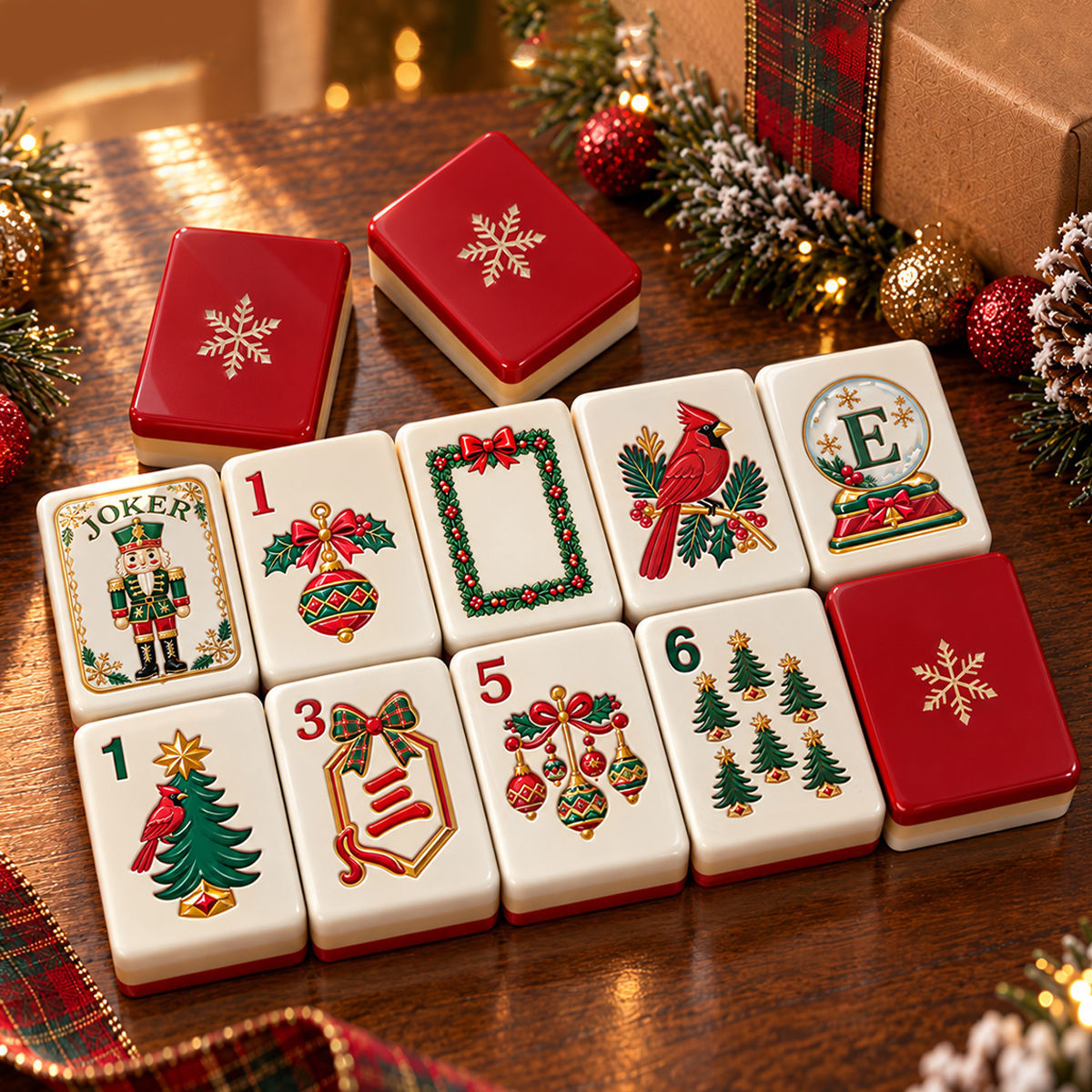
A 369 hand in American mahjong consists of three identical tiles and sequences—or groups of tiles—spaced three numbers apart within a single suit: 1-4-7, 2-5-8, 3-6-9. You build them by collecting tiles from the wall, picking up the live tile after each player's discard, and using jokers to substitute missing tiles. A single game lasts 10–15 minutes; winning hands come exclusively from the current year's National Mah Jongg League card. 369 hands appear frequently on the card because they're mathematically elegant and balance luck with strategy. Choose a 369 when you draw a strong start (two or three tiles already in hand), your hand develops consistently over the first three rounds, or you notice opponents discarding tiles you need—signals the pattern is waiting for you. Avoid forcing a 369 if you hold only one tile from it by round two; pivot to a different hand instead. Mahstead's best-selling mahjong sets include high-contrast engraved tiles that make 369 patterns instantly legible during fast play. 🀄 Shop best-selling mahjong sets →
Why 369 Hands Appear So Often on the Card
The National Mah Jongg League card includes far more 369 patterns than any other spacing because they live in the mathematical middle of each suit. Since every suit runs 1–9, sequences spaced three apart (1-4-7, 2-5-8, 3-6-9) avoid clustering and ensure every row of three occupies distinct positions. This design makes 369 hands statistically likely to complete from random tile draws, which is why competitive players treat them as default targets early in a hand. The card reserves roughly one-third of all listed winning patterns for 369 structures or patterns that include a 369 section. When reading a mahjong card, scan for lines showing 369, 147, 258 in a single suit paired with Winds, Dragons, or Flowers—these account for the bulk of beginner and intermediate wins. If you're sitting down with a new deck and no reference memorized yet, 369 is the pattern to hunt first.

How to Spot a 369 Hand in Your Starting Thirteen Tiles
Look at your starting hand the moment you pick up your tiles after the Charleston. Separate tiles by suit (Bams, Craks, Dots) and scan for any two or three tiles that are three numbers apart. If you see a 1 and 4 Bam, or a 5 and 8 Crak, or a 3, 6, and 9 Dot, you have a live anchor—a fragment of a 369 hand that could develop into a winner. Count how many tiles you'd need to complete that pattern: if you need only one or two more tiles plus a pair (a one-tile or two-tile wait), prioritize that line. In the first three rounds of the game, watch whether the wall yields those specific numbers. If you draw a 7 Dot in round one and you already hold 4 Dot and 1 Dot, that 369 Dot hand is warming up. If you draw three rounds straight with no 7 Dot and see a 7 Dot get discarded by another player, abandon that pattern immediately—the hand is dead. The first three draws determine whether a 369 is viable; if you don't have at least two pieces by the end of round two, switch to a different winning pattern instead of chasing.
When to Commit vs. When to Pivot Away
Commit to a 369 hand if: you hold at least two complete or partial groups (a pung of identical tiles, a joker substitute, or three consecutive numbers in the same suit) by round three; you've seen no discards from opponents that block your needed tiles; and your hand has a clear pair or the beginning of a pair. Pivot away if: you hold only loose, disconnected tiles by round three; another player discards a tile you desperately need (this signals the hand may be harder to complete than you thought); or you've drawn five or six times without adding to your 369 anchor. A third reason to pivot: if you're on "dead wall" (the final rounds before wall is exhausted), a half-built 369 that requires two or more tiles is mathematically unlikely to fill. Instead, shift your focus to a simpler hand on the card—maybe a hand with Flowers, or a hand with mostly jokers already in your existing tiles. Experienced players say the best 369 hands are those that develop without effort: tiles arrive organically, the pair shows itself, and you need no jokers or only one. If a 369 is fighting you, something else is meant to win.
🎁 See our most-loved mahjong sets & accessories →
369 Hands vs. Other Spacing Patterns: A Quick Comparison
Pattern Type | Most Common Spacing | Why Choose It | When to Avoid |
369 | 1-4-7, 2-5-8, 3-6-9 | Frequent on card; tiles spread evenly; easy pair options | Early hand is weak; pair is unclear |
147 | 1-4-7 mixed suits or same suit | Appears often; one number repeats easily | Requires multiple jokers; long wait |
258 | 2-5-8 mixed suits or same suit | Natural clustering; pairs emerge fast | Board is tight; tiles discarded early |
All one number (e.g., all 5s) | Five tiles same number, different suits | Fastest to spot; smallest tile draw needed | Very competitive; multiple players chasing |
Consecutive (e.g., 1-2-3) | No gaps; three in a row | Simplest to visualize; common pair options | Requires exact tile order; inflexible |
The table shows that 369 is not always the "best" hand—it's the most balanced. Use 369 as your default target on your first two draws because recognition is fastest and the card offers many 369 variants. If two players are building strong hands early and you're behind, look for an "all one number" or "consecutive" hand instead; they close faster and require fewer decisions. However, if you're in a casual weekly game where players discard slowly and the wall lasts many rounds, 369 hands reward patience because they can develop gradually and still win late.

Real Example: How a 369 Hand Unfolds Over Two Minutes of Play
You pick up thirteen tiles and see: 1 Bam, 4 Bam, 7 Bam (a complete 369 Bam line), East Wind, East Wind, Green Dragon, 2 Dot, 5 Dot, joker, White Dragon, 3 Crak, White Dragon, joker. Your 369 anchor is the 1-4-7 Bams—three strong tiles in hand. You need a pair, two or three more groups, and to discard six tiles. You have two jokers (useful for filling gaps) and two White Dragons (a possible pair). In round one, you pick up a 2 Bam; useless. In round two, you draw an 8 Dot; you think about whether 5-8 Dot plus another tile could start a second group, but it's fragile. In round three, you draw 7 Dot. Now you have options: keep the 1-4-7 Bam line plus 5-8 Dot line, or scrap the Dots and hunt for a pair to match 1-4-7 Bam. You discard the 3 Crak and 2 Dot. By round four, you've drawn a second East Wind—your pair. You now have 1-4-7 Bam (complete group), a pair of East Winds, and one joker plus the White Dragons. On your next turn, you draw a 4 Dot. Now you can form: 1-4-7 Bam, East-East (pair), Green Dragon-White Dragon-joker (as a pung substitute), and two jokers in hand. One joker plugs a gap; one is on hand. A final draw of any 9, any Dragon, or a joker seals the win. This hand took four minutes and won because the 369 Bam anchor stayed solid and the pair appeared. If the pair had not appeared by round five, you would have pivoted.
✨ Find your Mahstead set — free US shipping →
What to Check Before You Choose a 369 Hand
Do you see at least two of the three tiles you need? If you see only 1 and 4 Bam but no 7 Bam anywhere, the hand is speculative; safer to chase a different pattern on the card.
Is your pair clear? Before committing, know which two tiles you'll use as your pair. If you're unsure, the hand is not ready.
Have opponents discarded any of your needed tiles? If East Wind appears on the table and you were counting on East as your pair, that hand just became impossible; pivot now.
Are you on track for a pair by round three? If round three passes and you still hold four completely unmatched tiles, you're not building a focused hand; reassess.
Does the card show your exact hand? Reference the card and confirm the 369 line you're building is actually listed as a winning hand for this year; never guess.
A strong 369 hand speaks for itself by round three: you have most pieces, the pair is either in hand or one draw away, and your discards are clean (no second-guessing). When in doubt, fold—abandon that 369 and scan the card for a simpler, fresher pattern you haven't committed to yet. How to play American mahjong covers the full flow, but the principle holds: if a pattern isn't working by mid-game, a different one will.
Pairing a 369 Strategy with the Right Setup
When you're regularly choosing and completing 369 hands, clarity becomes everything. Tiles need to be large enough to spot at a glance, your rack must angle so neighbors don't peek, and your mat should have clear suit divisions so counting suit-by-suit stays fast. Our mahjong racks with pushers angle and space tiles so you can visually isolate each suit in seconds—crucial when you're deciding whether a 369 is viable in the first draw. A well-made mahjong mat includes marked suit zones that help you mentally organize Bams, Craks, and Dots without moving tiles. And when you're hosting a regular game and want everyone to succeed with 369 hands, standardized engraved American mahjong sets from our best-selling collection eliminate confusion: every tile is identical in weight and size, so draws are fair and everyone's rhythm stays sharp.

FAQ
How do I know if a 369 hand is on this year's card?
Get a current National Mah Jongg League card (issued every spring) and scan the lines. Look for patterns showing 1-4-7, 2-5-8, or 3-6-9 in the same suit. Nearly every card includes dozens of 369 variants; you'll spot them by the numeric spacing and suit consistency.
Can I play a 369 with tiles from different suits?
No. A classic 369 hand stays within a single suit—all Bams, all Craks, or all Dots. A hand may combine suits if the card lists it, but the 369 spacing itself must stay within one suit to count as a true 369 pattern.
If I've drawn two rounds with no progress on my 369, should I keep going?
No. If you hold three loose tiles and no pair by the end of round two, pivot immediately. Chasing a dead hand costs you time and forces weak discards. A winning hand should show obvious progress by round three.
What's the difference between a 369 hand and other spacing patterns?
369 is balanced—tiles space evenly across the suit and appear frequently on the card. Patterns like 147 or 258 are also common but may cluster differently. Start with 369 because it's easiest to spot and most forgiving if you need to swap.
Can I use jokers in a 369 hand?
Yes, one or two jokers can substitute for missing tiles in any 369 group. However, you cannot use a joker as a single tile or a pair; it must stand in for one tile within a pung (three), kong (four), or larger group. Save jokers for gaps that slow you down.
How many 369 hands typically appear on the card each year?
The card lists hundreds of winning hands yearly; roughly one-third include 369 patterns or 369 combinations. Exact counts vary, but 369 is among the most common structures, making it a safe default strategy early in any game.


View More
View More
View More
