
Chinese Mahjong vs. Sichuan Mahjong: Rules & Differences
Last updated: Nov 23, 2026
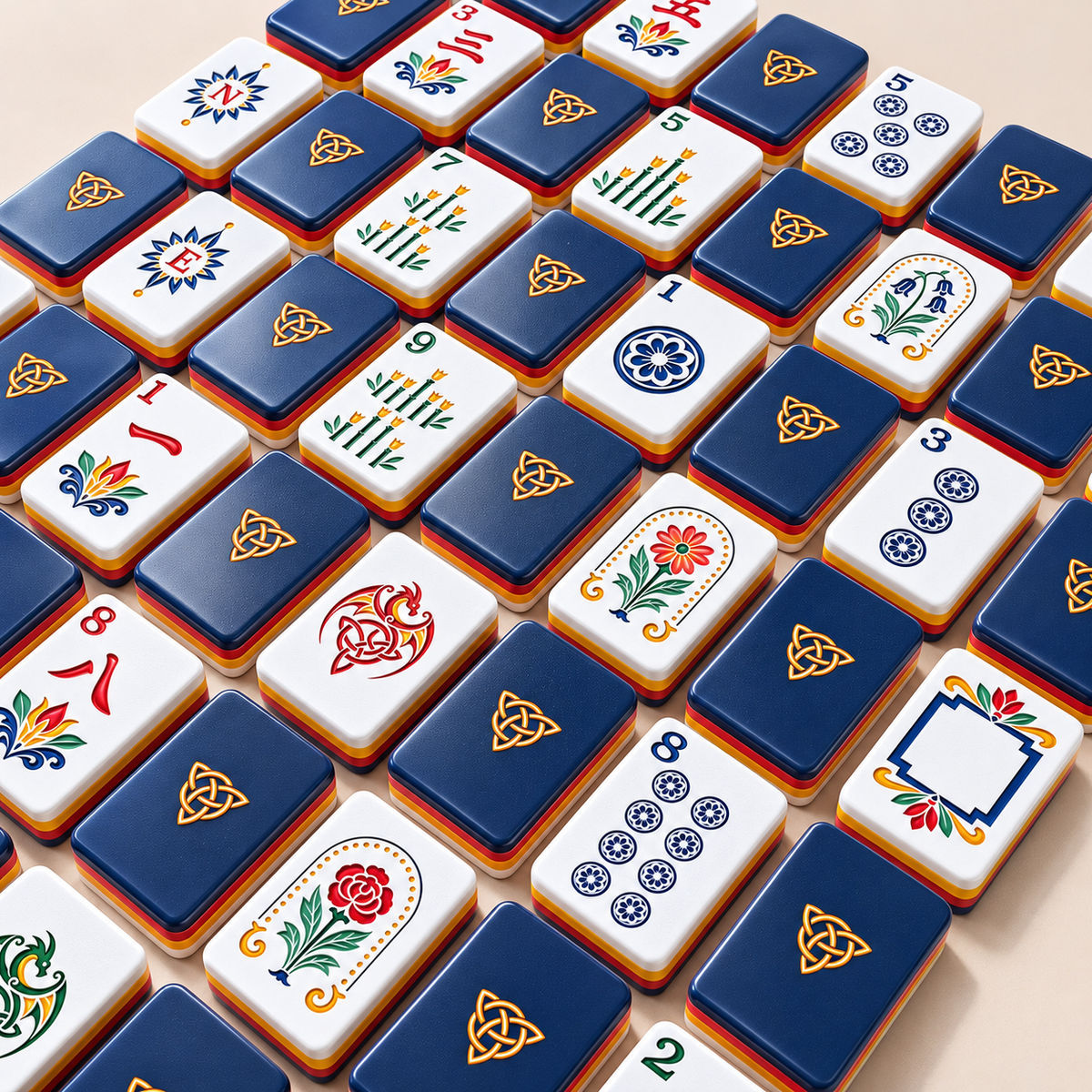
Chinese mahjong (standard Cantonese) uses 144 tiles in four suits: Craks, Bams, Dots, and Honors (winds and dragons). Winning hands require melds (pungs, kongs, or sequences called chows) plus a pair; jokers don't exist in classical play. Sichuan mahjong strips the game down to 108 tiles, removing many Honors, and allows simpler hand patterns with frequent wild-tile usage. American mahjong, by contrast, uses 152 tiles, prohibits chows entirely, and requires hands to match an annual League card—a completely different game. Neither Chinese nor Sichuan mahjong is played in America's mainstream clubs. If you're hosting American mahjong with friends, you need an American-format set; if you're learning a traditional Chinese variant, source a dedicated set from specialists who cater to that community.
How many tiles does each variant use, and why?
Chinese mahjong uses 144 tiles: 36 tiles per suit (Craks, Bams, Dots 1–9, four copies each) plus 28 Honors (16 winds, 12 dragons). Sichuan mahjong uses 108 tiles by removing tens and adding regional wild cards; some regional versions vary. American mahjong uses 152 tiles—108 from the three main suits plus 16 winds, 12 dragons, 8 flowers, and 8 jokers, which are not found in Chinese variants. The tile count directly shapes hand-building rules and strategy.

What is a "chow" and why can't you call one in American mahjong?
A chow (also called a sequence or run) is three consecutive tiles in the same suit—like 4, 5, 6 Dots. Chinese and Hong Kong mahjong allow players to call chows from the discard pile and expose them on the table. American mahjong bans chows entirely; you can only expose pungs (three identical), kongs (four identical), quints (five), and sextets (six). This single rule change transforms strategy from sequence-focused play to pattern-matching against the League card, making American mahjong a fundamentally different game despite sharing ancient roots.
How do wild tiles and jokers differ across variants?
Chinese mahjong traditionally has no jokers; players use designated tiles (often the flower tiles) as wilds in casual play, but classical competition forbids them. Sichuan mahjong embraces wild tiles—often red fives—and assigns them fixed values that modify hand scoring. American mahjong includes eight jokers in every game; they can substitute for any tile except in pairs or single-tile melds, and using them correctly is core to the hand-building strategy. Jokers make American mahjong faster and more forgiving for beginners, whereas traditional Chinese play rewards memory and read-ahead.
Variant | Total Tiles | Suits | Chows Allowed? | Jokers / Wilds | Pair Required? | Hand Source |
Chinese (standard) | 144 | 4 (including Honors) | Yes | None (classical) | Yes | Custom or memory |
Sichuan | 108 | 3 + limited Honors | Yes | Red fives (regional) | Yes | Memory or house rules |
American | 152 | 3 + Winds, Dragons, Flowers | No | 8 jokers (required) | Yes | Annual League card |
Can you play Chinese mahjong with an American mahjong set?
Technically no. An American mahjong set has 152 tiles: extra jokers and flower tiles that don't belong in Chinese mahjong. Chinese players need exactly 144 tiles without jokers. You could remove the eight jokers and flowers from an American set (leaving 144 tiles), but you'd still lack the correct tile artwork and Honor-suit composition that Chinese sets provide, and you'd confuse your tiles by mixing two different design systems. If you're serious about learning Chinese mahjong, buy a dedicated 144-tile Chinese set from a specialist supplier, not an American one.
Which variant should I learn first if I'm in the United States?
If you're playing in North America with local clubs or friends who gather weekly, learn American mahjong. It dominates U.S. home games and mainstream clubs; the annual League card and joker-based strategy are the entry point. If you have family or heritage connections to Cantonese or Sichuan traditions, learn the regional variant first—you'll find more community support and authentic rule books. Don't mix them. Starting with American mahjong is faster (the card tells you what hands win), while Chinese mahjong requires stronger memory and longer table time to internalize winning patterns. Once you've mastered one, switching to another takes only a few hours of study.
🀄 Shop best-selling mahjong sets →

What happens if you build a hand wrong—is the game forfeited?
In Chinese mahjong, declaring a false win (e.g., calling a hand that doesn't match the rules) results in an automatic loss and a point penalty—play continues. In American mahjong, a false "mah jongg" call is a misdeclare; you pay penalties to each player and your hand is dead for that round. In Sichuan variants, house rules vary, but typically the caller loses points and sits out one hand. The penalty is immediate and harsh because it polices the game's integrity. Always recount your tiles before calling any win, and ask the table to verify if you're unsure.
Can you switch variants mid-season with the same group?
Yes, but plan it carefully. If your weekly group has been playing American mahjong all season, switching to Chinese mid-year breaks rhythm and requires everyone to relearn rules, tile patterns, and hand values—people will make mistakes and frustration builds. The better approach: agree at the start of a season or quarter which variant you'll play, stick with it for 8–12 weeks, then rotate. Some groups play American in fall and winter, then switch to a regional variant in spring and summer if they have a core of players fluent in both. Communication and consistency matter more than variety.
What's the fastest way to learn Chinese mahjong if I only speak English?
Buy a rule book written in English (search library catalogs and online retailers for "Chinese mahjong rules for beginners" or region-specific guides like "Cantonese mahjong"). Watch YouTube tutorials from established channels that show live play with clear callouts. Then practice with one experienced player in a teaching round—not four-handed real play. Learn the 13 classical winning patterns first, then branch into less common ones. Expect 4–6 hours of study before your first full game. Chinese mahjong has no standardized "League card" like American mahjong, so learning happens through books, community, and repetition, not from a fixed reference.
What to check before you buy a Chinese or Sichuan set
Tile count: Confirm the set has exactly 144 tiles (Chinese) or 108 (Sichuan), not 152 (American).
Suit labels: Look for Craks (花), Bams (筒), Dots (万), and Honors labeled in Chinese characters or clear English.
Art style: Chinese sets use traditional designs; Sichuan sets often show regional symbols. Don't mix.
Joker presence: If the set includes eight joker tiles, it's American, not Chinese.
Rule book: Confirm a rule book or guide for your specific variant is included or available separately.
Size and feel: Hold or test tiles if possible; Chinese mahjong tiles are often slightly smaller and smoother than American tiles.
🎁 See our most-loved mahjong sets & accessories →
If you're hosting American mahjong in your home or club, we design engraved American sets and mats that make every Thursday night feel intentional. Our 160-tile acrylic sets are built to last through a full season of weekly games, and a quality mat keeps tiles clean and play centered. For travelers or players who host in different rooms, a sturdy travel bag protects your tiles between games.
Honest comparison: should you own both a Chinese and American set?
Yes, if:
You play American mahjong weekly and have family who plays Chinese mahjong seasonally.
You're teaching others and want to show both systems side-by-side.
You host game nights for different friend groups with different preferences.
No, if:
You're a beginner and can only commit to one variant for the next year.
You're on a budget and play one variant 95% of the time (buy that set, master it, branch later).
Most U.S. players own one American set. Many Chinese-heritage players own a dedicated 144-tile set. Crossover ownership is less common because the two games are so different that switching between them in a single night confuses tile recognition and hand-building instinct. Buy the set that matches your regular game, not the one that might impress someone someday.
✨ Find your Mahstead set — free US shipping →

FAQ
Is Cantonese mahjong the same as Chinese mahjong?
Cantonese mahjong is the most widely recognized form of Chinese mahjong, played in Hong Kong, southern China, and diaspora communities. Other regional styles exist (Shanghai, Sichuan), each with minor rule tweaks. When people say "Chinese mahjong," they usually mean Cantonese unless stated otherwise.
Can jokers be used in a pair in American mahjong, or in a single tile?
No. In American mahjong, jokers can never be used in a pair (the final pair must be two identical regular tiles) or as a single tile in any meld. They can only substitute for a tile in a pung, kong, quint, or sextet—always as part of a group of three or more.
Why does American mahjong require the League card when Chinese mahjong doesn't?
The National Mah Jongg League card standardizes winning hands across all U.S. competitive and casual clubs, ensuring fair play and consistent rules. Chinese mahjong evolved from ancient patterns that players memorize; it has no central authority issuing an annual card, so variants exist by region and house rules.
If I have 144 tiles, can I play American mahjong without the eight jokers?
No. American mahjong requires exactly 152 tiles—144 from the main set plus eight jokers. The jokers are not optional; they're built into hand patterns on the League card. Playing without them breaks the game logic and excludes valid winning hands.
How long does a round of Chinese mahjong take compared to American mahjong?
A round of Chinese mahjong typically lasts 20–40 minutes because players wait longer for useful discards and cannot call chows from the tile wall. An American mahjong round usually finishes in 15–25 minutes due to jokers speeding up hand completion and the fixed card limiting possible patterns. Your table's speed depends on player experience and house rules.
Can I learn American mahjong if I already know Chinese mahjong?
Yes, but expect 2–3 hours of focused study. The core concepts (pungs, kongs, pairs) overlap, but American mahjong's ban on chows, mandatory joker use, and hand-card matching feel alien at first. Most players fluent in both report that switching between variants mid-game causes errors—it's better to pick one per session.


View More
View More
View More
