
What Set Do You Need for Wuhan Mahjong?
Last updated: Nov 23, 2026
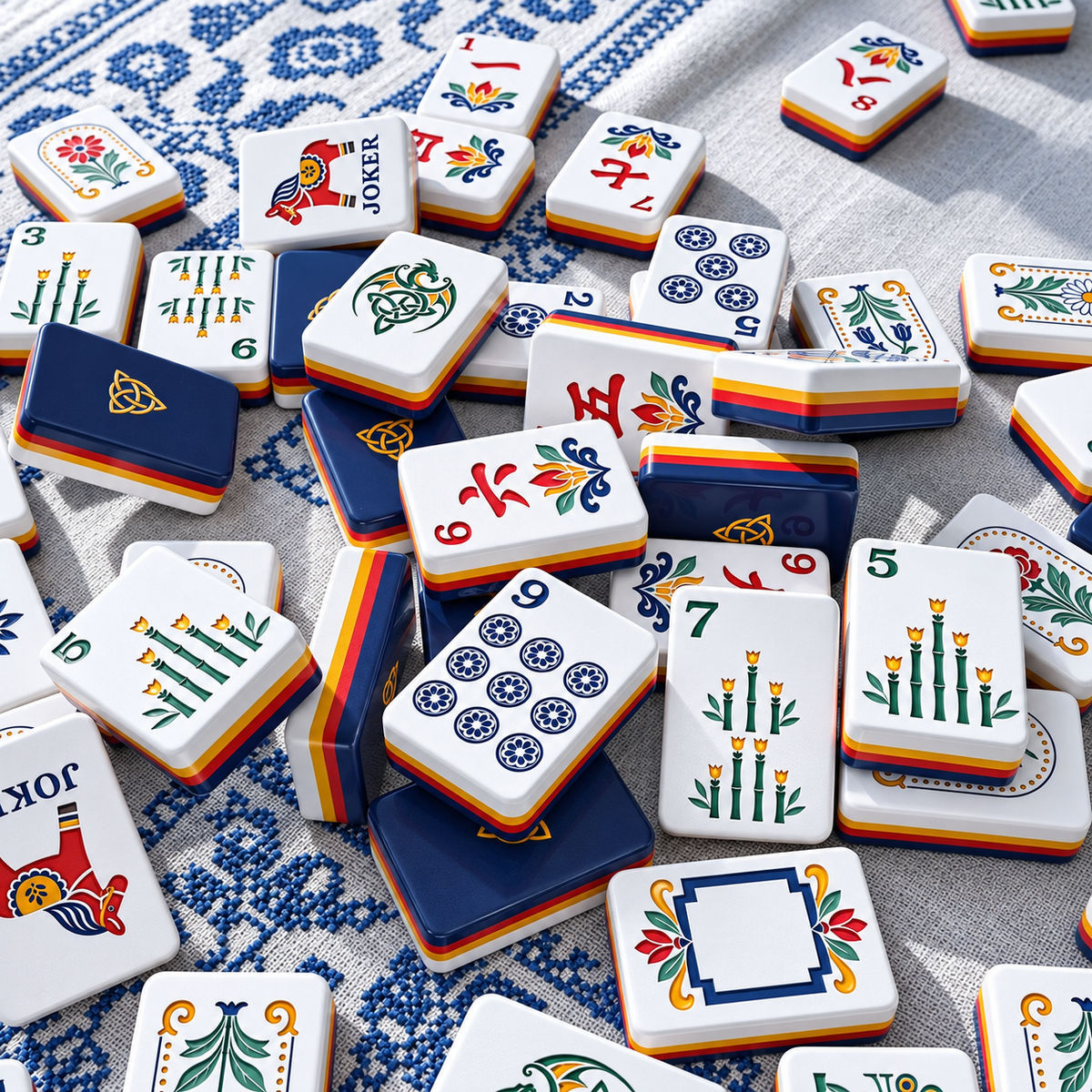
Wuhan mahjong is a Chinese variant that uses only 108 tiles (three suits, 1–9, four copies each, no dragons, flowers, or winds) and plays without honor tiles or exposed melds. It's common in central China and among diaspora communities in North America. A standard American 160-tile set contains too many tiles—you'd discard 44 of them—but works fine if you're willing to set extras aside before each game. The best move: buy a dedicated 108-tile Chinese set if you play Wuhan regularly, or use your existing American set and simply remove the winds, dragons, and flowers before shuffling. Games last 15–25 minutes per hand, typically with four players, and hands are won by going mahjong (combining melds and a pair). Mahstead's best-selling American mahjong sets can serve Wuhan players in a pinch, though they aren't purpose-built for it. 🀄 Shop best-selling mahjong sets →
Is Wuhan mahjong different from American mahjong?
Yes. American mahjong requires buying hands from the current-year National Mah Jongg League card, uses 152 tiles including winds and dragons, forbids sequences (chows), and exposes only pungs, kongs, and quints. Wuhan mahjong lets players build hands freely (no card), uses 108 tiles (suits and numbers only), allows both sequences and sets, and plays much faster. If you've learned American rules, Wuhan feels like a completely different game—more improvisational, less rigid. Most Wuhan players memorize five or six common hand patterns rather than consult a printed card each turn.

Why does Wuhan mahjong use fewer tiles?
Wuhan play strips the game to its core: three suits (Bams, Craks, Dots), numbered 1–9, with four copies of each tile. That's 108 tiles—enough for four players to draw 27 tiles in the initial deal, leaving 8 tiles in the dead wall (kong box). Winds, dragons, and flowers are omitted entirely. This simpler tile pool makes hand-building faster and lowers the barrier to entry for new players, and it's the standard in Wuhan, Hubei Province, and many overseas Cantonese-speaking communities. If you learned American mahjong first, expect a lighter, quicker rhythm.
Can you play Wuhan mahjong with an American set?
Yes, but with a setup step. Our best-selling American mahjong sets come with 160 tiles (152 playing tiles plus 8 spare jokers or blanks). Remove all four winds, all four flowers, and all 12 dragons—that's 20 tiles. You're left with 132 tiles; set aside another 24 to reach 108. This works in a pinch, but it's tedious and error-prone, especially if you play weekly. A dedicated 108-tile Chinese set is cheaper than an American set and saves setup time. If you own an American set already and only play Wuhan occasionally, the workaround is fine; if you're a regular Wuhan player, a purpose-built 108-tile set is your best investment.
What should you check before buying a Wuhan-specific set?
Look for tile size (usually 24–28 mm), material (bamboo-and-bone sets are traditional and beautiful; acrylic is durable and cheaper), and ease of shuffling. Tile markings must be clear—faded paint makes pip counting exhausting. Verify the set contains exactly 36 tiles per suit (not 40; some budget sets add fake extras). Check that the vendor includes a rack or carrying bag if you'll transport it. Count on receiving either loose tiles or a wooden box; if you want a mat, purchase it separately. We recommend checking product photos carefully and confirming tile count in the description before ordering, since online descriptions can be vague about Wuhan-specific specs.
🎁 See our most-loved mahjong sets & accessories →

How do you set up a Wuhan game with the right tiles?
Shuffle all 108 tiles face-down. Each player draws 27 tiles in the initial deal (four players × 27 = 108). Set aside 8 tiles in the dead wall (kong box) before play begins; the remaining tiles form the live wall. One player rolls dice to determine who starts as dealer and who draws first; that player draws one tile from the live wall, then the next player draws, and so on. Unlike American mahjong, there is no Charleston (tile-passing ritual before play). Play is continuous: draw one, discard one, go around the table until someone completes a winning hand (a combination of sets and a pair) and declares mahjong. Scoring varies by region and house rules; most Wuhan variants use simple point systems (e.g., all players pay the winner, or points calculated from hand complexity). If you're learning Wuhan for the first time, ask your group what scoring system they use—there's no single "official" rule.
What's the comparison: buy a 108-tile set vs. use an American set?
Factor | 108-tile Chinese set | American 160-tile set for Wuhan |
Tile count match | Exact (no removal needed) | Requires removing 44 tiles each game |
Setup time | 2 minutes | 5–7 minutes (counting and removing) |
Cost basis | Lower entry price | Already owned, or higher upfront |
Tile style | Traditional bamboo/bone or acrylic, often smaller | Larger, varied designs, more colorful |
Portability | Compact, lighter | Heavier, bulkier (160 tiles) |
Long-term | Best for regular Wuhan players | Acceptable for occasional play |
Best for | Dedicated Wuhan groups | Households with both American and Wuhan friends |
If your household plays Wuhan more than once a month, buy a 108-tile set. If you play both American and Wuhan, keep your American set and add a 108-tile set; mixing them mid-game is a frequent source of frustration.
✨ Find your Mahstead set — free US shipping →
What to check before you buy
Tile count. Confirm the vendor explicitly states 108 tiles (three suits, 1–9, four copies each). Do not buy a set without this clarity.
Material and weight. Bamboo-and-bone sets shuffle differently than acrylic; try both at a friend's house if possible before committing.
Tile size. 24–28 mm is standard; verify your racks (if you own them) will fit.
Markings clarity. Request or inspect photos showing pip detail on 1, 5, and 9 tiles; faded markings are a deal-breaker.
Included accessories. Check whether racks, a carrying bag, or a mat are bundled or sold separately.
Return policy. Buy from a vendor offering returns or exchanges in case tiles arrive with cracks or missing.
Shipping time. If you're hosting a game in two weeks, order now—don't wait.
Mahstead ships our best-selling American mahjong sets across the US with free shipping; for Wuhan-specific sets, reach out to us or check specialty Chinese retailers in your area (online or in Chinese-serving communities) for 108-tile options and delivery speed.

FAQ
Can you use jokers in Wuhan mahjong?
No. Wuhan play uses only the 108 numbered tiles. Jokers and wild tiles are not part of the hand or gameplay—they're ignored entirely. If you buy an American set with jokers, set them aside.
How long does a Wuhan mahjong game take?
One round (one winning hand) typically lasts 10–20 minutes, depending on hand complexity and house rules. A full session (four to six rounds) is roughly 60–90 minutes. American mahjong rounds often run 20–40 minutes by comparison.
Do you need a mahjong mat or rack for Wuhan?
Not strictly. Racks help organize your hand and prevent others from seeing it, and a mat protects the table and makes shuffling easier. For casual home play, you can play without either, but a mat is worthwhile if you host regularly.
What's the difference between Wuhan and Cantonese mahjong?
Both use 108 tiles and allow sequences. Cantonese mahjong has regional hand-building rules and scoring that differ from Wuhan conventions. Wuhan tends to be simpler and faster; Cantonese adds more melds and bonus calculations. Ask your group which ruleset they follow.
If I bought an American set, can I sell the extra tiles?
You can try—online marketplaces and local mahjong groups sometimes buy spares. Alternatively, donate them to a mahjong club or a friend learning the game. Don't discard them; they have value.


View More
View More
View More
