
How to Play Wuhan Mahjong: Rules, Hands & Strategy
Last updated: Nov 23, 2026
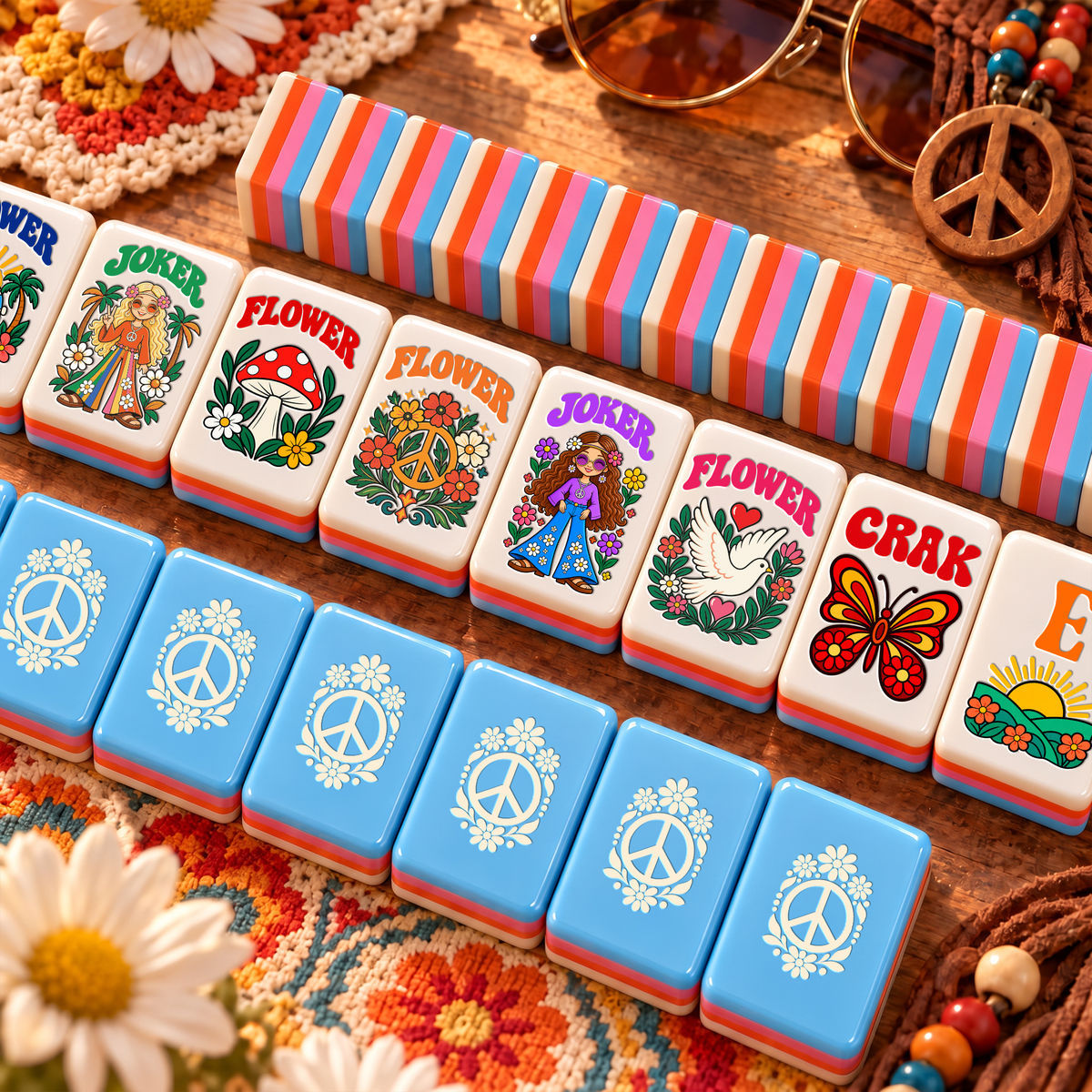
Wuhan mahjong uses a standard 144-tile Chinese set (three suits 1–9, winds, dragons, and flowers). Players aim to build a hand of four melds (pungs, kongs, or sequences) plus a pair, drawing and discarding each turn. Winning is called "hu" or "win," and points are calculated by base hand value plus multipliers (doubles, concealed melds, all-sequences). The game is faster than standard Cantonese mahjong because hand combinations are more flexible and scoring is simpler. A round typically lasts 15–30 minutes depending on luck and player speed. Unlike American mahjong, Wuhan uses no jokers, no pre-printed card, and chows (1-2-3 sequences) are freely exposed and callable. We recommend learning one rule set completely before hosting, then keeping a scorepad and a reference sheet visible—confusion at table kills the fun. #
Wuhan mahjong originated in central China and remains hugely popular in gaming clubs across the Yangtze River region. It sits between the strict classical game and casual home variants: fast enough for three-hour game nights, yet strategic enough to reward reading discards and remembering what's been thrown. If you've played American or Cantonese mahjong, you'll recognize the tile structure—but Wuhan's hand logic and scoring feel distinctly their own.
What is the basic tile set and hand structure?
A Wuhan mahjong set contains 144 tiles: three suits (Bamboo, Character, Dot) numbered 1–9 with four copies each (108 tiles), four winds (East, South, West, North—four of each, 16 total), three dragons (Red, Green, White—four of each, 12 total), and four flowers or seasons (one or two tiles per design, 8 total). A complete hand has 14 tiles: four melds of three tiles each (12 tiles) plus one pair (2 tiles). A meld is either a pung (three identical tiles), a kong (four identical tiles), or a chow (three consecutive numbered tiles in one suit—for example, 3-4-5 Bamboo). Unlike American mahjong, chows are open and can be claimed from any discard; the hand wins when you complete this 4-meld-plus-pair structure by drawing or claiming a discard.

How does drawing and discarding work each turn?
On your turn, you draw one tile from the wall, then must discard one tile face-up to the center. Other players watch your discard; if it completes their pung, kong, or chow, they may claim it by calling "pung," "kong," or "chow" (depending on the variant, some calls have priority—usually pung > chow > kong, or kong > pung > chow). If no one claims it within seconds, play passes to the next player. If you draw a tile that completes your winning hand (four melds + pair), you declare "hu" (win) immediately. Drawing one's own winning tile is often scored higher than winning off someone's discard. Speed matters: many tables play a house rule that a discard is dead once the next player draws, so hesitation costs you the claim.
What are the hand patterns and base scoring?
Wuhan recognizes dozens of named hand patterns, each worth a base point value. Common patterns include:
All Pungs (no chows): 2 points
All Chows (no pungs): 2 points
Concealed Hand (no melds claimed from discards): 1 point (or 2, depending on house rules)
Terminal or Honor Pung (tiles 1, 9, wind, or dragon): 1 point per meld
Mixed Straight (one chow each in Bamboo, Character, Dot): 2 points
Pung of Dragons or Winds: 1 point each, or 2 if all three dragons or all four winds
Your winning hand begins with a base score, then multipliers are applied. Doubles (wins caused by a specific condition—drawing your own winning tile, or winning on the first discard of the hand) double the total. Concealed melds (not claimed from the discard pile) double the hand. Some variants offer "fan" (multiplier levels), similar to Hong Kong mahjong, where each fan level increases payout exponentially. The dealer position also matters: if you're the banker and win, payouts are often larger.
🀄 Shop best-selling mahjong sets →
How do "robbing the kong" and dead wall mechanics work?
In Wuhan, when you declare a kong, you draw from the end of the wall (the "dead wall" or reserve section). If an opponent declares a kong and you already have a winning hand that only needs one more tile, you may "rob the kong"—claim the tile they drew for their kong, completing your win instead. This rule rewards sharp attention and adds tension to late-game play. Different house rules vary on timing and whether a robbed kong payout is doubled.
The dead wall is typically the last 14–16 tiles of the 144-tile wall. Once play reaches the dead wall, no one can rob the kong (the draw privilege expires), and players are said to be in "end game." Many rounds end in a draw (no one wins before the wall is exhausted), which is common and not penalized beyond resetting for the next round.
How does Wuhan scoring differ from American and Cantonese mahjong?
American mahjong uses a pre-printed annual card to validate hands; Wuhan has no card—hands are learned and remembered. American mahjong has no chows at all and uses jokers; Wuhan uses chows freely and no jokers. American mahjong uses 152 tiles (four winds, four flowers, eight jokers); Wuhan uses 144 with no jokers. Cantonese mahjong is slower and emphasizes concealment; Wuhan is speedier, allows more open play, and uses a flatter scoring system without extreme fan multipliers. Cantonese heavily penalizes losers in some variants; Wuhan typically uses a points pool or even splits. If you're switching from American mahjong, expect to unlearn the "card dependency" and relearn the hand memory. If you're coming from Cantonese, Wuhan will feel looser and quicker.
Read our guide to major mahjong variants to compare rulesets before choosing which to play regularly.

What are the most common beginner mistakes?
Mistake 1: Ignoring discards. New players discard randomly instead of reading the table—which tiles have been thrown, which player threw them, and what hand they might need. Strong players spot patterns and avoid tiles the player before them just discarded.
Mistake 2: Hoarding high-value tiles too long. A single dragon or wind held in hope of a terminal pung often blocks you from winning a simpler hand sooner. Calculate whether the bonus is worth the delay.
Mistake 3: Calling a chow too eagerly. Some variants penalize you for calling certain tiles (e.g., the first tile of a chow from certain players). Confirm local rules before claiming.
Mistake 4: Forgetting the dead wall. Playing as if every tile in the wall is available, then getting surprised when play reaches endgame and robbing rules change.
Mistake 5: Not settling on house rules. Before the first hand, agree on all multipliers, priorities (pung vs. kong vs. chow), robbing rules, and payout structure. Disputes mid-game sour the evening.
🎁 See our most-loved mahjong sets & accessories →
Comparison: Wuhan vs. Other Chinese Variants
Aspect | Wuhan | Cantonese | Riichi (Japan) | American |
Tiles | 144, no jokers | 144, no jokers | 136 | 152 + 8 jokers |
Chows | Yes, open & callable | Yes, open & callable | Yes, open & callable | No chows |
Hand speed | Fast (15–30 min) | Medium (20–45 min) | Medium–slow | Slow (varies) |
Scoring basis | Named patterns + multipliers | Many fan levels | Meld groups + yaku | Pre-printed card |
Jokers | None | None | None | 8 in play |
Best for | Speed lovers, Yangtze region players | Tradition-focused, Hong Kong style | Competitive tournament play | American social clubs |
What to Check Before You Buy a Wuhan Mahjong Set
Tile material: Resin (fast, durable) vs. bone/bamboo (premium, slower, heavier). Confirm suit symbols are clearly embossed; worn or faded stamps lead to call disputes.
Tile count: Standard 144 (no spares). Ask if spares are included; if so, confirm they don't enter play—only the 144 main set is used per round.
Size & weight: Larger tiles (around 28mm) are easier to handle; smaller tiles (22mm) fit more into racks but tire hands. Test if possible.
Case & storage: Wuhan sets are often sold with cloth bags and tile racks. Check that drawers or pouches close securely and that racks fit all four wind tiles and dragons without jamming.
Card or guide: Reputable sellers include a laminated rule card or cheat sheet showing patterns and point values. Verify it's in English (if you need it) and matches the house rules you plan to use.
Sound & feel: Draw a tile and discard it; it should glide smoothly and click crisply against the table. Sticky or silent tiles may indicate poor finish or humidity damage.
Getting Started: A Five-Step Checklist
Learn one hand pattern per day for five days. Start with All Pungs, All Chows, and one Terminal/Honor pung. Build from there.
Gather four players and assign dealer position. East player deals first and keeps score. Rotate clockwise after each round won.
Shuffle and build the wall. Stack all 144 tiles face-down in four rows of 36, then break the wall randomly (dealer breaks, counts 14 tiles from the right, draws from the 15th).
Deal 13 tiles per player, dealer draws 14 from the wall. Discard one tile to start play.
Play five rounds, keeping a running tally. Use a scorepad; after each round, move the dealer position and tally points. A full session is typically 8–12 rounds.
✨ Find your Mahstead set — free US shipping →
What You'll Need
If you're planning Wuhan game nights at home, our best-selling acrylic mahjong sets are designed for American game, but the tile structure (suits, winds, dragons, flowers) translates seamlessly to Wuhan once you learn the hand patterns. For a faster, smoother table experience, consider our mahjong mats (they protect tiles and create a consistent discard zone) and racks with pushers to organize your melds without fumbling. You'll also want a scorepad and pen, and—most importantly—a laminated reference sheet of Wuhan hand patterns printed from a trusted variant guide or downloaded from a local Wuhan mahjong club's website.
#

FAQ
Can I use an American mahjong set to play Wuhan?
No. American sets include jokers and flowers as active tiles, plus only 16 flowers total; Wuhan needs exactly 144 tiles with four of every wind and dragon. A standard Chinese 144-tile set is required.
How many points is "hu" (winning) worth as a base?
That depends on your hand pattern and house rules. A simple hand (e.g., All Chows) might be 2–4 points; a complex hand (e.g., All Pungs + All Honors + Concealed) could be 8–16 or more before multipliers. Always agree on scoring before play begins.
What happens if no one wins before the wall runs out?
The hand is declared a draw (or ""no win"). Players do not score, and the dealer position rotates (or stays, depending on house rule). Play begins a new round immediately.
Is Wuhan mahjong easier to learn than American mahjong?
Wuhan is arguably easier to start because there's no card to memorize—you learn hand patterns by repetition. American mahjong requires memorizing the year's National Mah Jongg League card, which is steeper at first. But Wuhan's scoring multipliers and robbing rules demand sharper table focus.
Can I play Wuhan with two or three players?
Yes, though rules vary. With three players, some variants skip the fourth wind or rotate a "dummy" hand. With two, the wall structure changes and draw mechanics differ. Confirm local three-player rules before you start; standard Wuhan assumes four.
Where can I find others to play Wuhan mahjong near me?
Search community centers, libraries, and cultural centers in or near cities with significant Chinese populations. Join online mahjong forums or Meetup boards and ask for "Wuhan" or "Chinese mahjong" groups. Many social clubs host casual games on weekends.


View More
View More
View More
