
Large Print vs. Standard Mahjong Cards: Which Fits Your Game?
Last updated: Nov 23, 2026
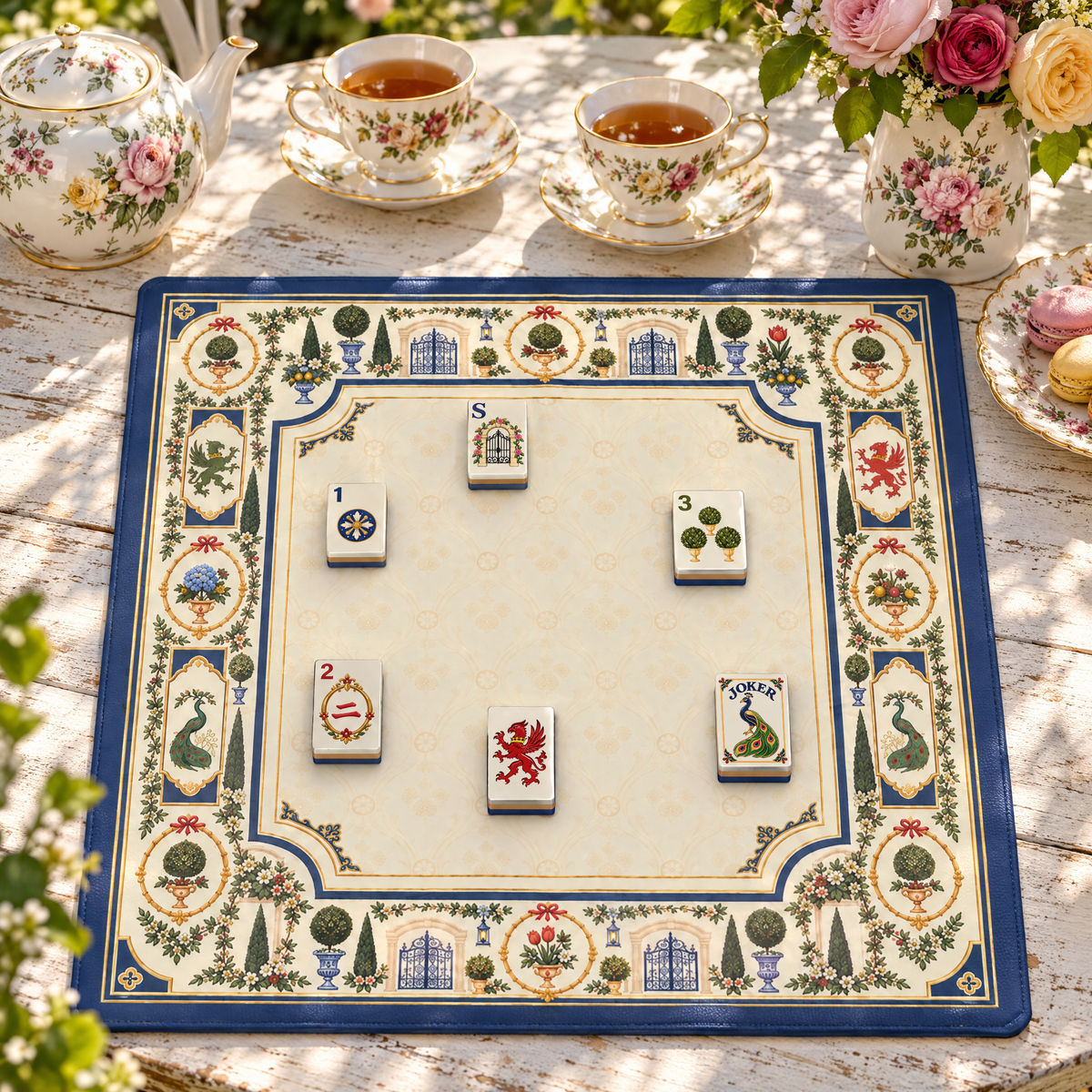
Large-print and standard mahjong cards display identical hand patterns from the current year's National Mah Jongg League; the only difference is font and symbol size. Standard cards fit a typical sheet; large-print versions enlarge all text, numbers, and tile symbols to roughly 150–180% of standard size, reducing eye strain during long games. Both are legally valid in tournament and casual play; your choice hinges on table lighting, player vision, hand-spotting speed, and personal preference. Large-print cards cost slightly more but serve players aged 55+, anyone with presbyopia, or tables in dim rooms. Many serious players keep one of each in their bag and choose based on the day's lighting and lineup.
Who actually needs large-print cards?
Large-print cards make sense if you or your regular players have presbyopia (age-related focus loss), astigmatism, or low vision, or if your game table sits in a room with poor overhead lighting or glare. If everyone at your table reads a standard phone screen without arm's length, standard cards work fine. However, games often stretch two or three hours; eye fatigue compounds. Players who squint after the first hour or ask neighbors to read their card should try large-print. Casual home games benefit more from large-print than competitive club play, where faster hand-spotting under pressure favors those who've memorized card sections.

What's the real difference in size and readability?
Standard National Mah Jongg League cards print on an 8.5" × 11" sheet with 13–15 rows of hands and columns for each suit/symbol combination. Tile illustrations are roughly 0.15" square; text is about 7–8 point font. Large-print versions expand to 11" × 17" (tabloid format) or split the hands across two or three pages, with tile symbols reaching 0.25"–0.30" square and text at 10–12 point font. Neither changes the actual hands or winning patterns. Under standard room lighting, both remain equally legible from 18–24 inches away—the typical distance from a seated player holding a card. Large-print wins in edge cases: low-contrast printing, thick bifocals, or tables lit mainly by overhead spots rather than ambient light.
How does large-print affect setup and hand-spotting speed?
A standard card folds into a card stand or holder without gap; a large-print card on tabloid paper may not fit many compact stands designed for letter-size. Some players fold large-print cards, which crease the tile grid and invite confusion mid-game. Setup time is identical for both: 15 seconds to place a card in your stand. Hand-spotting—locating your pattern among 200+ options—depends on familiarity and mental cross-referencing, not card size. Experienced players spot hands in 3–5 seconds either way; beginners may search 10–20 seconds regardless of print size. Large-print helps if you squint or lose your place, but it does not speed up winning-hand recognition.
Can you mix large-print and standard at the same table?
Yes. The National Mah Jongg League publishes both formats annually; any valid card from the current year is legal. Four players can each hold a different card size without penalty. However, mixing can slow play if some players habitually request to see a neighbor's card and the neighbor's font is smaller than expected. If your group has two or three players who prefer large-print, buying one large-print card for the table and passing it around after each hand works if no one minds the delay. Most regular foursomes solve this by rotating who holds the league card or using a shared stand visible to all.

What about digital and phone apps instead?
Digital mahjong card apps (available on iOS and Android) display the current year's hands on your phone or tablet with infinite zoom, brightness adjustment, and font size scaling. No licensing fee; free or low-cost versions exist. The tradeoff: fumbling with your device during the game, battery drain, distraction, and no tactile card to hold. Tournament play typically forbids phones at the table. Home games with one or two tech-savvy players can use apps without issue, but a printed large-print card remains faster for most groups. Apps suit casual solo studying but rarely replace a physical card in weekly multiplayer sessions.
Card Type | Best For | Readability | Portability | Setup Speed |
Standard (letter) | Good lighting, younger players, competitive speed | ✓ Good 18–24" | ✓ Fits all stands | ✓ <5 sec |
Large-print (tabloid) | Low light, presbyopia, groups 55+ | ✓✓ Excellent (poor light) | ~ May not fit compact stands | ✓ <5 sec |
Digital app | Solo study, ultra-zoom needs | ✓✓✓ Full control | ✓ Phone/tablet | ✗ Slower mid-game |
What to check before you buy
Measure your card stand. If you own a folding rack or travel stand, verify it opens to at least 11" width. Compact racks designed for letter-size may jam or not hold tabloid paper flat.
Test lighting at your regular game venue. Bring a standard card to a Wednesday night session; if you or others lean in or tilt the card, large-print is worth trying.
Confirm you have the current year's card. Large-print and standard are reprinted every spring by the League. An old large-print card is no better than an old standard card.
Ask your group first. If your weekly foursome plays in bright daylight and everyone reads comfortably, large-print is unnecessary—but keeping one spare for guests with vision needs is thoughtful.
Budget for storage. Large-print cards need a flat envelope or large case; they don't fit standard card sleeves. Mahjong bags and cases designed for full-size sets can hold a tabloid card flat.
🀄 Shop best-selling mahjong sets →
The practical decision framework
Ask yourself: Do I squint or ask for help reading tile numbers after 60 minutes? If yes, try large-print. Does my regular table have windows and good overhead light? If yes, standard is fine. Am I new to mahjong and building muscle memory for hand patterns? If yes, card size is secondary to play frequency; standard works. Do I host games where age or vision varies widely? If yes, keep one large-print card as a courtesy option for guests.
Here's the hidden insight: the real advantage of large-print isn't the card itself—it's permission to slow down without embarrassment. Newer or older players often rush through card-reading to appear competent. A large-print card signals that the table values accuracy over speed, which actually improves everyone's game by reducing missed wins and illegal melds.
Many players who own our best-selling mahjong sets also keep both a standard and large-print card in their travel bag, choosing at game time based on lighting and the day's group. It costs little more than a single printed card and removes the guesswork from weekly prep.
🎁 See our most-loved mahjong sets & accessories →
Pairing your card choice with the right setup
Your card size should match your game table and lighting. If you play in a bright home with large windows, standard cards and any mahjong mat work beautifully. If your game is at a club with low-contrast lighting or in a basement room, a large-print card plus a mat with high-contrast tile markings helps everyone track the discard pile and active hand. Players using racks with pushers should verify the rack width accepts your card size before buying; most modern racks flex, but older compact designs don't. The same applies to card holders in mahjong bags—tabloid cards need more space.
If you're buying a new mahjong set for your group, the card is often included or recommended separately. Match your card choice (standard or large-print) to your players' average age and the venue lighting before you purchase racks or bags, so your entire setup works in harmony.
✨ Find your Mahstead set — free US shipping →

FAQ
Can I use both large-print and standard cards in the same game?
Yes. Both are current-year League cards and legally valid. Four players can each hold any size. The only issue is social—if some read slowly, mixing sizes might feel unfair. Most groups agree beforehand which card version to use, or one player holds the League card for all to reference.
Does large-print cost significantly more than standard?
Large-print cards cost slightly more to print and ship due to larger paper size and weight. See current pricing on the product pages where you source your cards. The difference is modest—typically a few dollars per card—and a single large-print copy is inexpensive insurance for player comfort.
Will a large-print card fit in a standard card stand or mahjong rack?
Most modern card stands and racks designed for mahjong adapt to letter or tabloid size. Older compact stands or travel racks may not. Measure your stand's width before buying a large-print card, or choose a flexible mahjong rack with pushers that opens wide enough to hold both formats safely.
I'm a beginner—should I start with large-print or standard?
Start with standard. Beginners benefit more from play frequency and hand memorization than from card size. Once you've played 10–20 games and know your game table's lighting, try large-print if you squint. Many beginners never need it.
Can I zoom in on a digital mahjong app instead of buying a large-print card?
Digital apps let you zoom infinitely and adjust brightness, which can feel easier. However, apps are slower during active play (fumbling with a phone distracts), rarely permitted in tournament settings, and don't teach you to scan a physical card—a skill you'll need in any club or organized game. Use apps for solo study; keep a printed card for actual play.
How do I know if I need large-print before spending money?
Borrow a standard card from a friend and play one full session under your regular lighting. If you find yourself holding it closer than arm's length, squinting, or losing your place after 45 minutes, large-print will help. If you comfortably read the card the entire game, standard is sufficient.


View More
View More
View More
