
What Set Do You Need for Three Player Mahjong?
Last updated: Nov 23, 2026
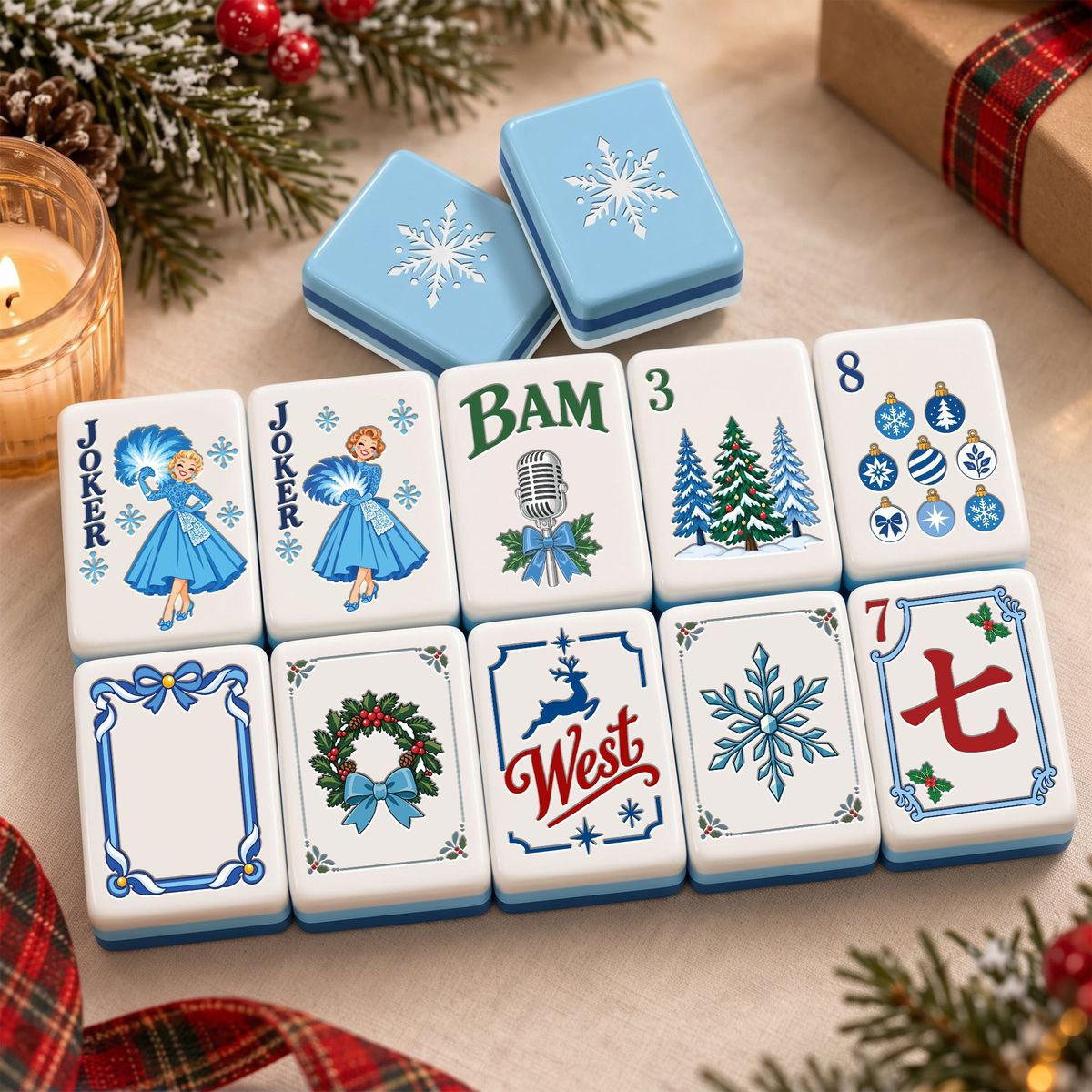
Three-player American mahjong uses the same 160-tile set as four-player games—you simply remove one player's entire starting hand before dealing. One player takes the role of the "dead hand," which never plays but rotates among players each round; alternatively, some groups agree to permanently remove 13 tiles (typically one suit's lower numbers or a mix of winds and dragons) and play all hands live. You still need a current National Mah Jongg League card to read valid hands. The real adjustment is psychological: with fewer players discarding, tiles you need appear less often, making pungs (three identical tiles) and kongs (four identical) harder to complete. Equipment stays the same—a full set, a mat or table space to organize your tiles, and racks with pushers to keep your hand private. Before buying a set, confirm whether your group follows the dead-hand rule or plays with permanent tile removal, as this affects which tiles you should label or track. 🀄 Shop best-selling mahjong sets →
How do you set up a three-player game?
The dead-hand rule is the simplest three-player setup. Before shuffling and dealing, one player is designated as the dead hand: they receive no tiles. The other two players and East deal tiles as usual (13 each on first pass, 14 for East), but the dead hand remains empty for that round. After scoring or a wall pass, the dead-hand role rotates—next round, a different player sits it out. Some groups prefer permanent tile removal instead: before any game begins, remove exactly one full player's starting hand (13 tiles) from the set and set them aside for the entire session. This keeps all three players active every round. The removed tiles are typically a 13-tile sequence of low or mid-range tiles—for example, all Bams 1–5, all Craks 1–5, and both Soap dragons—but your group can choose any 13 tiles. Either method works; the dead-hand rotation is more common because it preserves the full tile set's complexity and keeps the game fresh as responsibilities shift.

Does three-player mahjong follow the same rules as four-player?
Three-player mahjong follows the same basic rules as four-player American mahjong: you still need a valid hand from the current year's National Mah Jongg League card, you still follow the Charleston (the tile-passing ritual), and you still cannot call or expose chows (sequences). Pungs, kongs, quints, and sextets work identically. However, two practical rules differ. First, with one fewer player, the discard pool shrinks—tiles cycle less frequently, so hands that rely on a single discard source become riskier. Second, the dead-hand player or missing tiles mean fewer defensive walls; other players may feel more pressure to "cover" the missing hand's potential melds. Some groups also modify the Charleston for three players: instead of four full rotations of passing (Right, Across, Left, then Across again), three-player groups sometimes reduce to three rotations or pass only to Right and Left, skipping the middle "Across" exchange. Check your group's local practice before your first game; rules for two and three player mahjong explain the formal variants in detail.
What's the real equipment difference for three-player?
Equipment stays nearly identical: you still use a full 160-tile set, mahjong mats scale the same for three players, and racks with pushers hold 13 tiles per player just as they do in four-player games. The only practical change is table space. With three seats instead of four, your physical setup is tighter—many groups simply leave one side of the table empty or keep that space for drinks and score sheets. If you're hosting regularly, a standard rectangular mat works fine; three players naturally cluster around it. If you travel to different locations or host mixed four and three-player groups, confirm that your mat fits both layouts before ordering. Acrylic sets are especially practical for three-player games because the cleaner sound and lighter weight make dealing and handling tiles easier in the faster, tighter play rhythm. Beyond the set itself, you'll appreciate a good travel bag or case if you move between locations.
🎁 See our most-loved mahjong sets & accessories →
Which tiles should you remove if playing permanent removal?
If your group chooses permanent tile removal instead of a rotating dead hand, the choice of 13 tiles affects game balance. The most common approach is to remove one complete number across multiple suits: for example, all ones (1 Bam, 1 Crak, 1 Dot, plus one 1-valued tile like a wind or dragon) plus another 9–10 tiles to reach 13. Another group removes a single suit's lower numbers: say, Bams 1–5 (5 tiles) plus Craks 1–5 (5 tiles) plus Soap and Green dragons (2 tiles) to reach 12. The key is symmetry—avoid removing tiles in a pattern that favors one player's hand-reading. Removing "weak" tiles (low Bams and Craks, often harder to use in hand combinations) is gentler on playability than removing "strong" tiles (like honors or dragons). Before game day, write down which 13 tiles your group removes and check them against the starting pile so no one accidentally uses them. If you use an engraved set from our titles collection, you can note which tiles are "benched" in your scorecard—it becomes a standing joke and keeps the game transparent.

How does three-player speed change strategy?
With fewer discard sources, three-player mahjong is measurably tighter. In four-player games, by the time it's your turn again, you've seen 12+ new tiles (three opponents each play a card). In three-player, you see only 8–9. This means hands that depend on a specific discard (like a rare Crak you've been waiting for) have lower odds of appearing, so conservative play—holding pungs early and building with safer exposures—often outperforms aggressive calling. Conversely, players who pick fast and read discards sharply gain an edge because the reduced tile flow makes pattern recognition more valuable. Beginner groups often find three-player less forgiving of slow play; the game moves briskly if all three players decide quickly, so knowing the current year's hand card intimately matters more than in four-player, where the fourth player's delays occasionally buy time. Most experienced players appreciate three-player for exactly this reason: it rewards focus and punishes hesitation. If you're teaching a beginner, consider starting with four-player games so they can observe more discards and learn pacing in a less urgent context.
Set Type Comparison: Three-Player Readiness
Set Type | Best For | Why It Works for Three | Key Consideration |
Acrylic, no engravings | Casual home groups | Fast play, lightweight tiles | Check mat fits your three-seat layout |
Engraved tiles with house rules | Regular hosts tracking a standing group | Easy tile identification + personality | Engrave numbers clearly if removing tiles permanently |
Travel-friendly (compact mat + case) | Groups that play at multiple locations | Moves between venues smoothly | Confirm mat folds compact enough for car or backpack |
Deluxe/gift sets | Long-term collectors or milestone celebrations | Signals seriousness and care | Verify set includes full 160 tiles, not fewer |
What to Check Before You Buy
Tile count: Confirm you're getting 160 tiles (152 playing tiles + spares). Never assume a "deluxe" or vintage-looking set has a full count.
Mat size: Measure your table or the space where three players will sit. A standard rectangular mat fits three players comfortably; confirm dimensions on the product page before ordering.
Dead hand or removal?: Decide with your group beforehand whether you'll rotate a dead hand or permanently remove 13 tiles. If permanent removal, buy a set you don't mind marking discreetly (such as placing them in a small labeled pouch).
Racks: Three-player games move fast. If you're playing regularly, racks with pushers pay for themselves in speed and hand privacy—especially important in tight seating.
Current League card: Confirm you have the 2026 National Mah Jongg League card. Hands change yearly, and three-player reads are the same as four-player: you must have the current year's card.
Storage or portability: If your group plays at different locations, a mahjong bag or case protects your set and makes transport effortless.
✨ Find your Mahstead set — free US shipping →

FAQ
Can you play three-player American mahjong with a 144-tile set?
No. American mahjong requires exactly 152 tiles in active play plus 8 jokers (160 total). A 144-tile set (typically Chinese mahjong) lacks winds, dragons, flowers, and jokers, so hands from the National Mah Jongg League card cannot be completed. Always use a full 160-tile American set.
If we remove 13 tiles permanently, do we need to buy a smaller set?
No. You still need a 160-tile set. Removing 13 tiles is a rule choice, not an equipment change—you simply set those 13 aside before the game and never deal them. This preserves the set's integrity if you later play four-player games with the same tiles.
Does the dead hand player score if they win after taking their turn?
No. In traditional dead-hand three-player rules, the dead hand never plays and cannot win. If you play a variant where the dead hand takes a turn later, confirm this with your group beforehand. Most groups keep the dead hand completely out of play for clarity.
What if three players want different rotation rules—can we change them mid-session?
Not without resetting. Changing from dead-hand rotation to permanent removal mid-session creates confusion about which tiles are valid and upsets hand strategy. Decide the rule before the first Charleston and stick with it for the full session.
Are engraved sets harder to shuffle or deal in three-player games?
Engraved sets shuffle and deal identically to plain sets. The extra weight is negligible, and three-player games actually benefit from acrylic or engraved tiles because faster play and tighter seating make heavier, more stable tiles easier to handle. No practical difference.


View More
View More
View More
