
What Set Do You Need for Malaysian Mahjong?
Last updated: Nov 23, 2026
Malaysian mahjong uses the same 152-tile base as American play (three suits, winds, dragons, flowers, jokers) but follows different hand-building rules and a separate scoring system not tied to an annual card. The game emphasizes pungs, kongs, and sequences (called "chows"—which American mahjong forbids as exposed melds)—and allows jokers more flexibly in certain positions. You can play with a standard best-selling mahjong set, but you must memorize the hand patterns and scoring from a Malaysian reference guide or learn from an experienced player, since no single authoritative card exists as it does in American mahjong. Setup is faster (no Charleston tile-pass ritual), and games typically move quicker. If you're transitioning from American play, expect a 3–5 hour learning curve to internalize the hand types; most players prefer printed hand charts at the table during their first dozen sessions. 🀄 Shop best-selling mahjong sets →
How is Malaysian mahjong different from American mahjong?
Malaysian mahjong allows exposed chows (sequences like 4–5–6 of the same suit), which American mahjong prohibits entirely. Jokers function as wild tiles in both, but Malaysian rules often permit jokers in pairs or as single tiles in sequences, whereas American mahjong reserves jokers only for exposed melds of identical tiles (pungs, kongs, quints, sextets). Hand patterns are not issued on an annual card; instead, players memorize or reference printed lists of standard winning combinations. The game lacks the formal Charleston passing ritual before play, so the East player simply draws and discards to begin. Scoring systems differ entirely: Malaysian mahjong awards points based on hand type, tile difficulty, and bonuses for self-drawn wins or limit hands, rather than the point-value method on the American card. Games are generally 30–45 minutes versus the 1–2 hours typical of American sessions because fewer meld types and a faster discard pace keep turns brief.

Which tiles do Malaysian players use?
Malaysian mahjong requires the same 152-tile count: three suits (Bams, Craks, Dots), numbered 1–9 with four copies of each; 16 winds (four each of North, East, West, South); 12 dragons (four each of Red, Green, and White); 8 flowers; and 8 jokers. Some Malaysian players prefer sets with clearer tile markings (especially numbers and suit symbols) because hand recognition speed matters more in the faster-paced variant. You may use any standard best-selling set—the tile composition is identical to American sets—but comfort with rapid tile-spotting during your first sessions will improve your play. A few regional players add extra jokers or blank tiles beyond the base 152 for house rules, but the official tile count remains constant. Consider a set with bold, high-contrast numerals and large suit icons if you're learning; as you progress, aesthetic preference becomes the deciding factor. Mahstead's sets include all required tiles in durable acrylic form, suitable for both variants.
Do you need a different mat or rack for Malaysian play?
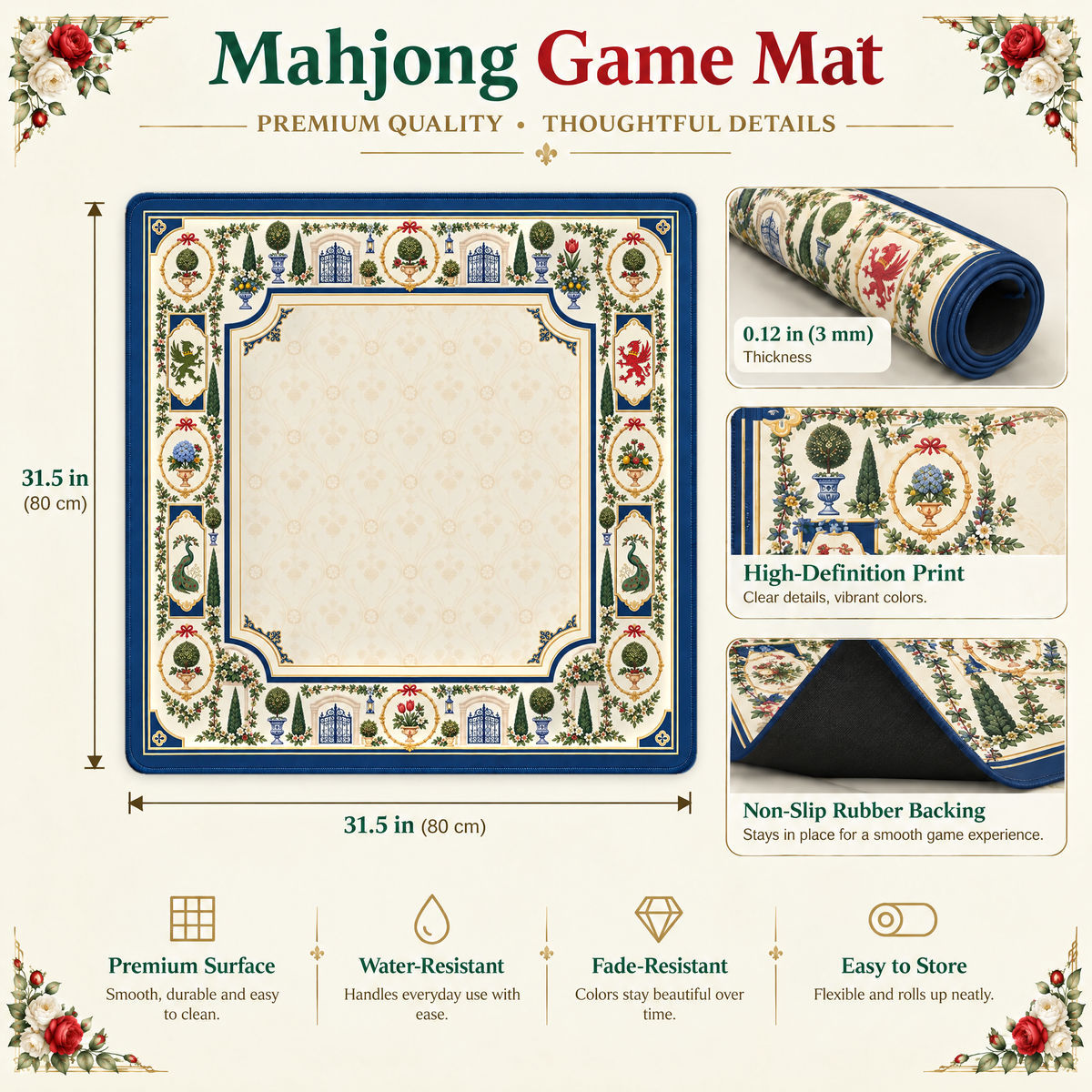
No—mahjong mats and racks with pushers work identically for Malaysian and American play, since both use the same tile arrangement and meld display. A mat protects your tiles and provides clear zones for hand, melds, and discards. Racks with pushers help organize your hand and speed up tile manipulation, especially valuable in Malaysian play where turn rhythm is brisk. If you're hosting a multi-game session (American one night, Malaysian the next), one mat and set of racks serve both rulebooks. The only equipment difference is a printed hand reference—laminated cards listing winning combinations—which you'll want at each player's seat during learning phases. After 20–30 games, most players internalize the hands and no longer need the charts. Choose a mat size that fits your table and offers comfortable reach for all four players; standard mats accommodate all position rotations seamlessly.
🎁 See our most-loved mahjong sets & accessories →
What's the fastest way to learn Malaysian mahjong rules?
Start with a printed hand list or e-book specific to Malaysian mahjong (not the American NMJL card). Identify the five to eight most common winning patterns and practice spotting them in sample tiles before your first game. Play your opening session with the hand chart and a patient experienced player at the table; expect to pause frequently for rule questions—this is normal. Focus on understanding chows (how to build and recognize 1–2–3, 4–5–6, etc. within one suit), since this mechanic most differs from American play. Learn the bonus system (concealed hands, self-drawn tiles, limits) incrementally rather than memorizing all scoring upfront. After three to five games, most beginners recognize the core hand types and scoring logic. Online Malaysian mahjong communities and YouTube tutorial channels offer rule walkthroughs; however, live play with a mentor accelerates learning more reliably than solo study. Allocate 4–6 weeks of weekly play before you feel confident; progression is faster than American mahjong because fewer hand types and simpler tile interactions exist.

What equipment checklist ensures a smooth Malaysian mahjong night?
Item | Purpose | Check before play |
152-tile set | Core gameplay | All tiles present, jokers included, no cracks |
Mat | Tile organization, protection | Non-slip backing, clear zone markings |
Racks with pushers | Hand management, speed | All 4 racks move smoothly, pushers grip tiles |
Hand reference chart | Rule learning | Laminated or digital, readable at table distance |
Dice (two) | Deal & draw randomization | Clear numerals, one per player setup |
Transport & storage | Zipped securely, compartments for mat & racks |
Before your first Malaysian session, verify all tiles are accounted for, the mat lies flat with no wrinkles, and each player's rack slides smoothly. Print or laminate hand reference sheets (one per player, one spare). Test your dice with a practice roll. Place the bag or case on standby for transport if hosting away from home. Set a house rule about joker substitution upfront (e.g., "joker can replace any tile in a chow" or "joker = wild in melds only") so no mid-game disputes arise. Assign one player as scorekeeper; Malaysian scoring is more complex than American, so a dedicated noter prevents errors. Have a pen and scorepad ready. If anyone is new to mahjong entirely (not just new to Malaysian variant), spend 10 minutes teaching hand formation and basic tile recognition before beginning.
✨ Find your Mahstead set — free US shipping →
Can you switch between American and Malaysian mahjong with one set?
Yes—the 152 tiles are identical, so one best-selling set supports both variants. The differences lie in rulebook, hand patterns, and scoring, not tile composition. Many households keep a single set and alternate games by ruleset. The transition during one evening requires only a mental shift: stop looking at the American card, activate the Malaysian hand patterns in memory (or reference a printed Malaysian guide), and adjust your scoring logic. Racks and mats function for both, so no equipment purchase is necessary. The main practical hurdle is keeping hand patterns clear—store printed Malaysian hand charts separately from your American NMJL card so you don't accidentally consult the wrong reference mid-game. If you host mixed groups (some players familiar only with American, others with Malaysian), plan separate tables or dedicate one ruleset per evening to avoid confusion. After a few dual-ruleset sessions, most players mentally compartmentalize the two games and switch fluidly; new players find the shift jarring, so group newcomers by game variant until they solidify one ruleset before introducing the second.
What to check before you buy
Tile size and weight: Malaysian players, like American, benefit from tiles large enough to handle quickly without fumbling—typically 1.25 inches per side. Acrylic tiles offer consistent weight and durability across extended sessions. Joker count: Verify your set includes 8 jokers; Malaysian play may reference them heavily, and running short mid-game disrupts flow. Marking clarity: High-contrast numerals and suit symbols matter in faster-paced Malaysian play; squinting at tiles slows turns unnecessarily. Mat dimensions: Ensure the mat comfortably spans your table and leaves 12–18 inches of clearance on all sides for discards and play space. Racks and pushers: Test that racks hold 13–14 tiles without tiles sliding or pushers sticking; smooth operation is non-negotiable for Malaysian play's quicker rhythm. Storage: Plan how you'll transport the set and protect tiles between sessions; a padded bag prevents cracks during travel. Hand reference: Source a reliable Malaysian hand guide or book before your first game; don't rely on internet searches at game time. House rules: Clarify with your group whether you're playing Hong Kong, Cantonese, or a local Malaysian variant, since rule nuances differ; this prevents disputes over winning conditions or melds.

FAQ
Is Malaysian mahjong played with the same four-player setup as American?
Yes, Malaysian mahjong is a four-player game with identical seating and position rotation (East, South, West, North) as American play. The Charleston passing ritual is omitted, but hand formation and meld display remain similar.
Can I use my American mahjong card to play Malaysian?
No. The American NMJL card lists hands specific to American rules and cannot be used for Malaysian play. You need a separate Malaysian mahjong reference guide or hand chart to identify winning combinations.
How long does a Malaysian mahjong game take?
A typical game lasts 30–45 minutes, faster than American mahjong (1–2 hours) because fewer meld types and a quicker discard pace keep turns brief and reduce hand complexity.
Are jokers used differently in Malaysian mahjong?
Yes. Malaysian rules often allow jokers as wild tiles in sequences and sometimes in pairs, whereas American mahjong restricts jokers to exposed pungs, kongs, quints, and sextets only, never in pairs or single-tile positions.
What's the biggest challenge switching from American to Malaysian mahjong?
Internalizing new hand patterns and scoring logic. American players must unlearn the annual card system and memorize Malaysian combinations, a shift typically taking 4–6 weeks of weekly play to feel natural.
Do I need to buy a separate set for Malaysian mahjong?
No. A single standard 152-tile set works for both American and Malaysian play. The rulebooks and hand patterns differ, but tile composition is identical, so one Mahstead set supports both variants.


View More
View More
View More
