
Cantonese Mahjong with 2 Players: Rules & Setup
Last updated: Nov 23, 2026
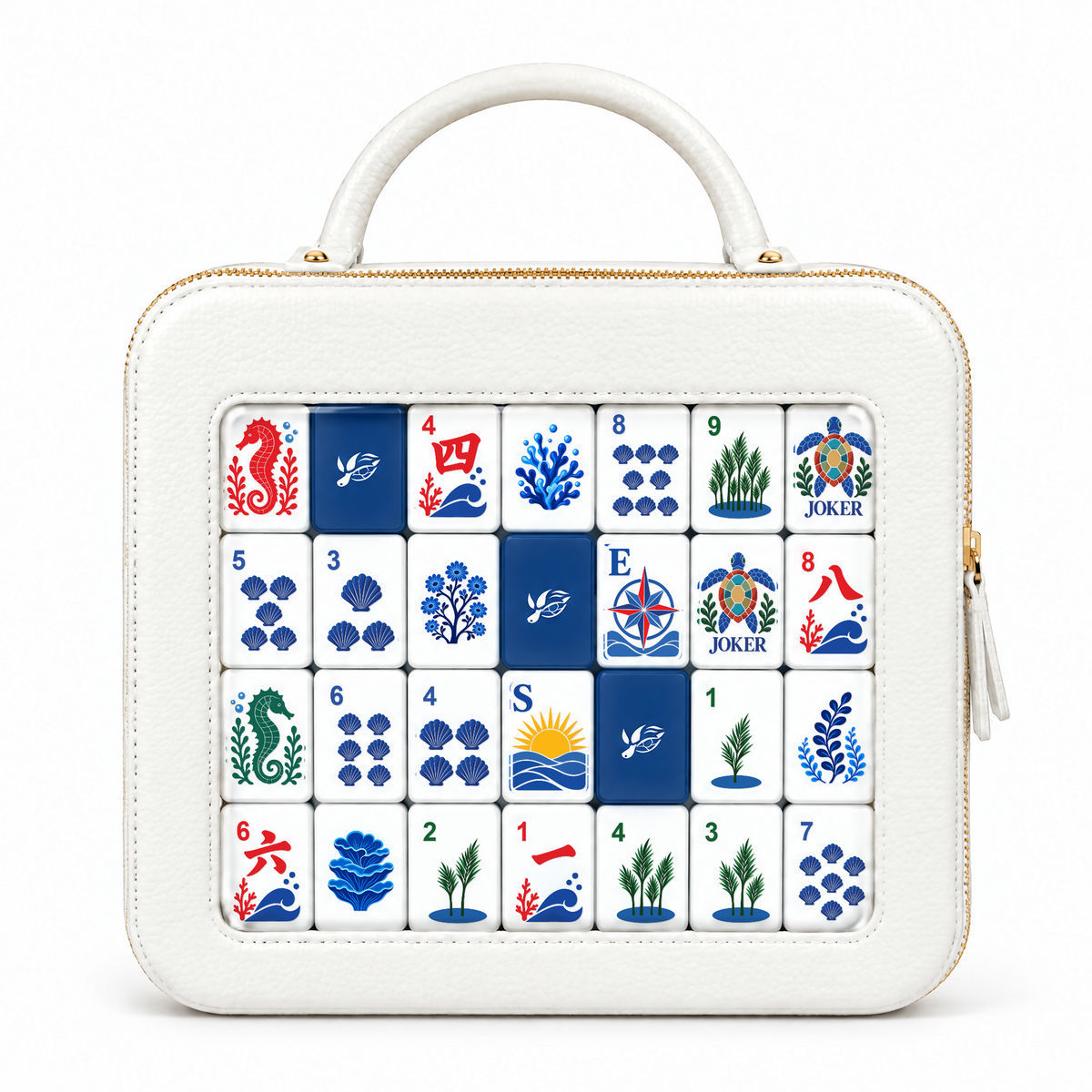
Cantonese 2-player mahjong (also called "headhunters" or "two-handed") uses a modified 108-tile set (one suit removed) or sometimes all three suits with reduced copies. Each player draws 13 tiles instead of the standard 14, and play cycles much faster because there are fewer players drawing from the wall. Winning hands follow Cantonese scoring rules (not the National Mah Jongg League card system), emphasizing melds like Pongs and Kongs plus a final pair. The game typically takes 15–30 minutes per round. The core difference: without four players rotating winds, the strategic geography of the game vanishes, forcing you to think defensively about what your one opponent is building rather than managing table position. If you own a standard 160-tile American mahjong set from Mahstead, you can adapt it by setting aside one suit and removing half the tiles, though a proper Cantonese set is designed for this variant from the start.
Cantonese mahjong with two players is a lean, cutthroat version of the game where every tile matters twice as much. You lose the social rhythm of four-player rounds and gain speed and intimate hand-reading—you're not guessing what three other players hold; you're locked in a duel with one opponent. Here's how to set it up, play it, and win.
Why is 2-player Cantonese mahjong so different from 4-player American?
American mahjong is a position game: your seat (East, South, West, North) and the Charleston (tile-passing ritual) give every player different tiles at the start. With two players, there's no meaningful position; you deal face-to-face and draw straight from the wall. American mahjong limits playable hands to those on the current year's National Mah Jongg League card—a curated, static list. Cantonese 2-player uses dynamic hand valuation based on tile combinations and point scoring, so any valid meld sequence can win if it scores high enough. The pace shifts too: four players each discard one tile per round, building a complex defense; two players discard twice as often, forcing faster reads and riskier plays. In Cantonese rules, a Kong (4 identical tiles) or a Pong (3 identical tiles) can be called and exposed on anyone's discard, not just your own draws.
🀄 Shop best-selling mahjong sets →

What tiles do you use for 2-player Cantonese mahjong?
A true Cantonese 2-player set uses 108 tiles: one suit (Bams, Craks, or Dots) removed entirely, so you have two complete suits (1–9, four copies each = 72 tiles), plus winds (4 each: East, South, West, North = 16 tiles), dragons (3 types × 4 copies = 12 tiles), and flowers (4 tiles). This creates a tighter, faster game because fewer tiles are in play. Some players adapt a full 144-tile Chinese set (three suits, no jokers, no flowers) by playing with all tiles but removing jokers. If you're starting with an American mahjong set—which includes Bams, Craks, Dots, winds, dragons, flowers, and jokers—remove one entire suit (say, all Bams) and set aside all jokers; use the remaining 100 playable tiles. You won't use the standard 8 jokers in Cantonese mahjong, so setting them aside keeps the game pure and teaches you to read the wall without wildcards. Keep your tiles in a Mahstead travel bag to protect the set while you swap between game variants.
How do you deal and set up the wall?
Both players sit across from each other. Shuffle all tiles face-down. Each player builds a wall of tiles in two rows: the wall is 18 tiles long per player (9 tiles wide × 2 tiles high per side = 36 tiles per wall), so the full wall is 36 tiles. To form it, one player rolls two dice; the total (2–12) determines where to start drawing. Beginning from that point on your own wall, count the tiles from right to left, and both players begin drawing from that break-point. The dealer (East) draws first, taking 2 tiles from the top of the wall (4 tiles total: 2 on top of the 2 below, a "stack"). The non-dealer draws next, taking 2 stacks (4 tiles). This alternates until each player has 13 tiles. The dealer then draws 1 more tile (the first draw of the discard round), giving the dealer 14 and the non-dealer 13. Play begins with the non-dealer's discard.
What are winning hands in Cantonese 2-player mahjong?
A winning hand in Cantonese mahjong has four melds (Pongs, Kongs, Chows, or mixed sequences) plus one pair = 14 tiles total. Each meld is 3 or 4 identical or consecutive tiles. A Pong is three identical tiles (e.g., 3 Red Dragons). A Kong is four identical tiles. A Chow is three consecutive tiles of the same suit (e.g., 5 Bam, 6 Bam, 7 Bam)—a key difference from American mahjong, where Chows are not callable. A pair is two identical tiles. Once you have a legal hand, you declare "Win" or "Mahjong." The hand is scored based on the composition: sets without jokers, all Honors (winds + dragons), all one suit, or special combos like "All Pongs" earn higher points. Scoring varies by region and house rules, but a basic system awards 1 point per meld quality level, multiplied by a base value (often 2 or 4 points per hand). The winner collects from the loser.
🎁 See our most-loved mahjong sets & accessories →

What are the core rule differences in play?
Calling Melds: In Cantonese play, any player can call and claim a meld (Pong, Kong, Chow) from the other player's discard. If you discard a 5 Crak and your opponent has 4 Crak and 6 Crak in hand, they can call that Chow immediately, then expose their three-tile set on the table and continue play. This is radically different from American mahjong, where only Pungs and Kongs can be claimed on your own discard, and Chows are never exposed.
Going Out: You can declare a win only on your own draw or if you call the winning tile from your opponent's discard. If you draw the 14th tile that completes your hand, you go out on that draw. If your opponent discards the tile you need, you call it and go out. You cannot go out on a tile you've had in your hand—you must form the hand at the moment of drawing or calling the final tile.
Robbing the Kong: If your opponent has a Pong on the table and draws the fourth identical tile to form a Kong, you may "rob" that tile instead of letting them take it—a bold but rare move that can save you from a losing hand. House rules vary on when and whether robbing is allowed.
Dead Wall: The last few tiles in the wall (often 7–14 tiles, depending on house rules) are never drawn; they stay dead to prevent endless play. Once the wall gets too small, the round ends in a draw and you reset.
How do you score and what beats what?
Cantonese scoring is point-based, not rank-based like American mahjong. A single point is the house minimum. You earn multipliers for special hands:
Hand Type | Base Points | Multiplier | Example |
All Pongs (no Chows) | 1 | ×2 | Four 3-tile Pongs + pair |
All Honors (winds + dragons only) | 1 | ×3 | Five Honor melds + pair |
All one suit (no Honors) | 1 | ×2 | All Dots/Bams/Craks + pair |
All Honors + one suit (Limit Hand) | 1 | ×4–8 | Rare; four Honor melds + one suit tile + pair |
Simple win (mixed) | 1 | ×1 | Standard hand, no special melds |
Each meld's composition modifies points too: Kongs score higher than Pongs; a pair of Dragons or a pair of your Wind (East, etc.) adds bonuses. A "self-draw" win (you drew the winning tile) often scores 1 point base; a "discard win" (you called the winning tile from your opponent) scores 0.5 points base, halving the multiplier in some rules. After 5–8 rounds or when one player reaches a target score (often 100 points), that player wins the session. House rules vary widely, so agree on scoring before you start.
✨ Find your Mahstead set — free US shipping →
What mistakes do new 2-player Cantonese players make?
Mistake 1: Confusing American and Cantonese hand-reading. American mahjong players expect every meld to be identical tiles (Pong, Kong, Quint, Sextet). Cantonese mahjong allows Chows (consecutive tiles). Your first game, you'll discard a 5 Dot thinking it's safe, forgetting your opponent might have 4 Dot + 6 Dot and call your discard for a Chow. Study Chow patterns before your first round.
Mistake 2: Hoarding tiles too long. With only two of you drawing, your opponent sees discards faster and reads your hand quicker. If you keep a 7 Bam, a 7 Crak, and a 7 Dot for three rounds, they'll know you're building Pongs or a mixed hand. Discard defensive tiles early (tiles that don't fit your obvious pattern) to throw off their count.
Mistake 3: Ignoring the dead wall. If you've drawn 30 tiles and only 8 remain, the round will end in a draw soon. Rushing to complete a marginal hand might waste that round. Instead, either commit to a clear win or fold and wait for the next deal.
Mistake 4: Not agreeing on house rules. Robbing a Kong, calling Chows mid-draw, scoring multipliers for a "clean" hand—all vary by region. Ask your opponent: Can I rob a Kong? Do Chows score as much as Pongs? Does a self-draw win double the payout? Before the first tile is laid.
Mistake 5: Overvaluing early draws. You draw a Dragon and two identical Craks; you might fixate on them. But if your opponent discards three different Dots and both Winds, they're fishing for a specific hand. Pivot your strategy; don't lock into the tiles you hold early—stay flexible until the wall shrinks.
What should you check before you buy a Cantonese 2-player set?
If you're buying a dedicated 2-player Cantonese set, verify the tile count: it should be 108 tiles (two suits + Honors + flowers, no jokers) or 144 tiles (three suits + Honors, no jokers or flowers). If you already own a 160-tile American mahjong set, you can play Cantonese by removing one suit and all jokers. Check that tiles are clearly marked: in dim light, you need quick reads of suit symbols and numbers. If you play frequently, consider a mat with a non-slip surface and a tile rail to protect your set and keep tiles from sliding during fast rounds. For storage, a bag or case prevents tiles from chipping or scattering in transit between homes or clubs.

FAQ
Can I use an American mahjong set for 2-player Cantonese?
Yes. Remove one suit entirely and all jokers. Use the remaining 100 playable tiles (two suits + Honors + flowers). You'll need to learn Cantonese hand-reading and scoring rules, which differ from American. It's playable, though a Cantonese-specific 108-tile or 144-tile set is cleaner.
How long does a 2-player Cantonese round take?
Typically 10–20 minutes. With only two players, the wall depletes faster and hands form quicker. A full session (5–8 rounds to reach a target score) takes 1–2 hours, much shorter than four-player American mahjong.
Is calling a Chow on someone's discard legal in all Cantonese rules?
Yes, calling Chows on discards is standard Cantonese play, a major difference from American mahjong where Chows are never exposed or called. Verify house rules with your opponent before starting, as some regional variants have stricter calling windows.
What's the best strategy for 2-player Cantonese?
Play defensively early; discard tiles your opponent is unlikely to need (isolated numbers, off-suit Honors). Read their discards for patterns—if they dump all low Dots, they're not building Dots. Build your own hand quietly, expose melds only when you're close to winning, and force them into dangerous discards.
Do I need special pushers or racks for 2-player Cantonese?
No. With only two players and 13–14 tiles per hand, racks with pushers are optional; many players simply hold their tiles in hand. A rack is useful if you have mobility issues or play long sessions, as it reduces hand fatigue.
Can beginners jump straight to 2-player Cantonese, or should they learn 4-player first?
Beginners benefit from learning four-player American or Cantonese first, as you'll absorb tile recognition and hand logic in a slower, social context. Two-player is faster and more punishing; mistakes show immediately. Start with four-player, then graduate to heads-up once you're comfortable reading tiles and basic melds.


View More
View More
View More
