
What Is Rolling the Dice in American Mahjong?
Last updated: Nov 23, 2026
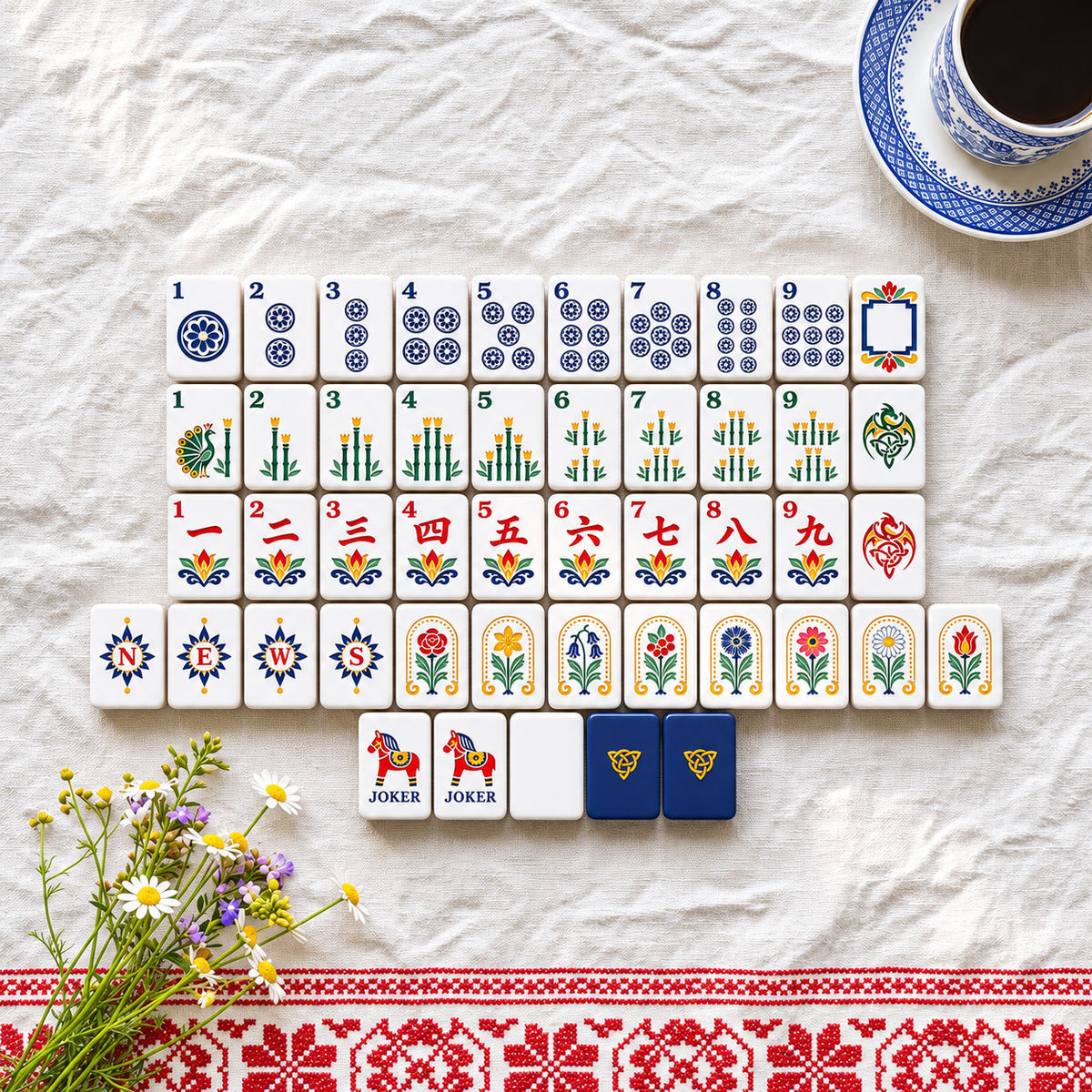
Rolling the dice in American mahjong is the procedure used after the Charleston to decide who becomes the dealer (East) and the order of the other three seats (South, West, North). Each player rolls two standard six-sided dice in turn, going around the table. The roller's score is added to a running total; the player whose roll causes the total to reach a number matching their seat number (1–4, clockwise from East) becomes the next dealer. If the total exceeds 4, it wraps: reaching 5 acts as 1, 6 as 2, and so on. A typical roll takes 2–3 minutes total.
Why do we roll dice at the start of each game?
The dice roll ensures every player has an equal mathematical chance of being dealer before any tiles are drawn. Without randomization, one player would always deal, skewing advantage. The National Mah Jongg League rules mandate a fair method; rolling dice satisfies that requirement. It also builds anticipation—everyone waits to hear if they'll manage the draw and discards first. Some players enjoy the small moment of suspense before the tiles touch the table.

How exactly do you count the dice roll?
Assign seats 1–4 clockwise around the table: East (dealer) = 1, South = 2, West = 3, North = 4. East rolls two dice first and adds the result (2–12). Keep a running total. South rolls and adds their result to the total. West rolls and adds. North rolls and adds. Once the cumulative total lands on or passes 4, divide by 4 and use the remainder. For example: East rolls 7 (total: 7). South rolls 5 (total: 12). West rolls 3 (total: 15). 15 ÷ 4 = 3 remainder 3, so seat 3 (West) is the dealer for that round. Modulo arithmetic prevents confusion: always reduce the final total by 4 until you have a number between 1 and 4. Write it down if you're learning; it becomes automatic after three games.
🀄 Shop best-selling mahjong sets →
What's the most common mistake when rolling?
New players forget to use modulo (remainders) and call the highest number the winner instead. If the total is 15, some say "North wins because the total is near 4" rather than dividing correctly. Another mistake: rolling once per player and stopping, instead of continuing the count. The dice roll is cumulative; every player must roll, not just until someone "reaches" a number. A third error is assigning seat numbers inconsistently. Confirm before rolling that everyone agrees: East = 1, South = 2, West = 3, North = 4 (always clockwise). Write the seat numbers on a notepad if your group rotates often. Recounting aloud at the end of all four rolls prevents disputes.
How does rolling the dice fit into the full game setup?
The sequence matters: first, everyone buys in and sits down. Second, perform the Charleston (pass tiles to all three other players in a set pattern per how to play American mahjong). Third, roll the dice to confirm dealer order. Fourth, the new dealer places the wall (143 tiles in a line facing them, with the pair of dice placed on top at the break point to indicate where the draw begins). Fifth, each player picks their 13 tiles in turn starting from the break. Sixth, each player draws a 14th tile on their turn, and play begins. Skipping or reversing any step breaks the whole sequence. Most groups write a simple laminated checklist and keep it on the table for the first few games of a new player.

Do different mahjong variants roll dice the same way?
Chinese, Hong Kong, Riichi, and Taiwanese mahjong use different dealer-selection methods. Chinese mahjong often rolls to place the wall break, not to name the dealer upfront—the dealer rolls again during wall setup. Hong Kong mahjong uses a similar cumulative count but may include the flower tiles or bonus points. Riichi uses a separate dealer-assignment rule tied to the opening hand: the player with the highest scoring hand becomes dealer next round, not a dice roll. American mahjong always uses the post-Charleston dice roll to assign dealer, making it one of the clearest and most repeatable methods. If you play multiple variants, clarify which method applies before anyone rolls; mixing them up halts the game for 5 minutes while everyone re-reads the rules.
🎁 See our most-loved mahjong sets & accessories →
What should you check before rolling?
Checklist Item | Why It Matters | How to Fix It |
Seat numbers assigned and agreed | Prevents recount disputes | Say aloud: "East = 1, South = 2, West = 3, North = 4" |
Dice are clean and not stuck | Unequal wear skews results | Use matched dice from a fresh set |
No one has rolled out of order | Cumulative total must be sequential | Enforce turn order: East → South → West → North |
You can see all four dice results clearly | Misreading causes recounts | Roll on a mat or flat surface; announce each total |
Final total is reduced by modulo 4 | Prevents wrong dealer assignment | 15 ÷ 4 = 3 remainder 3 → seat 3 is dealer |
A single miscount restarts the whole roll. It costs 90 seconds and zero goodwill; don't skip verification. Our mahjong mats have a dedicated dice zone so rolls land flat and visible to all four players.
Why does my group use physical dice instead of an app?
Some players prefer apps for speed and to avoid human error. However, the physical dice roll is part of American mahjong tradition and ritual. Hearing the dice rattle and watching the result emerge builds trust; players see the randomization happen in real time. An app removes that transparency, even if it's fair. Younger players sometimes prefer digital methods, but most weekly groups stick with physical dice because the tactile moment signals "this game is serious and fair." If your group plays once a week, the extra 2–3 minutes is negligible and often becomes a moment for chat or snack breaks. Keep your dice with your set; Mahstead sets include dice matched to the tile design for easy storage.
✨ Find your Mahstead set — free US shipping →
What to check before you buy dice:
If you're starting a new group or replacing worn dice, buy a standard pair from your mahjong set rather than generic gaming dice. Mahjong dice are often slightly smaller and color-coordinated to the set. Verify the numbers 1–6 are legible (not worn flat). Store them in a small cloth pouch inside your mahjong case so they don't roll loose during transport. Most players buy dice once with their set and never replace them; they're nearly indestructible. If one die cracks or the numbers fade after years of play, a spare pair costs little and arrives with your set's original purchase. Don't share dice between unrelated mahjong sets; players may unconsciously associate a particular set's dice with luck, and swapping them causes tension.

FAQ
Can the same person roll twice if no one "lands" on a seat number?
No. Four players roll once each, always once per round. The cumulative total always produces a remainder between 1–4; someone always becomes dealer. Remainders ensure no ties and no re-rolls.
If East rolls and the total is 4, does East stay dealer?
Only if East's individual roll creates a total that, when reduced by modulo 4, equals 1. If East rolls 5 and no one has rolled yet (total = 5), then 5 ÷ 4 = 1 remainder 1, so East is dealer next round. If South has already rolled before East, the running total changes the outcome.
Do you have to use the dice if you rolled them accidentally before the Charleston?
No. Pre-Charleston rolls don't count. Restart after the official Charleston ends. Only the post-Charleston roll determines dealer order. Any other rolls are void.
What if someone's dice roll lands on the floor?
Use the result from the die that landed nearest the table, or ask that player to roll again. Most groups say "re-roll if the die touches the floor" to keep it simple. Write this rule at the start of your first game so no one disputes it later.
Can you play American mahjong without rolling dice?
Technically, you could agree to a dealer by rotation or random draw, but the National Mah Jongg League rules require fair randomization. Dice rolling is the standard. Skipping it doesn't invalidate the game, but it's not American mahjong by official rules.
How do I explain rolling the dice to a beginner?
Say: "After the Charleston, each of us rolls two dice in order. Add all four rolls together. Divide by 4. Whoever's turn matches the remainder is the dealer." Demo one roll and count aloud. Most beginners understand after seeing it once.


View More
View More
View More
