
Singapore vs Siamese Mahjong: Key Differences Explained
Last updated: Nov 23, 2026
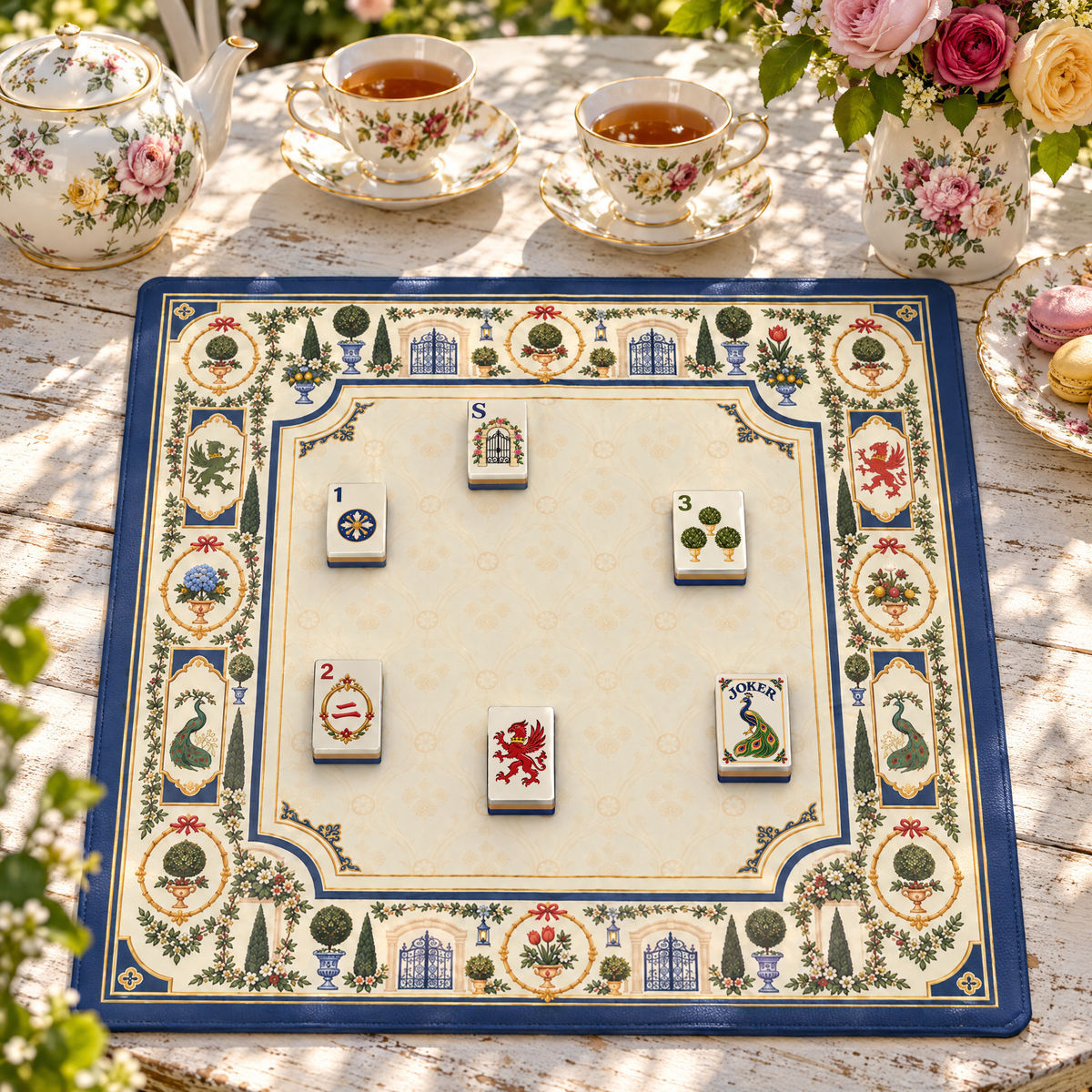
Singapore mahjong uses 144 tiles and emphasizes concealed hands and draw-heavy gameplay, with players rarely exposing melds until winning. Siamese (Thai) mahjong also plays with a reduced tile set but introduces a unique "flower" variant where three-tile combinations called "sets" differ from standard pung/kong structures, and players can declare melds mid-game. Both are played primarily across Southeast Asia. Singapore mahjong rounds typically last 15–30 minutes per hand; Siamese rounds vary by house rules but often run longer due to frequent melds. Neither game requires the spring NMJL card used in American mahjong. If you play American mahjong at home, moving to Singapore or Siamese means learning a completely different tile composition, hand system, and scoring model—but the core tile-matching logic remains recognizable to any mahjong player.
What tiles do Singapore and Siamese sets use?
Singapore mahjong plays with 144 tiles: four copies each of Bams 1–9, Craks 1–9, and Dots 1–9 (108 tiles), plus winds (16 tiles), dragons (12 tiles), and flowers (8 tiles). Siamese mahjong similarly uses 144 tiles but sometimes includes regional scoring tiles or blank variants that change hand calculations. The flower tile in Singapore is decorative; in Siamese mahjong, flowers are often integral to "special" hand categories. American mahjong, by contrast, uses a full 152-tile set plus 8 jokers—substantially more complexity because of the season and flower tiles, plus the joker mechanic itself. This tile-count difference alone means you cannot swap sets between variants; each game has its own ecosystem.

How do melds and exposures differ?
In Singapore mahjong, players keep most melds hidden and rarely expose pung or kong until someone wins. This concealment forces opponents to read discards and count carefully. Siamese mahjong encourages more open play: players expose melds (called "sets") throughout the hand, revealing strategy early and inviting more table conversation. American mahjong sits between them—you may expose pungs, kongs, and higher melds but never chows (sequences), and jokers can never appear in a single tile or pair. The "open play" style of Siamese means rounds feel more collaborative and teachable; the silent, counting-heavy nature of Singapore mahjong appeals to experienced players who enjoy deduction. Neither variant aligns perfectly with American mahjong's structured hand-from-card-only rule.
What are the winning hand patterns?
Singapore mahjong wins on five melds plus a pair (the same foundation as Hong Kong and traditional Chinese mahjong). Winning patterns are infinite as long as each meld is valid—three tiles (pung) or four tiles (kong), plus the final pair. Siamese mahjong uses similar meld structures but often introduces "special hands" (runs, all-one-suit, all-honor combos) that score bonus points, much like American mahjong's card-based hand list. American mahjong restricts you to hands shown on the current year's NMJL card; there is no improvisation. A Singapore player switching to Siamese must learn bonus patterns; a Siamese player switching to American must accept that only the printed card defines legal hands—a jarring constraint for those used to flexible winning conditions.
How does gameplay speed and round structure work?
Singapore mahjong rounds typically play at a steady, deliberate pace (15–30 minutes per hand) because the concealed-hand style demands constant attention and tile counting. Discards reveal little information, so newer players often feel lost. Siamese mahjong rounds vary widely depending on how often melds are called; frequent exposures can speed up play or extend it if debates arise over meld validity. American mahjong's round time depends on hand complexity and the group's familiarity with the current year's NMJL card—usually 20–45 minutes. Siamese mahjong tends to be the most social because melds are announced and discussed in real time. If your group values brisk, quiet play, Singapore suits you; if you prefer banter and transparency, Siamese is more forgiving.

Which variant is easier to learn?
Siamese mahjong is often considered more approachable for newcomers because the meld-call culture and open play make strategy visible and negotiable. Singapore mahjong demands pattern recognition, discard analysis, and silent reading of the table—skills that sharpen over months of play. American mahjong occupies the middle: the hand card removes guesswork (you know exactly what's legal), but the card itself is dense and requires study. For a household learning together, Siamese offers the fastest on-ramp; for long-term depth and competitive edge, Singapore rewards dedication. American mahjong suits groups already committed to a structured, card-based system. None is objectively "easier"—each is easier for a different type of player. Test-play a few hands in each variant before committing to a set; the variant you enjoy most is the right one, regardless of difficulty ranking.
Comparison: Singapore, Siamese, and American Mahjong
Aspect | Singapore | Siamese | American |
Tile Count | 144 | 144 | 160 (152 playing + spares) |
Winning Melds | 5 melds + 1 pair (fixed) | 5 melds + 1 pair + bonus specials | Hand must match NMJL card only |
Meld Exposure | Mostly hidden | Open, called aloud | Exposed pungs/kongs; no chows exposed |
Hand Selection | Player-created (infinite combos) | Player-created + bonus patterns | Card-only (one year's deck per season) |
Round Time | 15–30 min (deliberate) | 15–45 min (variable) | 20–45 min (card-dependent) |
Joker Use | Not used | Not used | 8 jokers per set; strict rules |
Skill Floor | High (reading discards) | Medium (visible play) | Medium (card memorization) |
Social Style | Quiet, analytical | Chatty, collaborative | Balanced, competitive |
🀄 Shop best-selling mahjong sets →
Should you switch variants—and what set do you need?
If you play American mahjong and want to explore Singapore or Siamese, you'll need a dedicated set for each variant because the tile compositions don't transfer. A Singapore or Siamese player visiting the US and encountering American mahjong similarly cannot use their home set; the joker mechanism, the season tiles, and the card-based hand system are unique to the American game. The upside: once you own a set for each variant you play, you have a lifetime toolkit. The downside: buying sets for two or three variants adds up quickly. Our best-selling mahjong sets include both American and classic 144-tile options, so you can start with your primary variant and expand later.
What to check before you buy a Singapore or Siamese set
Tile count: Confirm the set is exactly 144 tiles (or verify the exact count with the seller). Some sets marketed as "universal" are misleading.
Tile material: Acrylic, bone, and wood each feel different. Test in-hand if possible; online reviews help.
Joker presence: Singapore and Siamese sets should not include jokers. If the listing says "160 tiles," it's likely an American set mislabeled.
Card inclusion: Singapore and Siamese don't use a yearly card. If a set includes a score card or reference sheet, check it's region-specific, not an NMJL card.
Language markings: Look for English, Mandarin, Thai, or local-language tile markings depending on your group's preference.
Bag or case: Since you'll own multiple sets if you play more than one variant, a sturdy travel bag or case keeps tiles safe between games.
🎁 See our most-loved mahjong sets & accessories →
Playing multiple variants at the same table
Some households play both American and Singapore or Siamese mahjong on different nights or seasons. The key rule: label your sets clearly and store them separately. Use a permanent marker on the box or bag (e.g., "American 152," "Singapore 144," "Siamese 144"). Never mix tiles from different sets; even slight color or size variations confuse the game. If your group rotates variants, a mahjong mat and rack with pushers help players organize tiles quickly, reducing setup time between games. Many experienced players keep three sets—one for each major variant they love—and swap sets between seasons or gatherings based on who's attending.
✨ Find your Mahstead set — free US shipping →

FAQ
Can I use the same set for Singapore and Siamese mahjong?
No. Both use 144 tiles, but tile counts and regional variants differ slightly. Always confirm the exact composition with the seller before buying a single set to play both.
Do Singapore or Siamese mahjong sets come with jokers?
No. Jokers are specific to American mahjong. If a 144-tile set includes jokers, it's either mislabeled or a hybrid variant—ask the seller for clarification.
Is Singapore mahjong harder than American mahjong?
Not harder, but different. Singapore demands discard-reading and silent deduction; American mahjong requires memorizing the NMJL card. Choose based on play style, not difficulty.
How long does a typical Singapore mahjong round last?
15–30 minutes per hand. Rounds are deliberate because players keep melds hidden and must track discards carefully. Siamese rounds often run 15–45 minutes depending on meld frequency.
Do I need a special mat or rack for Singapore or Siamese mahjong?
Not required, but helpful. A mahjong mat keeps tiles organized and protects surfaces; racks with pushers speed up play and reduce tile fatigue, especially for extended sessions.
Which variant is best for teaching new players?
Siamese mahjong. Open meld calls and visible strategy make the game more transparent. American mahjong's card system and Singapore's silent deduction suit experienced players better.


View More
View More
View More
