
British Mahjong Cheat Sheet: Rules & Quick Reference
Last updated: Nov 23, 2026
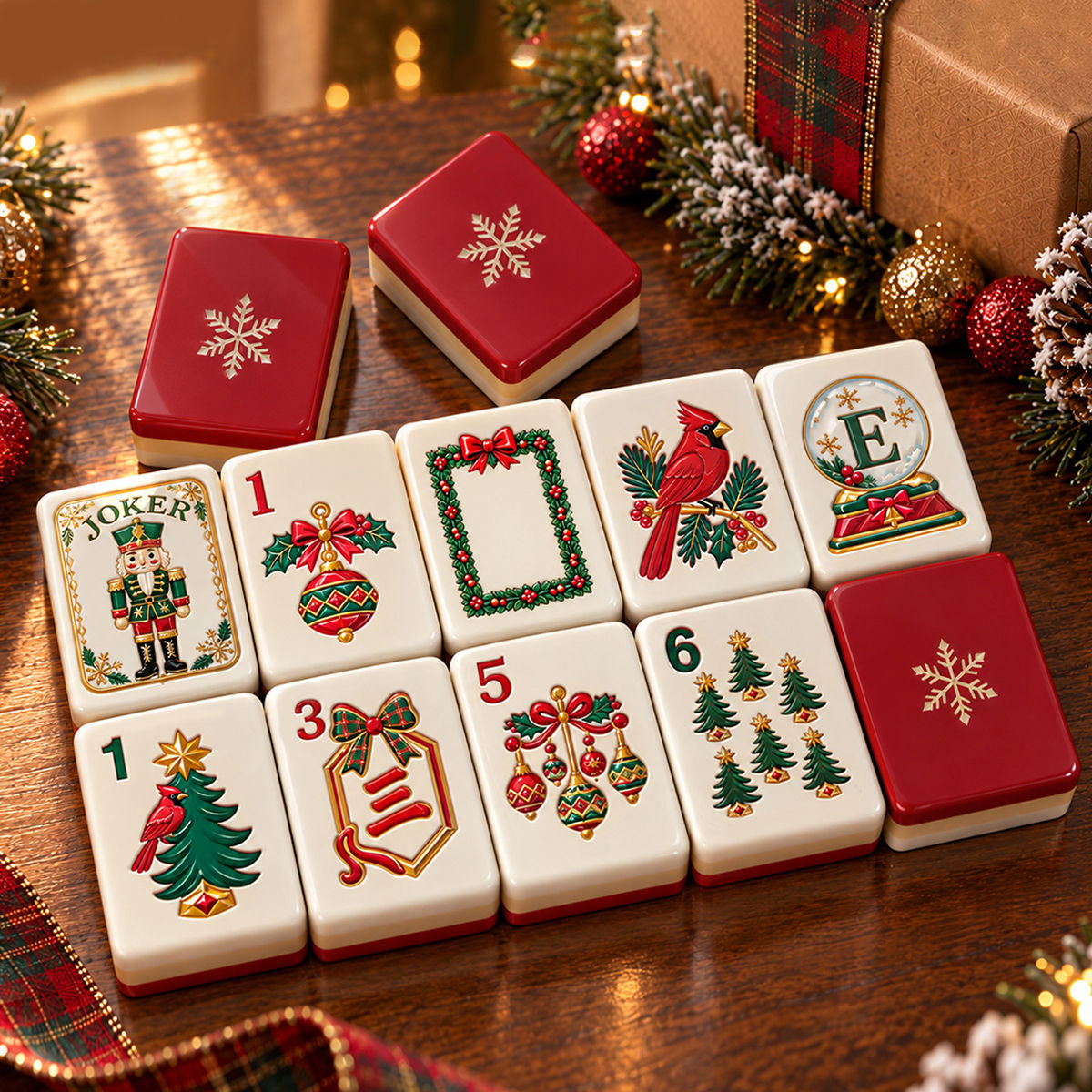
British mahjong, also called Riichi or Japanese mahjong in some contexts but distinctly its own variant, uses a 152-tile set identical to American mahjong's tile count but follows unique winning patterns, scoring rules, and hand mechanics. Unlike American mahjong—which ties hands strictly to the current National Mah Jongg League card—British mahjong players memorize traditional hand patterns and can call sequences (chows: three consecutive numbered tiles in one suit), pungs, and kongs at any time during play. Winning requires completing a hand of 14 tiles in 1934 standard patterns, and points are calculated by tile values, wait type, and win method. A typical British game takes 30–60 minutes; beginners learn the core rules in 2–3 sessions. British tiles, pushers, and mats are the same physical items as American sets, but the gameplay is fundamentally distinct.
🀄 Shop best-selling mahjong sets →
What tiles do British mahjong players use?
British mahjong uses the standard 152-tile set: three suits (Bams, Craks, Dots numbered 1–9 with four copies each), 16 winds (four each of North, East, West, South), 12 dragons (Red, Green, White), eight flowers, and eight jokers. The 1 Bam displays a bird; White dragon is called "Soap" or zero. You'll draw from a live wall of 144 tiles during play, with eight jokers remaining as dead tiles. British sets are physically indistinguishable from American ones, so any 160-tile acrylic set works—the difference is only in how you play.

How do winning hands differ from American mahjong?
American mahjong hands come from a printed card updated annually; British mahjong uses timeless 1934 standard patterns that don't change. A winning British hand contains 14 tiles: four melds (pungs, kongs, or chows) plus a pair. A chow is three consecutive numbered tiles in one suit (like 3–4–5 Dots), which you can call during play and declare openly on the table—American mahjong forbids chows entirely. You win by drawing or discarding to complete this 14-tile structure. British mahjong rewards pattern recognition over card memorization; experienced players instantly see if a combination qualifies.
What's the scoring system in British mahjong?
British mahjong scoring assigns point values to tiles based on their type and position in your hand. Dragons are worth 10 points each; winds worth 10 points if they match your seat or are the prevailing wind; flowers worth points during specific rounds; terminals (1 and 9) worth points in certain melds; and honors (dragons and winds) worth points when grouped. You also earn multipliers for how you won (drew from wall, claimed a discard), your wait type (single tile, double, or choice), and concealed versus exposed melds. Typical winning hands score 30–40 points for beginners; skilled players track combinations that yield 60+ for large payouts. Scoring sheets or calculator apps help tally during play.
How is play order and the deal structured?
Four players sit at cardinal positions: East (dealer), South, West, North. East deals first and goes first each round; if East wins, they deal again. Players draw 13 tiles, then East draws their 14th to begin. Each turn, you draw from the wall, then discard one tile face-up. Opponents may claim your discard to complete a meld (chow, pung, kong), which must immediately go on the table. If no one claims it, the next player draws from the wall. Play continues until someone wins with 14 tiles or the wall empties (dead hand). The deal passes counterclockwise after each round.

What are the main differences from American mahjong?
American mahjong uses an annual card with fixed hand patterns; British uses timeless memorized patterns. American mahjong prohibits chows and only allows exposed pungs, kongs, and quints; British allows chows and all meld types to be called. American scoring uses a point card tied to the hand; British uses tile-value arithmetic. American mahjong requires the Charleston (tile-passing ritual) before play begins; British does not. American games are typically faster (20–30 minutes) and rule-heavy; British games emphasize hand-reading skill and pattern familiarity. If you know American mahjong, expect a 1–2-week learning curve to switch to British rules—tiles are identical, but strategy and terminology differ completely.
Aspect | American Mahjong | British Mahjong | Why It Matters |
Hand source | Annual National Mah Jongg League card | 1934 standard patterns (timeless) | American requires card purchase; British is free once learned |
Chows allowed | No; only pungs, kongs, quints, sextets | Yes; central to most hands | British gameplay flows faster with more meld options |
Scoring basis | Hand pattern on the card | Tile values + win method | American is look-up; British is calculation |
Tile-passing ritual | Charleston (mandatory) | None | American setup takes 5 min; British starts immediately |
Game length | 20–30 min typical | 30–60 min typical | British rewards complex patterns; American prioritizes speed |
Win condition | Hand from the card + conditions met | 14 tiles in valid pattern | American is rigid; British is pattern-based |
🎁 See our most-loved mahjong sets & accessories →
What mistakes do new British players make?
The biggest blunder is forgetting that you can call chows. New American mahjong players often wait for pungs or kongs only, missing winning opportunities. A second trap: discarding honor tiles (dragons, winds) too early—they often trigger wins by other players and are hard to replace. Never hoard jokers; use them to complete melds and unblock your hand. Don't assume the player showing their melds first will win; British mahjong allows last-turn reversals, so discard carefully until the wall is nearly empty. Finally, avoid rushing the score calculation—most disputes arise from arithmetic errors, not rule misreads. Keep a notebook the first dozen games to spot your personal weak spots.
What equipment makes British mahjong easier to play?
The same acrylic tile sets work for both American and British mahjong—a quality best-selling set with clear engraved markings eliminates squinting and tile misreads. Racks with pushers hide your hand neatly and let you organize melds quickly, which is crucial when you're learning patterns. A padded mat protects tiles and dampens noise, making it easier to focus on strategy. Dice are standard (roll to see who deals), and a travel bag keeps tiles sorted. None of these are mandatory, but they speed up learning and reduce errors on the table.
✨ Find your Mahstead set — free US shipping →
What to check before you buy a British mahjong set
Tile clarity: Look for high-contrast engraving so you read suit symbols (Bamboo, Circle, Character) instantly under table light. Acrylic thickness: Thicker tiles (acrylic vs. bone/bamboo) last longer and shuffle silently—important for back-to-back games. Complete tile count: A 160-tile set includes all 152 playing tiles plus spares. Confirm no tiles are missing before your first game. Included accessories: Check if dice, pushers, and a carrying bag are included or sold separately. Hand size fit: If your hands are small or large, test a rack to ensure tiles fit comfortably—ergonomics matter over long sessions.

FAQ
Can I use the same set for both American and British mahjong?
Yes. The tile set (152 tiles plus jokers) is identical. Only the rules and hand patterns differ. One set supports both variants.
How long does it take to learn British mahjong if I know American?
Most American players transition in 2–4 weeks of casual play. The biggest hurdle is learning chows and the 1934 pattern library; after that, strategy clicks quickly.
What's the biggest rule difference that catches new players?
Chows. You can call three consecutive numbered tiles in one suit and declare them openly on the table. This is forbidden in American mahjong and feels radical at first.
Do I need to memorize all 1934 winning patterns?
No. Beginners play with a reference sheet for the first 10–20 games. Muscle memory and visual recognition kick in naturally; most patterns follow logical themes (all terminals, all dragons, etc.).
Is British mahjong harder than American mahjong?
Different, not harder. American mahjong is card-lookup and rule-heavy; British is pattern-recognition and arithmetic-heavy. Choose based on whether you enjoy memorization or mental math.


View More
View More
View More
