
How to Play Guangdong Mahjong: Rules, Setup & Strategy
Last updated: Nov 23, 2026
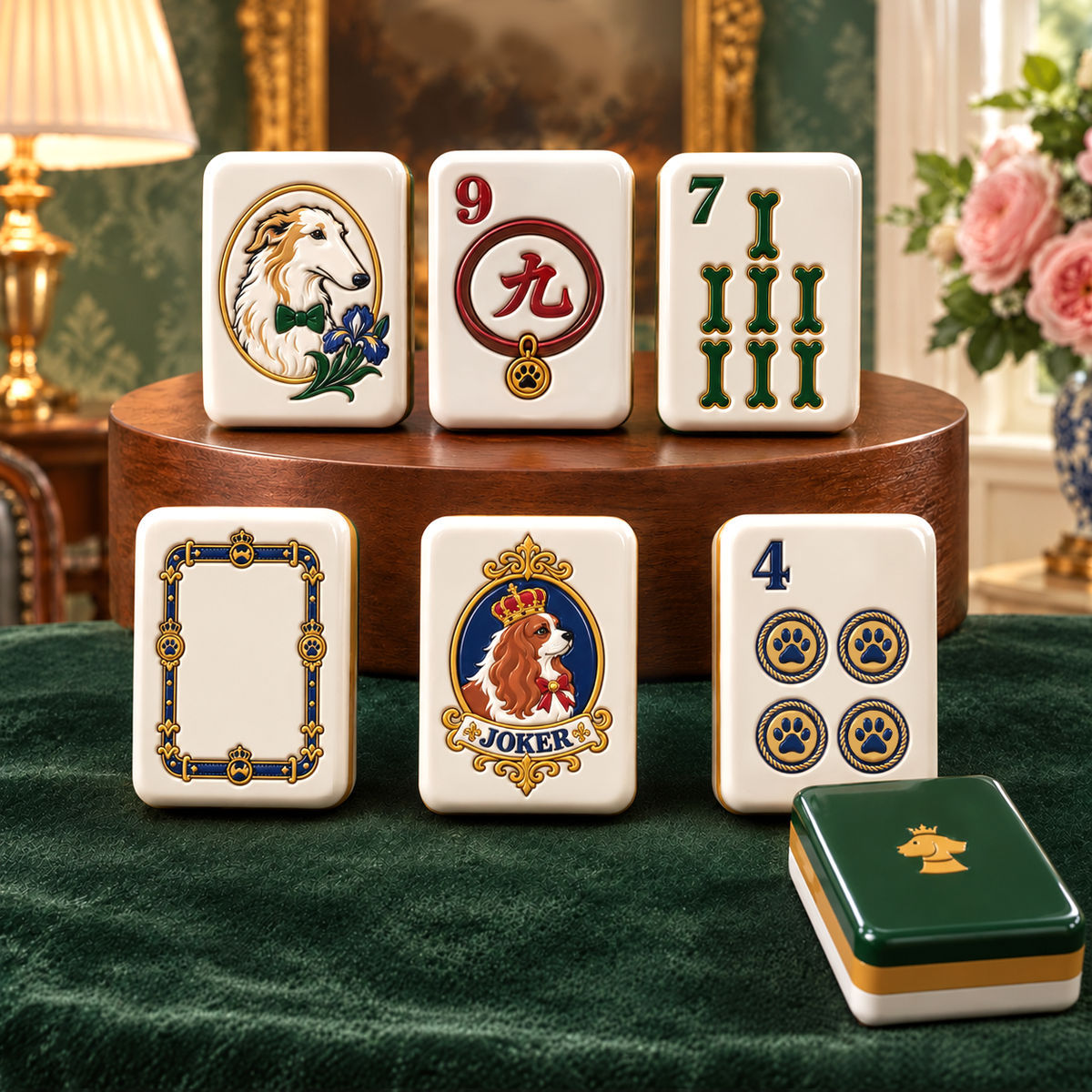
Guangdong (Cantonese) mahjong uses 136 tiles: the standard 108 number tiles (Bams, Craks, Dots 1–9, four of each), 16 winds, 12 dragons, and no flowers or jokers. A game lasts about 45 minutes to 2 hours and is built on melds (pungs, kongs, chows—unlike American mahjong, which forbids chows). Winning requires a hand of four melds plus a pair, drawn either from the wall or when another player discards. Scoring is decimal-based and tracks cumulative wins rather than point values per hand. Guangdong mahjong is faster, more interrupt-heavy, and demands rapid tile-reading and defensive play. The game is played in live communities, cultural centers, and online platforms across Asia and the diaspora—not on the National Mah Jongg League card.
Guangdong mahjong is the everyday game of Southern China, beloved for its speed, bluff, and social ritual. Unlike the American variant (which uses hand cards and preset patterns), Guangdong mahjong is fluid, aggressive, and rewards quick decision-making. If you've learned American mahjong first, Guangdong will feel like jumping from checkers to chess: the rules are tighter, but the tempo is breakneck.
What tiles are in a Guangdong set, and how do they differ from American?
A Guangdong mahjong set contains 136 tiles total: 108 number tiles (Bams, Craks, Dots, each 1–9 in four copies), 16 winds (four cardinal directions, each in quadruplicate), 12 dragons (four Red, four Green, four White), and no flowers, seasons, or jokers. American mahjong adds flowers, jokers, and extra tiles to reach 152 or 160 pieces. Guangdong's smaller footprint makes it faster and forces tighter strategy—you cannot rely on jokers to bail you out. The tiles themselves are identical to Chinese/Hong Kong sets, so there is no American-specific Guangdong variant; any traditional 136-tile Chinese set will work.

How do you form and claim melds in Guangdong mahjong?
In Guangdong, a meld is either a pung (three identical tiles, e.g., three 5 Dots), a kong (four identical), or a chow (three consecutive tiles in one suit, e.g., 4–5–6 Bams). This is a core difference from American mahjong, where chows cannot be declared or exposed. Melds are formed in your hand and claimed (exposed on the table) when you either draw a tile that completes it or when another player discards a tile you need. When you claim a meld, all players see it—this transparency is central to Guangdong's social and defensive play. Exposed melds stay on the table for the rest of the hand and count toward your win. Crucially, a meld formed entirely from tiles you drew (not claimed from a discard) is "closed" and scores higher than an exposed one.
What makes a winning hand, and how does scoring work?
A winning hand comprises four melds (pung, kong, or chow) plus one pair (two identical tiles). You win by either drawing the final tile from the wall (called "win from the wall" or 自摸) or by claiming a discard that completes your hand. Scoring is cumulative and based on fan (multipliers): a basic win is 1 fan, and bonuses stack for patterns like "all pungs," "all one suit," "terminals and honors," or "seven pairs." Each fan typically doubles the payout or adds a fixed unit (varying by house rules). Unlike American mahjong's complex point tables, Guangdong scoring is arithmetic and negotiated before play. Most home games settle bets in small currency units per fan—this is why speed and observation matter: every discard is a signal, and every exposure tells you what others are chasing.
How does the discard and draw sequence work?
Each turn follows a rigid pattern: draw one tile, then discard one tile. After you discard, any other player can claim it for a chow (only the player directly after you can claim for a chow; anyone can claim for a pung or kong, but claiming a kong sacrifices your turn). If no one claims the discard within seconds, it is dead and the next player draws. This creates the tempo: you are always watching the discard pile and calculating whether a tile is "safe" or dangerous. Dangerous discards are those matching the suits or numbers of tiles that players before you have exposed—if Player B exposed a 4–5–6 Craks pung, then discarding a 3 or 7 Crak risks Player C claiming it for a chow. The best Guangdong players memorize every exposure and safe discard in microseconds.
What are the main strategic differences from American mahjong?
American mahjong is pattern-driven: you hunt for a specific hand from the current year's card, and jokers let you substitute and hedge. Guangdong is meld-driven: any four melds plus a pair win, so flexibility is built in, but exposure is irreversible. In American mahjong, you can hold tiles face-down (your rack) and bluff or delay; in Guangdong, every discard is a bet and every exposure is a commitment. Defense is active: you track opponents' exposed melds to infer what they're chasing, and you poison the discard pile with tiles they cannot use. Luck matters less because the tile distribution is fixed and you can calculate odds. Speed matters more: hesitation signals weakness. Finally, Guangdong allows dead hand (a hand that cannot win given the remaining tiles and opponents' melds), which ends your play immediately—a risk that sharpens focus.
Decision Guide: Guangdong vs. American Mahjong
Aspect | Guangdong | American |
Tile count | 136 | 152–160 |
Hand structure | 4 melds + pair (any pattern) | 1 hand per year's card |
Chows (1–2–3 sequences) | Allowed and crucial | Forbidden |
Jokers | None | 8 in play |
Exposed melds | Scored lower than hidden | Not scored separately |
Speed | 45–90 min per hand | 90–120 min per hand |
Defense | Active; discard tracking | Passive; pattern hunting |
Scoring | Decimal multipliers (fan) | Point values per hand |
Learning curve | 3–5 hours for basics | 2–3 hours for basics |

How do you handle kongs and stealing/robbing?
When a player draws or claims a tile that completes a kong (four identical), they expose the kong and draw a replacement tile from a separate section of the wall (the "kong tail"). This keeps the hand at 13 tiles (the winning 14th is the draw you just made). If you already have a pung on the table and draw the fourth tile, you can add it to the pung to form a kong—other players can then rob the kong (claim that fourth tile as their winning pair or meld), which ends the hand and awards the win to the robber, not the kong-maker. This mechanic is uniquely tense: exposing a kong invites danger, and keeping a pung concealed avoids the risk. Kong tactics are where Guangdong play becomes psychological.
What common mistakes do new Guangdong players make?
Discarding too fast. Hesitation signals strength; rushing signals weakness. New players often discard carelessly and tip their hand. Pause for 2–3 seconds even if you know what to throw.
Forgetting chow order. A chow is unidirectional: 4–5–6 is valid, but you cannot mix it with a 6–7–8 in the same suit as a single pair. Learn chow logic before play.
Misreading opponent melds. Every exposed meld shrinks the odds of similar tiles appearing. If a player exposes a 3–4–5 Dot chow, assume they do not want Dots 1–2 or 6–7–8.
Keeping too many honor tiles. Winds and dragons are hard to meld. Hold them only if you have a clear two-meld line; otherwise ditch them early.
Not tracking the wall. Guangdong players monitor how many tiles remain. Late in the wall, long hands become impossible—shift to defensive play.
🀄 Shop best-selling mahjong sets →
What materials and set size work best for Guangdong mahjong?
A Guangdong game is fast and tactile—tiles are shuffled loudly on the table, drawn rapidly, and discarded with purpose. You'll want tiles that are durable, sound clear when mixed, and easy to read at a glance. Our best-selling mahjong sets are sized for standard play and built from acrylic or resin, so they withstand weeks of weekly games without cracking or fading. A set should include a sturdy carrying case, especially if you move between homes or meetups. Most Guangdong players keep a set at home and one at a friend's house so they never need to ask "Who's bringing the tiles?"—redundancy avoids friction. A quality mat is optional but invaluable: it silences the click-clack of shuffling (polite to neighbors) and marks the wall boundary clearly, which new players appreciate. If you are hosting, a mahjong mat transforms a dining table into a professional play surface in seconds.
What to check before you buy
Tile count. Confirm your set has 136 tiles (some Chinese sets add blanks or extra flowers—verify the listing). If you want a set that covers both American and Guangdong, a 152-tile set works, but the extra tiles sit unused for Guangdong games.
Character legibility. Guangdong tiles use traditional Chinese characters for winds (北 North, 南 South, 東 East, 西 West) and dragons (中 Red, 發 Green, 白 White). If characters are tiny or embossed poorly, fast play becomes a squint fest.
Weight and balance. Heavy tiles (140–160g per tile) feel premium and resist shifting; lighter ones (80–100g) are travel-friendly. Ask yourself: will this set live on one table or move often?
Noise level. Acrylic tiles are louder than resin. If you live in an apartment or play late, resin is neighborly; if you like the traditional crack of shuffling, acrylic is your preference.
Case fit. The case must accommodate all 136 tiles plus a wall divider (if included). A case that is too tight will jam; too loose will let tiles slide.
🎁 See our most-loved mahjong sets & accessories →
Where can you learn and play Guangdong mahjong?
Guangdong mahjong thrives in community centers, cultural societies, and private homes in cities with significant Chinese populations. Search online meetup boards for "Cantonese mahjong," ask at local libraries or community centers (many host weekly games), or connect through friends and family networks—word-of-mouth remains the primary gateway. YouTube has tutorial channels in Mandarin and Cantonese that demonstrate hand-forming and discard strategy. Online platforms (Tencent's MJ, Mahjong Soul, and regional apps) offer free practice, though the pace is faster online and internet lag punishes hesitation. Start with 1–2 friends and a YouTube guide, then scale up to four-player games once you are confident. Most newcomers need 5–10 supervised hands before they stop thinking and start reacting.
✨ Find your Mahstead set — free US shipping →

FAQ
Can I use an American mahjong set for Guangdong?
Technically yes if it is a 152-tile set (which includes all 136 base tiles), but the extra tiles and jokers will confuse setup. Buy or borrow a traditional 136-tile Guangdong set instead—they are inexpensive and widely available online.
Is Guangdong mahjong played for money?
Often, yes. House rules typically involve small per-fan stakes (from currency units to dollars per multiplier). House rules vary wildly; always agree on bets before the first draw. Many casual home games are played for bragging rights only.
How long does a game of Guangdong mahjong take?
A single hand typically lasts 10–15 minutes; a full session (8–16 hands) runs 2–4 hours depending on player speed and chatter. American mahjong is slower because of the card and pattern-matching overhead.
What is the hardest part of learning Guangdong mahjong?
Internalizing chow logic and defensive discard strategy. Forming pungs and kongs is intuitive; predicting what opponents want and poisoning the discard pile takes 20+ hours of play.
Can you play Guangdong mahjong with 2 or 3 players?
Yes, but the game changes. With 3 players, each sits at a corner of the table and the fourth position is "dead" (its discard pile is not playable). Variant rules adjust hand-completion odds. With 2 players, the game is too luck-dependent and rarely played. Stick to 4 for the full experience.
Do I need a mat and racks for Guangdong mahjong?
No—many players use a bare table and hold all tiles in their hands. But a mat and racks with pushers reduce shuffling noise, organize tiles visually, and make the game easier for beginners. They are a quality-of-life upgrade, not a requirement.


View More
View More
View More
