
What Is Chow in Mahjong? American Rules Explained
Last updated: Nov 23, 2026
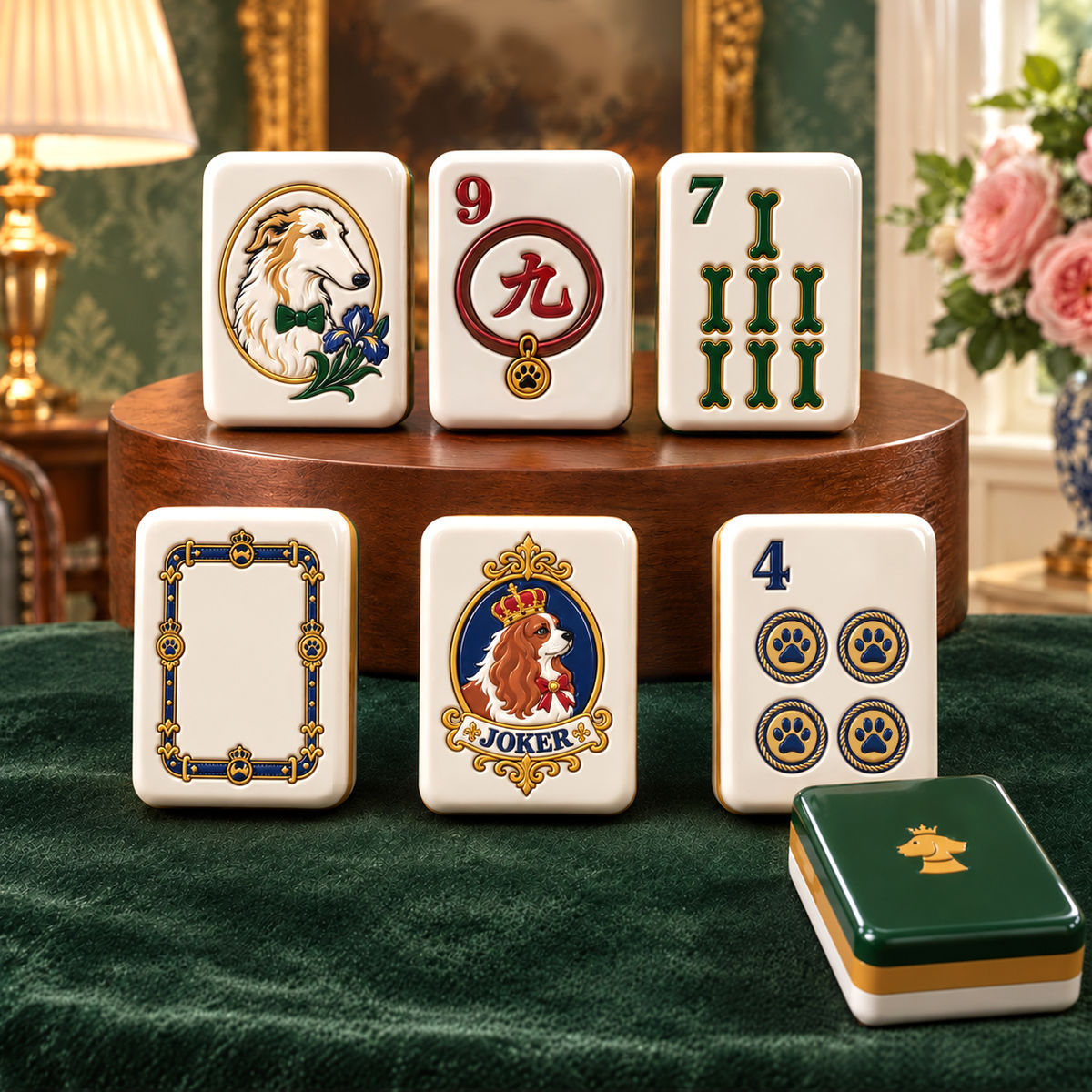
A chow (or chow meld) is a sequence of three consecutive numbered tiles in the same suit—for example, 4 Bam, 5 Bam, 6 Bam. In Chinese, Hong Kong, and Taiwanese mahjong, chows are fundamental melds you can call, steal, and expose on the table. American mahjong is entirely different: chows are not allowed. American players can only expose pungs (three identical tiles), kongs (four identical), quints (five identical), and sextets (six identical). Jokers may substitute in these exposed groups but never in a single tile or pair. This structural difference shapes every hand on the National Mah Jongg League card—all legal American hands consist only of sets and pairs, never sequences. If you play Chinese or Riichi mahjong, chows are your workhorse. If you play American mahjong with a best-selling mahjong set, you'll never use them. 🀄 Shop best-selling mahjong sets →
Why doesn't American mahjong have chows?
American mahjong was codified in the 1920s–1930s by Jewish and Chinese immigrants in the United States, drawing inspiration from Chinese variants but reinventing the rules entirely. The designers chose to simplify the game by removing sequences and basing all legal combinations on the printed card issued yearly by the National Mah Jongg League. This eliminated the need for players to memorize hundreds of hand patterns and made the game less dependent on rapid decisions during a round. The result is a slower, more deliberative game in which hand-building is a puzzle solved before play begins, not during it. American mahjong players instead focus on reading the card, managing the Charleston tile-passing ritual, and tracking discards to anticipate winning opportunities.

How do chows work in Chinese and other Asian variants?
In Chinese mahjong (and its Hong Kong and Taiwanese cousins), a chow is a meld of three consecutive numbered tiles in one suit: 1-2-3, 5-6-7, 8-9-1 (wrapping), and so on. You can call a chow from a discard (steal the tile), or form one from your own hand. Once called or formed, you expose it face-up on the table. Chows are combined with pungs (three identical tiles), kongs (four identical tiles), and a pair to form a complete 14-tile hand. In Riichi (Japanese) mahjong, chows work similarly but with strict rules about who can call them and when. Taiwanese mahjong allows chows but often with regional variations in naming and stealing. The key advantage: chows create flexibility. You can complete a chow with a single tile, so your hand stays fluid longer than in American mahjong, where pungs and kongs require three or four identical tiles.
Variant | Chows? | Calling & Stealing | Hand Structure | Pace |
American | No | N/A | Sets + pair only | Deliberate, card-based |
Chinese | Yes | Open, multiple players can steal | Chows + pungs + kong + pair | Fast, reactive |
Hong Kong | Yes | Restricted, often East only | Chows + sets + pair + bonus tiles | Medium, skill-driven |
Taiwanese | Yes | Open with variations | Chows + sets + pair + regional twists | Medium to fast |
Riichi | Yes | Restricted by turn order | Chows + pungs + kongs + pair | Fast, honor-based |
🎁 See our most-loved mahjong sets & accessories →
What does "exposed" mean, and why can't you expose a chow in American mahjong?
To expose a meld means to lay it face-up on the table so all players see it. In Chinese and other chow-allowing variants, once you call or form a chow, you expose it immediately. In American mahjong, you cannot expose a chow—because chows are not legal melds. You can expose only pungs, kongs, quints, and sextets. The reason is structural: American mahjong's entire ruleset depends on the current National Mah Jongg League card, which lists only legal combinations of identical-tile sets and pairs. Exposing a meld also has a strategic cost: all players know what you're building toward, and they can adjust their discards. In American play, many players keep their hand hidden until they win, which makes the game feel more like a hand-solving puzzle than a negotiation with other players.
Can you play American and Chinese mahjong with the same set?
Technically yes, but it's not ideal. American mahjong uses 152 tiles plus 8 jokers (often sold as a 160-tile set with spares); Chinese mahjong typically uses 144 tiles with no jokers. The tile designs differ too: American sets feature Arabic numerals and clear Western styling, while Chinese sets use traditional characters and art-heavy designs. A Mahstead engraved American mahjong set is built specifically for American rules—the tiles are sized and marked for speed and clarity during play, and many sets feature custom engraving that reflects American themes or inside jokes from your weekly game. If you try to play Chinese mahjong with an American set, you'll have two problems: jokers (which aren't used in Chinese play) and the lack of certain character tiles. Conversely, if you use a Chinese set for American mahjong, you'll lose the standardized joker and may struggle to read unmarked or unfamiliar character-based designs. For serious play, stick with a set designed for your chosen variant.
✨ Find your Mahstead set — free US shipping →

How do you score a winning hand without chows?
American mahjong scoring is entirely based on the printed card for that year. Each hand listed on the card has a point value (usually 30–60+ points, depending on difficulty and rarity). When you win, you consult the card, identify the matching hand, and claim the points. There are no bonus points for melds or combinations; the only bonuses come from declaring Concealed (hand built entirely from your own tile draws, never calling a discard) or No Jokers (completing the listed hand without using any joker substitutes). Because sequences don't exist, scoring is simpler than in Chinese mahjong, where you'd calculate points for melds, honor tiles (winds, dragons), and bonus tiles. This simplicity is deliberate: American mahjong rewards strategy and card-reading skill, not arithmetic speed. If you're learning American mahjong, focus first on reading the card and recognizing hand patterns, not on scoring. Once you've won a few hands, the point values become intuitive.
Should you learn chows if you play American mahjong?
No. If you play American mahjong exclusively, there's no reason to study chows. However, if you're curious about other variants or might visit a game in a different region (or online), learning how chows work is valuable context. Many mahjong players start with American rules and then explore Chinese or Riichi mahjong later—each variant has its own appeal. Chinese mahjong is faster and more reactive; American mahjong is more cerebral and card-focused. Riichi mahjong adds honor tiles and bonus hand patterns. If you're serious about American play, invest in mastering the current year's National Mah Jongg League card, the Charleston ritual, and hand recognition. A mahjong mat and racks with pushers will give you a professional setup that makes play faster and clearer, which is where you'll really see the beauty of American rules: pure hand-solving under pressure.
What to check before you buy a mahjong set for your variant
Confirm the variant: Are you playing American, Chinese, Hong Kong, Taiwanese, or Riichi? Don't assume—ask your group which card or rulebook they use.
Check tile count: American sets are 160 tiles (152 playing + spares); Chinese sets are typically 144 tiles. Mixing them will cause confusion.
Verify tile design: American tiles use clear Arabic numerals and Western styling. Chinese tiles use characters. Some players prefer hand-painted bamboo or acrylic for durability.
Confirm joker presence: American sets include 8 jokers (never use them in a single tile or pair). Chinese sets have zero jokers—confirm before ordering.
Look for clarity: Tiles should be easy to read from across the table. Mahstead's best-selling sets use bold numerals and crisp paint.
Test weight and feel: Hold a tile if you can. Too-light tiles feel cheap; too-heavy tiles tire your hand during long games.
Plan storage: A mahjong bag or case keeps tiles organized and protected between games.

FAQ
Can I play American mahjong if I only know how to play Chinese mahjong with chows?
You'll need to learn a new game. American mahjong has no chows, no calling from the table, no honor bonuses, and a completely different hand-validation system (the printed card). Many players switch between variants, but each requires dedicated practice—the strategies differ significantly.
What happens if someone tries to call a chow in an American mahjong game?
It's not a legal meld under American rules, so the call is rejected. The discard returns to the player, and play continues. Always clarify your variant before sitting down—it prevents awkward corrections mid-game.
Are Mahstead sets compatible with both American and Chinese mahjong?
Mahstead sells exclusively American mahjong sets (160-tile, with jokers and Arabic numerals). They are not suitable for Chinese play. If you play both variants, you'll need two separate sets.
Why do Chinese players use chows if American players don't?
The two variants evolved separately. Chinese mahjong (the original) uses chows for flexibility and speed. American mahjong (1920s–1930s reinvention) simplified the rules to make the game more strategic and card-based, removing chows entirely.
If I learn American mahjong first, will I be confused switching to Chinese mahjong later?
Yes, initially. Your hand-solving instincts will be different—American players think in "sets and pairs," while Chinese players think in "sets, pairs, and sequences." Many players play both, but you'll need dedicated practice for each variant.
Does the NMJL card change every year, and does that affect chows?
The card changes every spring, but chows remain banned in American mahjong every year. The card lists legal hands for that season; none of them include sequences. You'll need to buy or access a current-year card before each season starts.


View More
View More
View More
