
Riichi Mahjong Ittsu Rules: Complete Guide & Hand Examples
Last updated: Nov 23, 2026
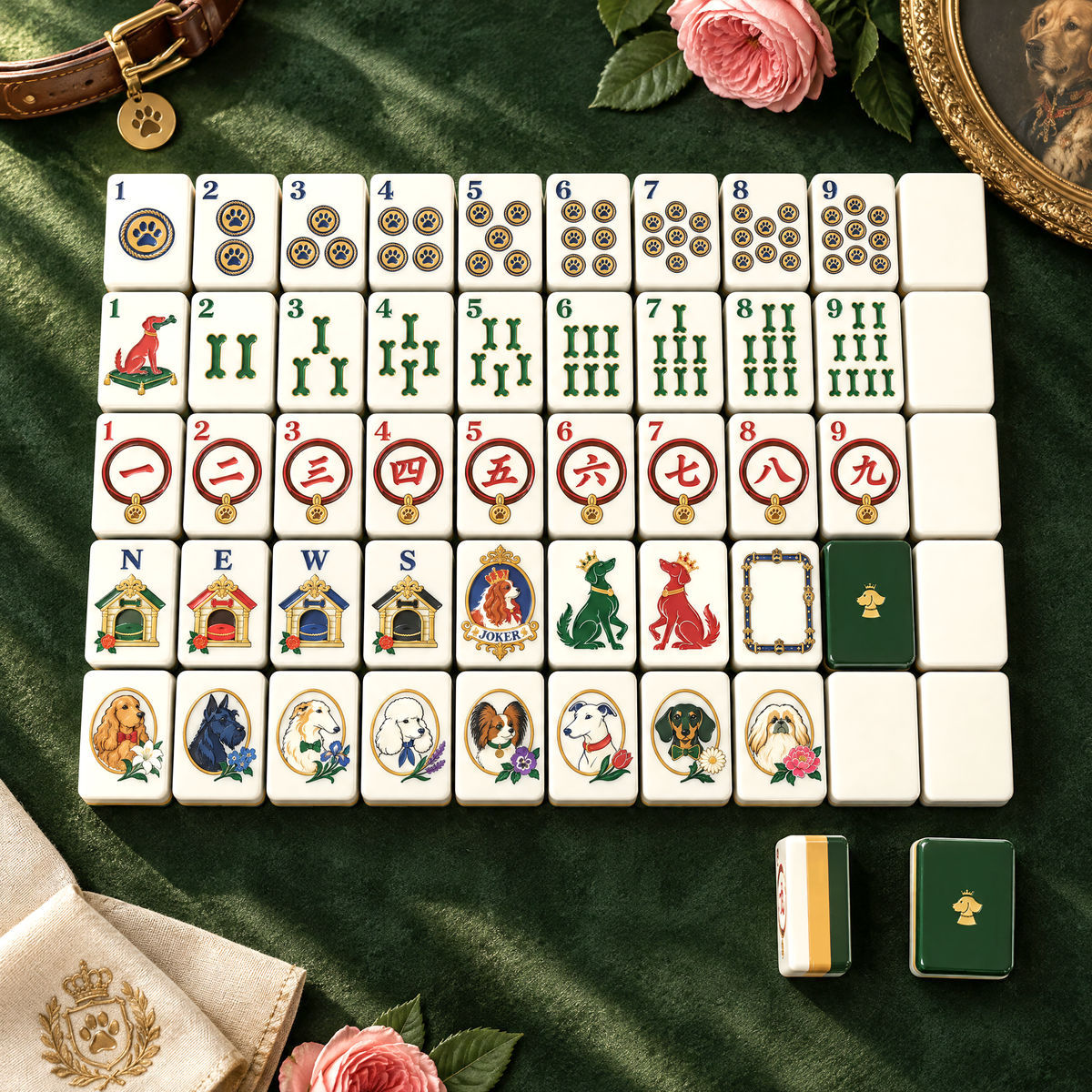
Ittsu (一通, "all terminals and honors in sequence") is a riichi mahjong yaku (winning pattern) worth double points. The hand requires three melds (groups) of consecutive number sequences—such as 1-2-3, 4-5-6, and 7-8-9 in the same suit (Bamboo, Pin, or Character)—plus a pair. In riichi play, sequences (called chows) are core to winning; you declare them when drawn and opponents discard into them. Unlike American mahjong, which forbids sequences entirely and uses a fixed card of playable patterns each year, riichi mahjong rewards melds built across the entire game. Ittsu appears frequently in intermediate-level play. Scoring varies by ruleset (Hong Kong, Japanese, Taiwanese), but Japanese riichi typically values it at 2 fu-han (double), earning roughly 2,000–8,000 points depending on seat and whether you've declared riichi. To form it, you need luck with drawn tiles and willingness to expose melds early; beginners often miss the hand by keeping melds concealed too long.
What is a sequence (chow) in riichi mahjong?
A sequence (chow, or shun in Japanese) is three consecutive numbered tiles in the same suit. Legal sequences are 1-2-3, 2-3-4, 3-4-5, up to 7-8-9. You form a chow by drawing a tile from the wall or claiming a discard from any player (unlike pungs, which only the player to your left can complete). Once claimed, the chow is placed faceup on your rack. In American mahjong, sequences don't exist; winning hands consist only of pungs (three identical tiles), kongs (four identical), and pairs. Riichi mahjong weaves sequences throughout the game, making hand-building tactically richer and faster-paced than American variants.

How do you build the three sequences for ittsu?
To build ittsu, you must collect all nine tiles of one suit in three consecutive groups: 1-2-3, 4-5-6, and 7-8-9, plus any pair. Start by discarding tiles from other suits early, signaling to opponents you're chasing a single suit. Draw and claim discards aggressively; if you see the 1-2-3 group almost complete and an opponent throws a 3, claim it and expose the chow. Continue building 4-5-6 and 7-8-9 openly. The pair can be any two identical tiles (often dragons or winds). Speed and openness matter: riichi players respect the player chasing a visible suit and avoid feeding dangerous discards. If you hide all three sequences, you score a closed hand bonus (but this slows play). Most ittsu hands are mixed open-and-closed melds because waiting for a perfect closed hand often costs the win to faster opponents.
🀄 Shop best-selling mahjong sets →
Ittsu vs. other riichi yaku (winning patterns) by score and rarity
Yaku | Melds Required | Base Points (closed) | Speed | Difficulty |
Ittsu | 1-2-3, 4-5-6, 7-8-9 + pair (one suit) | 2,000–8,000 | Medium | Moderate |
Chiitoitsu (seven pairs) | Seven different pairs | 2,000–8,000 | Slow | Tricky |
Sanshoku (three colors) | Same sequence in all three suits | 2,000–8,000 | Slow | Hard |
Tanyao (all simples) | 2–8 only, no terminals | 1,000–4,000 | Fast | Easy |
Yakuhai (triplet dragons/winds) | One pung of dragon or your wind | 1,000–3,000 | Very fast | Very easy |
Ittsu scores the same as several mid-tier hands but demands more deliberate play than yakuhai or tanyao. The trade-off: ittsu is less dependent on opponent cooperation (you don't need them to discard your exact tile) and more forgiving of a mixed open-and-closed build. Intermediate players often favor ittsu because it's achievable without luck, only focus.
American mahjong vs. riichi: why sequences change everything
American mahjong (played with a standard 152-tile set) forbids sequences entirely. Winning hands consist only of pungs, kongs, and pairs drawn from a fixed yearly card issued by the National Mah Jongg League. The pattern is rigid; you memorize or look up hands on the card, declare "mah jongg" when you match a row, and the game ends. Riichi mahjong allows sequences as primary melds, so hand-building is fluid and ongoing. You don't consult a card; you declare riichi (a bet that you need one more tile to win) and keep drawing until you complete any legal yaku. This makes riichi faster—games often last 10–15 minutes per round instead of 30 minutes—and more interactive, since chows invite discards from all players, not just the left neighbor. If you've played American mahjong for years, riichi can feel liberating but chaotic at first; the speed and open play reward quick reads of opponent intentions.

Common mistakes in chasing ittsu (and how to avoid them)
Waiting too long for a closed hand: Many beginners sit on 1-2-3 and 4-5-6 unexposed, hoping to draw both 7, 8, 9 and a perfect pair before anyone guesses their suit. Opponents notice the discards and rarely feed you; by the time you're ready, three other players have already won. Claim chows as soon as they're half-complete. Openness signals intent and often triggers cooperative play: other players respect a clear ittsu chase and avoid their suit.
Mixing suits accidentally: You discard a Bamboo and a Character, confusing opponents about your actual suit. Or you swap suits mid-game (say, starting in Bamboo, then chasing Pin for a better pair). Stick to one suit from turn one. If the tiles don't flow, fold the hand and pivot to yakuhai or tanyao—don't force ittsu and miss the win.
Ignoring your waits: You have 1-2-3 and 4-5-6 exposed but haven't claimed or drawn the 7. The 7 is your critical tile. If you see an opponent discard it and you don't have a meld waiting, you're stuck. Always know your exact waits (the tiles that complete your next group) and prioritize them over exploratory draws.
Overexposing: You expose 1-2-3, 4-5-6, and 7-8-9 early, leaving only the pair concealed. Opponents know exactly what you need (your pair tile) and actively discard pairs you can't use. A mixed approach—one or two hidden groups—keeps them guessing longer.
Step-by-step example: building ittsu in real time
You're seated East (dealer). On your first turn, you draw a 3-Pin. The table discards mostly Winds and Dragons. You hold a 1-Pin and 2-Pin already. On turn two, you see a player discard a 4-Pin; you claim it and expose 1-2-3-Pin, laying it visibly on your rack. Opponents now know you're chasing Pin. On turn three, you're waiting for a 5-Pin or anything. Another player throws a 6-Pin; you claim it. You already have a 4-Pin, so you add the 6-Pin to your hand to keep 4-5-6 hidden for now—you don't have the 5 yet. On turn four, you draw. It's a 5-Pin. You expose 4-5-6-Pin. Now you need 7-8-9-Pin and any pair. The table watches you closely; if they discard Pin, you'll likely claim it. You keep drawing and claiming discards. On turn ten, an opponent throws an 8-Pin; you claim and place 7-8-9 Pin on your rack (you already held the 7 and 9 closed). One group remains: your pair. You have two 5-Dragons waiting. On turn twelve, the player to your left discards a 5-Dragon. You claim it, add your second 5-Dragon, and declare "ittsu"—you've won. Total elapsed time: roughly five minutes, and you scored 2,000–4,000 points depending on the round wind.
🎁 See our most-loved mahjong sets & accessories →
What to check before you buy a riichi set
Riichi mahjong tiles must be clear and uniform so melds are legible across the table. Acrylic sets with embossed Number and Wind tiles work well; thick engravings can blur under table lighting. Ensure your set includes all 136 tiles for Japanese riichi (or variants like 108 for Hong Kong). When buying a set designed for American mahjong (152 tiles with Flowers and no Seasons), confirm the seller stocks a riichi-compatible variant. Our best-selling acrylic sets are designed for clarity and ship with racks that organize melds visibly, a real advantage when managing open chows. If you're hosting regular riichi sessions, a quality mat and pushing racks reduce disputes over meld placement and speed up play.
Should you learn ittsu or a simpler yaku first?
If you're new to riichi, master yakuhai (a single pung of dragons or your seat wind) and tanyao (sequences using only 2–8) first. Both require fewer tiles, teach you how to read discards and claim chows, and win games fast. Ittsu demands discipline—you must ignore most tiles and resist pivoting mid-game. After ten or twenty riichi games where you've won on simpler hands, ittsu becomes intuitive. You'll feel when a table is flowing Pin and when an opponent signals they're chasing Bamboo; you'll know when to fold and when to push. At that point, ittsu wins become frequent and satisfying, a payoff for your early restraint.
✨ Find your Mahstead set — free US shipping →

FAQ
Can you form ittsu with sequences in mixed suits (e.g., 1-2-3 Bamboo, 4-5-6 Pin, 7-8-9 Character)?
No. Ittsu requires all three sequences in a single suit. If you mix suits, you've formed a different yaku called sanshoku (three colors), which is worth the same but is technically distinct. Always keep your eye on one suit for ittsu.
Does ittsu work with concealed tiles, or must melds be exposed?
Both. If all three sequences are hidden (drawn, not claimed from discards), ittsu scores a closed-hand bonus—roughly double the points. If any sequence is exposed (claimed from a discard), the bonus is lost, but you still score ittsu. Openness typically guarantees the win faster than hiding.
How many points is ittsu in Japanese riichi mahjong?
Base scoring for a closed ittsu hand as Non-Dealer is roughly 2,000 points; as Dealer, 3,000. Open ittsu (with at least one exposed meld) typically scores 1,000–2,000 points for Non-Dealer, 1,500–3,000 for Dealer. Exact totals depend on fu (melds' base value), which varies by ruleset and winning draw type. Refer to a riichi scoring chart for precision.
If I'm halfway through ittsu and someone wins on a simpler hand, did I make a mistake?
Not necessarily. Riichi is luck-based; even a solid ittsu chase can stall if the tiles don't flow. However, if you sat passively waiting for a perfect draw instead of claiming open melds, you likely played too slowly. Claim chows aggressively and fold if the tiles turn cold after 4–5 turns.
How do I know which suit to chase for ittsu—Bamboo, Pin, or Character?
Look at your opening hand. If you hold three or more tiles from one suit, start there. If discards of one suit flow your way early (opponents throw multiple Bamboo in the first three turns), pivot and chase Bamboo. Flexibility wins; stubbornness loses.
Is ittsu harder in Hong Kong mahjong than Japanese riichi?
Hong Kong mahjong uses a 108-tile set, no flowers, and different scoring. Ittsu in Hong Kong is technically simpler (fewer tiles mean faster pattern formation) but scores lower. In Japanese riichi, ittsu is mid-tier difficulty and mid-tier reward—a good target for developing players.


View More
View More
View More
