
What Does the North Wind Tile Look Like in Mahjong?
Last updated: Nov 23, 2026
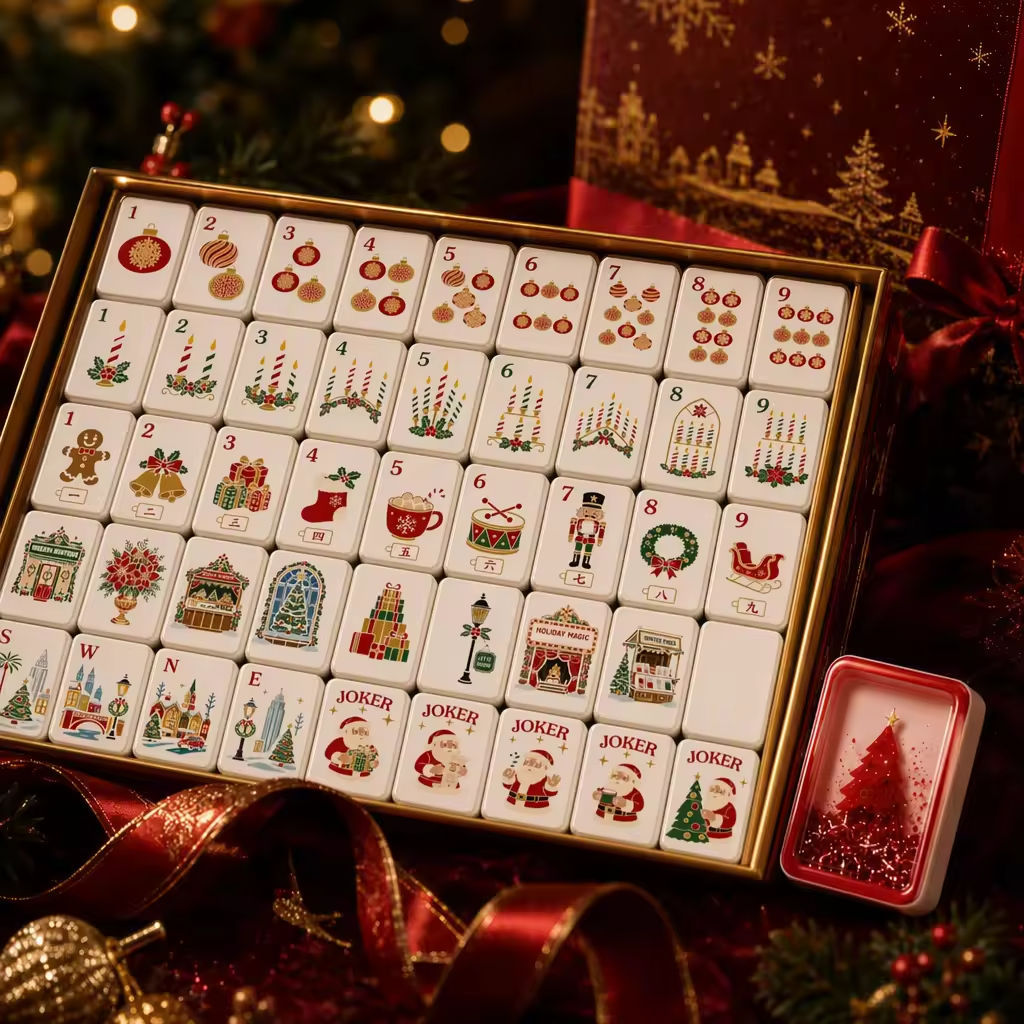
The North Wind tile (one of four wind tiles in American mahjong) shows the Chinese character 北 (north) on a solid-colored face, typically white, ivory, or bamboo. Unlike Dragon tiles, which feature bold red, green, or white markings, the North Wind and its three wind companions (East, South, West) display only a single ideogram per tile with minimal ornamentation. The character size and font weight vary by set maker—some use thick brushstrokes for clarity, others thinner lines—but the design remains consistent across all four copies of the North Wind tile within one set. Mahstead's engraved acrylic sets render wind tiles with crisp, legible characters that remain visible under table light and during rapid play. The North Wind tile serves only as a wind tile; it cannot function as a dragon or flower substitute and has no numerical value in hand construction.
The North Wind tile is one of 16 wind tiles in a standard American mahjong set, appearing four times alongside East, South, and West. Unlike the three Dragon tiles (Red, Green, White), which carry bonus or symbolic weight, the four winds are purely structural. Understanding their appearance matters because misidentifying a wind tile can cost you a hand during play—and confusion at the table slows the game. Let's walk through what to look for.
How do wind tiles differ from dragon tiles visually?
Dragons display bold color or high contrast—Red Craks are unmistakable red, Green Bams bright green, White Dots plain or blank—but winds use a single monochromatic character. East Wind shows 東, South shows 南, West shows 西, North shows 北. None of these characters are colored or shaded; they sit on a tile face identical in tone to any number tile. The key difference: a Dragon tile looks "special" at a glance, while a wind tile requires you to read the character. Always check the ideogram itself, not surrounding decoration, to confirm which wind you hold.

What's the clearest way to read North Wind at speed?
The character 北 (north) consists of two vertical strokes on the left side, then a horizontal stroke crossing both, then a lower horizontal base—resembling an upside-down "T" with a closed bottom. East (東) has more strokes and looks bulkier. South (南) appears almost square. West (西) looks like stacked rectangles. Spend two minutes memorizing each shape before your first game. During play, glance at the left edge of the character: 北 starts narrow and narrows further. This muscle-memory anchor will let you sort your hand without hesitation.
🀄 Shop best-selling mahjong sets →
Why do some sets make wind tiles hard to spot?
Cheap sets with shallow engraving, poor contrast, or tiny fonts force players to tilt tiles toward the light. Worn tiles—especially if you're using a 15-year-old set from a drawer—become smooth and the character fills with lint or discoloration. Some manufacturers choose a serif or calligraphic font that ornaments the character, making it slower to parse under pressure. Acrylic sets with deep laser engraving maintain legibility across thousands of hands because the character doesn't fade and the contrast stays sharp. If you play weekly, a well-made set pays for itself in faster, error-free games.
What does the North Wind tile cost relative to other tiles?
In American mahjong, all tiles cost the same per unit—you buy a complete 160-tile set with all characters, suits, winds, and dragons included, not individual tiles. The North Wind tile's production cost is identical to any other wind or number tile. Our best-selling collection includes full sets at various styles; see the product page for current pricing. A quality set is an investment split across a dozen players over many years, so the per-hand cost remains trivial.

How do I avoid confusing North Wind with other tiles in my rack?
Organize your hand by type: separate all winds into one section, dragons into another, then arrange number suits by Bam, Crak, Dot. Within the winds, place them in compass order (East, South, West, North) or simply group all North Winds together so you know their position without reading each tile. Use a mahjong rack with pushers to keep tiles upright and fully visible; holding tiles in your hand invites accidental flips and misreads. When calling a hand or declaring exposure, say the tile name aloud—"North Wind pung"—to let other players confirm before you expose it. This habit catches mistakes before they cost you.
Which set design makes wind tiles easiest to identify?
Acrylic sets with engraved characters (not printed or painted) hold legibility across seasons and humidity swings. Look for sets with a font size that fills at least one-third of the tile face, and characters centered rather than crowded to a corner. Avoid sets where winds share a tile face with numeric labels or color spots—some budget sets blend styles inconsistently. When choosing your set, hold a tile at arm's length under normal indoor light and confirm you can read the character without squinting. Mahstead's engraved sets meet this standard; custom engravings on the reverse (like names or dates) do not interfere with character clarity on the face.
Consideration | What to look for | Why it matters |
Character size | At least one-third of tile face | Readable at speed during rapid hand-building |
Engraving depth | Laser-engraved, not painted or printed | Survives thousands of hands without fading |
Font clarity | Simple, sans-serif or standard script | Reduces misreading under table light or glare |
Tile orientation | Character centered and upright | No guessing about rotation; identical across all four copies |
Material | Acrylic or bone; consistent finish | Uniform lighting and contrast across the set |
🎁 See our most-loved mahjong sets & accessories →
What's the connection between tile design and house rules?
Some casual groups play "house rules" where wind tiles carry bonus points or wild-card functions—though official American mahjong (per the National Mah Jongg League card) never does this. Before sitting down, ask your host whether winds are structural-only or if local play adds special rules. If you're hosting, choosing a quality mat and clear tile set signals to new players that you run by standard rules, reducing confusion. New players often misidentify winds anyway; a crisp, legible set halves the teaching burden.
✨ Find your Mahstead set — free US shipping →
What to check before you buy
Tile weight and feel: Hold a sample if possible. Heavier acrylic tiles (around 1–1.5 oz per set total) feel solid and shuffle smoothly; lightweight sets clatter and tip easily.
Character legibility at arm's length: Test under the light you'll play under. If you cannot read a wind tile from 18 inches away, skip that set.
Set completeness: Confirm the set includes all four copies of each wind (16 total). A 160-tile set includes all playing pieces, never short-counted.
Storage case or bag: If you host weekly, a protective bag or case extends tile life and makes transport effortless. Check our bags and cases collection for sizes that fit your style.
Return or exchange policy: Buy from sellers who stand behind their product. Defective tiles should be replaceable.
For a deeper dive into what makes up a complete set, learn what's in an American mahjong set and how each component works together during play.

FAQ
Can I use the North Wind tile as a joker?
No. In American mahjong, only the eight joker tiles (marked with a star or joker face) can substitute for any tile in your hand. Wind tiles are fixed; they can only match wind positions on the current year's card.
Do all four North Wind tiles look identical in the same set?
Yes. A standard set prints or engraves all four copies of the North Wind with the same character, size, and style. If one North Wind looks different, the set may be defective or a mix of tiles from different manufacturers.
How is the North Wind tile used during the Charleston?
The Charleston is the pre-game tile-passing ritual. Wind tiles pass like any other tile during the three right-passes and two left-passes. They hold no special status or restriction during Charleston.
What if I can't read the character on my North Wind tile?
Replace the tile or the set. Unreadable tiles slow the game and risk errors during scoring. Many online communities offer replacement tiles, or you can purchase a new set and archive the old one for decoration.
Is the North Wind tile worth more points than other tiles?
No. All non-joker tiles in American mahjong carry identical face value—they contribute only to hand patterns shown on the current year's card. Winds, Dragons, flowers, and numbers have no inherent point value; the hand pattern alone determines scoring.
Can I tell a fake or counterfeit mahjong set by inspecting the North Wind tile?
Inspect the entire set, not one tile. Counterfeits often show uneven engraving, misaligned characters, warped tiles, or inconsistent font across copies. Compare your tile to an authentic reference (online seller images or a friend's set). Genuine acrylic sets have smooth edges, crisp character edges, and consistent weight across all tiles.


View More
View More
View More
