
Mahjong Bag Made in USA: How to Choose One That Lasts
Last updated: Nov 23, 2026
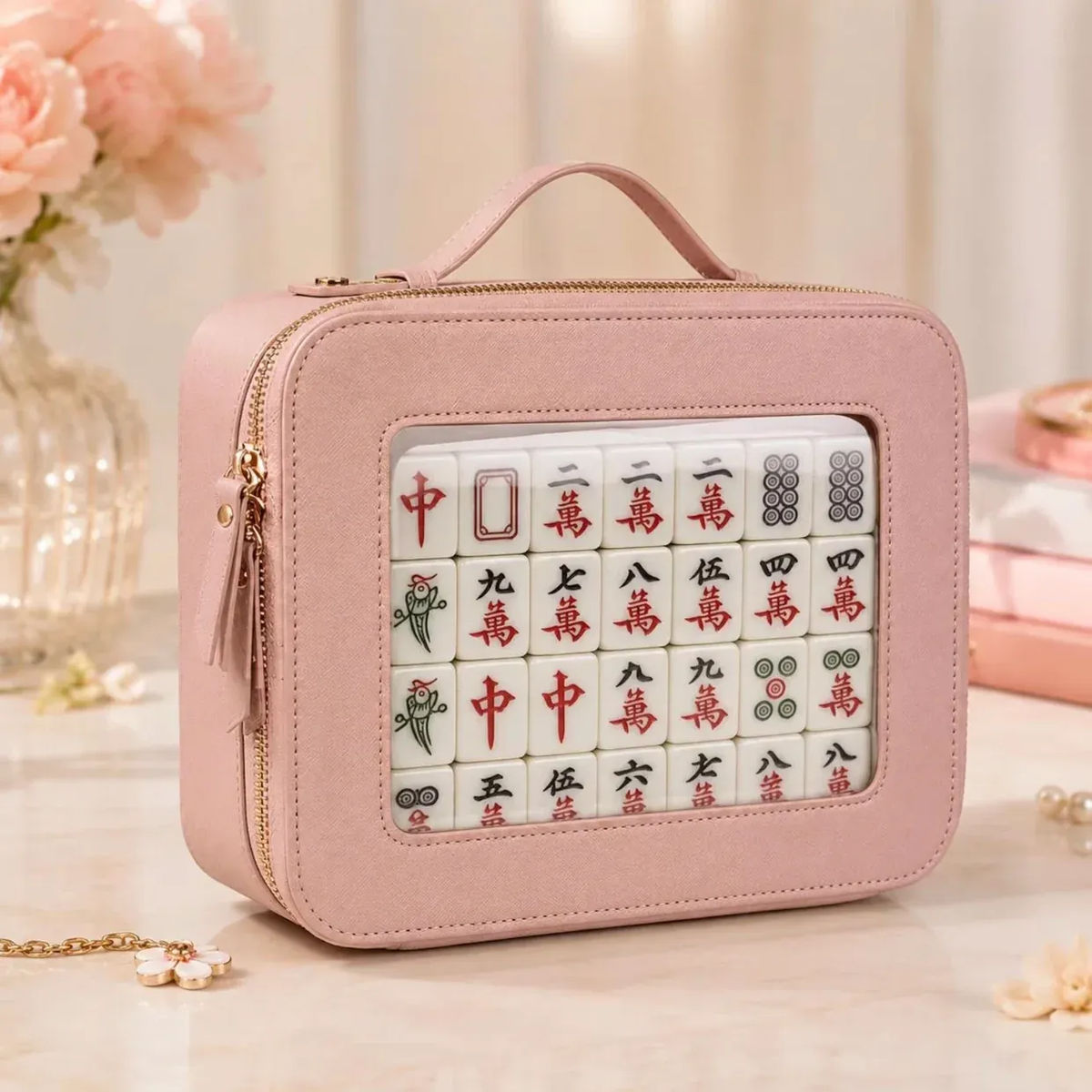
A made-in-USA mahjong bag is a protective carry case designed to hold a 160-tile acrylic set, mat, racks and dice together for transport to game nights. These bags come in two main forms: soft drawstring pouches (compact, lightweight, best for frequent movers) and structured cases with compartments (roomier, heavier, ideal for hosting). American-made options tend to use reinforced nylon or canvas with stitched seams rather than glued construction, making them more durable than imports. Price varies by capacity and material—see current pricing on the product page. The key difference from generic tote bags is internal organization: mahjong-specific bags have divided sections to keep tiles from shifting and mats from creasing. Buy based on your actual travel frequency and whether you're the one hosting or joining weekly games.
What makes a bag "made in USA"?
A bag marked "made in USA" is constructed and assembled in the United States, though materials may come from anywhere. We work with manufacturers who handle cutting, stitching, QC and packaging domestically. American-made bags typically use lockstitch seam construction (the needle passes through both fabric layers and the bobbin thread, creating a reinforced bond) rather than chain-stitch, which unravels if one thread pulls. This matters because a game bag sees repeated packing, unpacking and jostling in car trunks. A true made-in-USA bag should have a label stating country of origin; if it doesn't, ask before you buy.
How much storage space do you actually need?
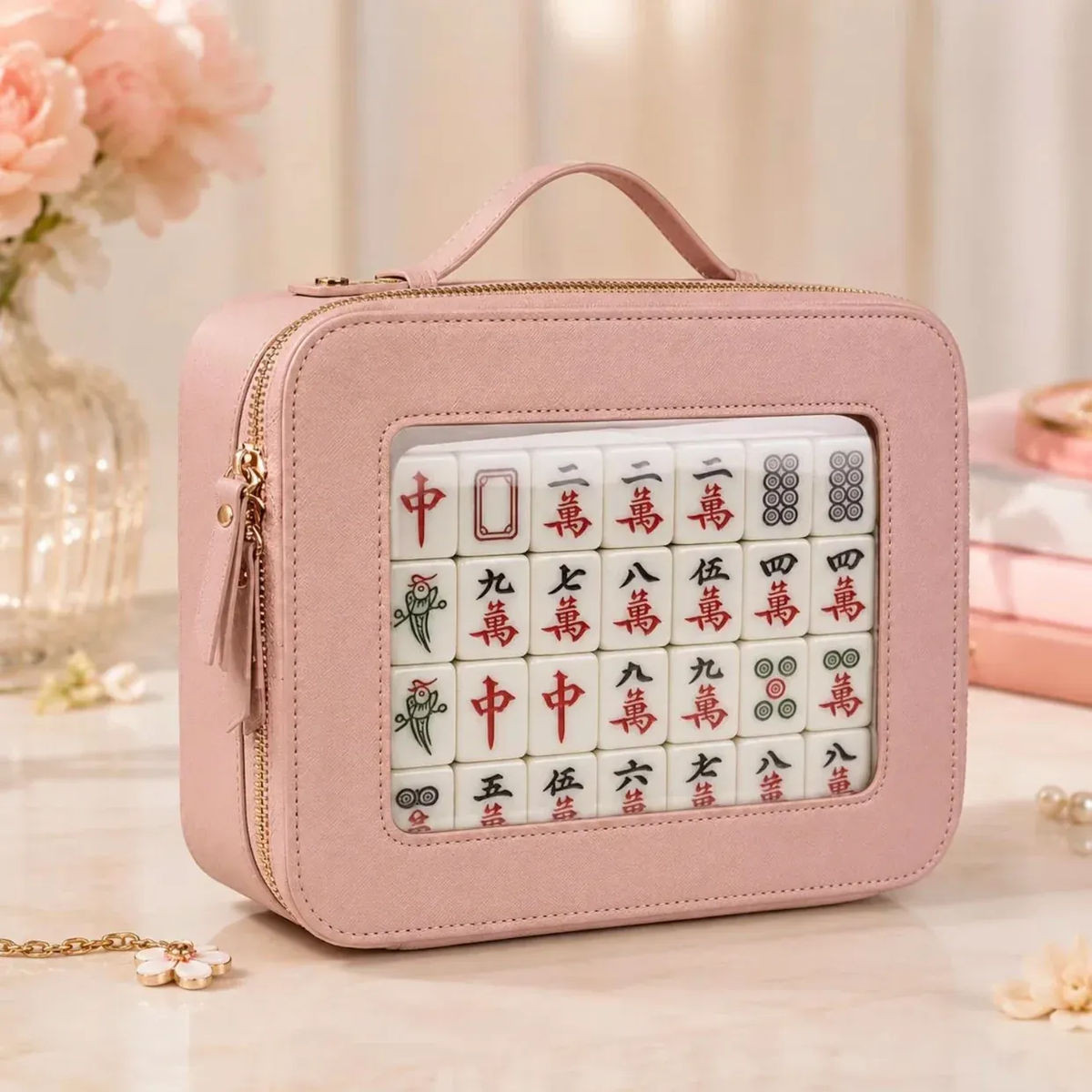
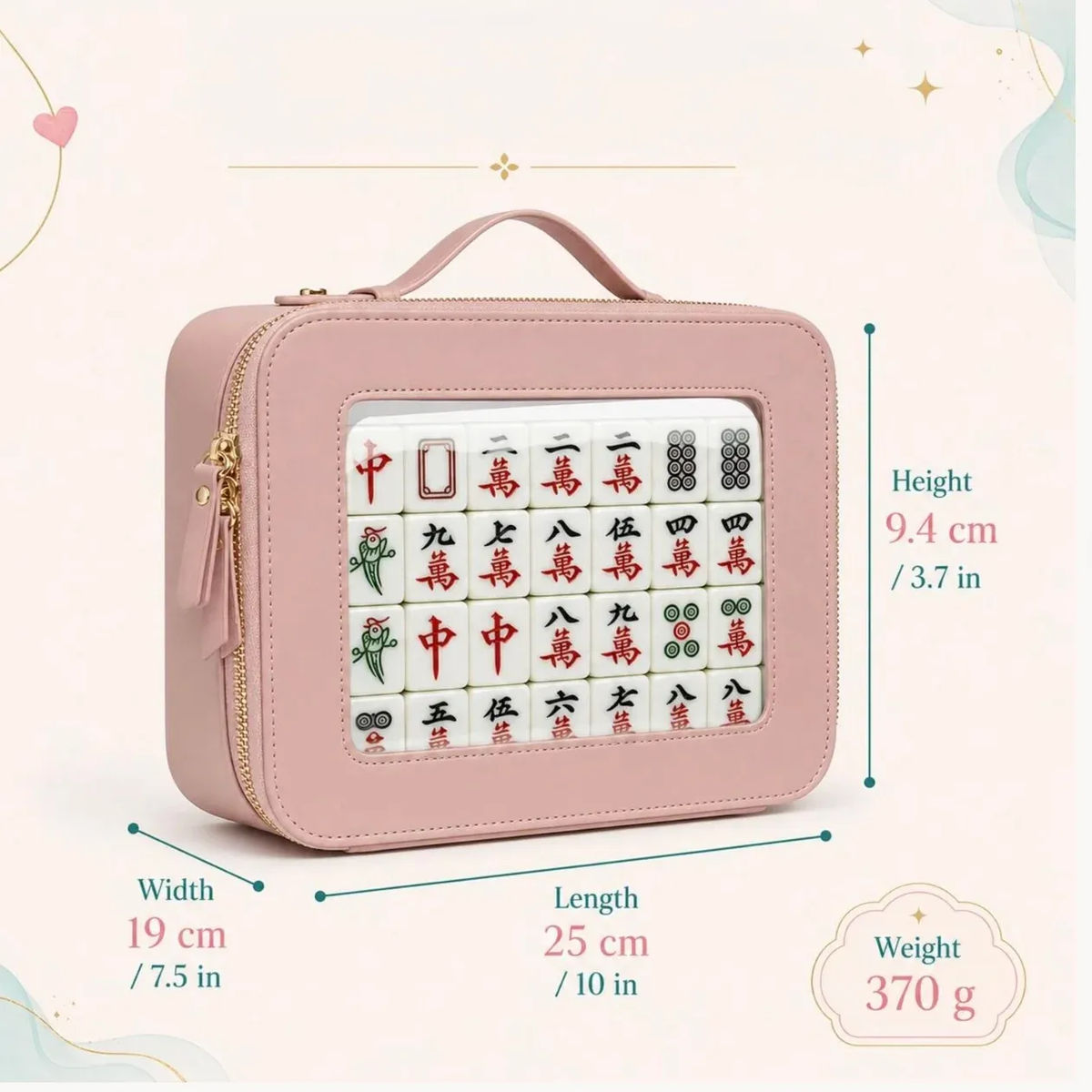
The size question boils down to one thing: are you carrying just a set and dice, or a complete game station? A compact drawstring pouch holds a 160-tile acrylic set and dice snugly—roughly 14×10 inches when laid flat. A medium structured case adds room for a mat rolled flat and one pair of racks. A large tote accommodates a mat, set, racks, pushers, extra jokers and the current year's card, plus personal items like your phone and scorebook. We've found most weekly players split the difference: one person brings the set and racks (medium case), another brings the mat (it fits in almost any bag if rolled). Hosting solo? A large case saves multiple trips from kitchen to table.
🎁 See our most-loved mahjong sets & accessories →
Soft pouch vs. hard-sided case: which wins?
Feature | Soft Drawstring Pouch | Structured Case | Best for |
Weight | 4–6 oz | 12–18 oz | Pouch: commuting; Case: hosting |
Packed size | Folds flat | Fixed footprint | Pouch: car seat; Case: game closet |
Tile protection | Good (bagged inside) | Excellent (padded compartments) | Case: frequent movers |
Carries comfortably | Shoulder strap | Two handles or strap | Pouch: long walks; Case: short trips |
Price per unit | Lower | Higher | See product page |
Lifespan (weekly use) | 3–5 years | 5–8 years | Case: long-term value |
The pouch wins if you're the minimalist who walks or bikes to game night. The case wins if you're packing in a car trunk weekly or hosting, because compartments prevent tile scatter and mats don't crease. Hybrid option: buy both—pouch for travel, case for storage at home.
What compartments actually matter?
A well-designed mahjong bag includes: a zippered main section (holds the set box or loose bagged tiles), a flat pocket for the current year's card and scorebook, elastic straps or dividers inside for racks, and a separate pouch for dice and pushers. Some bags add a clear front pocket (good for viewing the fabric design without opening); others include a removable shoulder strap (converts a hand-carry to backpack mode). The mistake we see players make is buying a generic "craft tote" and stuffing everything in. Tiles rattle, mats wrinkle, and within a year seams start pulling where the weight shifts. Our travel bag collection shows which bags have each feature—read the description before ordering.

How to decide: first-time buyer vs. upgrade?
First-time buyer: You've just bought your first acrylic set and want to protect it. A compact soft pouch is your entry point—easy to pack, affordable, and enough to test whether you'll play regularly. Once you join a weekly game, you'll know whether to upgrade. Upgrading player: You've been playing for a year or more, you host occasionally or carry gear multiple times weekly, and your pouch's seams are showing stress. Move to a structured case with interior compartments. This is where durability pays off; a well-made American case will outlast three cheap pouches. Host or tournament player: You're the one coordinating mats, racks, spare dice and backup tiles. A large tote with multiple pockets and reinforced handles is non-negotiable. A failing seam mid-game-night is a crisis.
✨ Find your Mahstead set — free US shipping →
Real materials that hold up
We specify nylon or canvas because both breathe (tiles don't sweat), both washable, and both withstand repeated seam stress. Nylon is lighter and water-resistant; canvas is heavier and tougher. Avoid vinyl-coated bags for frequent use—the coating cracks after a couple years in car climates. Check the seams before you order: photos should show clean, tight stitching with no thread gaps. If a seam is visible and ragged in the product image, it will fray after a few weeks of use. Interior padding (foam or felt) is a plus for hardcase models; it reduces tile rattle and protects mats from creasing.
Our best-selling mahjong sets come with basic storage advice, but your bag is the real protection layer.
What to check before you buy
Measure your mat. Roll your mat to see its diameter and length. Will it fit flat or do you need to coil it separately? Many players leave mats at home and buy a mat-specific storage tube to avoid oversizing the bag.
Count your gear per game. Set, dice, racks, pushers, card, scorepad, pen. Which items travel every week? Which stay home? Buy bag size to match actual weekly cargo.
Test the handles or strap. Can you comfortably carry the full bag for five minutes? Ask the seller or read reviews on weight distribution. A shoulder strap helps more than two handles if you're walking.
Look for seam photos. A reputable maker shows close-ups of stitching. Count visible stitches per inch (8–10 is industry standard); fewer means weaker seams.
Confirm material and origin. The product page should state "made in USA," fabric type (nylon or canvas), and whether it's washable. If it doesn't, email before ordering.
🀄 Shop best-selling mahjong sets →
Why engraved bags matter (if you're gifting)
If you're buying a bag as part of a gift set—say, a personalized acrylic set plus carrier—an engraved bag with a player's name or game group logo adds character. Custom engraved American mahjong sets pair well with matching monogrammed bags. This is where made-in-USA quality shines: a domestically produced bag holds engraving detail better than imports, and local makers often do custom work faster.
FAQ
Can I use a mahjong bag for other games or storage?
Yes. The compartments suit any tile or game-piece storage, and the handles work for carrying books or craft supplies. But once tiles have lived in it for a year, the smell sticks—your non-mahjong items will absorb it. Dedicated bags are cleaner.
Do I need to wash my mahjong bag?
Once or twice yearly, if you play weekly. Hand-wash in cool water with mild soap; air-dry flat. Check seams while damp; if threads are separating, reinforce with fabric glue or a needle. Never machine-wash or dry-clean acrylic tile bags.
What's the difference between a bag and a case for mahjong?
"Bag" typically means soft fabric with drawstring or handles; "case" means hard-sided or heavily padded structure. Bags are lighter and pack flat; cases offer compartment organization. For American mahjong, both are called "bags" in most shops—check photos to see which style you're buying.
How long should a good mahjong bag last?
A well-made American bag with quality seams lasts 5–8 years of weekly use. Soft pouches last 3–5 before seams stress. Lifespan depends on what you carry (heavier full sets age bags faster) and how wet the bag gets (mats can introduce moisture).
Can I fit a full mat and set in a single bag?
Yes, if the bag is large enough (roughly 18×16 inches when closed). Roll the mat, place it vertically or coiled along the inside wall, and tuck the set box or bagged tiles alongside. Keep dice and racks in separate pockets so the mat doesn't compress them.
Should I buy a USA-made bag if it costs more than an import?
If you play weekly and will own the bag 3+ years, yes. The better seams, thicker fabric and local repair options make it a smarter investment. For occasional use, a cheaper import works—but plan to replace it sooner.


View More
View More
View More
