
What Does the East Wind Tile Look Like in Mahjong?
Last updated: Nov 23, 2026
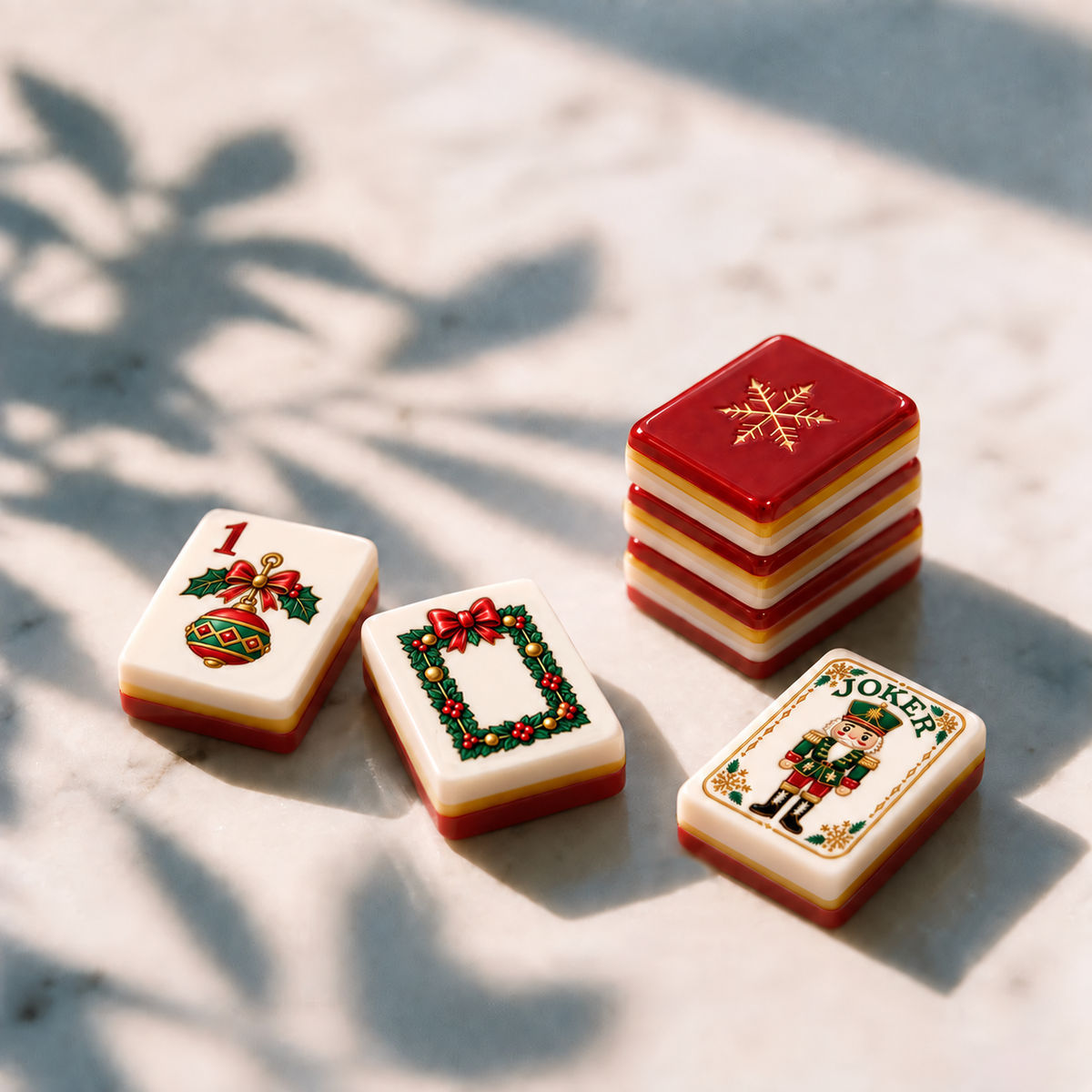
The East Wind tile displays the Chinese character for "East" (東) on an acrylic face, typically printed or engraved in black ink on a white or light cream background. In most sets, all four wind tiles—North, East, South, West—look nearly identical except for their characters and sometimes subtle color bands. East Wind tiles are called but never melded exposed until you declare a winning hand; they function as honor tiles alongside Dragons and Flowers. A standard American mahjong set contains exactly four East Wind tiles, one for each player. The tile measures roughly 1¼ inches wide and ¾ inch tall, sized to fit comfortably in a hand rack. Because wind tiles are essential honor tiles used to identify your seat and build scoring patterns, acrylic clarity and character legibility matter—Mahstead's best-selling mahjong sets use deep-etched characters so wind tiles remain readable through hours of play.
The East Wind tile is one of 16 wind tiles in an American mahjong set. Its appearance and role in play are fundamental to reading your hand and setting up the game.
Why Does East Wind Look Different From Number Tiles?
East Wind belongs to the honor family—tiles that carry no numeric value and are printed with symbols or characters instead of dots, craks, or bams. The East character (東) is instantly recognizable once you learn it, and its simplicity is deliberate: during fast play, you need to scan your rack in one second. Unlike the three numbered suits that repeat through 1–9, wind tiles stand alone. Each player sits as one cardinal direction—East, South, West, North—and this identity persists throughout the game, affecting both the deal rotation and which patterns you can build.

What Does the East Wind Character Actually Look Like?
The East Wind character is a square or slightly rectangular symbol composed of four strokes, resembling a simplified compass point. In traditional Chinese, it reads top-to-bottom as 東 (dōng). On acrylic tiles, this character is printed or engraved centered on the tile face. Most sets use black ink on white or cream acrylic so the character contrasts sharply and stays legible after thousands of shuffles. Engraved designs (where the character is carved into the tile rather than printed on top) resist fading better than printed versions, especially if you play weekly or travel with your set.
🀄 Shop best-selling mahjong sets →
How Is East Wind Different From South, West, and North?
All four wind tiles are the same size and shape—the only difference is their character. South Wind shows 南 (nán), West Wind shows 西 (xī), and North Wind shows 北 (běi). Because they look so similar at a glance, many new players accidentally grab the wrong wind tile during the Charleston or when playing. A practical fix: before your first game, lay out all 16 wind tiles (four of each direction) face-up on the mat and study them for 30 seconds. The shape variations become obvious. Some experienced players also use set designs with subtle color coding—for example, a faint green tint for East to make seat identification faster, though this is optional and not part of the official American rules.

Why Does East Wind Matter to Your Score?
East Wind is part of the honor tile family on the current year's National Mah Jongg League card—the official scoring reference that changes annually. Patterns containing East (or any wind) pay more than patterns made of only numbered tiles, because honor tiles are harder to collect. You'll see card sections labeled "Winds" or "Dragons" that showcase hands built from these tiles. When you have East Wind in your hand, it opens doors to high-paying combos that numbered-only hands cannot access. The winning hand itself often requires at least one honor tile, making East Wind and its siblings critical to strategy. Players who understand which wind-based hands are in play that year make faster, smarter decisions about what to keep and what to discard.
Tile Type | Count in Set | Appearance | Role in Play |
East Wind | 4 | 東 character, white/cream background | Honor tile; builds wind-based hands; identifies East player |
South Wind | 4 | 南 character, white/cream background | Honor tile; builds wind-based hands; identifies South player |
Number Tiles (1–9 Bams) | 4 each | Dots 1–9, bamboo-style icons | Suit tiles; no honor value; form chows (not in American play) |
Dragons (Red, Green, White) | 4 each | Solid color or character; Red/Green/White coding | Honor tiles; no numeric value; build dragon-only hands |
🎁 See our most-loved mahjong sets & accessories →
How Do I Spot East Wind Quickly During Play?
Speed matters at the table. Develop a one-second scan: when you pick a tile and need to identify it instantly, focus on whether it has a character or numbers. All four wind tiles have characters; all numbered tiles show dots or icons. Next, recognize the character shape: East (東) has four strokes arranged in a cross-like pattern; the others are visually distinct once you've seen them side-by-side. Keep your wind tiles in a separate mental zone of your rack—many players position all honors (winds, dragons, flowers) on one side and numbered tiles on the other, so your eyes don't have to hunt. If you're playing with an older or worn set, characters may blur; this is one reason acrylic sets with deep-etched designs hold their legibility better than cheap plastic or paper tiles over many seasons of play.
What Mistakes Do New Players Make With East Wind?
Confusing East Wind with other tiles. The most common error: mixing up East (東) and North (北) because both contain similar stroke counts. Spend five minutes before your first game comparing these two side-by-side.
Forgetting that East Wind can't be called mid-hand. Unlike some global mahjong variants that allow calling any tile, American mahjong only lets you call (claim from another player's discard) certain exposed melds. You can only call East Wind if someone discards it and you're ready to show a complete exposed pung, kong, quint, or sextet that includes it. You cannot call a single East Wind tile or a pair.
Losing track of East during the Charleston. The passing ritual before play involves exchanging 6, 6, and 6 tiles (or 6, 5, 5 in some house rules). Players often lose focus on where their wind tiles end up. The rule: wind tiles are fair game and can be passed just like any other tile. If you want to keep a specific East Wind tile, don't pass it during the Charleston.
Overlooking East Wind patterns on the card. Many hands mix winds with numbers or other honors. If you scan the card only for all-numbered patterns, you'll miss higher-paying hands that include East. Review the current season's card and mark every hand containing a wind tile, so you know what combinations to hunt for.
What to Check Before You Buy
Character legibility: Hold the set at arm's length under normal lamp light and confirm you can read each wind character without squinting. Engraved designs (carved into acrylic) age better than printed ones.
Tile weight and feel: Wind tiles should sit flush and level in your rack, not wobble or tilt. Poor-quality acrylic or warped tiles create play friction and slow the game.
Count: Verify your set includes exactly four East Wind tiles. Open the box and count all 16 wind tiles (4 of each direction) before your first game.
Material: Acrylic sets maintain character sharpness through hundreds of plays; resin or cheaper plastics may develop cloudy spots or character fade.
✨ Find your Mahstead set — free US shipping →

FAQ
Is East Wind the same tile in Chinese mahjong and American mahjong?
Yes, the character and basic honor status are identical—但 Chinese mahjong uses 144 tiles and allows chows (1-2-3 sequences), while American mahjong uses 152 tiles and forbids chows. Wind tiles themselves function the same way: uncalled honor tiles used to build patterns and identify seating.
How many East Wind tiles are in a complete American mahjong set?
Exactly four. American mahjong sets contain 152 playing tiles—one of which is four copies each of North, East, South, and West winds. If you count only three East tiles, something is missing or broken.
Can I use an East Wind tile as a joker replacement?
No. In American mahjong, jokers (the eight dedicated wildcard tiles) are the only tiles that can substitute for missing tiles in an exposed meld. Winds, dragons, flowers, and numbered tiles are fixed—they can never act as jokers. Using a wind tile as a joker voids the hand.
Why do some East Wind tiles have a color background?
Some artisan or decorative sets add subtle color—for example, a green tint behind East—to make wind identification faster or for aesthetic appeal. This is optional and not part of official rules. Official NMJL tournament play uses standard black characters on white or cream backgrounds.
What if I can't tell East Wind from North Wind mid-game?
Call a pause and ask the other players to compare side-by-side on the mat. During the game, misidentifying a tile and building the wrong hand can invalidate your win. It's better to slow down for five seconds than to score incorrectly or argue later. Consider using an older or spare set to drill wind character recognition before your next game.
Do I need to learn Chinese to play American mahjong and read East Wind?
No. You only need to memorize four symbols (東南西北 for East, South, West, North) and recognize them instantly. You don't need to speak or read Chinese—just pattern-match the characters. Most players learn them within one or two games through repetition.


View More
View More
View More
