
What Does the 9 Dot Tile Look Like in Mahjong?
Last updated: Nov 23, 2026
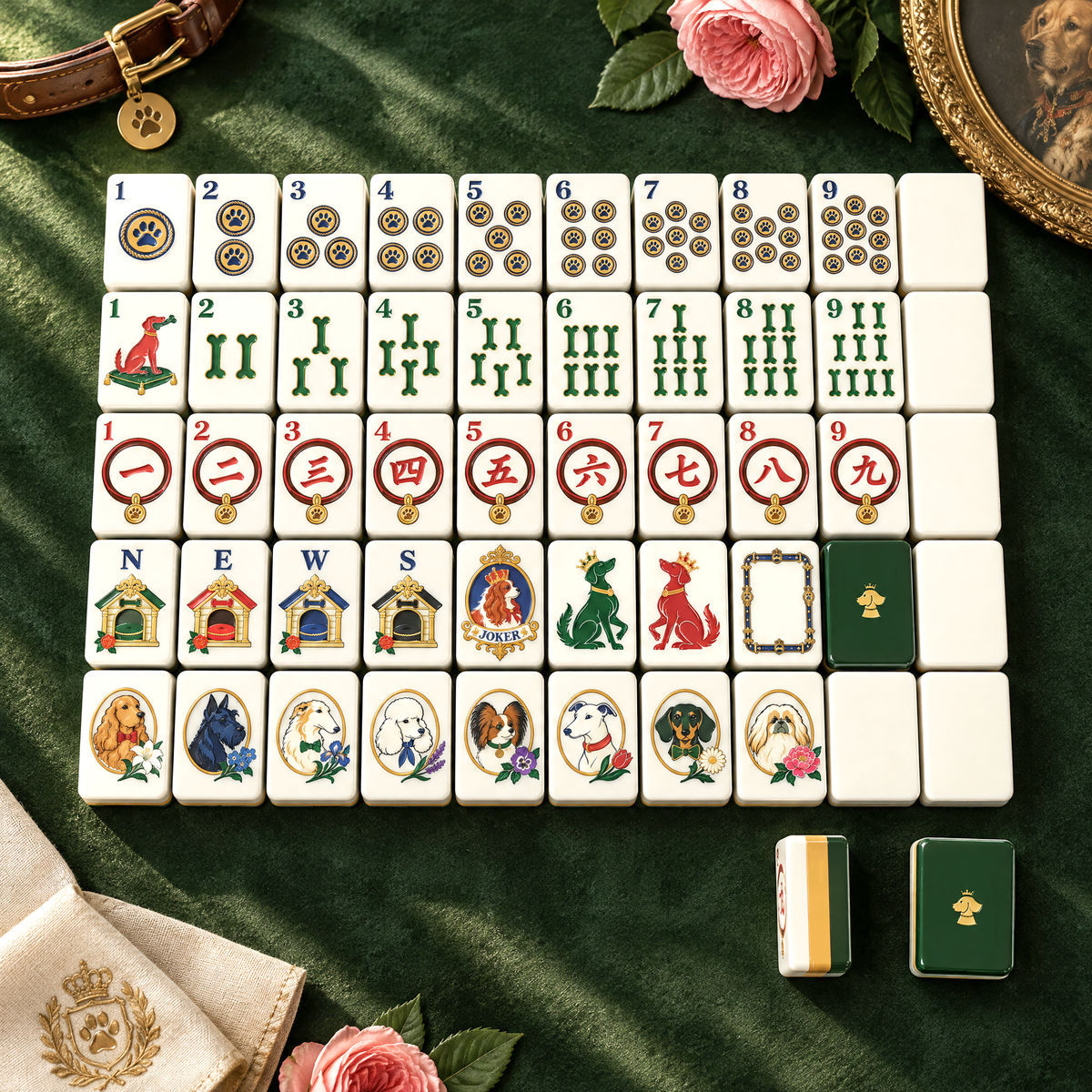
The 9 Dot tile in American mahjong shows nine small circular pips (dots) arranged in a 3×3 square pattern on its face. It belongs to the Dot suit—one of three number suits alongside Bams and Craks—and appears four times in every 152-tile American set. Each copy looks identical: same arrangement, same size. The tile is typically about 1.25 inches wide and made from acrylic, bone, bamboo, or plastic depending on your set's quality. You use three or four 9 Dots together to form a pung (three identical tiles exposed) or kong (four), never in a sequence. Because American mahjong has no chows (runs of consecutive tiles), the 9 Dot only pairs with other 9 Dots, making it one of the easiest tiles to spot when sorting your hand. Mahstead's acrylic sets use laser engraving to keep all numbers and suits crisp and readable through years of play.
The 9 Dot tile is a fundamental piece of the American mahjong system. Understanding what it looks like helps you build hands faster, avoid tile confusion during play, and appreciate the design logic behind the whole game.
How is the 9 Dot visually different from other number tiles?
The 9 Dot displays a specific pip count—nine small circles—arranged in rows. The 1 Dot shows a single dot in the center; 2 Dot shows two dots diagonally; 3 Dot shows three in a diagonal line; and the pattern continues through 9 Dot, which fills nearly the entire face of the tile. This numerical clarity prevents misreading at a glance, especially under casual table lighting. Each suit (Dot, Bam, Crak) uses the same numbering system, so you'll recognize the 9 instantly once you learn the pattern. The 9 Dot is often one of the easiest tiles to spot because its cluster of pips is unmistakable.

What does the Dot suit represent in American mahjong?
The Dot suit—called the "Dot" or "Circles" suit—is one of three core number suits in American mahjong sets. It includes tiles numbered 1 through 9, with four copies of each number, totaling 36 Dot tiles. The Dot suit has a traditional association with coins or money in classical Chinese mahjong, though in American play it is simply a distinct category you need to recognize and sort. The other two number suits are Bams (bamboo sticks) and Craks (Chinese characters representing ten thousand). Together, these three suits form the backbone of every hand you play on the current season's card.
🀄 Shop best-selling mahjong sets →
Why does the 9 Dot appear four times in a standard set?
American mahjong uses exactly 152 playing tiles: 36 of each number suit (Dot, Bam, Crak), 16 wind tiles (4 each: North, East, West, South), 12 dragon tiles (4 each: Red, Green, White), 8 flower tiles, and 8 jokers. The four copies of the 9 Dot exist so that multiple players can expose pungs and kongs without running out of identical tiles. If only one or two copies existed, the game would collapse—you couldn't form the melds the card requires. The four-copy rule applies uniformly to every numbered tile, wind, and dragon. This redundancy is by design and is central to how hands are constructed.
How do you use the 9 Dot in actual play?
On the current year's card, hands show patterns like "999 Dots pung" or "Dot 7-8-9" (though the latter is technically illegal in American play because you cannot expose a chow or run—only pungs, kongs, quints, or sextets). When you need three 9 Dots, you collect them from your hand or by drawing from the wall, then expose them as a pung on the table. If you collect all four, you expose a kong. Jokers can substitute for missing tiles in exposed melds but never as a single tile or pair. The 9 Dot, like any number tile, becomes part of your strategy for completing and announcing hands before your opponents do.

What should you check before buying a set with readable Dot tiles?
When shopping for a new set, hold the 9 Dot (or any high-number tile) under normal table lighting to confirm the pips are clearly visible and don't blur together. Acrylic sets with laser engraving maintain crisp detail the longest. Bone and bamboo sets can develop wear; plastic sets may have slightly duller contrast. If you play weekly or in tournaments, choose a set with durable engraving or embossing so the 9 Dot stays legible after months of shuffling. Our most-loved acrylic sets are designed for that daily durability.
🎁 See our most-loved mahjong sets & accessories →
Comparison: Tile Readability Across Set Types
Set Type | Dot Visibility | Durability | Best For |
Acrylic (laser engraved) | Sharp, high contrast | Years of weekly play | Serious players, clubs |
Bone/bamboo | Clear when new | Fades with age | Collectors, occasional play |
Plastic | Good, but softer edges | 1–2 seasons | Beginners, travel |
Resin (engraved) | Crisp detail | 2–3 years | Balance of beauty and use |
A begklist: recognizing the 9 Dot at your table
Before your first game:
Hold up a 9 Dot tile and note its 3×3 grid pattern.
Compare it to a 1 Dot (single center pip) and 5 Dot (center + four corners) so you build visual memory.
Scan the number tiles 1–9 in order and say each aloud to lock in the Dot suit's sequence.
During play:
When sorting your hand, group all Dots together and arrange them low-to-high (1–9).
Spot-check the 9 Dot whenever you pick a new tile to confirm it wasn't misread.
If your set uses small or faded pips, ask for a card reader or brighter light rather than guess.
What to check before you buy
Acrylic tiles with laser engraving keep numbers readable for years without fading. If you play on a dimly lit table, choose a set with high-contrast colors (black pips on white or pale backgrounds work best). Bone and plastic sets can develop wear in the pips, making the 9 Dot harder to identify mid-game. Test a sample under your actual table lighting if possible. New arrivals at Mahstead often include acrylic sets with updated engraving techniques that improve contrast even further.
✨ Find your Mahstead set — free US shipping →

FAQ
Can I use the 9 Dot in a sequence like 7-8-9?
No. American mahjong does not allow exposed chows or sequences—only pungs (three identical), kongs (four identical), quints (five), and sextets (six). The 9 Dot must appear with other 9 Dots only.
How many 9 Dot tiles do I need to declare a winning hand?
It depends on the hand on the card. Most hands calling for "9 Dot" require either a pung (three 9 Dots) or a kong (four 9 Dots), or possibly a pair, depending on the pattern. Always check the current season's card to confirm the exact requirement.
What if my set has unclear or faded pips on the 9 Dot?
Inspect the tile under good lighting first. If fading is extreme, use a magnifying glass or ask your group to spot-check it for you during play. For frequent players, investing in a newer acrylic set with crisp laser engraving prevents this problem long-term.
Are all four copies of the 9 Dot truly identical?
Yes. In a standard 152-tile set, all four 9 Dots are visually and functionally identical. This uniformity is essential because you must be able to grab any of the four without confusion when forming melds.
What is the difference between the 9 Dot and the 9 Bam or 9 Crak?
The number 9 is the same, but the suit symbol differs. The 9 Dot shows nine pips (dots); the 9 Bam shows nine bamboo sticks; the 9 Crak shows the Chinese character for ten thousand, repeated nine times (or a stylized design). You cannot mix suits—a 9 Dot is never the same tile as a 9 Bam.
Why do some sets engrave or print the Dot tile differently?
Traditional sets may show nine small dots in a grid, while modern acrylic sets often use laser engraving for sharper edges. Some decorative or themed sets may stylize the pips (e.g., making them larger or adding color), but the number 9 remains constant.


View More
View More
View More
