
What Does the 7 Crak Tile Look Like in Mahjong?
Last updated: Nov 23, 2026
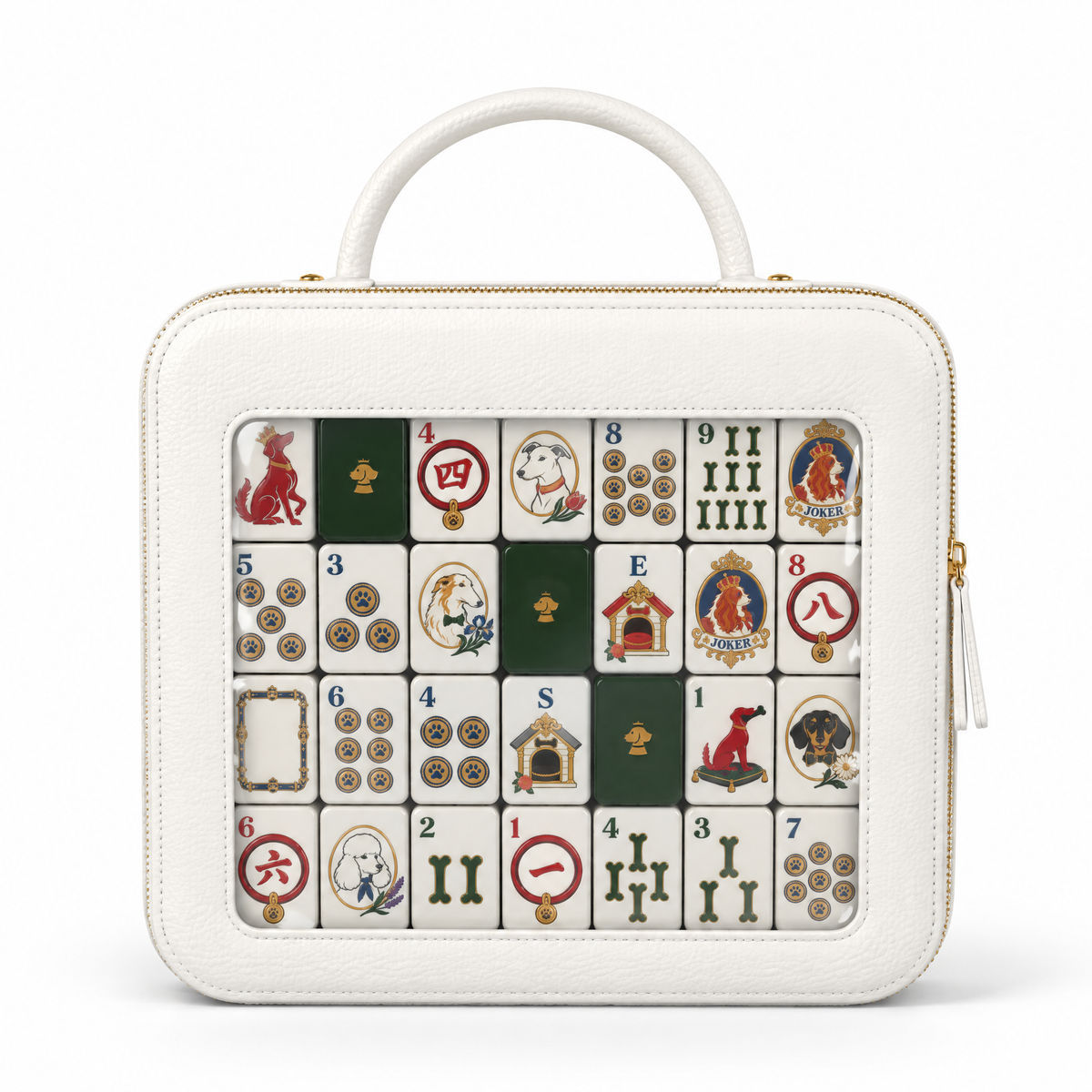
The 7 Crak is marked with seven identical characters (usually stylized bamboo stalks or other pictographs, depending on the tile design) arranged vertically or in columns on the tile face. It appears in every American mahjong set as four identical copies—one for each player's hand. The Crak suit (also spelled Crack in older texts) represents bamboo; each Crak tile from 1 to 9 has a corresponding number of symbols. The 7 Crak sits in the middle-upper range of the suit and appears in many hands listed on the current year's National Mah Jongg League card. Tile size varies by set design; most acrylic American tiles measure around 1 inch × 0.75 inch, making the symbols clear and countable at table distance. Quality sets use sharp engraving or high-contrast printing so players never confuse 7 with 6 or 8 under game-speed conditions.
Why Does Crak Tile Design Matter in Play?
Speed and accuracy win games. When you're calling a hand during the discard phase or scanning your rack for matching tiles, you need to read "7 Crak" in one glance, not count symbols. Poor tile design—faint numbers, worn engravings, or unclear suit symbols—costs time and creates disputes. We play weekly, and the moment someone hesitates over a tile count is the moment the table slows down. Choose a set with bold, high-contrast numerals paired with clear suit marks so the 7 Crak stands out instantly from the 6 and 8 beside it.
🀄 Shop best-selling mahjong sets →

How Is the 7 Crak Different from Other Suits?
Each suit has its own visual identity. Craks (bamboo) typically appear as vertical stalks, dots as small circles, and Bams as more abstract shapes depending on the tile artist. The 7 Crak uses seven of the Crak symbol, the 7 Dot uses seven dots, and the 7 Bam uses seven Bams. American mahjong tiles also include winds, dragons, flowers, and jokers—but the numbered suit tiles follow this direct correlation: number + symbol repeated that many times. This uniformity helps new players learn tile recognition quickly and lets experienced players read their hand without looking at numerals alone. A well-designed 7 Crak combines both the numeral "7" and the seven visual symbols so backup reading is always available.
What Happens If You Can't Spot the 7 Crak Quickly?
Misreads slow the game and breed tension. A blurry or worn 7 Crak gets confused with nearby numbers, leading to false "I have that" calls or discards of the wrong tile. We've all been at a table where someone calls a hand, the hand is checked, and the player swears they had a 7 Crak when their rack showed an 8. Modern acrylic tiles with laser engraving solve this; older Bakelite or painted sets sometimes fade after years of play. If your set is more than five years old and the numerals are fading, a fresh best-selling set with clear engraving restores confidence. Tiles are not precious—they're working tools. When they stop working, upgrade.
How Do You Read a 7 Crak Quickly Across the Table?
Learn the visual anchor. The 7 Crak sits between the 6 and 8 in both symbol count and numeric order. Scan your rack for clusters of Craks, then use the number line: if you see six stalks, that's a 6; seven stalks, that's your 7; eight stalks, that's the 8. Also memorize the numeral position—most tiles print the number in the same corner, so your eye jumps there first. During the Charleston (the tile-passing phase before play begins), practice flipping through your tiles and calling them aloud: "1 Crak, 2 Crak, 3 Crak…" This trains your brain to recognize the pattern. Within two games, the 7 Crak becomes automatic, just like reading a playing card in poker.

What Tile Set Features Make the 7 Crak Easiest to Read?
Contrast, size, and engraving depth matter most. High-contrast sets (white or light tiles with black numerals and symbols) outperform low-contrast sets (cream tiles with gray symbols). Larger tiles give more room for clear engraving; smaller travel sets sometimes sacrifice readability. Acrylic tiles with precision laser engraving—where the mark is cut into the surface rather than painted on top—last longest without fading. We recommend checking tile photos before purchase: if the 7 Crak numeral and symbols look crisp in the product image, they'll look crisp in your hand. Matte finishes (non-glossy) also reduce glare under table lights, making symbol counting faster. When you order a best-selling mahjong set, Mahstead pairs durable acrylic with engraving methods that keep the 7 Crak (and all 151 other tiles) readable for years of weekly play.
🎁 See our most-loved mahjong sets & accessories →
Does the 7 Crak Appear in Common Hands?
Yes, frequently. The middle numbers (4, 5, 6, 7, 8) of each suit appear in a high percentage of winning hands listed on the current year's National Mah Jongg League card. The 7 Crak works in pungs (three identical), kongs (four), quints (five), and sextets (six), and also appears in sequences with Winds and Dragons when hand patterns call for them. Because Craks are one of three suits and the 7 sits in the statistically "hot" middle range, you'll draw or discard a 7 Crak multiple times per game. This is another reason clarity matters: you'll interact with this tile dozens of times each week, so a worn or unclear 7 Crak directly impacts your game speed and pleasure.
What to Check Before You Buy a Mahjong Set
Feature | What to Look For | Why It Matters |
Tile Material | Acrylic with laser or precision engraving | Durable, readable for years; paint fades |
Contrast | Black symbols on white/light tile | Fast visual recognition; reduces counting errors |
Numerals + Symbols | Both present on every numbered tile | Backup reading if lighting is poor; faster play |
Tile Size | Minimum 1" × 0.75" | Symbols clear and countable; comfortable rack handling |
Surface Finish | Matte or semi-gloss (not high-gloss) | Reduces table glare; easier symbol spotting |
Sample 7 Crak | Seven distinct stalks or symbols | Confirms engraving quality before purchase |
✨ Find your Mahstead set — free US shipping →
How to Verify Your 7 Crak Before Play Begins
Before your first game with a new set, lay out one complete suit of Craks (1 through 9) in order and scan them left to right. Call each number aloud. Do the numerals jump out or do you have to squint? Can you count the symbols without looking at the numeral? If either answer is "no," or if two tiles look too similar, the set will slow your game. A quality set shows instant, unmistakable differences between the 6, 7, and 8 Craks. Take a photo of your numbered Craks and keep it in your mahjong bag—when a table dispute arises ("Is that a 6 or 7?"), you can reference your own known tiles. This is rare but it happens, and photographic proof settles it fast.

FAQ
What does a 1 Crak look like, and is it different from the 7 Crak?
The 1 Crak displays one symbol (typically a single bamboo stalk) and the numeral "1." The 7 Crak shows seven stalks and "7." Both belong to the Crak suit, but the number of repeated symbols is the core visual difference. If you can read one, you can read the other.
Can I use the 7 Crak in a joker or blank tile position?
No. In American mahjong, jokers and blank tiles are separate from numbered suit tiles. The 7 Crak must always be used as a 7 Crak—never as a substitute. Jokers fill exposed gaps in hands; the 7 Crak fills numbered Crak positions only.
Why do some older mahjong sets have faint or missing numerals on the 7 Crak?
Painted tiles and Bakelite sets wear down over decades. Surface paint chips or fades; hand oils and table friction wear engraving. Acrylic with laser engraving resists this because the mark is carved into the material, not applied on top. If your inherited set has faint tiles, a modern replacement set is a practical upgrade.
How many 7 Craks are in a complete American mahjong set?
Four. American mahjong uses 152 playing tiles—four copies of each numbered tile (1–9 in each suit), four of each wind, four of each dragon, and extras like flowers and jokers. You'll have exactly four 7 Craks, one per potential hand.
Does the 7 Crak work in any hand on the National Mah Jongg League card?
The 7 Crak appears in many hands, but not all. Its frequency depends on the current year's card. Middle-range numbers (4–7) tend to appear more often than 1s or 9s, but specific hand patterns vary yearly. Check your current card to see which hands use the 7 Crak.


View More
View More
View More
