
What Does the 1 Dot Tile Look Like in American Mahjong?
Last updated: Nov 23, 2026
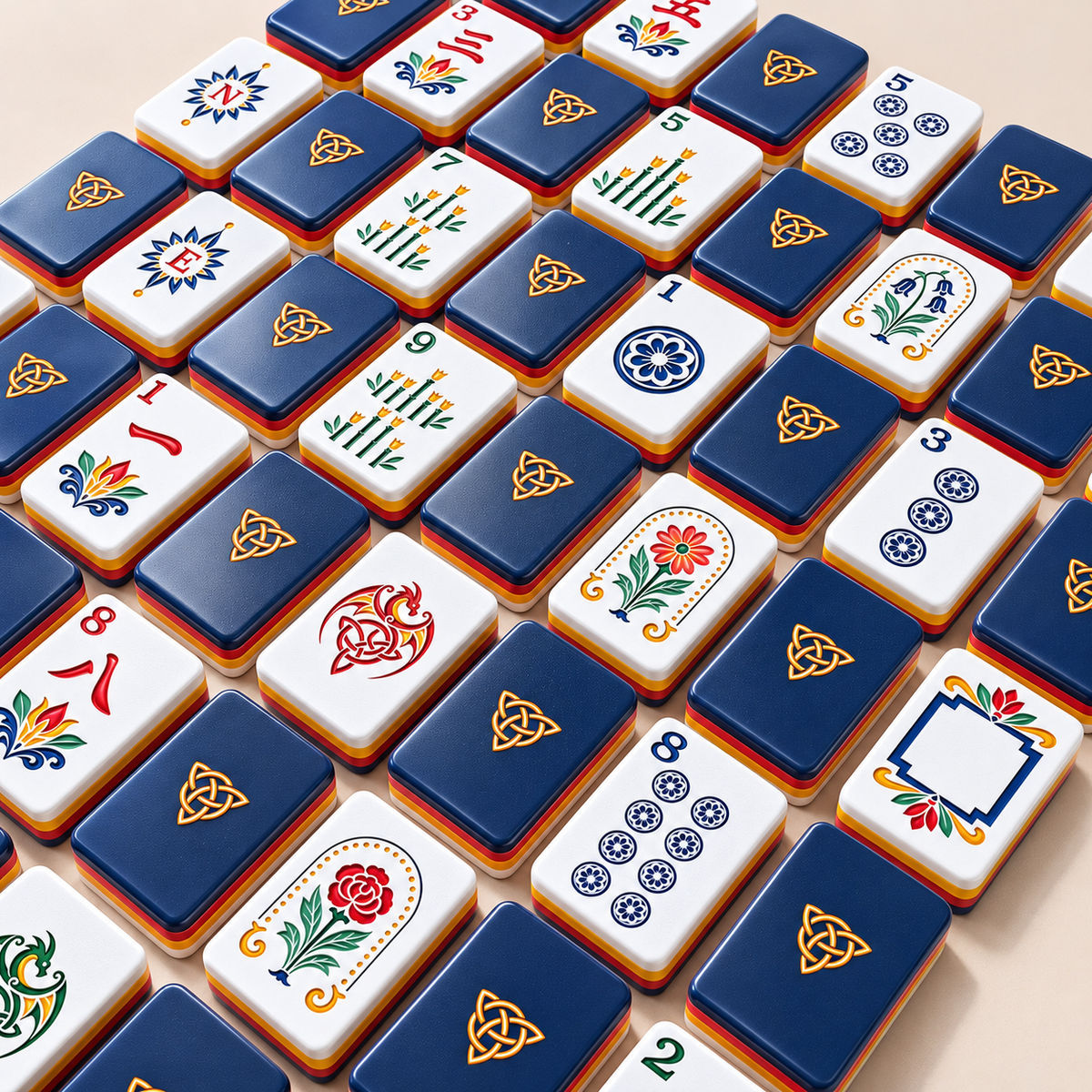
The 1 Dot tile features one red dot centered on a white tile face, part of the Dot suit (also called Circles or Pearls). In American mahjong, each numbered Dot tile (1–9) shows that many red circles arranged in a pattern; the 1 Dot is the simplest, with just a single mark. It pairs with the other Dots in the same suit, forming pungs, kongs, and sequences on the mahjong card. You'll see four copies of the 1 Dot in every 152-tile set—one for each player's potential hand. The tile is typically 1.25 inches square, made of acrylic, bamboo, or bone depending on the set's quality and cost basis. The 1 Dot's plain design makes it a reliable identifier, especially under low light at a weekly game, so choosing a set with crisp engraving or inlay matters more here than flashy decoration.
The 1 Dot tile is one of the 108 suited tiles in American mahjong—part of the Dot suit's nine ranks (1–9), each represented four times in a standard set. Unlike the simpler number tiles you'd find in other games, mahjong's visual system relies on immediate pattern recognition under game pressure, which means the 1 Dot's single-dot design is both its greatest strength and a common point of confusion for new players.
How is the 1 Dot different from other numbered tiles?
Each numbered tile in the Dot suit displays its rank as red circles arranged in a recognizable pattern. The 1 Dot shows one centered circle; the 2 Dot shows two circles (typically diagonal); the 3 Dot shows three circles in a diagonal line; and so on through 9 Dot, which displays nine circles in a 3×3 grid. This visual scaling makes the 1 Dot the easiest to spot at a glance, but also the most likely to be confused with blank or defective tiles if the engraving is shallow or worn. The cleaner and crisper the dot's edge, the faster your eyes lock onto it during rapid tile selection or hand inspection.

Why do some 1 Dot tiles look like they're missing a mark?
New players often mistake a 1 Dot for a blank or error because they expect to see multiple dots and assume a single mark indicates damage. In fact, a legitimate 1 Dot is intentionally designed with only one dot—that's its rank marker. If you hold up a 1 Dot alongside a blank spare tile (which some mahjong sets include as extras), you'll notice the 1 Dot always has that one clear circle, while a blank has none. Poor tile manufacture—shallow engraving, faded inlay, or worn paint—can make the 1 Dot harder to distinguish, so investing in our best-selling acrylic mahjong sets with deep engraving ensures your 1 Dots stay legible through hundreds of games.
What's the physical size and material of a 1 Dot tile?
Standard American mahjong tiles measure 1.25 inches wide and 0.75 inches tall—the same size as every other tile in the 152-tile playing set. A 1 Dot tile occupies one slot in your rack, displays one red dot on its face, and weighs the same as a 5 Dot or King's Ransom tile. The material varies by set: acrylic is durable and budget-friendly; bone and bamboo tiles offer tactile warmth and vintage appeal; some sets blend materials (acrylic face with bamboo or wood backing). The 1 Dot's small, centered design means even basic engraving looks crisp on acrylic, but if you prefer engraved tiles with custom titles or themes, the 1 Dot will display your chosen engraving cleanly because there's no competing visual pattern to crowd it.
Can you confuse the 1 Dot with the 1 Bam or 1 Crak?
Yes—and it happens more often than you'd think during a quick game. The 1 Bam typically displays a bird (a stylized image rather than dots), making it instantly different. The 1 Crak shows a character or symbol specific to the Crak suit (the character suit). The 1 Dot is purely geometric: one red circle on white. If your set uses high-contrast colors and clear suit markers on the tile edges or corners, confusion drops dramatically. Some players organize their racks by suit, which also prevents mixing: all Dots on the left, Craks in the center, Bams on the right. If you frequently play in dim lighting or have vision challenges, choosing a mat with clear sightlines and good surface contrast helps you read tiles faster, reducing errors that come from misidentifying the 1 Dot.

How does tile quality affect gameplay with a 1 Dot?
A crisp, deep-engraved 1 Dot speeds up your hand-reading process, especially in fast rounds where every second counts. A worn, faded, or shallow 1 Dot forces you to squint, flip the tile closer to your eyes, or ask "Is this a 1 Dot?" repeatedly—embarrassing in tournament play and slowing at casual tables. High-quality acrylic or bone tiles maintain their engraving through thousands of shuffles and games; cheaper alternatives can wear or chip, making the single dot harder to see. When you buy a new set, examine a 1 Dot under normal room light and from about two feet away—that's the distance you'll read it from during play. If you can spot it instantly without tilting or moving closer, the set's engraving is good enough for reliable, comfortable play. We recommend inspecting the 1 Dot sample photo on any product page before ordering, as the depth and clarity of that single dot predict the legibility of the entire set.
Comparison: What Matters in a 1 Dot Tile?
Quality Factor | Why It Matters | What to Check |
Engraving depth | Deeper marks stay visible after 100+ games; shallow marks fade quickly. | Hold tile at arm's length; can you see the dot clearly? |
Contrast color | Red on white is standard; some sets use black or other colors for readability. | Does the dot pop out from the tile face? |
Tile material | Acrylic holds engraving well; bone ages beautifully; wood can splinter. | Feel the edges; are they smooth or rough? |
Set completeness | Four 1 Dots per set (one per player); defective tiles spoil a hand. | Count them when unboxing; all four present? |
Suit consistency | All Dots (1–9) should use the same color and size circles for visual harmony. | Do all Dot tiles look like a coherent family? |
🀄 Shop best-selling mahjong sets →
What to check before you buy
Before purchasing a new set, verify the 1 Dot tile meets three simple standards: Legibility — you read the single dot instantly from arm's length. Completeness — the set includes all four copies (one for each player), with no missing or defective tiles. Durability — the engraving is deep enough to survive 200+ shuffles without fading. Ask the seller for a close-up photo of the 1 Dot tile under normal light; if they can't provide one or it looks blurry, the engraving is probably shallow. Check the product page's tile sample images to spot any 1 Dots that appear faded, chipped, or unevenly colored—these flaws compound over time.
🎁 See our most-loved mahjong sets & accessories →
Real-world game impact: Why the 1 Dot matters more than you think
During a typical four-player weekly game, each player draws, discards, and reads tiles dozens of times per round. A crisp 1 Dot tile reduces the mental load—your brain recognizes it instantly without conscious effort, freeing up focus for strategy and hand-reading. Conversely, a faded or ambiguous 1 Dot forces a moment of hesitation: Is that a 1 or a blank? Multiply that by four players and ten rounds, and unclear tiles introduce friction into the game's rhythm. Tournament players specifically train their eyes to distinguish tiles at a glance; casual players simply want a smooth, uninterrupted game. The 1 Dot's minimalist design—just one centered dot—makes it the ideal test case for a set's overall engraving quality. If the manufacturer invested effort in a sharp 1 Dot, the entire set benefits from that precision.
The National Mah Jongg League card drives hand selection each year, and the 1 Dot appears in dozens of winning hands—from simple sequences to complex patterns. Understanding exactly what a 1 Dot looks like, how to spot it quickly, and why tile quality matters ensures you're never fumbling for clarity mid-game. Whether you're building your first set or upgrading after years of play, prioritize legible 1 Dots as your baseline. Start with our collections and read detailed reviews of tile quality and design options to find a set that matches your game style and plays smoothly every week.
✨ Find your Mahstead set — free US shipping →

FAQ
Is the 1 Dot red or another color?
The 1 Dot displays one red circle on a white tile face—red is the standard color across American mahjong sets. Some specialty or custom sets may vary, but red-on-white is the universal convention. Check product photos to confirm the color before ordering if you have a strong preference.
Can you confuse the 1 Dot with the White Dragon?
The White Dragon (often called "Soap") is a symbol tile, separate from numbered suits. It's unmarked or has a subtle border, making it visually distinct from the 1 Dot's clear red circle. They're easy to tell apart because the White Dragon belongs in a different part of your rack and hand-types.
Why does my 1 Dot look faded compared to my friend's set?
Tile wear, shallow original engraving, or exposure to sunlight can fade a 1 Dot over time. If your set is new and the 1 Dot already looks dull, the manufacturer used lower-quality engraving. Bone and bamboo tiles can age beautifully but may look lighter with age—inspect before buying if you want consistent color.
How many 1 Dot tiles are in a standard set?
Exactly four—one for each of the four players. A complete 152-tile American mahjong set includes four copies of every numbered tile (1–9) in each suit (Bams, Craks, Dots). If your set is missing a 1 Dot, contact the seller immediately to request a replacement.
Do online photos show the 1 Dot accurately?
Usually not perfectly—lighting, camera angle, and screen settings distort colors and depth. Ask the seller for a close-up photo under natural daylight without filters. If you can't see the 1 Dot's circle clearly in the photo, the tile's engraving is probably shallow and may frustrate you in play.
Is a 1 Dot tile worth more or less than other numbered tiles?
All 152 playing tiles in a standard set are identical in value—pricing is based on the whole set's material and craftsmanship, not individual tile rank. Spare tiles (extras beyond 152) sometimes include blank or joker tiles but never numbered Dots.


View More
View More
View More
