
Western Classical Mahjong Tile Set: How to Choose
Last updated: Nov 23, 2026
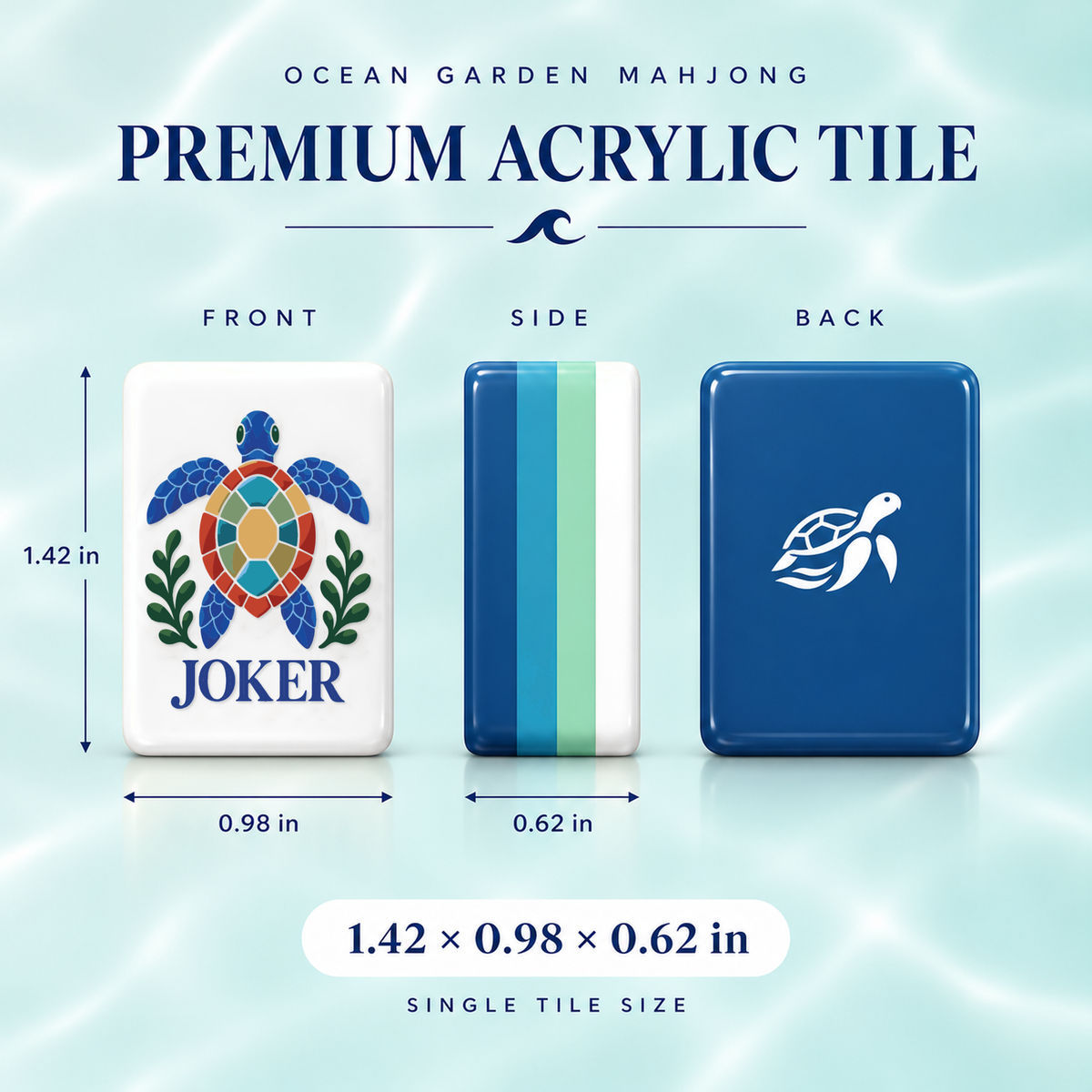
A western classical mahjong tile set is an American-style 160-tile set (152 playing tiles plus spares) designed with traditional or artistic tile faces, typically made from acrylic, bone, or bamboo. These sets include three suits (Bams, Craks, Dots), 16 winds, 12 dragons, 8 flowers, and 8 jokers, plus the racks, pushers, and mat needed to play. The term "classical" usually refers to hand-painted or engraved designs that echo vintage Asian aesthetics rather than modern graphics. Western sets sold in North America run from entry-level acrylic (durable, lightweight, affordable) to premium bone and bamboo (heavier, more tactile, costlier). We recommend browsing our best-selling mahjong sets to compare materials and designs side by side, then confirm the set includes 160 tiles, a mat, and pushers before ordering.
Western classical mahjong tile sets blend traditional aesthetics with modern durability. Choosing one depends on tile material, engraving style, and whether you prioritize portability or table presence.
What material feels right for weekly play?
Acrylic is our go-to for weekly players: it's lightweight, won't crack if dropped, and the tiles snap satisfyingly when you set them on a rack. Bone and bamboo feel more luxurious and weigh more, which some players love; they're louder (the clack carries), and they need more careful storage to avoid warping or chipping. For a group that plays every Friday night in someone's living room, acrylic beats bone every time—you're not worried about leaving tiles in a car or a humid guest room. If you host serious players or display your set between games, bone or bamboo signals commitment. Acrylic scales beautifully; bone and bamboo are harder to replace individual tiles if one cracks.
🀄 Shop best-selling mahjong sets →

How do you read western classical engraving styles?
Hand-painted or engraved western classical tiles usually feature one of three design families: minimalist line art (suits and numbers only, often in serif fonts), ornamental borders (flowers, scrolls, or geometric frames around the suit symbols), or period-revival designs (characters that mimic vintage bone tile carving). The goal is legibility at arm's length; if you squint at a tile and still can't tell if it's a 3 Crak or 5 Dot, the engraving is too fussy. We've tested this: tiles with clean outlines and high contrast (dark character on light tile or vice versa) reduce eye strain over a four-hour game. Ornamental tiles look stunning but slow down a fast group because players pause to admire rather than read. Ask yourself: Will my table appreciate a classical look, or will they prefer clarity and speed?
Should you buy a set with a mat and racks included?
Yes—most western classical sets sold as bundles cost less than buying components separately, and consistency matters. A mat that matches your tile color and finish (light wood tones, cream, grey) makes the whole table cohesive and helps your brain process which tiles belong where. Racks with pushers should fit the tile weight; acrylic sets pair with lightweight plastic or wood racks, while bone sets demand sturdier racks to support the heft without wobbling. If you buy a set alone and add a mat and racks later from different makers, you risk size mismatches or visual discord. Our best-selling mahjong sets bundle these components so you unbox a complete setup. Bundles also ship more safely: the mat and racks cushion the tiles.
🎁 See our most-loved mahjong sets & accessories →

What's the difference between 160-tile and 144-tile sets?
American mahjong is always played with exactly 152 tiles plus 8 jokers (160 total in play). A 160-tile set includes 152 playing tiles plus spare tiles (extra jokers or blanks) in case one breaks. A 144-tile set is incomplete for American mahjong and often signals a Chinese or Hong Kong variant set—those games use fewer tiles and different hands. Never buy a 144-tile set if you play American mahjong weekly; you won't have enough jokers or the right tile mix. Our sets are all 160-tile American sets, so you're never guessing. If you already own a set and want to check: count the jokers (should be 8 in your rack) and confirm you have four of each numbered tile 1–9 in each suit. If you're missing tiles, learn what's in an American mahjong set to spot gaps.
How do engraved or personalized sets compare to standard designs?
Engraved sets (with your name, initials, or a witty phrase on the tile face or edge) cost more but transform a set into a gift or conversation piece. A set engraved with "Mahstead 2026" or a player's name makes it instantly memorable and discourages lending (nobody borrows Carol's tiles by mistake). Standard designs are cheaper and let the classical aesthetic speak for itself; they also work better for group play where the set belongs to the club or a rotating host. We offer engraved American mahjong sets that ship fully assembled; you just unbox and play. If you're buying as a wedding gift, milestone birthday, or team tradition, engraving is worth it. If you're buying for yourself to host casually, standard classical works perfectly and lets you upgrade later.
✨ Find your Mahstead set — free US shipping →
Buying Guide: Western Classical Set Comparison
Factor | Acrylic (Classical) | Bone (Classical) | Best For |
Weight | Light (easy travel) | Heavy (table presence) | Acrylic if you move sets; bone if you host at home |
Durability | Resistant to drops and warping | Prone to chips if mishandled | Acrylic for casual play; bone for display |
Sound | Quiet snap | Loud, satisfying clack | Acrylic for noise-sensitive homes; bone for traditionalists |
Engraving clarity | Sharp, high-contrast lines | Fine detail, can read as busy | Both work; depends on design complexity |
Storage | Any shelf or bag | Humidity-controlled box recommended | Acrylic anywhere; bone in climate-controlled space |
Tile replacement | Easier to source matching acrylic | Harder to find exact bone match | Acrylic if accidents worry you |
What to Check Before You Buy
Count the tiles in photos or product specs. Confirm 160 total (152 playing + 8 spare).
Verify the mat size matches your table. Most western classical mats are 36–40 inches wide; measure your table first.
Read the rack weight rating. If you're buying bone tiles separately, ensure your racks support them.
Check the joker count. The set must include 8 jokers; if the photo shows fewer, it's incomplete for American mahjong.
Look for tile thickness specs. Thicker tiles (1⁄2 inch or more) feel more substantial; thinner tiles (3⁄8 inch) suit travel bags better.
Confirm free shipping is included. We ship all orders across the US at no extra charge.
Ask if the set is sold with pushers and a mat. Don't assume they're included; many sets sell tiles only.
Hosting Your First Western Classical Game
Once you've chosen your set, you're ready to host. Lay out your mat, arrange the four racks with pushers at the four compass points (North, East, South, West—one player per side), and set the wind tile indicator in the center so everyone knows who's East. Have the current year's National Mah Jongg League card handy—it's the only valid hand reference for American mahjong. Run through the Charleston (the pre-game tile-passing ritual) so new players understand the flow. A western classical set's traditional look often sets a calm, focused tone; players naturally slow down and savor the game rather than rush. If anyone's new, keep how to play American mahjong nearby for quick reference.
Why Material Choice Matters More Than You Think
The tile material you choose shapes how often you actually play. Acrylic sets get packed into cars, taken to vacation homes, and stacked on shelves without ceremony—so you're likelier to pull them out on a whim. Bone sets become artifacts; they live in a climate-controlled cabinet and come out for special occasions. Neither is wrong. We've seen players who bought premium bone sets and now never host because moving the tiles feels like a production. Others bought lightweight acrylic and host twice a month because setup takes five minutes. If you're just starting or play casually, acrylic's lack of fuss wins. If you've been playing for years and want a set that feels as serious as the game, bone delivers. Our best-selling mahjong sets span both worlds; pick the one that matches your play style, not just your taste.

FAQ
What's included in a 160-tile western classical mahjong set?
152 playing tiles (four each of 1–9 Bams, Craks, Dots; four each of winds North, East, South, West; four each of Red, Green, White dragons; four each of flowers; and eight jokers) plus eight spare tiles. Most bundles also include a mat, four racks with pushers, and dice.
Can I use a western classical set to play Chinese or Hong Kong mahjong?
No. American mahjong uses 152 tiles and the National Mah Jongg League card. Chinese and Hong Kong variants use 144 tiles and different hand combinations. A western classical American set is designed and numbered only for American play.
How much does a western classical acrylic set cost compared to bone?
Acrylic sets are generally more affordable than bone, though exact pricing varies by design and finish. Visit our product pages to compare current options without guessing.
Should I buy an engraved set or a standard design?
Engraved sets are ideal as gifts, for milestones, or to mark a group tradition; standard classical designs are better for general hosting and testing whether you love the aesthetic before committing.
How do I keep a bone or bamboo tile set in good condition?
Store it in a humidity-controlled environment (not a damp garage or attic). Use a protective case or bag when transporting. Avoid extreme temperature swings. Check racks and pushers annually for warping or cracks.
What size mat should I buy with my western classical set?
Most American mahjong mats are 36–40 inches wide. Measure your table first. A mat that's too small leaves tiles cramped; too large and it overhangs or bunches. Our mahjong mat guide walks you through sizing.


View More
View More
View More
