
Vintage Style Mahjong Travel Bag: What to Know Before You Buy
Last updated: Nov 23, 2026
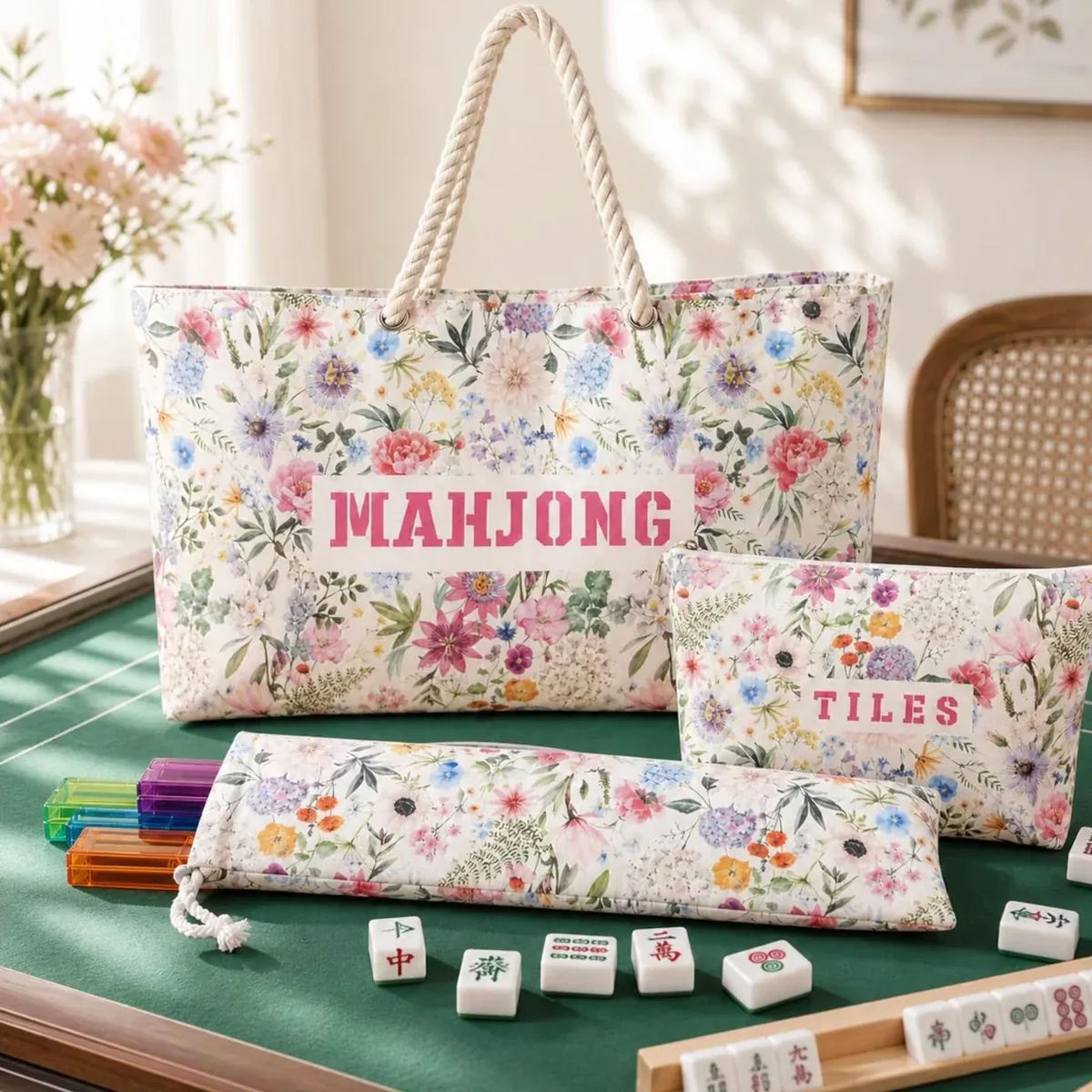
Vintage-style mahjong travel bags are drawstring, zippered, or structured carriers designed to hold a complete 152-tile American mahjong set with room for mats, racks, and dice. They blend nostalgic aesthetic—think brocade, embroidered silhouettes, retro color palettes, and brass or wooden accents—with practical protection for travel to game nights and tournaments. Most hold a standard set plus a few accessories; weight ranges from 2–5 pounds empty depending on material and frame. At Mahstead, our travel bag collection offers canvas, faux-suede, and patterned fabric designs that suit both practical players and gift-givers. Before ordering, confirm interior dimensions match your set's footprint, check if you need room for a mat rolled inside, and verify the strap type fits your carry style. Vintage styles often cost more than plain utility bags because of fabric quality and embellishment, but they last years with proper care. 🀄 Shop best-selling mahjong sets →
What makes a bag "vintage style" versus plain?
Vintage-style mahjong bags lean on period design cues: brocade or silk-like jacquard weaves, hand-painted or embroidered bamboo and crane motifs, jewel tones (burgundy, forest green, navy, gold), wooden toggle closures, brass corner guards, and tapered or structured silhouettes that recall 1970s–1990s aesthetics. Plain utility bags prioritize function—nylon, solid colors, minimal trim, lightweight zippers. Vintage styles signal that mahjong is a ritual worth dressing up; they photograph well and spark conversation at game night. The trade-off is cost and weight; embellishment adds material and labor, and hardware raises durability but also mass. If you're gifting to a serious or nostalgic player, vintage style wins. If you're a traveling tournament regular who swaps sets weekly, plain is faster to pack and often more water-resistant.

How do I know if a vintage bag will fit my set?
Measure your acrylic mahjong set in its original box or storage tray: length, width, and height in inches. A standard 160-tile set from our best-selling collection in its box is typically 10–12 inches long, 4–5 inches wide, and 3–4 inches tall; some vintage bags list interior dimensions in product details. Cross-reference: if the bag's listed depth is 5 inches and your set box is 4 inches, you have 1 inch of wiggle room, which is safe. If the bag is 4 inches and your set is 4 inches, skip it—boxes compress during shipping and you'll force the closure. Also ask: do you want the bag to hold only the set, or also a rolled mat, racks, and dice? A snug fit looks elegant but offers no buffer for damp weather or rough handling. Test this at home: pack your actual set, then add one extra item. If it strains the zip or closure, size up.
Drawstring, zippered, or structured—which works best for travel?
Closure Type | Best For | Pros | Cons |
Drawstring | Casual game nights, lightweight travel | Easy on/off, lightweight, flexible capacity | Slower to pack, relies on knot tension, no waterproofing |
Zippered | Regular play, mixed weather, quick swaps | Fast access, weather seal, durable, looks polished | Heavier, zips can jam if overstuffed, higher cost |
Structured (frame/handle) | Tournament carry, formal gifting, weekly rotation | Professional look, rigid protection, easy shoulder carry | Bulkiest, heaviest, less flexible, most expensive |
We usually recommend zippered for vintage-style bags: the closure is smooth, the seal keeps dust off tiles, and the structured sides hold embroidery and hardware without sagging. Drawstring works if you're packing into a larger tote and don't move your set often. Structured frames are for players who hand-carry the same bag to weekly games or events and want their set to look as important as it is.
🎁 See our most-loved mahjong sets & accessories →

What fabric and lining protects tiles best?
Canvas and heavy cotton-blend exteriors resist snags and offer structure for embroidery or appliqué. Interior lining matters more: padded cotton or microsuede spreads impact across tile surfaces rather than concentrating force at corners. Avoid thin plastic or burlap linings—they slide, bunch, and offer no shock absorption. When you check a product listing, look for "padded interior" or "soft lining"; unpadded bags are usually budget utility styles, not vintage. Faux suede and brocade fabrics feel luxurious but demand care: spot-clean if damp, store away from direct sun to prevent fading (reds and golds fade fastest), and avoid rough seams against bare tile edges. If you game in humid climates or travel by car with climate shifts, zippered closure with lined interior is non-negotiable—moisture inside an airtight drawstring bag can fog acrylic tiles over weeks. For vintage styles with embroidery or appliqué, inspect seams at product photos; loose thread edges indicate rushed sewing and won't hold through a year of weekly play.
What should I check before ordering?
Run through this checklist:
Interior dimensions vs. your set box: Measure twice, order once. Allow 0.5 inches clearance on length and width.
Strap length and attachment: Confirm the strap is long enough for your shoulder or hand carry. Detachable straps offer flexibility but add seams that fail under repeated stress.
Lining material: Padded cotton or microsuede only. Reject thin plastic or unlined options.
Zipper or closure type: Test the closure in photos—smooth operation visible? Avoid tiny zips on bags that need to open wide.
Weight: Vintage bags with wooden or brass hardware add 1–2 pounds. If you're commuting by transit, that matters.
Color and pattern durability: Bold reds and golds fade; navy and forest green age well. Ask the seller if dyes are colorfast.
Seam strength: Look at the heel and base in photos. Double-stitched seams (visible parallel lines) last; single-stitch is quick but fails.
Return policy: Vintage bags from sellers other than Mahstead may have strict no-return policies due to custom orders. Know your recourse if the interior is too tight.
Our travel bag collection at Mahstead includes detailed product photos and dimensions; measure your set first, then filter by interior size. Most vintage designs arrive in 5–10 business days; allow extra time if ordering close to a tournament.
✨ Find your Mahstead set — free US shipping →
Should I buy vintage style as a gift for a mahjong player?
Absolutely—if you know the player's aesthetic. Vintage-style bags are the physical embodiment of "I respect this hobby," especially paired with a new engraved mahjong set or one from our best-selling lineup. The bag works as a standalone gift to an existing player (it signals upgrade-and-ritual) or as half a gift bundle with a new set for someone learning to play. Common mistakes: buying a bag without checking interior size (it won't fit their existing set), choosing a color that clashes with their home décor (mahjong bags live in view on shelves), or selecting a drawstring when they prefer zippered (they'll resent fumbling at game night). If you're unsure, ask quietly what color or style they gravitate toward in their kitchen, wardrobe, or game room—vintage-style bags feel personal, so a match lands harder than a generic choice. Gift receipts are your friend here; return policies vary by seller.
FAQ
Can a vintage mahjong bag hold a mat rolled inside?
Yes, if the interior depth is 5+ inches and the mat is rolled tightly to 2–3 inches diameter. Test at home first—the set and mat together must not strain the zipper or fold the bag's sides.
Will a vintage canvas bag get water-stained if caught in rain?
Canvas absorbs moisture and can stain if treated fabrics aren't sealed. Uncoated canvas will darken when wet and may take hours to dry. For rainy climates, choose a zippered bag with treated or synthetic fabric and keep a small waterproof tote inside your car.
How do I clean a vintage embroidered or brocade mahjong bag?
Spot-clean embroidery and brocade with a damp microfiber cloth and mild soap; air-dry away from direct heat or sun. Avoid machine washing—embellishment and hardware will detach or corrode. For lined interiors, vacuum gently with a brush attachment to remove dust.
Is a vintage bag worth the extra cost over a plain utility bag?
If you play weekly or display the bag at home, yes. Vintage bags last 10+ years and are pleasant to use; plain bags wear faster and feel utilitarian. If you swap sets monthly or don't care how the bag looks, plain is fine.
What size is "standard" for a mahjong travel bag interior?
Most American mahjong set boxes are 10–12 × 4–5 × 3–4 inches. Vintage bags typically list 11 × 5 × 4 inches or similar; that's a safe fit for a standard 160-tile set. Measure your specific set before ordering.
Can I use a vintage mahjong bag for other games or items?
Yes. These bags also hold playing cards, dice, tile-based word games, or craft supplies. The vintage aesthetic makes them useful beyond mahjong, so they earn their place on a shelf even during off-seasons.


View More
View More
View More
