
Mahjong for Chess Players: What Transfers, What's Radically Different
Last updated: Nov 23, 2026
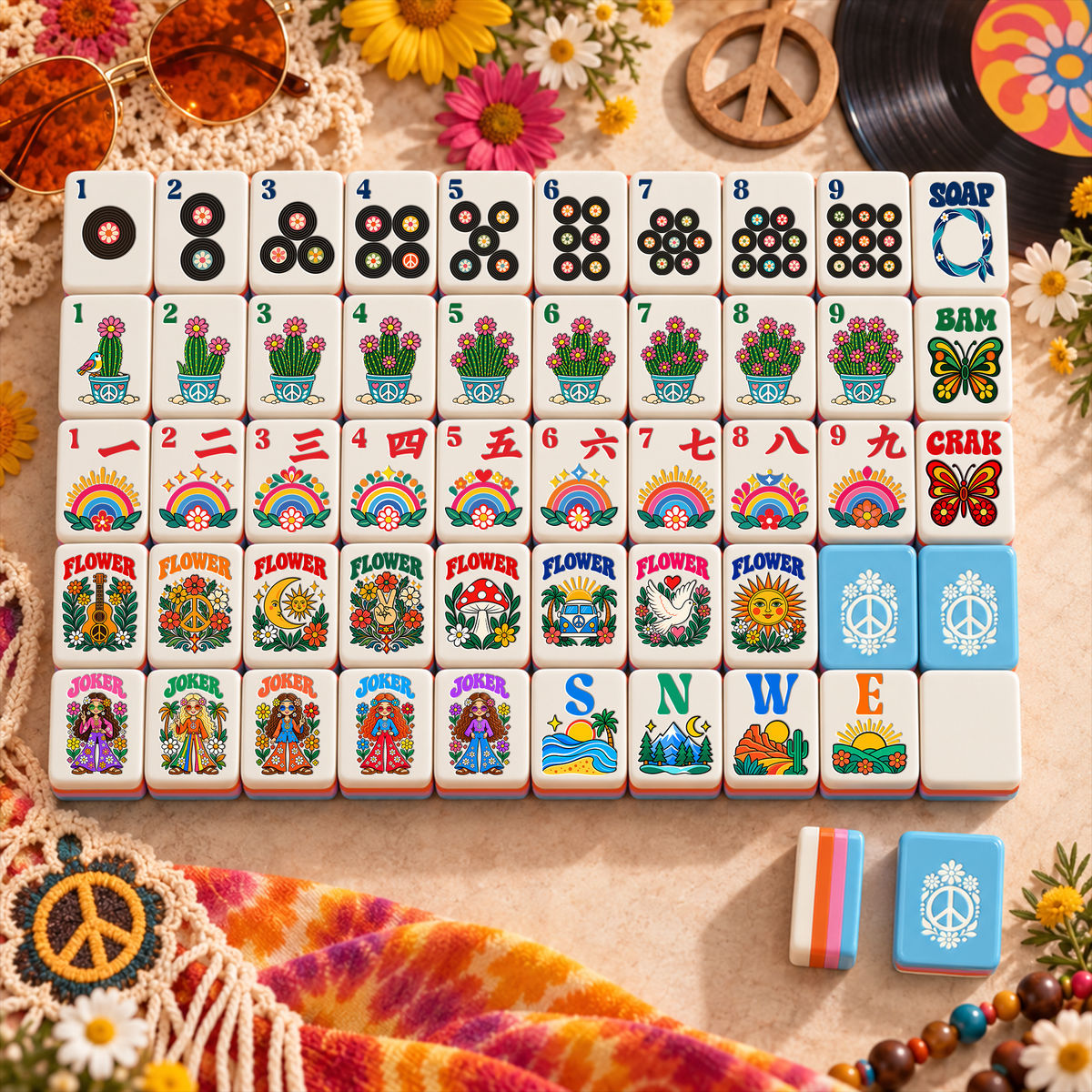
Chess players bring genuine advantages to mahjong: both require long-term planning, tile/piece positioning memory, and the discipline to read an opponent's strategy from their moves. But American mahjong differs radically: you cannot control your hand draw, the winning hand changes every season (from the National Mah Jongg League card), tiles are called live and exposed mid-game, and the social rhythm—the Charleston passing ritual, rapid decisions, simultaneous play—is faster and noisier than chess. In chess, you have unlimited time to calculate; in mahjong, you discard in seconds while three others watch. The luck factor is non-negotiable: a master player can lose to a beginner's lucky draw. Chess trains you to build plans; mahjong trains you to abandon them and adapt. Your pattern recognition will help you spot winning hand shapes on the card, but your competitive instinct may hurt you at first—mahjong rewards cooperation and communication as much as cunning.
Chess teaches you to read positions three moves ahead. Mahjong also rewards memory and foresight, but not in the way you expect.
Why Your Chess Memory Helps (and When It Doesn't)
In chess, the 64 squares and 32 pieces never change in quantity; you memorize openings and track every piece's history. In American mahjong, 152 tiles enter play—14 in your hand, visible to no one but you—and 138 on the table, partially concealed. You cannot memorize the entire board state: other players' tiles are stacked face-down in their racks. What you can train: recalling which suits and numbers have been discarded (the "dead wall" you build), inferring what opponents want from the tiles they keep or pass during the Charleston, and recognizing hand patterns on the card at a glance. Your chess ability to hold multiple piece positions in mind absolutely transfers. Your chess habit of calculating exact outcomes does not: luck makes the math irrelevant.

The Real Skill Transfer: Pattern Recognition Under Pressure
Chess players excel at spotting shape and opportunity in a crowded board state. That exact skill dominates mahjong. Here's how it works in practice: the National Mah Jongg League card lists hundreds of winning hand patterns—pung hands (three identical tiles), kong hands (four identical tiles), quints, sextets, pairs, and sequences within the card's allowed shapes. A chess player glancing at their 14 tiles instinctively parses them into clusters: two 3 Dots, four 5 Craks, a pair of East winds, a joker. Within seconds, they cross-reference the card, spot three possible hands that fit, and begin discarding to build one. A beginner would take a minute and feel lost. Your pattern recognition is genuine capital. Where it breaks down: mahjong patterns are not constructed by you (like a chess gambit); they are revealed by the luck of the draw and the card's fixed menu. You are not inventing strategy; you are choosing which of several fixed strategies to pursue, then hoping the tiles cooperate.
Where Chess Thinking Fails: Luck Is Not An Opponent
In chess, every move by your opponent is rational and intentional. In mahjong, one half of the game is random draw. A terrible player holding a lucky hand beats a master holding bad tiles. Chess teaches you to assume the opponent plays optimally; mahjong teaches you that tile luck is indifferent to skill. This mindset shift separates chess players who thrive from those who leave the game frustrated. The first time a beginner wins on a lucky hand while you, having studied the card and memorized discard patterns, lose to a bad draw, you will feel the loss viscerally. Accept it: mahjong is not chess. It is a game where strategy and luck are equally weighted, and social pressure accelerates decision-making so much that perfect calculation is impossible anyway. The chess player's instinct to blame poor play for losses works in chess; in mahjong, it leads to regret and resentment.
The Social and Speed Advantage You're Not Ready For
Chess is turn-based and silent. Mahjong is simultaneous and social. Four players draw and discard at the same time; tiles fly across the table; conversations and jokes overlap. The pace is bracing. Chess players often struggle here because the problem is not computational—it is attentional and social. In chess, you have no pressure to decide quickly; in mahjong, a slow discard signals that you are holding something juicy, and opponents will call your tile to sabotage your hand. New players from chess often discard slowly and thoughtfully, then wonder why every good tile they need gets called or picked up by the player before them. Mahjong rewards fast, decisive discard. The second surprise: mahjong actively encourages talk. Opponents will discuss the card, joke about tiles, and comment on hands as they develop. This is not cheating; it is part of the game's social fabric. Chess players accustomed to absolute silence at the board find this disorienting. The best mahjong players are comfortable reading the table and making snap decisions under chatter and competitive pressure.

How to Translate Chess Discipline Into a Mahjong Advantage
Your chess training—discipline, systematic thinking, the habit of holding multiple scenarios in mind—is an asset if you apply it correctly. First, study the current year's National Mah Jongg League card for 20 minutes before your first game; unlike chess openings, the rules of mahjong change every spring, and a newcomer who memorizes the card's hand shapes will immediately see patterns others take weeks to spot. Second, during play, keep a mental count of discards (the "dead wall"): you will quickly learn which numbers are gone, narrowing the odds of drawing what you need. Third, embrace the luck. Play 50 hands before you judge whether you like the game; early variance is noise. Finally, practice fast decisions. Set a personal timer of five seconds per discard in casual games; the speed will improve your read of the table and accelerate your intuition.
What Transfers from Chess | What Doesn't Translate | Your Retraining |
Piece/tile positioning memory | Controlling your hand draw | Accept luck; focus on discard strategy |
Long-term planning over several moves | Perfect calculation under live time pressure | Embrace 5-second decisions; read context not math |
Reading opponent intent from past moves | Social comfort and rapid chatter | Listen more; discard faster; laugh at bad beats |
Discipline and habit | Adapting to a fixed card that changes yearly | Memorize the current card; update every April |
What You'll Need to Play Well
Best-selling mahjong sets are engraved acrylic with clear, easy-to-read tiles—ideal for chess players accustomed to clarity and precision. You will also benefit from quality mahjong racks with pushers: they hold your 14 tiles upright and organized, letting you see your hand at a glance and discard decisively. A mahjong mat keeps tiles from rolling and marks each player's position. If you travel to games, a sturdy bag or case protects your set.
🀄 Shop best-selling mahjong sets →
Before Your First Game: A Checklist
Read how to play American mahjong for 15 minutes.
Study what's in a 152-tile set: understand the suits (Bams, Craks, Dots), winds, dragons, flowers, and jokers.
Learn how the Charleston works: this passing ritual before play is non-negotiable and unique to American mahjong.
Get a copy of the current year's National Mah Jongg League card (or ask your group for theirs; many clubs have laminated extras).
Play three practice hands with a patient group before keeping score; ask questions without fear.
Watch one hand in silence to absorb the pace and rhythm.
🎁 See our most-loved mahjong sets & accessories →
A Word on Competitive Instinct and Group Dynamics
Chess is a two-player zero-sum battle; mahjong is a four-player cooperative-competitive hybrid. You score points, yes, but you cannot win unless someone melds (declares a winning hand). If three players gang up on the strongest player to block their tiles, that strong player can be shut out. Conversely, if one player fumbles their hand badly, everyone else benefits. Chess teaches you to crush your opponent; mahjong teaches you that the table's weakest player can set the tone. On your first night, you may find yourself frustrated that no one is playing "optimally" by chess standards—someone holds a tile they "should" discard, or someone calls a tile rashly. This is mahjong. The game has loose formal rules but strong social rules: respect the pace, don't table-talk about your own hand, and laugh when someone gets lucky. A chess player who can adopt this mindset quickly will find mahjong rewarding. A chess player who approaches it as "chess but with more tiles" will quit within a month.
✨ Find your Mahstead set — free US shipping →
Begin at mahjong for beginners if you want a gentler introduction. For deeper rules, American mahjong scoring explains how hands earn points—a concept chess players will grasp instantly.

FAQ
Does chess rating predict mahjong skill?
Not directly. Chess rating reflects calculation and focus. Mahjong rewards memory, social reading, and speed equally. A 1400-rated chess player often outlearns a 2100-rated player because mahjong's luck and social rhythm matter more than pure tactics.
Can I use chess opening principles (control the center, develop pieces fast) in mahjong?
Partially. "Building early" (drawing toward a hand quickly) helps, but mahjong has no center; the card dictates which hands exist. You are choosing which of 50+ fixed shapes to pursue, not inventing strategy. Chess principles of timing and flexibility help, but mahjong's rules are stricter.
How long does it take a chess player to become competent at mahjong?
Competent (understanding the card, discarding decisively, reading the table): 10–15 hours of active play. Skilled (winning regularly, predicting opponents' hands, balancing aggression and caution): 50–100 hours. Mahjong has less to memorize than chess openings but more social and luck variables.
What's the biggest shock for chess players learning mahjong?
That preparation and skill are capped by luck. A chess player can study, train, and play perfectly and still lose to a beginner's lucky hand. Accepting this is the hardest mental shift.
Should a chess player learn Chinese or Hong Kong mahjong instead of American mahjong?
No. American mahjong is simpler for chess players: the card is fixed and published, hand shapes are predetermined, and rules are stable. Chinese or Hong Kong mahjong allow chows (sequences of consecutive numbers) and hand creation, requiring more intuition and fewer memory aids. Start with American.
Does speed matter more in mahjong than in chess?
Yes. Chess rewards depth; mahjong rewards speed and social comfort. A chess player's tendency to think deeply before each move is a liability in mahjong, where slow play leaks information and slows the table.


View More
View More
View More
