
Fall Mahjong Party Decorations: Host the Perfect Game Night
Last updated: Nov 23, 2026
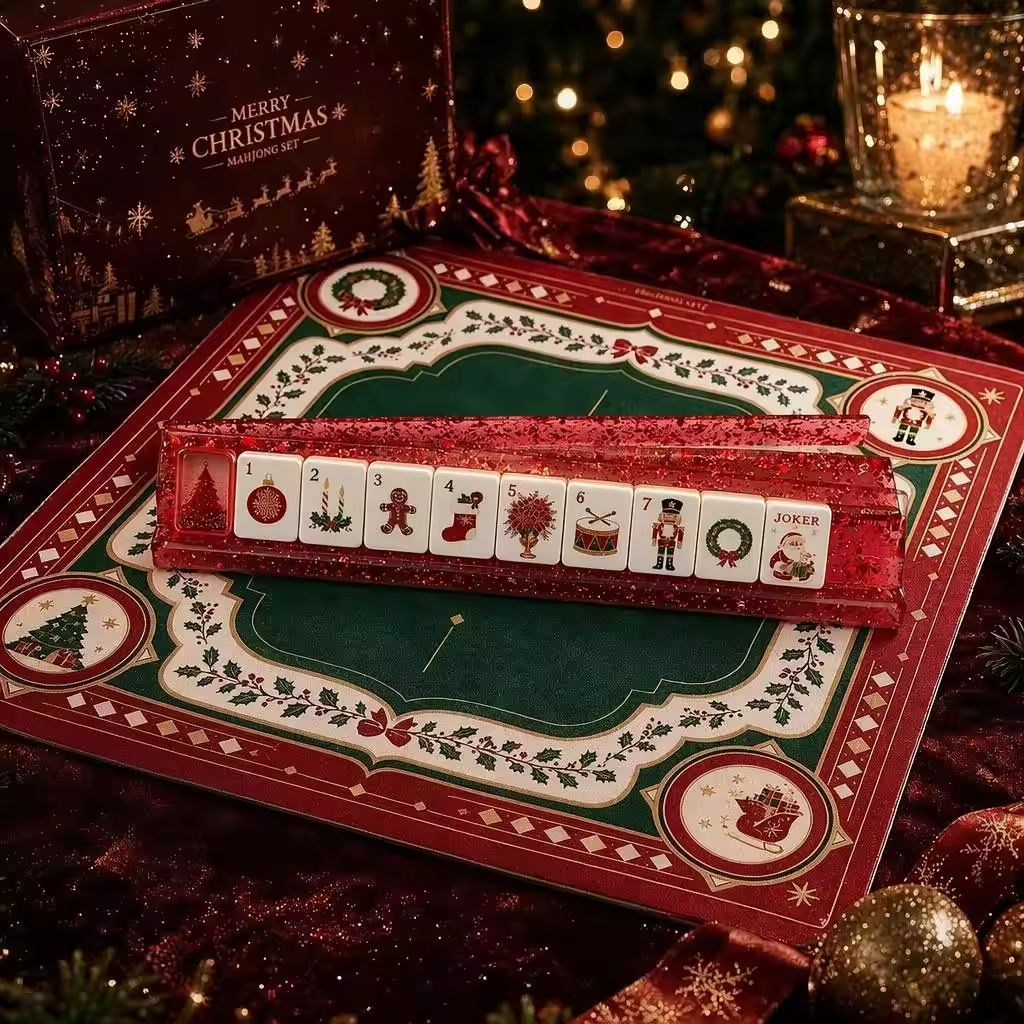
Fall mahjong decorations blend aesthetic appeal with practical game logistics. Start with a color-coordinated acrylic set (autumn hues like burnt orange, burgundy, or cream pair beautifully with dark wood tables), layer a fabric mat to define the play zone and protect surfaces, and add matching racks with pushers to elevate tile handling. Small touches—a seasonal table runner, warm lighting, snacks in fall colors—complete the vibe without distracting from the game itself. The investment centers on the set and mat; at Mahstead, we offer engraved and themed collections that double as decor while functioning as your permanent game kit. Focus spending on quality tiles (they'll last decades) rather than single-use decorations that clutter storage afterward.
What makes a fall mahjong table visually cohesive?
A cohesive table isn't busy—it's intentional. Choose one color story: cream tiles with a deep forest-green mat, or burgundy acrylic with a rust-and-cream striped mat. The mat anchors the space; it defines where tiles live and signals to players this is the focal point. Pair it with racks in a complementary tone (natural wood or black bamboo-style). Add a seasonal centerpiece—a small vase with dried grasses or eucalyptus—to the side, never the center. Soft overhead or string lighting (not harsh overhead bulbs) makes tiles easier to read and creates warmth. Keep the palette to three colors maximum: the set, the mat, and one accent element. Too many competing hues feel chaotic; too minimal feels sterile. Test your setup by standing back—does your eye rest on the tiles naturally, or does it jump around?

How do you choose tile colors that complement autumn?
Warm neutrals are mahjong party safest bets: cream, ivory, natural bone-colored acrylic, or soft gray work with any mat. If you prefer richer tones, burgundy, deep rust, and charcoal acrylic sets photograph well and feel intentional without being trendy. Avoid bright primary colors in fall; they read as summery. Match the tile color to your mat by holding samples together under your actual lighting (daylight and evening differ). Many hosts keep a neutral set year-round, then swap the mat seasonally—a best-selling mahjong set in cream or natural works with any mat you rotate in. Consider engraved designs if you host regularly; engraved American mahjong sets with autumn motifs (leaves, gourds, harvest scenes) signal effort and make great keepsakes. The tiles themselves don't need to change; a single versatile set plus seasonal mat swaps is smarter than buying new acrylic each season.
🀄 Shop best-selling mahjong sets →
What role does a mat play in fall hosting?
A mat serves three purposes: gameplay, protection, and decor. Functionally, it corrals tiles, muffles noise (important in a cozy space), and protects your furniture from scratches and spills. Aesthetically, it frames the game—a well-chosen mat elevates plastic or acrylic tiles instantly. For fall, choose mahjong mats in rich textures: faux leather with embroidered detailing, felted wool blends, or cotton with subtle patterns. A cream mat with burgundy trim works with most tile sets; a rust or olive mat grounds the space and ages well visually. Size matters too: a mat that's too small (standard 27–30 inches) cramps four players; oversized mats (36+ inches) accommodate racks, dice, and elbows comfortably. Fall gatherings often run longer (fewer people linger outside); invest in a mat thick enough to cushion tile-setting for hours without hand fatigue. Wash or spot-clean before guests arrive; a lint-free, fresh mat signals you've prepared.
How do racks and pushers enhance the autumn setup?
Mahjong racks with pushers are not decoration—they're functional decor. They keep tiles orderly and visible, reduce hand strain during long games, and look polished on the table. For fall hosting, choose racks in natural wood, black bamboo-style, or neutral acrylic that echo your mat or tiles. A rack should hold 13–14 tiles comfortably; racks too small force awkward tile stacking and waste the pusher feature. Pushers must glide smoothly without damaging tile faces. Test any rack before a game night: load it, play a few turns, and confirm tiles don't shift or tips don't splinter. Many fall hosts position racks at table corners, angled so players can view their own tiles and the center board equally. Mismatched racks (each player using a different style) read as lazy; uniform racks feel intentional. If you're hosting weekly games, this is worth the investment—good racks last as long as the set.

What finishing touches tie the fall aesthetic together without overcomplicating play?
Small, removable touches make the biggest impression: a linen table runner in cream or sage beneath the mat's edges, hurricane glasses with fall candles (unscented, so they don't distract), and a beverage station on a sideboard with cinnamon sticks, apple cider, or spiced tea. Place scoring chips in a small wooden bowl or ceramic dish—not loose on the mat. Use cloth napkins in autumn colors for snacks; they look intentional and protect the play zone. If you have space, hang string lights or use a plug-in candelabra near the table (not overhead, which casts shadows on tiles). The key: no element should sit on the mat or require moving during play. One host we know uses a framed year's calendar of game dates and winners (updated after each session) as a wall backdrop—simple but it says, "We take this seriously." Store any non-essential decor away before the first hand deals; once players settle, they need focus, not visual noise. A clean, calm table outlasts a themed but cluttered one every time.
Decoration Element | Fall Vibe | Practical Impact | Setup Time | Reusable? |
Acrylic mahjong set (neutral tone) | Warm, cohesive | Foundation; works for years | 2 min | Yes (multiple seasons) |
Fabric mat (rust, olive, cream) | Intentional, grounded | Noise control, tile wrangling, protection | 3 min | Yes (rotate seasonally) |
Wooden racks with pushers | Polished, functional | Tile visibility, hand comfort | 1 min per player | Yes (decades) |
Seasonal table runner | Subtle warmth | Frames the mat, hides table edge | 2 min | Yes (swap with seasons) |
Unscented candles in glasses | Ambient, safe | Visual softness, no distraction | 2 min | Yes |
Scored-chip bowl | Tidy, decorative | Keeps chips organized, table clear | 1 min | Yes |
Total prep (four-player setup) | ~11 min | — |
🎁 See our most-loved mahjong sets & accessories →
What to check before you buy
Tile count and quality: American mahjong uses exactly 152 tiles in play (plus 8 jokers). A 160-tile set includes spares. Confirm tiles are acrylic (not resin, which yellows) and edges aren't sharp—you'll handle them for hours.
Mat thickness and material: Thin mats (under 3mm) slide during play; felt or faux leather should be washable and stain-resistant.
Rack fit: Bring a tile sample to test if buying online. Racks that are too tight crack tiles; too loose lets them shift mid-turn.
Lighting at your table: Acrylic tiles reflect harsh light. Test your setup under evening lighting (when most games run) to confirm tile markings are legible.
Guest comfort: If hosting weekly, invest in cushioned chairs and ensure no player sits for more than 2 hours without a break.
Beyond tiles: Building a fall mahjong tradition
The best fall setups aren't about trendy decor—they're about creating a space where players want to return. One weekly group we know scores each season's games in a leather-bound journal with pressed autumn leaves tucked inside the cover; another rotates hosting duties and each person decorates according to their aesthetic. A travel bag or case lets you transport your set to different homes if you rotate hosts, keeping the ritual consistent even as the location changes. The investment compounds: a quality set, mat, and racks cost less upfront than a single replacement season of single-use party supplies, and they improve with use. Fall is the season hosts build habits—weekly games in October often continue through winter and spring. Make your table a reason people show up.
✨ Find your Mahstead set — free US shipping →

FAQ
Can I use the same mahjong set year-round and just change the mat for fall?
Yes. A neutral acrylic set (cream, ivory, or natural bone tone) pairs with any mat. Many hosts keep one quality set and rotate mats seasonally—it's smarter than buying multiple sets. The mat does the visual heavy lifting for fall.
What's the minimum I need to host a fall mahjong game night?
A set, a mat, and racks. You don't need candles, runners, or themed snacks. The tiles, mat, and racks are the functional core; everything else is optional and can be added gradually as you host more.
How do I know if a mat is washable?
Check the product listing for fabric content and care instructions. Faux leather and sturdy cotton blends are easiest to spot-clean. Delicate fabrics or leather (not synthetic) require special care and aren't ideal for regular game hosting.
Do I need to buy fall-specific tiles, or can I use my existing set?
Use your existing set. Acrylic tile color doesn't need to change with seasons. Pair it with a seasonal mat instead—one set, multiple mats, saves money and storage space.
How far in advance should I order decorations and a new set before hosting?
Order at least 2–3 weeks early to confirm arrival before your first game. Allow time to unpack, test racks and mats, and clean tiles. Last-minute orders often arrive the day of or miss your event window.


View More
View More
View More
