
Vietnamese vs. Wright-Patterson Mahjong: Key Differences Explained
Last updated: Nov 23, 2026
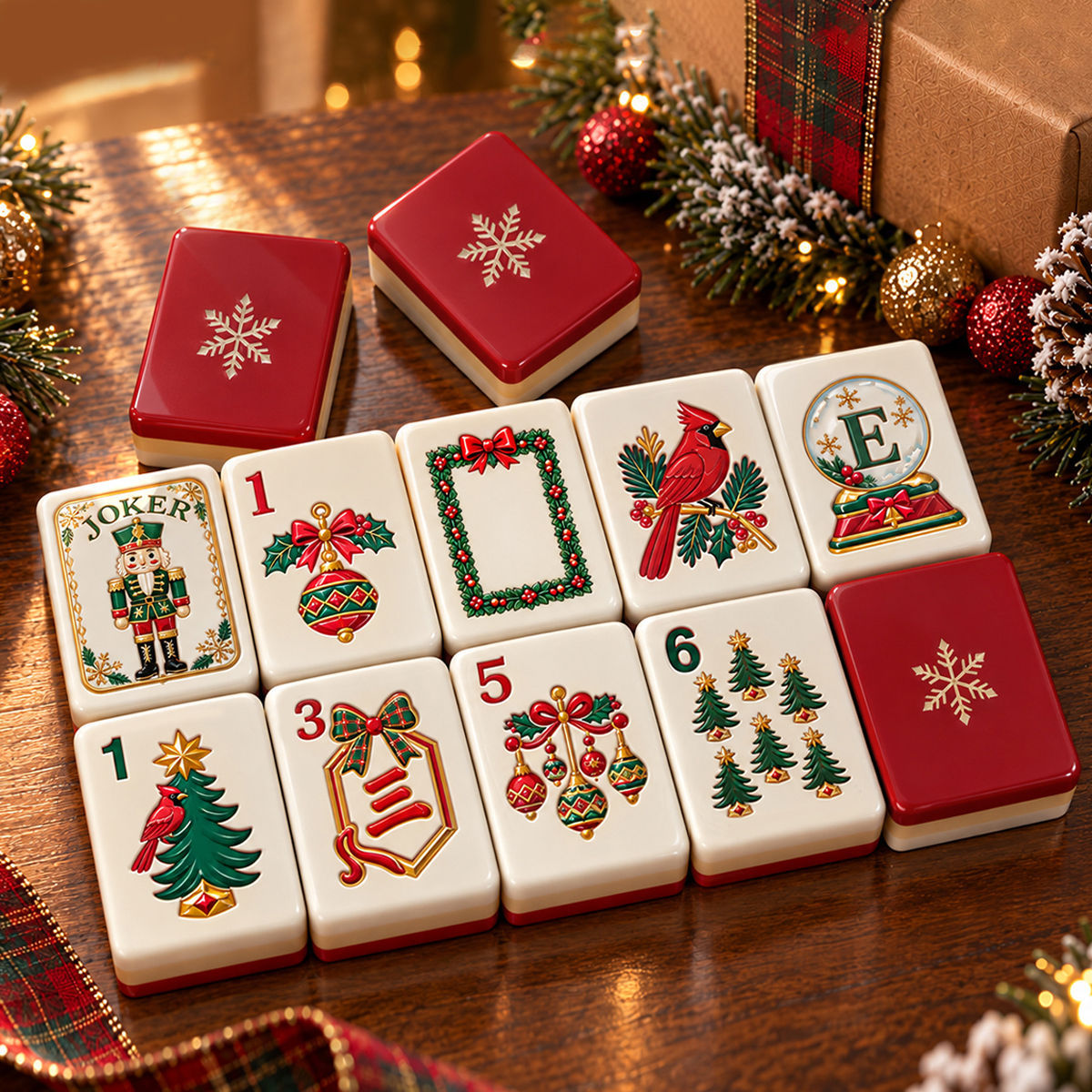
Vietnamese mahjong uses a 108-tile set (three suits, numbers 1–9, four copies each, plus winds and dragons—no flowers or jokers) and plays with 16 tiles per player. Hands are built entirely from melds: no pairs required at the end, and sequences (chows) are valid melds alongside pungs. Wright-Patterson mahjong, named after the U.S. Air Force base in Ohio where American servicemen popularized the game in the mid-20th century, uses the standard American 152-tile set with flowers and jokers, requires a pair to win, and—unlike Vietnamese play—forbids sequences; only pungs, kongs, and joker-adorned melds count. Vietnamese play emphasizes rapid tile-calling and aggressive exposure; American (Wright-Patterson derived) play ties hands strictly to the annual card and allows joker flexibility. Both are competitive and social, but Vietnamese mahjong suits players who prefer hand-construction freedom, while American mahjong attracts those who love strategic card-based hand hunting.
What tiles and set sizes do each variant use?
Vietnamese mahjong strips the game to essentials: 108 tiles—Bams, Craks, Dots 1–9 (four each), plus four winds and three dragon types (Red, Green, White)—no flowers, no jokers. Wright-Patterson (American) mahjong plays with 152 tiles: the same 108 base, plus eight flowers, eight jokers, and four additional winds to total 16 winds overall. This means American mahjong sets from our best-selling collection include decorative elements Vietnamese players never draw. The smaller Vietnamese set makes setup faster and reduces the tile pool, forcing tighter hand choices.
🀄 Shop best-selling mahjong sets →

Can you use sequences in both games?
No—this is the sharpest rule difference. Vietnamese mahjong allows and encourages chows (sequences like 4-5-6 Craks). You can call and expose sequences, and winning hands often mix sequences and pungs. Wright-Patterson (American) mahjong explicitly forbids sequences: winning melds are only pungs (three identical tiles), kongs (four identical), and joker-enhanced melds. American hands come from the current year's National Mah Jongg League card, which lists legal hand patterns—all involve non-sequence combinations. If you've learned American mahjong, switching to Vietnamese means unlearning this core constraint. Vietnamese players find American rules restrictive; American players find Vietnamese play more fluid but less puzzle-like.
How does winning work in each variant?
Vietnamese mahjong wins with any four melds (no pair required at the end). Your hand is complete as soon as you form four pungs, chows, or kongs. Wright-Patterson mahjong requires exactly one pair plus three melds (three pungs, kongs, or joker sets). This pair must be identical tiles (two 5 Dots, two White dragons, etc.), and the pair is not a pung—it does not use the joker. American mahjong also ties winning hands to the seasonal card: only patterns listed on that year's card are legal, so creativity is bounded. Vietnamese play gives you freedom; American play gives you structure and shared reference.

How do jokers function, if at all?
Vietnamese mahjong has no jokers. Tiles stand alone or combine into melds. Wright-Patterson mahjong includes eight jokers that can substitute for any tile within an exposed meld (pung, kong, or quint). You can never use a joker in a pair, and a joker never counts as a single tile win. This joker flexibility is central to American strategy: holding a joker gives you multiple ways to complete a pung or kong, and understanding joker rules shapes your discard decisions. Vietnamese players draw and play every tile as literal; American players leverage jokers as wildcards within melds only.
Which variant suits your group, and what do you need to play?
Aspect | Vietnamese Mahjong | Wright-Patterson (American) Mahjong |
Tile count | 108 | 152 |
Winning melds | Any four (no pair) | Three melds + one pair |
Sequences allowed? | Yes, required skill | No, forbidden |
Jokers | None | Eight, strategic tools |
Flowers | None | Eight, bonus tiles |
Hand selection | Free-form, creative | Card-based, from annual NMJL card |
Pace | Fast, aggressive calling | Strategic, deliberate |
Learning curve | Intuitive tile logic | Rule card essential |
Best for | Casual, fluid play | Competitive, organized leagues |
Vietnamese mahjong suits casual, intimate games where players want speed and creative hand-building. Setup is quicker (108 tiles), and play flows without referencing an external card. Wright-Patterson mahjong suits players who prize structure, shared strategy, and competition—and that's why our engraved American sets appeal to weekly game hosts. American players benefit from a dedicated mat, racks with pushers to organize tiles and melds neatly, and a travel bag or case if you rotate hosts. Vietnamese groups often play without such gear, relying on speed and memory instead.
What to check before you buy
If you're shopping for a new mahjong set and thinking about which variant to play:
Tile count: Do you want 108 (Vietnamese) or 152 (Wright-Patterson/American)? Most U.S. shops stock American sets.
Player count: Vietnamese typically plays four; American plays four with optional two- or three-player variants using a subset of tiles.
Annual card access: Will you have the current year's National Mah Jongg League card? Wright-Patterson play requires it.
Set durability: If you play weekly, acrylic tiles and quality racks outlast bamboo-and-bone sets by years.
Portability: Weekly hosts benefit from custom engraving and cases with handles for rotating locations.
Most Western game groups start with American mahjong because sets are readily available and rules are standardized. If your circle has Vietnamese or Chinese heritage players, offer both: a 108-tile Vietnamese set for heritage nights and a 152-tile American set for standing games. Both variants sharpen your tile-reading and strategic thinking—the choice is about community and tradition, not skill level.
🎁 See our most-loved mahjong sets & accessories →

FAQ
Can I play Wright-Patterson mahjong with a Vietnamese 108-tile set?
No. Wright-Patterson requires flowers, jokers, and the extra winds to reach 152 tiles. A 108-tile set is incomplete for American play. You must use an American set with all components.
Are Wright-Patterson and standard American mahjong the same game?
Yes. "Wright-Patterson" is an informal historical label for the American variant popularized by U.S. servicemen at Wright-Patterson Air Force Base. It follows modern American Mah Jongg League rules and uses the same 152-tile set.
If I learn Vietnamese mahjong, can I switch to American without relearning everything?
Partially. Tile recognition, wind/dragon names, and game pace transfer directly. But American rules on sequences (forbidden), jokers (strategic), pairs (required), and card-based hands require retraining—expect 2–4 weeks of deliberate play before fluency.
Which variant is harder to learn for a complete beginner?
Vietnamese is more intuitive: you build melds from any tile pool without external constraints. American mahjong requires the card as a reference, making the first month slower—but many find the card gives satisfying structure and focuses competitive play.
Can I host both variants with one set of equipment?
You need two separate tile sets: a 108-tile Vietnamese set and a 152-tile American set. Racks, mats, and bags are interchangeable, so investing in quality mahjong racks and pushers benefits both games.
Where do I find Vietnamese or American mahjong groups near me?
American mahjong clubs meet at community centers, libraries, synagogues, and country clubs—search your city's library website or Meetup board. Vietnamese mahjong often gathers through cultural community centers or family networks; ask local Vietnamese community organizations for game nights. ✨ Find your Mahstead set — free US shipping →


View More
View More
View More
