
Vietnamese Mahjong vs Siamese Mahjong: Rules & Key Differences
Last updated: Nov 23, 2026
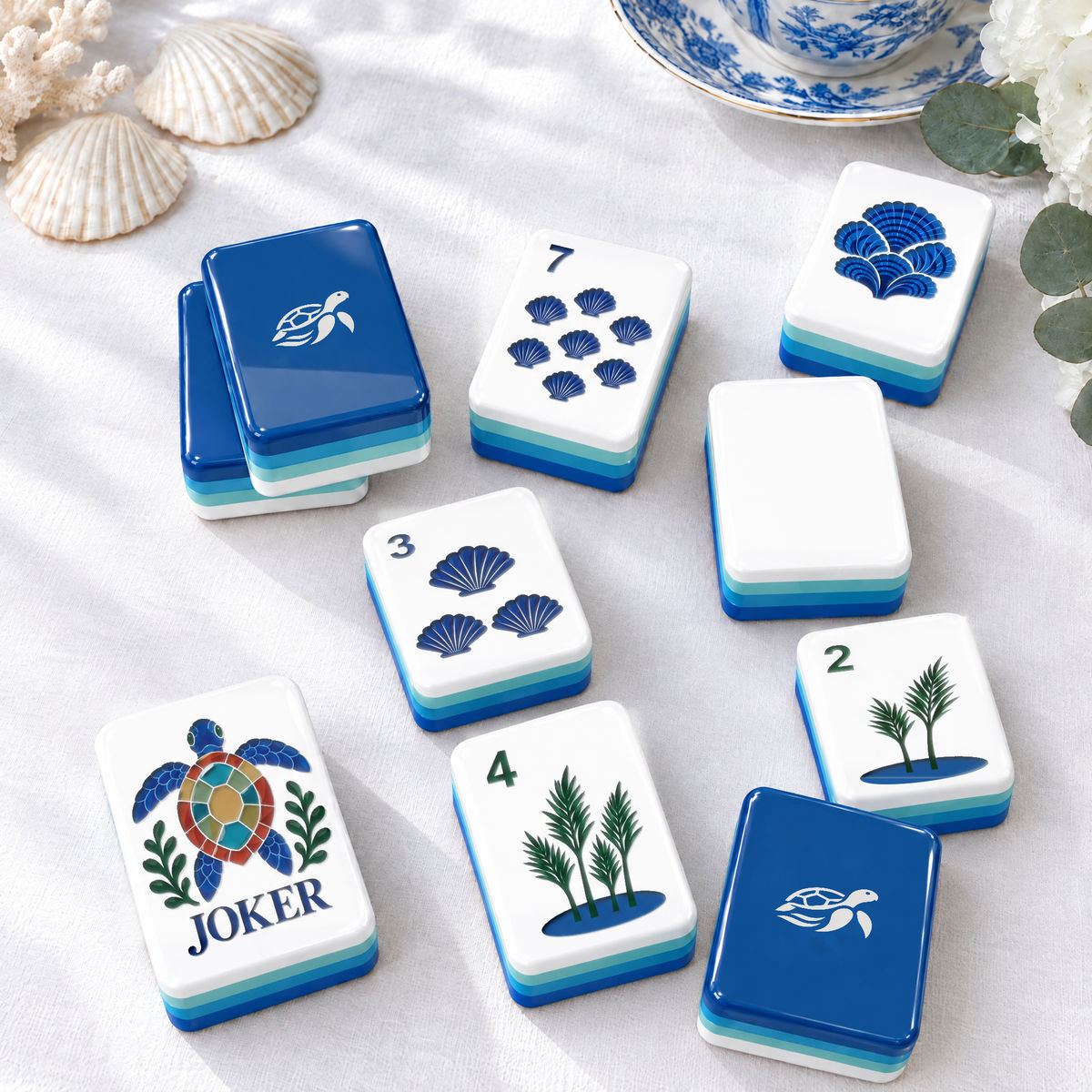
Vietnamese mahjong and Siamese (Thai) mahjong are distinct regional variants played across Southeast Asia, each with separate tile compositions, hand-forming rules, and cultural scoring traditions. Vietnamese mahjong typically uses 108 tiles (Bams, Craks, Dots, Winds, Dragons) with simpler hand patterns and faster rounds, often played in casual social settings. Siamese mahjong employs a larger tile set (144 or more tiles depending on regional rules) with more complex hand combinations, jokers, and bonus scoring tied to specific tile patterns and seat positions. Neither variant uses the standardized National Mah Jongg League card that governs American mahjong. Both games are rooted in Chinese mahjong but adapted to local preferences—Vietnamese favors speed and accessibility, while Siamese emphasizes pattern complexity and skill depth. Players typically learn these variants through family tradition or local clubs rather than published rulebooks, so rule variations between groups are common. If you're exploring beyond American mahjong, starting with a versatile acrylic set from our best-selling collection gives you a foundation to learn any regional variant with clear, durable tiles.
How many tiles does Vietnamese mahjong use?
Vietnamese mahjong traditionally uses 108 tiles divided into four suits (Bams, Craks, Dots, Winds) plus honor tiles (Dragons). Each numbered tile appears in a single suit; the game omits the Flowers and Jokers found in other variants. Rounds are typically shorter than Chinese or American mahjong, making it popular for casual play in homes and community centers across Vietnam.

What makes Siamese mahjong different from Vietnamese?
Siamese mahjong expands the tile set to 144+ tiles, incorporates Flowers, Jokers, and bonus tiles that award extra points for rare hand combinations. Hand patterns emphasize symmetry and specific sequences; scoring rewards players for completing thematic groups (e.g., all Winds, all Honors). Siamese rules also tie bonuses to seating position (seat winds), a feature less central to Vietnamese play. The result is a slower, more strategic game that can span multiple hours per session.
Can you play Vietnamese mahjong with an American set?
Technically yes, but with limitations. American sets contain 152 tiles including Flowers and 8 Jokers, offering more flexibility than a standard 108-tile Vietnamese set. However, American mahjong hands are tied to the annual National Mah Jongg League card—a reference that doesn't apply to Vietnamese rules. You'd need to establish your own hand patterns or use published Vietnamese rulebooks. For casual play among friends, a standard acrylic set works, but dedicated Vietnamese players typically prefer sets designed specifically for 108-tile gameplay.
What are the most common hand patterns in each variant?
Vietnamese mahjong hands typically follow "eye + four melds" structure—a pair (the eye) plus four groups of three tiles each (Pung, Kong, or simple sequences). Wins require completing these straightforward combinations with minimal bonus scoring complexity. Siamese hands follow similar grouping but reward completed hands featuring all one suit (Flush), all Honors, or all even/odd numbers with multiplied scores. Siamese also recognizes "Quint" combinations (five matching tiles) as valid melds, and certain Flower combinations activate bonus points unavailable in Vietnamese play.
How do jokers function differently between these games?
Vietnamese mahjong rarely uses Jokers; when they appear, they're wildcards substituting for a single tile in a meld—a feature adopted from Chinese play. Siamese mahjong incorporates Jokers more prominently, allowing them to substitute for named tiles in sequences and Pungs, though never as the pair. Joker usage in Siamese is tracked separately from the melds themselves, and using multiple Jokers in one hand often reduces final scoring or incurs penalties. American mahjong forbids Jokers entirely in pairs and reserves them for specific hand patterns on the League card.
Comparison: Vietnamese vs Siamese at a Glance
Aspect | Vietnamese | Siamese |
Tile count | 108 standard | 144+ regional |
Suits | 4 (Bams, Craks, Dots, Winds) | 5+ (adds Flowers, Bonuses) |
Hand structure | Eye + 4 melds (simple) | Eye + 4 melds + bonus patterns |
Joker use | Rare; wild sub only | Standard; multiplied scoring |
Round time | 20–40 minutes | 45–120 minutes |
Bonus scoring | Minimal | Seat position, pattern matches |
Learning curve | Beginner-friendly | Intermediate to advanced |
Best for | Social, quick play | Strategic, long sessions |
🀄 Shop best-selling mahjong sets →

Which variant is easier for beginners?
Vietnamese mahjong wins on accessibility. Fewer tiles (108 vs 144+), simpler hand patterns, and no seat-based bonus scoring remove barriers for new players. A beginner can learn the eye-plus-four-melds rule and start playing in one session. Siamese demands deeper pattern recognition and multiplier calculation, making it better suited to players already comfortable with Chinese or American mahjong fundamentals.
How do scoring systems compare?
Vietnamese scoring is straightforward: base points for a completed hand, modest multipliers for all-one-suit or all-Honors hands. Siamese scoring multiplies points based on the meld type (Pung vs sequence), seat wind match, Flower bonuses, and specific pattern completions. A single Siamese hand can earn 4–8× the base score depending on conditions; Vietnamese hands remain closer to flat multipliers. American mahjong uses a point list tied to hand type, where each valid hand has a fixed point value with no multipliers—a different philosophy altogether.
Should I buy a specific set for Vietnamese or Siamese play?
If you're committed to either variant, a dedicated 108-tile Vietnamese set or 144-tile Siamese set ensures you have the exact tile composition for those rules. If you're exploring both variants casually or learning American mahjong first, a standard 160-tile acrylic set gives you flexibility—you can remove Flowers and Jokers for Vietnamese play or add bonus tiles for Siamese experimentation. Check your local community center, library, or cultural club to see which variant is popular in your area before investing; many groups supply sets for newcomers.
🎁 See our most-loved mahjong sets & accessories →
What to check before you buy
Local availability: Ask at Vietnamese, Thai, or Chinese community centers which variant they play; many groups have house rules that differ from published standards.
Tile clarity: Whether you choose Vietnamese or Siamese, ensure tiles are large enough to read during play—acrylic sets with engraved characters eliminate confusion.
Included accessories: Confirm your set includes racks (if you prefer them), a mat for hand organization, and a case if you plan to travel or store tiles long-term.
Rulebook or guide: Vietnamese and Siamese rules are rarely published in English; ask your group for a written summary or video tutorial before your first game.
Joker count: If playing Siamese, verify your set has enough Jokers for the variant's bonus-scoring rules—some regional groups use custom Joker counts.
✨ Find your Mahstead set — free US shipping →

FAQ
Can I learn Vietnamese mahjong if I already know American mahjong?
Yes. Both use suit structure, but Vietnamese omits the National Mah Jongg League card and Flowers, simplifying hand patterns. Your understanding of melds, discards, and claiming tiles transfers directly; you'll mainly relearn which patterns count as winning hands in Vietnamese rules.
Is Siamese mahjong played in Thailand's casinos or only casually?
Siamese mahjong is played recreationally in homes, community gatherings, and informal clubs. Organized tournaments exist but are less formalized than Chinese or American mahjong competitions. Rules vary by region and group, so always confirm local customs before joining a game.
Which variant should a new player start with?
Vietnamese mahjong. Its simpler tile count (108 vs 144+), shorter rounds (20–40 min), and flat scoring make it ideal for beginners. Once comfortable with basic hand-forming and tile-claiming mechanics, you can progress to Siamese or American variants without relearning fundamentals.
Do Vietnamese and Siamese players ever switch sets during a game?
Not typically. Each variant is designed for its specific tile composition and hand patterns. Switching mid-game would break the rules and confuse scoring. Most players own or have access to sets suited to their primary variant.
Where can I find other players of Vietnamese or Siamese mahjong in the US?
Search community centers, libraries, and cultural organizations in Vietnamese or Thai neighborhoods. Meetup boards and social media groups for Southeast Asian communities often list mahjong nights. Ask local restaurants or shops if they know groups; word-of-mouth remains the fastest way to find players.
Can I use the same mat and racks for both variants?
Yes. Mats organize tiles regardless of variant, and racks work with any tile size. A standard mahjong mat and racks with pushers are variant-agnostic and will serve you well whether you play Vietnamese, Siamese, American, or Chinese mahjong.


View More
View More
View More
