
Do You Need a Mahjong Starter Kit? Real Answer
Last updated: Nov 23, 2026
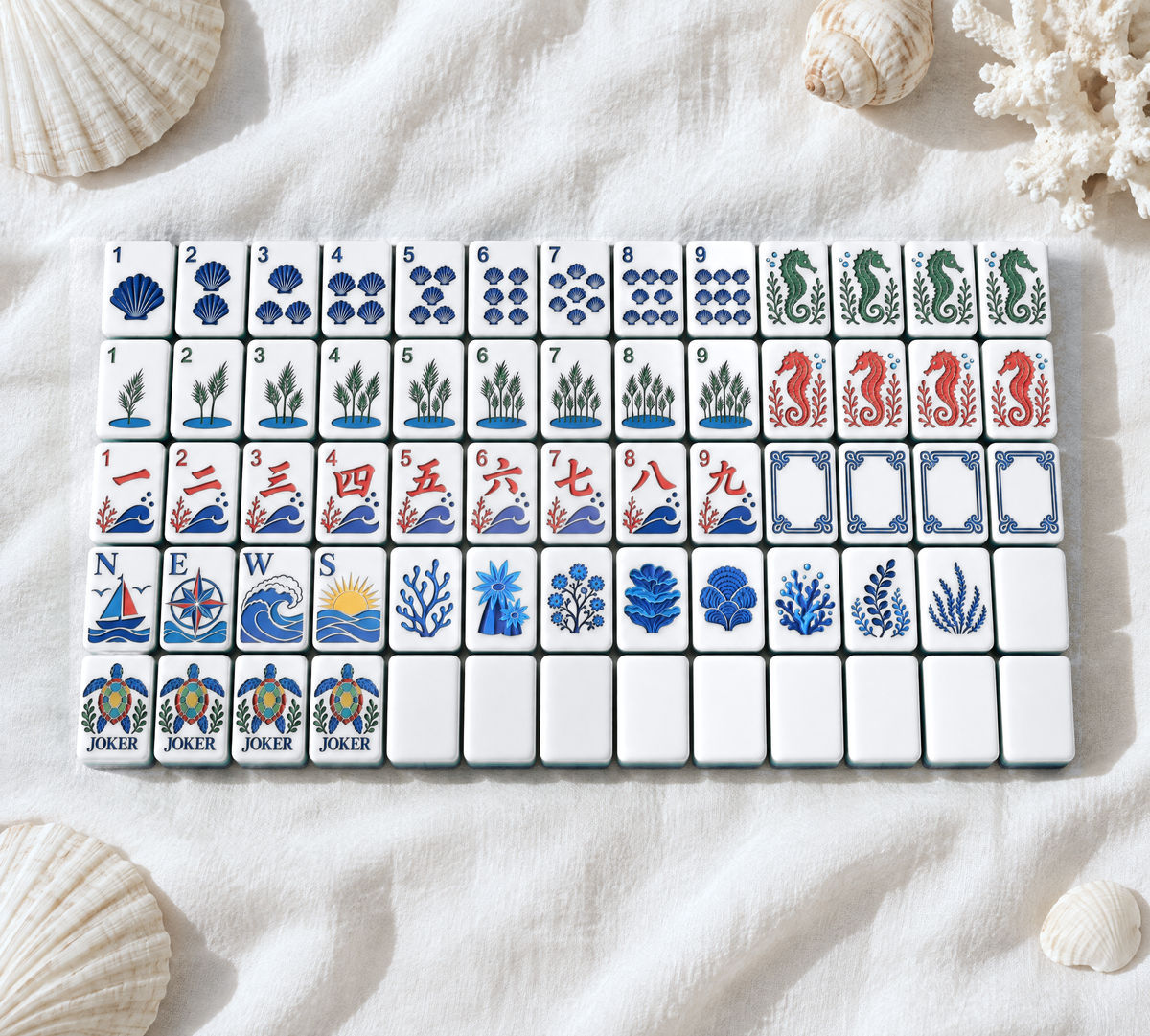
You don't automatically need a starter kit—it depends on your game frequency and how you'll host. A kit bundles a 160-tile set, mat, and racks to simplify buying, but many new players find they need a better mat or stronger racks later anyway. The real starter essential is one complete American mahjong set (152 playing tiles plus 8 jokers) plus the current year's National Mah Jongg League card. Everything else—mat, racks, bag—you can add gradually as you figure out what your group prefers. At Mahstead, we sell best-selling mahjong sets individually and bundled, so you can start lean and upgrade piece by piece without double-buying. Most casual players who meet weekly end up with separate items they chose themselves rather than a one-size starter kit.
What's actually inside a mahjong starter kit?
A starter kit typically includes one 160-tile American mahjong set, a mat, four racks with pushers, and sometimes a drawstring bag. The set has all the tiles you need: 108 suit tiles (Bams, Craks, Dots in numbers 1–9, four of each), 16 winds, 12 dragons, 8 flowers, and 8 jokers. The mat protects your table; the racks hold your hand off-display. We've watched hundreds of new players open kits and immediately realize the mat doesn't fit their table or the racks feel flimsy—not because kits are bad, but because everyone's setup is different.

Do all four players really need their own rack?
Yes, if you're playing the standard four-player American game. Each player holds 14 tiles (after draws), and a quality rack keeps tiles upright and organized so no one accidentally reveals their hand. Pushers help slide tiles smoothly. If your group plays casually, some players skip racks and hold tiles in their lap, but once you try a real rack, most people don't go back. Cheap racks warp after a month of weekly play; we've heard that complaint enough times that it matters when you choose.
🀄 Shop best-selling mahjong sets →
Is a mat required, or just convenient?
A mat is convenient, not required, but it's worth the small investment if you're hosting at home. It defines the play area, protects your table from tile wear, and marks the dealer position clearly so new players don't get confused about rotation. The real question: does your mat need to fit a specific table size? We've seen people buy a standard mat and then discover it's too small for their dining table or slides around on a glass top. Before you buy, measure your table and check whether you want a mat that drapes over the edge or fits flush in the center. That decision alone saves you a return trip.

What's the honest cost comparison: kit versus buying items separately?
Approach | Typical basket | Best for | Trade-off |
Starter kit | Set + mat + racks + bag together | First-time buyers wanting one transaction | May include mat/racks you'll replace; harder to customize |
Set + mat | 160-tile set + dedicated mat | Players who already have racks or borrow | More flexibility; mat choice matters most |
Set only | 160-tile set + card | Ultra-casual players or borrowers | You'll buy racks/mat later anyway—costs more total |
Piecemeal upgrade | Buy one quality item per month | Serious weekly players | Takes longer but aligns with actual use patterns |
The kits don't always cost less than buying items separately; they often cost about the same but bundle items you might not want. We recommend: buy a set you love first (look at engraved American mahjong sets if your group loves personalization), then add a mat you've measured for your table, then racks if your play becomes weekly.
What do real weekly players wish they'd bought first?
From hosting games every week, we see the same pattern: players buy a kit, then within three months they've upgraded the mat (because the original doesn't fit or wore thin) and the racks (because they felt too flimsy or weren't tall enough). The one thing nobody regrets? The tile set itself. If you buy a high-quality set with clear suit markings and smooth faces, you'll use it for years. A good mat costs a fraction of what you'll eventually spend on replacements if you choose the wrong one.
The smartest move: invest in a set first—especially if it's custom engraved for your group—then host a few games before buying a permanent mat and racks. A mahjong mat choice should fit your table exactly, and racks with pushers feel different to every hand. Once you know what matters to your group, you won't waste money on the wrong extras.
🎁 See our most-loved mahjong sets & accessories →
What to check before you buy any starter kit
Table size: Measure your play surface in inches before picking a mat; note whether you want the mat centered or edge-to-edge coverage.
Rack height and grip: If possible, hold a sample rack; if ordering online, check reviews for hand size feedback (tall vs. compact hands matter).
Tile set clarity: Look for large, easy-to-read numerals and suit symbols, especially if anyone at your table has vision concerns.
Bag durability: If the kit includes a bag, check whether it has a rigid bottom or interior pockets; drawstring bags tear easily after weekly transport.
Joker and spare count: All American mahjong sets used in play have exactly 152 tiles + 8 jokers. Any set sold as "160-tile" includes those spares; never add spares to active play.
Card included: Always buy the current year's National Mah Jongg League card separately; no kit includes it, and hands are called only from that year's card.
The biggest regret we hear: "I bought a starter kit to try it out, then realized I wanted to host seriously, and now half the items don't match my real setup." Buy what solves your immediate need—usually just a good set and the card—then expand as you play.
✨ Find your Mahstead set — free US shipping →

FAQ
Do I need to own my own set, or can I use a borrowed one at a friend's house?
You can borrow to try the game, but once you host or play weekly, you'll want your own. A borrowed set might have mixed tile sizes, missing jokers, or unfamiliar suit markings that slow your game. Your own set gives you consistency and confidence.
Does a starter kit come with the National Mah Jongg League card?
No. Starter kits include tiles, mat, and racks—never the card. You must buy the current year's card separately; hands are called only from that year's card, updated every spring. The card is essential; don't skip it.
How long does a starter kit actually last before pieces wear out?
The tiles last many years if handled normally. Mats wear thin after 12–18 months of weekly play, and cheap racks warp or split pushers within a year. The set is the durable part; everything else may need replacement as you refine your setup.
Can I use a starter kit for 2-player or 3-player mahjong?
A standard kit is designed for 4-player American mahjong. Two- and three-player variants use different hand structures and tile counts. If your group plays fewer than four, ask the seller whether the set and mat work for your variant before buying.
Is it better to buy a kit all at once or add pieces over time?
Add over time if you're new. Buy a good set and mat first (after measuring your table), play for a month, then decide whether you need racks. Kits assume one setup fits everyone; your actual group might prefer different racks or no mat at all.
What's the difference between a starter kit and a "best-selling" collection?
A starter kit is a pre-bundled package (tiles + mat + racks). A collection on our site groups items by popularity or theme so you can mix and match. Collections give you more control; kits give you convenience if the bundle matches your needs.


View More
View More
View More
