
7 Dot Mahjong Tile: Meaning and Gameplay Rules
Last updated: Nov 23, 2026
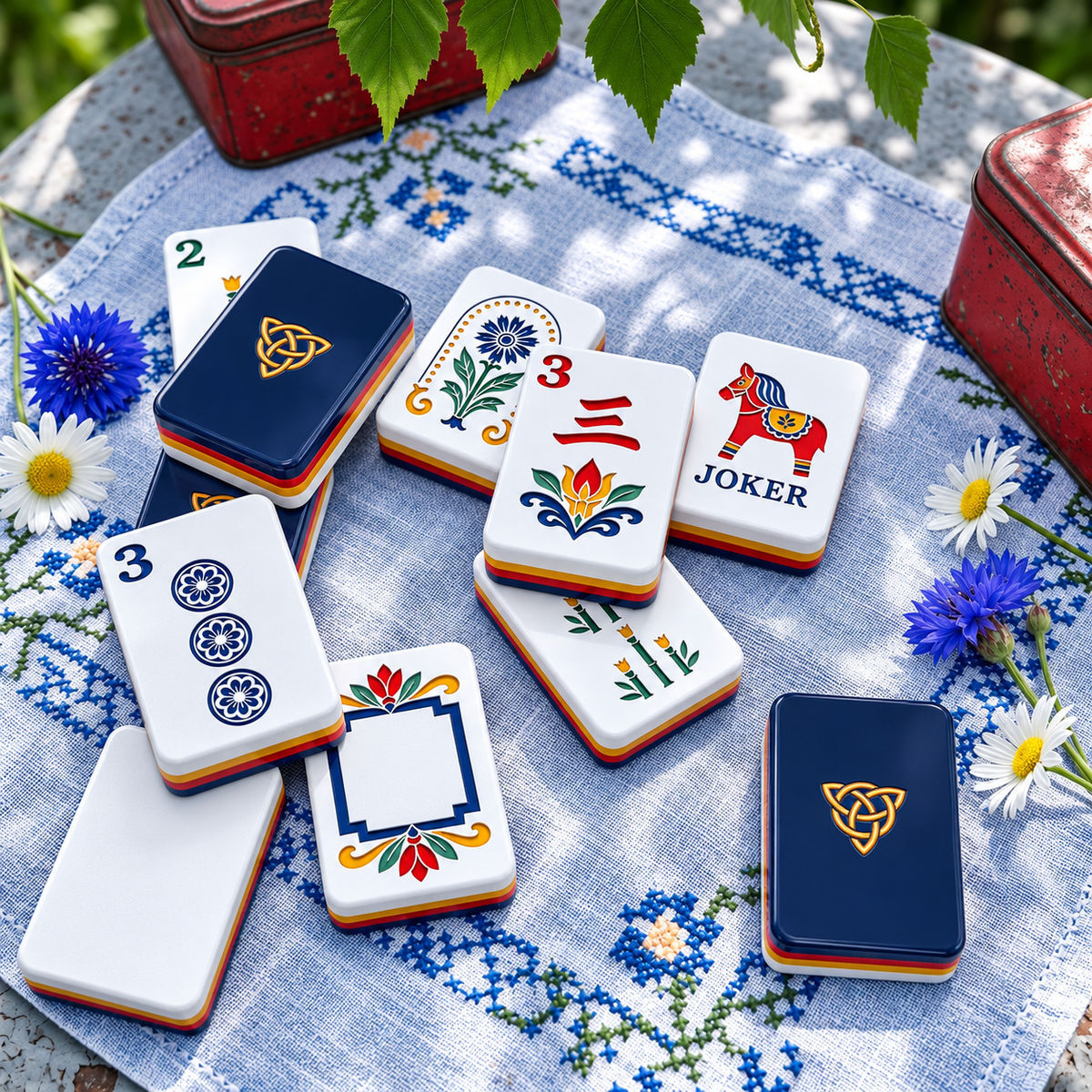
The 7 Dot is a single tile from the Dots suit (also called Circles or Pearls in other variants), numbered 1–9 with four identical copies in every American mahjong set. In American mahjong, all Dots are colored one shade (typically green or teal on acrylic tiles), with the number printed or embossed clearly. The 7 Dot functions identically to any other numbered Dot: it can be part of a pung (three identical 7 Dots), a kong (all four 7 Dots), a quint (five 7 Dots using a joker), or a sextet (six 7 Dots using jokers). Unlike Chinese variants, American mahjong contains no sequences or chows—you cannot group 5, 6, 7 as a run. The 7 Dot's value depends entirely on the hand you're building from the current National Mah Jongg League card; some hands call for one or more 7 Dots, others don't. It costs no more than any other numbered tile in a standard best-selling mahjong set.
What does the 7 Dot look like on a real tile?
On acrylic American mahjong tiles, the 7 Dot displays the number 7 and seven small circular symbols (or dots), all rendered in a contrasting color against the tile face. The suit color—typically green for Dots—wraps around or fills the tile background. Engraved or printed versions may vary in shading; custom mahjong titles sets can feature etched artwork or personalized corner designs while keeping the numeral and dots unmistakable. The tile is square, roughly 1⅛ inches on each side for comfort in hand, and weighs enough (acrylic or resin) to feel durable during shuffling and dealing. On the reverse, all tiles are blank or show a repeating pattern so no one sees your hand from behind. The 7 Dot sits alongside its three identical copies; all four are shuffled together with 151 other tiles before play.

How is the 7 Dot used in a hand?
The 7 Dot enters play only when your chosen hand from the National Mah Jongg League card (issued each spring) includes it. If your hand calls for "Pung 7 Dot, Pung 8 Dot, Pung 9 Dot" or a different combination, you must collect or draw exactly three 7 Dots and place them face-up on the table as a pung—once exposed, all three stay visible until the game ends. You cannot use two 7 Dots with a joker to form a hidden pair; jokers cannot substitute for a single tile or pair in American rules. If you draw a fourth 7 Dot after exposing a pung of three, you may upgrade to a kong by adding the fourth tile—this still counts as one group. Some hands demand a quint (five tiles, using two jokers), others a sextet (six tiles, using three jokers); in each case, the 7 Dots anchor the count. Because American mahjong has no sequences, the 7 Dot never connects to the 5, 6, or 8—it stands alone as a numbered member of the Dots suit.
🀄 Shop best-selling mahjong sets →
Why does the 7 Dot matter strategically?
The 7 Dot matters because it appears in only four copies per set, and some years' hands demand it heavily while others barely touch it. During the Charleston—the tile-passing ritual before play begins—if you need a 7 Dot for your target hand and you see it in another player's pass, you may swap it into your hand or let it go depending on your strategy. If 7 Dots are rare in this year's card and appear in multiple hands, the table will compete for them; players who hold even one 7 Dot early may be watched closely. Conversely, if few hands on this year's card use 7 Dots, you might discard them safely without losing scoring chances. The 7 Dot also appears in mixed-suit patterns—for example, a hand might call for "Pung 7 Dot, Pung 7 Crak, Pung 7 Bam" (one from each suit), or a progression involving 7s across suits. Knowing where 7 Dots went in discards helps you calculate whether your hand is still completable; this tile-counting habit separates experienced players from beginners.
When should you discard the 7 Dot?
Discard a 7 Dot early in the game if it does not appear in any of your three backup hands (the ones you're pursuing alongside your primary target). Many players keep three live hands in mind; if only your first-choice hand uses 7 Dots and you're falling behind, switching to a hand that ignores them frees you to discard safely. Discard before other players have named a hand—once someone declares which hand they're building, and that hand calls for 7 Dots, discarding one gives them a free draw or forces them to wait longer. Watch the board: if three of the four 7 Dots have already been played or exposed in pungs, holding the last one gives you an advantage only if your hand needs it; otherwise, release it to avoid being called. Late in the game—when only five or six tiles remain in the wall—discard 7 Dots you don't need, because players who do need them are unlikely to draw one in time. Timing and information are everything; the tile itself has no inherent danger, but careless discard costs points.

How do 7 Dots compare across mahjong variants?
Variant | 7 Dot Role | Sequences Allowed? | Joker Rules | Key Difference ---|---|---|---|--- American | Part of pungs/kongs/quints/sextets only | No | Cannot substitute in pairs | Only NMJL card hands; four copies per tile Chinese (Classical) | Part of sequences or pungs | Yes (chows: 5-6-7 runs) | Jokers vary by regional rules | Hands are open-ended; sequences essential Hong Kong | Part of sequences or pungs | Yes (chows) | Limited substitution | Faster play; simpler hand lists Riichi (Japanese) | Part of melds (chows or pungs) | Yes (chows) | Minimal or none | Requires "ready" declaration; intricate scoring Taiwanese | Part of sequences or pungs | Yes (chows) | Regional variants | Hybrid rules; mixed sequences and pungs
The core difference: American mahjong forbids sequences entirely, so the 7 Dot never appears in a 5-6-7 run. It must always be paired with two other 7 Dots (or filled out with jokers), or it sits unused. This constraint shapes strategy; you cannot slowly build a sequence over several turns. Chinese and other variants embrace sequences, making the 7 Dot more flexible and less bottlenecked. If you're learning American mahjong and have played Chinese or Riichi, unlearning sequences is the hardest pivot. Learn how to play American mahjong to see the full rule set in action.
What to check before you buy
Know the year of your NMJL card: The 7 Dot's value shifts year to year. Check the cover or title page of your current year's card; if it's outdated (more than one year old), hands and tile frequency may not match. Beginners should start with the current year's card and a new best-selling acrylic mahjong set to ensure all four copies of every tile (including 7 Dots) are clean and consistent.
Count the tiles when you unbox: Open your set and verify all three Dots suit tiles are present—count one copy each of 1 through 9 Dots, and confirm you have four of each numeral before you play. This is especially important if the set was used or passed down; missing 7 Dots or any numbered tile breaks hands mid-game.
Inspect the tile finish: Acrylic tiles should show the 7 clearly (no scratches, fading, or printing errors). If engraving is used, the number should be deep enough that shuffling doesn't wear it smooth. Poor legibility causes hesitation and slows play.
Choose the right set for your group: If players have weak eyesight, larger or lighter-colored tiles help. If you travel frequently, a lighter acrylic set in a padded travel bag and case is worth the investment. If you host weekly games, a durable acrylic set with matching mahjong mats and racks with pushers reduces fumbling and speeds turns.
🎁 See our most-loved mahjong sets & accessories →
Why 7 Dot matters more than other mid-range tiles
The 7 Dot is neither as scarce as winds (16 total) nor as abundant as jokers (eight), making it a true workhorse. It sits in the middle of the Dots suit numerically, so hands balanced across low, middle, and high tiles often snag at least one 7 Dot. Because the card changes yearly, players develop intuition: "This year, 7s are hot," or "I've barely seen any 7 Dots yet—nobody's playing them." Competitive tables track 7 Dots in the wall (discards, exposed groups, and dead tiles) and estimate the odds of drawing one. Beginners often undervalue mid-range tiles and fixate on winds or dragons; experienced players know that 7 Dots, 8 Dots, and similar mid-range numerals are the glue holding half the card's hands together.
If you're hosting regular games, choose a mahjong mat with printed tile reference marks so new players can quickly identify suits and numbers—this speeds learning and keeps the table focused on strategy, not tile-reading.
✨ Find your Mahstead set — free US shipping →

FAQ
Can a 7 Dot be a wild tile or joker substitute in American mahjong?
No. In American mahjong, jokers are the only wild tiles, and they cannot substitute for a 7 Dot in a pair or single tile. The 7 Dot must always be matched with two other identical 7 Dots (or built into a larger group using jokers) to be exposed and scored.
How many 7 Dot tiles are in a standard American mahjong set?
There are exactly four 7 Dots in every standard 152-tile American mahjong set—one for each player's potential need. All four are shuffled and dealt together with the other 151 tiles; no extras are used during play.
Does the 7 Dot have a special meaning or superstition?
Not in American mahjong rules. In some Chinese or cultural contexts, the number 7 may carry symbolism, but American mahjong treats all numbered tiles functionally—only the NMJL card defines which hands win and which tiles are valuable in a given year.
If I'm learning American mahjong, why should I focus on 7 Dots?
The 7 Dot is a good training tile because it forces you to practice tile-counting, discard strategy, and hand-reading. Learning when to hold, pass, and discard a common mid-range tile builds intuition faster than obsessing over rare winds or dragons.
Can a 7 Dot be part of a sequence or run in American mahjong?
No. American mahjong has no sequences or chows (runs like 5-6-7). The 7 Dot can only appear in identical groups: a pung (three), kong (four), quint (five with jokers), or sextet (six with jokers), based on your chosen hand from the current year's card.


View More
View More
View More
