
6 Dot Mahjong Tile: Meaning, Where It Appears, How to Use It
Last updated: Nov 23, 2026
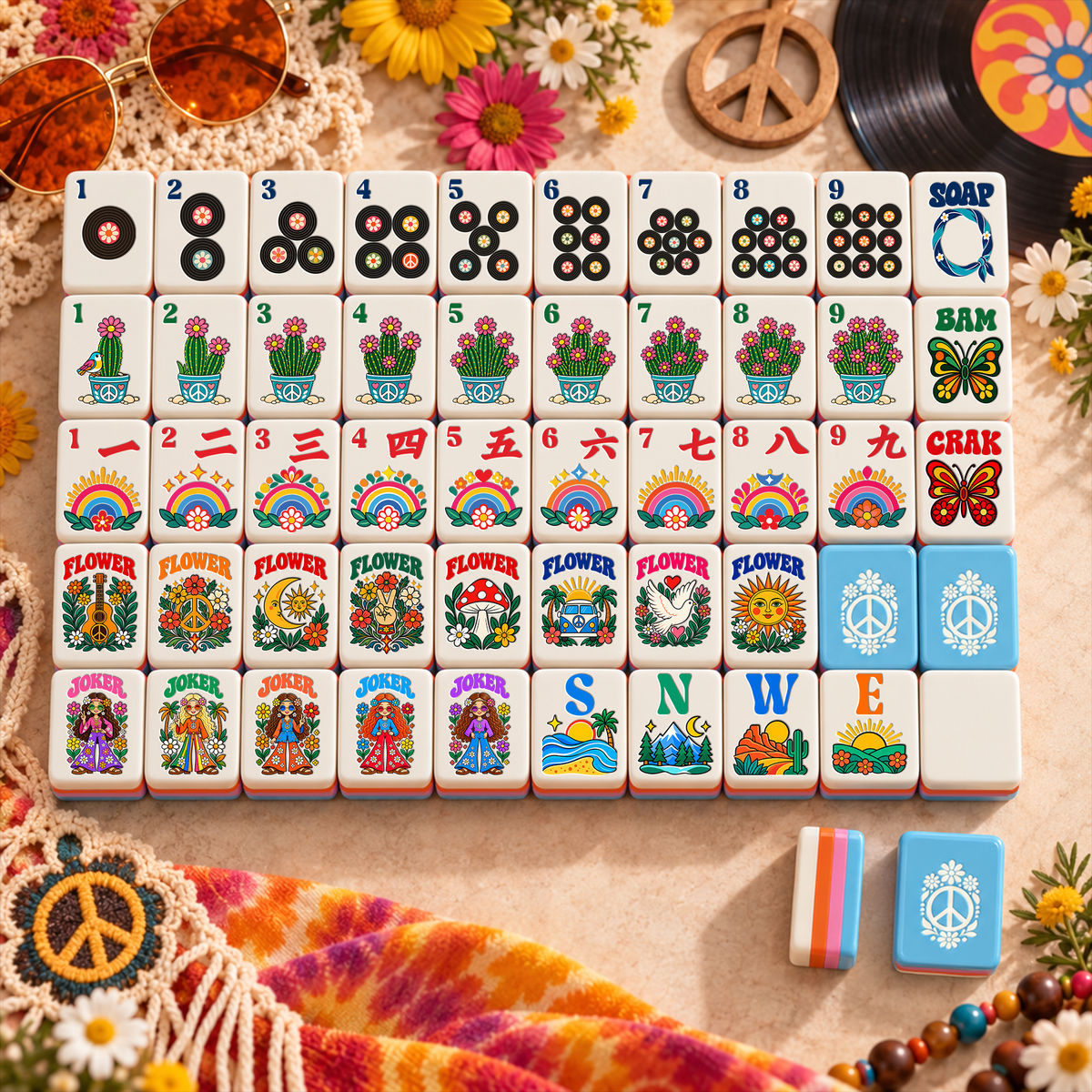
The 6 Dot is a numbered tile in the Dot suit (one of three in American mahjong), featuring six small circles or pips on its face. Every American set contains exactly four 6 Dots—one for each player's wall. On the mahjong card, it appears in hands with other Dots (1–9), mixed with other suits, or as part of sequences in non-American variants. The 6 Dot has no special rank or point value in American mahjong; its role depends entirely on the hand pattern you're chasing that season. In Chinese, Hong Kong, and Riichi variants, numbered tiles hold traditional symbolic meaning—the 6 symbolizes smoothness and luck—but in American mahjong, we treat it purely as a building block: it can form pungs (three identical 6 Dots), kongs (four), or appear in limit hands printed on the card. Quality sets like those from Mahstead's best-selling collection mark all numbered tiles clearly so you can spot a 6 Dot at a glance under table light.
The 6 Dot is one of nine numbered tiles in the Dot suit, featured six small circles or pips on its face. Every American set contains exactly four 6 Dots—one for each player's wall. On the mahjong card, it appears in hands with other Dots (1–9), mixed with other suits, or as part of sequences in non-American variants. The 6 Dot has no special rank or point value in American mahjong; its role depends entirely on the hand pattern you're chasing that season. In Chinese, Hong Kong, and Riichi variants, numbered tiles hold traditional symbolic meaning—the 6 symbolizes smoothness and luck—but in American mahjong, we treat it purely as a building block: it can form pungs (three identical 6 Dots), kongs (four), or appear in limit hands printed on the card. Quality sets like those from Mahstead's best-selling collection mark all numbered tiles clearly so you can spot a 6 Dot at a glance under table light.
Why does the 6 Dot appear so often on the mahjong card?
The mahjong card prints hands that use all tiles fairly evenly across the year. Because the 6 Dot is one of nine tiles in its suit with no special restrictions—unlike winds, dragons, or flowers—it forms a core building block for pung hands, kong exposures, and mixed combos. Players commonly chase 6 Dots as the third or fourth tile in a pung, making it a frequent pick during wall play. Its mid-range position in the Dot sequence (not a rare 1 or 9) means it's neither hoarded nor ignored, keeping it in active circulation at the table.

How do you recognize a 6 Dot on an engraved acrylic set?
On engraved American mahjong sets, the 6 Dot appears as six clearly defined circular pips (usually arranged in two columns of three on traditional tiles, or in other balanced patterns on modern designs). Acrylic tiles from Mahstead are molded with raised or inset pip marks and often feature color coding by suit: Dots are usually white, green, or translucent, so the six circles stand out under table light. Bamboo and bone tiles use deeper carving; plastic mass-market sets sometimes compress the pips, making a 6 Dot harder to read at speed. If you're hosting weekly games, engraved acrylic ensures every player can ID tiles quickly without squinting—crucial when hands move fast.
Can you use the 6 Dot to form a pair in American mahjong?
Yes, but only if the mahjong card calls for it. The 6 Dot is a regular numbered tile with no restrictions; you can pair it with an identical 6 Dot (never with a different number—American mahjong uses only identical pairs, never sequences). A pair of 6 Dots counts as one of the melds needed to complete a hand. However, you cannot use a joker to substitute for one half of a pair; both tiles must be genuine 6 Dots. Once your hand is complete and you call "Mahjong," both tiles in your pair stay hidden until scoring—this is when the card determines your hand's point value.
What role does the 6 Dot play in American vs. Chinese mahjong?
In American mahjong, the 6 Dot is purely functional: it's a numbered tile with no inherent power or symbolism. You chase it only because the current year's card includes hands that need it. In Chinese mahjong, the 6 is auspicious (linked to smoothness and flow), and players often prize sixes for luck—but rules and hand-winning logic are otherwise similar. In Hong Kong and Riichi variants, the 6 can form sequences (chows) like 4-5-6 or 6-7-8, which never happen in American play: we have no chow tiles, only identical melds (pungs, kongs, quints, sextets). If you play multiple variants, the 6 Dot's function shifts dramatically—in American, it's a solid building block; in Chinese, you might chase it for cultural value as much as game strategy.

How to avoid confusing the 6 Dot with similar tiles?
The easiest mix-up occurs between the 6 Dot and the 5 Dot or 7 Dot when tiles are stacked face-down or light is poor. Count the pips carefully: 5 has five circles, 6 has six, 7 has seven. On quality mahjong sets, pip sizes and spacing are consistent, making them distinct even in dim rooms. Another source of confusion: the 6 Crak (bamboo suit) and 6 Bam (stick suit) look completely different from the 6 Dot, so once you learn the suit markers, you won't mix them up. If you're buying a set, inspect how clearly the pips are carved or printed—cheap sets can run pips together, turning a 6 into an illegible blob. Acrylic sets hold their detail for years; bamboo and bone require better care but offer a traditional feel. When ordering from Mahstead, you get consistent, laser-clear marking on all numbered tiles.
Tile | Suit | Pip Count | Common Use | Mix-Up Risk |
6 Dot | Dots | 6 circles | Pung, kong, mixed hands | 5 or 7 Dot under poor light |
6 Crak | Craks | 6 bamboo stalks | Pung, kong, mixed hands | None (visually distinct) |
6 Bam | Bams | 6 small lines or circles | Pung, kong, mixed hands | None (visually distinct) |
White dragon | Dragon | Blank or "Soap" | Pair, pung, often joker sub | Can look blank if carelessly molded |
🀄 Shop best-selling mahjong sets →
How to read the mahjong card for 6 Dot hands
When you open the current year's mahjong card, scan the sections to spot hands containing 6 Dots. Most hands list tile patterns in shorthand: "Dots 1-2-3, 4-5-6" means you need two identical three-tile runs (but remember, no sequences exist in American mahjong—this notation refers to pung or exposed sets). If the card shows a hand like "6 Dot pung, 6 Dot pung" (sometimes written as "Dot 6" twice), you need two separate groups of three identical 6 Dots each (impossible in one game, but possible across a season if you play multiple rounds). Always confirm the exact pattern with the card symbol, not memory. Beginners often misread shorthand and waste time chasing the wrong tiles. Mahstead's best-selling sets ship with a clear card-reading guide so you and your table stay aligned.
What to check before you buy a new set—6 Dot clarity checklist
Inspect pip marking under bright light. Count all six circles on a sample 6 Dot tile—no merged or missing pips.
Feel the texture. Raised pips on acrylic or carved grooves on bamboo make tiles tactile and easier to distinguish when handling fast hands.
Check all four 6 Dots are identical. Set them side-by-side; they should look and feel the same (this confirms quality control).
Compare with other Dot numbers. Pick a 5 Dot and a 7 Dot; the difference should be obvious at a glance.
Test under your table's lighting. If you host weekly games, bring sample tiles to your game space and view them in actual play conditions.
Verify the set count. American mahjong uses 152 playing tiles plus spares; confirm your set contains all four 6 Dots in the 152-tile deck.
Ask about engraving options. If you want custom text or suit symbols, Mahstead's engraved collection offers designs that keep numbered tiles readable.
✨ Find your Mahstead set — free US shipping →
Can you substitute a joker for a 6 Dot?
In American mahjong, yes—but only in exposed melds (pungs, kongs, quints, sextets), never in a hidden pair. If you're holding three 6 Dots and want to expose the pung, you can replace one 6 Dot with a joker; the pung still counts as valid and stays exposed on your rack. However, if you're collecting tiles toward a hand that needs a 6 Dot pair, you cannot use a joker for one half of the pair—both must be real 6 Dots. Jokers are one-time wildcards: once placed, they can't be reclaimed. If you run low on 6 Dots late in a hand and need one urgently, a joker in an exposed pung can free you to draw another real tile. Read more about how jokers work in American mahjong here.

FAQ
What does the 6 Dot tile look like on a traditional bamboo set?
A traditional bamboo 6 Dot shows six thin stalks carved in two rows, while an acrylic version displays six circular pips. Bamboo tiles feel heavier and require careful handling; acrylic is more durable for frequent weekly play.
Is the 6 Dot considered lucky in American mahjong?
No. American mahjong has no lucky or unlucky tiles—all 152 tiles are neutral game pieces. In Chinese and other variants, the 6 carries cultural significance (smoothness, flow), but American rules ignore symbolism entirely.
How many 6 Dots are in a complete American mahjong set?
Exactly four—one in each player's wall. A 160-tile set contains 152 playing tiles (including all four 6 Dots) plus spare tiles for emergencies.
Can you make a hand using only 6 Dots?
No. American mahjong hands always combine multiple suits and tile types—winds, dragons, numbered tiles, flowers. A hand of all one number would violate the card pattern rules.
What happens if a 6 Dot tile breaks during play?
Stop the game immediately. Replace it with a spare from your set (most quality sets include spares). If no spare exists, you cannot continue—a complete 152-tile deck is required for legal American mahjong.
How do I know if my 6 Dots match the rest of my set?
Check size, weight, pip depth, and color consistency. Hold all four 6 Dots together; they should be identical. Mismatches suggest the set was damaged or assembled from different batches—contact the seller for replacement tiles.


View More
View More
View More
