
Uma and Oka in Riichi Mahjong Explained
Last updated: Nov 23, 2026
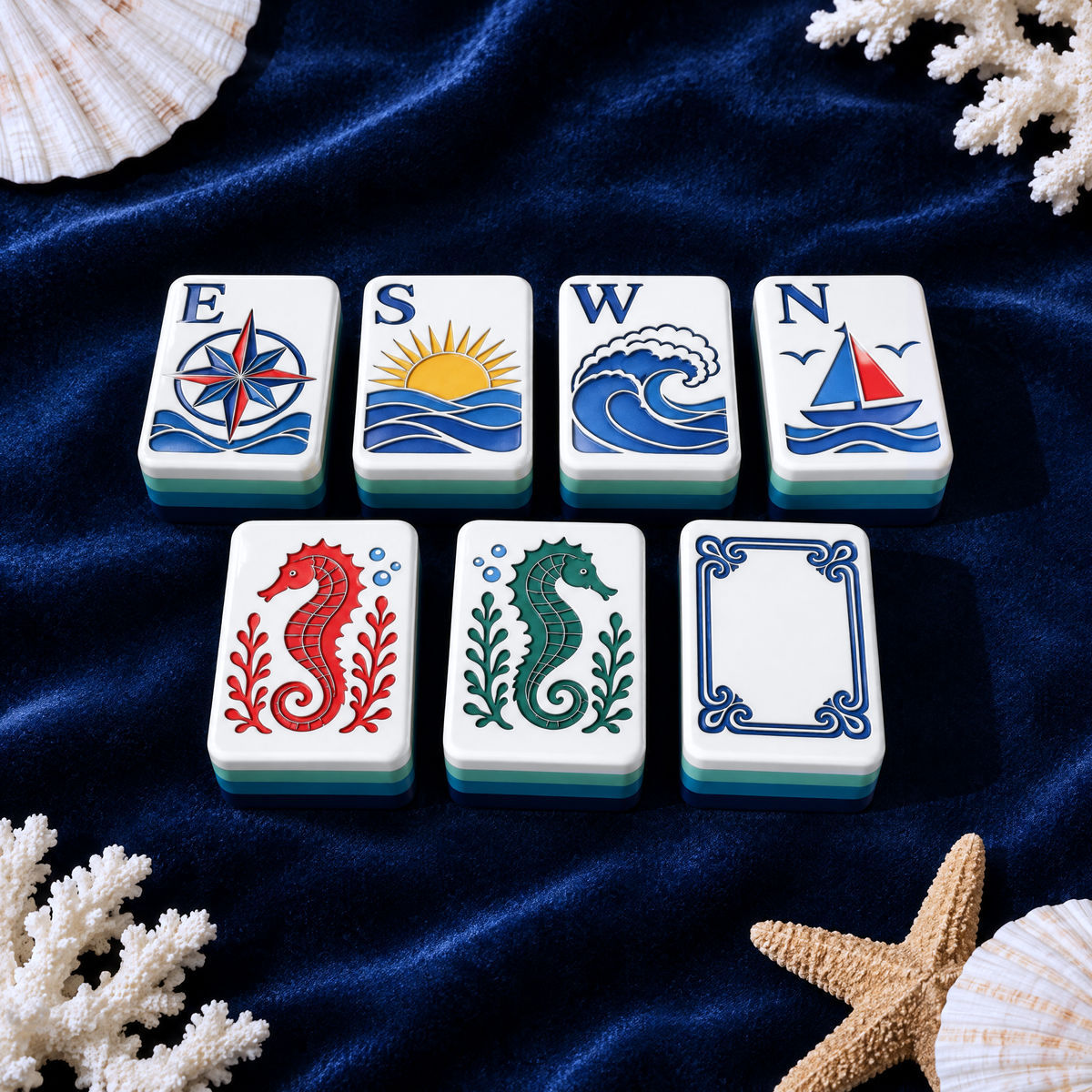
Uma (浮き) and oka (岡) are end-of-game scoring adjustments unique to riichi mahjong. Uma adds or subtracts fixed points from each player's final tally based on finishing position; oka is a starting payment pool that distributes to top finishers. In a typical 30-point uma system, first place gains 30 points, second gains 10, third loses 10, fourth loses 30—applied after all hand scoring concludes. Oka (often 20,000 or 30,000 points per player at the table start) goes into a pot; the player with the highest score wins it. These mechanics flatten variance and reward consistent play, making tournaments feel fair even when luck heavily favors one hand. American mahjong uses a simpler per-hand payment model, so uma and oka don't apply—they're specific to riichi and other Asian variants.
Uma and oka are scoring adjustments unique to riichi mahjong that fundamentally change how money or points flow between players. Unlike American mahjong, where each hand is settled independently based on a fixed point scale, riichi mahjong treats a full four-player session as one continuous scoring event. At the end of the round (typically four hands, one per wind), players' cumulative scores are ranked, then uma (position bonus) and oka (pot distribution) are applied to determine final winners and losers.
Understanding uma and oka is essential if you play riichi tournaments or friendly games with Japanese players, or if you're transitioning from American mahjong rules. These mechanics can shift the outcome of an entire session—and they're unlike anything in American or most Western mahjong play.
How does uma work?
Uma assigns a fixed point award or penalty based on final ranking, applied to every player's score after all hands are played. The most common uma system is 30-10-10-30: first place receives 30,000 additional points; second gets 10,000; third loses 10,000; fourth loses 30,000. Some games use 20-10-10-20 or 50-20-20-50—the ratio stays consistent. Uma is applied automatically; there's no option to skip it. The advantage: a player can catch up even after falling behind, because final rank matters more than intermediate scores. This prevents "dead hand" situations where victory becomes mathematically impossible mid-session, keeping all four players engaged throughout.

What's the difference between oka and uma?
Oka is a starting payment; uma is a finishing adjustment. Oka (typically 20,000 or 30,000 points per player) is pooled at the start—each of the four players pays it before play begins. That pool (80,000–120,000 total points) goes to top finishers: often first place takes all of it, or first and second split it. Uma is a fixed bonus/penalty added to each player's final score, independent of oka. They work together: oka rewards consistency over a session, while uma prevents runaway leaders and gives trailing players a mathematical path to victory. In casual games, you might use uma only; in tournaments, both are standard.
What's a worked example of uma and oka scoring?
Imagine four players—Alice, Bob, Carol, and Dave—play four hands with riichi scoring. After four complete hands (one east, one south, one west, one north), their cumulative scores are:
Alice: 45,000 points
Bob: 38,000 points
Carol: 32,000 points
Dave: 25,000 points
Before oka, they applied 30,000-point oka at the start. Now apply 30-10-10-30 uma:
Alice (1st): 45,000 + 30,000 = 75,000
Bob (2nd): 38,000 + 10,000 = 48,000
Carol (3rd): 32,000 − 10,000 = 22,000
Dave (4th): 25,000 − 30,000 = −5,000
Next, the oka pool (4 × 30,000 = 120,000 points) goes to first place. Alice receives the full pot:
Alice final: 75,000 + 120,000 = 195,000
Bob final: 48,000
Carol final: 22,000
Dave final: −5,000
Alice wins the session overall. Dave finishes in debt—he pays the difference to winners. In real money games, this debt translates to an actual loss; in point-only games, it's a final score that reflects underperformance.
How do different uma and oka systems change strategy?
Higher uma values (e.g., 50-20-20-50) make position more valuable than raw hand scoring, so players focus on winning overall rank rather than maximizing points in a single hand. Lower uma (e.g., 10-5-5-10) keeps hand-by-hand scoring more important. Larger oka pools (30,000 or 40,000 per player) reward first place heavily, encouraging aggressive play early to establish a lead. Smaller oka (10,000 per player) flattens payoff differences, making second and third place more competitive. Tournament organizers choose uma and oka values to balance luck and skill: high uma/oka systems favor consistency; low systems reward tactical play and lucky hands. Read more on how riichi and other variants differ from American mahjong.

Which uma and oka values do tournaments use?
The National Riichi Mahjong Association (NRMA) and regional tournament bodies in Japan, North America, and Europe each set their own standards. Most North American tournaments use 30-10-10-30 uma with 30,000-point oka as the default, though you'll see 20-10-10-20 in casual clubs and 50-20-20-50 in high-stakes events. Some tournaments split oka between first and second (half to each) instead of giving it all to first; this softens the penalty for fourth place and keeps winnings more evenly distributed. Before entering a tournament or joining a new club, always ask the organizers which system they use—it changes the entire character of the game and your strategy.
Comparison: Uma & Oka Systems at a Glance
System | Ranking Reward | Oka per Player | Best For | Outcome |
30-10-10-30 + 30k oka | High position bonus | 30,000 | Tournaments (NRMA standard) | First place wins big; fourth place loses heavily |
20-10-10-20 + 20k oka | Moderate position bonus | 20,000 | Casual clubs, friendly games | More balanced payoffs; second/third stay competitive |
50-20-20-50 + 40k oka | Very high position bonus | 40,000 | High-stakes competitive play | Consistency heavily rewarded; luck matters less |
Oka split (50/50 to 1st & 2nd) | First and second share pool | 20,000–30,000 | Club-friendly tournament | Fourth-place penalty eased; mid-table tighter |
No oka, uma only | Ranking bonus alone | None | Casual, point-only games | Simpler settlement; hand skill dominates |
What to check before you play with uma and oka
Before sitting down, confirm these details with the game host or tournament organizer:
Uma value: Is it 30-10-10-30, 20-10-10-20, or something else?
Oka amount: How many points per player at the start, and who receives it (first place only, or split)?
Oka distribution: Does first place take all, or do first and second split it?
Starting score: Do all players begin at 25,000, 30,000, or another baseline?
Final payment: Are scores settled in real money, or are they final tallies only?
Round count: How many hands will be played (often four, but sometimes eight in tournaments)?
If you're new to a group, ask a veteran player to walk you through an example hand before play starts. Mismatched expectations about uma and oka can sour an otherwise friendly game.
🀄 Shop best-selling mahjong sets →
If you're learning riichi mahjong or hosting weekly games with friends, having a durable set with clearly marked tiles makes scoring and settlement straightforward. Our best-selling mahjong sets are built for serious play—crisp engravings that stay legible through hundreds of hands, and heavy acrylic tiles that stack reliably when you're tracking cumulative scores across multiple rounds.
For tournament organizers or clubs running riichi sessions regularly, consider a mahjong mat with score tracking and organized tile layouts—it speeds settlement and keeps uma and oka calculations visible to all four players. Pairing a quality mat with engraved set titles (like "Tournament 2026" or player names) adds clarity and professionalism to your games.
American vs. Riichi: Why American Mahjong Doesn't Use Uma and Oka
American mahjong uses a simpler settlement model: each hand is scored independently, and how jokers work and hand difficulty determine payout. There's no running cumulative score across four hands, and no ranking-based adjustments. A player wins points on that hand alone; the next hand is a fresh start. This makes American games feel faster and more luck-dependent—a single hot hand can swing the session. Riichi mahjong, by contrast, treats the entire session as one arc, using uma and oka to flatten variance and reward long-term consistency. If you're used to American mahjong and switch to riichi, expect to think in cumulative terms rather than hand-by-hand payoffs.
✨ Find your Mahstead set — free US shipping →

FAQ
Can uma and oka be negotiated before the game starts?
Yes, in casual games. Tournament play typically fixes them per the organizer's rules. Always confirm with the table host before sitting down—mismatches cause disputes.
What if a player's final score (after uma and oka) goes negative?
That player pays the difference to winners. In point-only games, it's a final tally; in money games, they settle the debt in cash. Some casual groups eliminate the negative by capping losses at the fourth-place uma penalty only.
Is oka the same as a "table fee" or "house cut"?
No. Oka is a player-funded pool that distributes to top finishers; all four players contribute equally, and it all goes to winners. A table fee is the house's cut and doesn't go back into the game. Oka is fair and transparent.
Do different regions use different uma and oka values?
Yes. North American clubs often use 30-10-10-30 + 30k oka; some European tournaments use 20-10-10-20. Japanese tournaments vary by level. Always ask locally.
Can you play riichi mahjong without uma and oka?
Yes, but it's unusual in tournaments. Casual players sometimes play hand-by-hand settlement only (like American mahjong). Without uma and oka, variance is higher and leaders pull away faster; consistency matters less.


View More
View More
View More
