
Two-Tone Mahjong Tiles: Why They Matter & How to Choose
Last updated: Nov 23, 2026
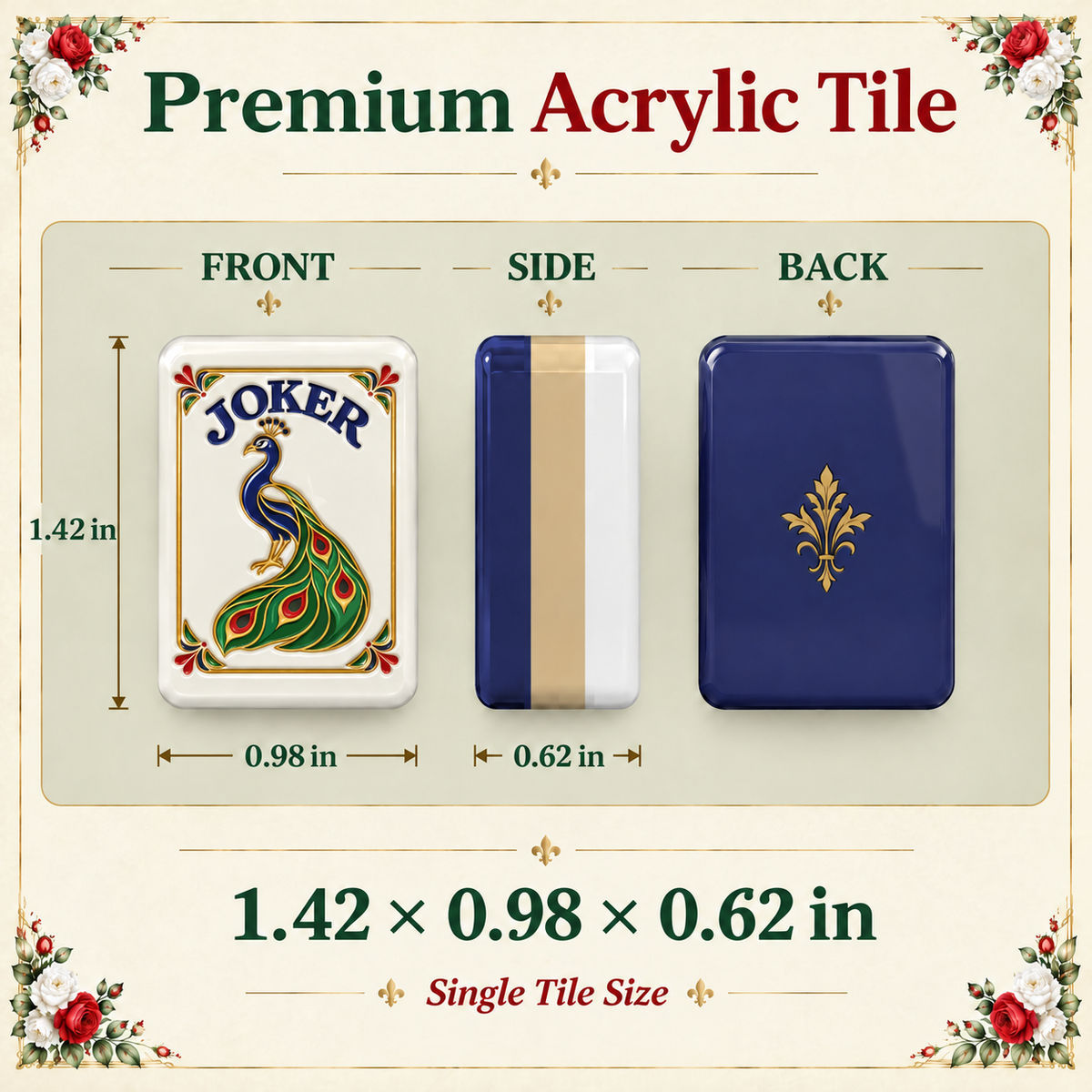
Two-tone tiles feature two distinct colors per tile—typically a light background with darker numbers, or vice versa—designed to reduce glare and improve readability under varied lighting. The most common versions pair cream or white with black, or light jade with dark green. They're standard in American mahjong sets from Mahstead and other makers because they cut fatigue during long games and help players with vision sensitivity spot tiles quickly from a distance. Cost varies by material (acrylic, bamboo composite, resin) and engraving detail, but two-tone is not a premium upgrade—it's a foundational design choice. The main mistake players make is confusing two-tone with monochrome (single color) sets, which cause eye strain and are rarely played in serious American games.
Two-tone tiles use contrasting colors to reduce eye strain and improve readability under varied lighting. The most common versions pair cream or white with black, or light jade with dark green. They're standard in American mahjong sets because they cut fatigue during long games and help players spot tiles quickly from a distance. Cost varies by material (acrylic, bamboo composite, resin) and engraving detail, but two-tone is a foundational design choice, not a premium upgrade. The main mistake players make is confusing two-tone with monochrome sets, which cause eye strain and are rarely played in serious American games.
What exactly is a two-tone tile design?
A two-tone tile uses two colors in a single design: one for the background or body, one for the numbers and suit symbols. For example, a cream tile with black numbers, or pale green with dark green pips. This contrast makes tiles readable from across the table without squinting, especially under fluorescent or warm home lighting. The "two" tones separate the information (the tile value) from the surface, so your eye catches the number instantly. One-color (monochrome) tiles—all cream, all green—blur together and force players to turn tiles sideways to read them in poor light.

Why do players choose two-tone over solid colors?
Two-tone tiles dramatically cut eye fatigue during four-hour games. If you're hosting weekly games, your players' eyes matter: solid-color tiles strain vision because there's no contrast between number and base. Two-tone also speeds up gameplay—players identify tiles faster, hands flow quicker, and less time is spent squinting at Dot 5 versus Dot 6. Newer players especially benefit because two-tone removes one cognitive barrier. Players with presbyopia or astigmatism often report that two-tone sets are the only ones they can read comfortably at arm's length. Over a season of play, the fatigue reduction is noticeable.
How do color combinations affect gameplay and comfort?
The most popular two-tone combos are cream-and-black, white-and-black, light jade-and-dark green, and ivory-and-burgundy. Cream-and-black is the classic American standard and works under nearly any home lighting. White-and-black offers the sharpest contrast and is ideal for players with mild vision loss. Light jade with dark green is gentler on the eyes under long sessions—less stark than white-black but still highly readable. Burgundy-and-ivory or similar warm tones feel premium but offer slightly less contrast, so they work best in well-lit rooms. The rule: higher contrast = faster reading, but warm-tone combos = less glare fatigue. Choose high-contrast if your group includes players over 60 or if you play in dim lighting; choose warm tones if players are younger and your room has good natural light.
When might you want monochrome or single-color tiles instead?
Monochrome tiles (one solid color per tile, numbers in the same hue) are rare in American games but appear in some travel sets or novelty designs. They look sleek but cause real problems: reading becomes slow, mistakes spike, and players with any vision correction get frustrated. The only legitimate reason to use monochrome is aesthetic—if a set is a one-time display piece or a gift for someone who doesn't play regularly. For any weekly game, two-tone is non-negotiable. If someone brings a monochrome set to your table, politely offer to lend them a best-selling two-tone set instead.
How to inspect tiles before buying—a practical checklist
Before you order a set, check:
Contrast ratio: Hold a sample image at arm's length (playing distance). Can you read the numbers without tilting the tile? If you hesitate, contrast is too low.
Lighting test: View photos under three conditions—bright daylight, warm home lighting (60W bulb), and fluorescent. If tiles blur in any, move on.
Engraving depth: Numbers should be raised or recessed enough to catch light differently from the background. Flat paint-on numbers fade visually over time.
Gloss vs. matte: High-gloss two-tone tiles can reflect light harshly (opposite of what you want). Matte or satin finishes are gentler; check the product description.
Material: Acrylic two-tone tiles from Mahstead offer consistent color and easy cleaning. Bamboo composites may vary in tone between sets.
Sample or reviews: If available, look for photos of tiles in home lighting, not studio shots—studio lighting hides flaws.
🎁 See our most-loved mahjong sets & accessories →

Two-tone vs. monochrome vs. hand-painted: a comparison
Style | Contrast | Eye Strain | Speed of Play | Durability | Best For |
Two-Tone | High | Low | Fast | 5–10 years (acrylic) | Weekly games, mixed ages |
Monochrome | None | High | Slow | 3–5 years | Display, casual play |
Hand-Painted | Medium | Medium | Medium | 2–4 years | Collectors, aesthetics |
Ombre/Gradient | Low–Medium | Medium–High | Medium | 4–7 years | Players who want artistry |
Two-tone wins for playability and longevity. Hand-painted sets are beautiful but fade faster and read slower. Monochrome is a novelty; don't use it for regular games. If you host serious play, engraved American mahjong sets in classic two-tone finishes are the standard.
Why Mahstead two-tone sets are built for long games
We design our two-tone tiles with gaming durability in mind. Acrylic bases are paired with UV-resistant inks so colors don't fade after a season of play. The two-tone contrast is engineered—not an afterthought—so your 1:00 AM game feels as readable as 7:00 PM. We test every batch under warm, cool, and fluorescent lighting to ensure consistency. Tiles are tumbled and finished to a satin shine that reads clearly without harsh reflection. When you order a set, you also get matching racks with pushers (optional add-on) that complement the tile colors and reduce glare further by tilting tiles toward your eye. Free US shipping means you can try a set risk-free and replace it immediately if the contrast doesn't work for your table's lighting.
What to check before you buy
Room lighting at game time: Bright, dim, or mixed? Match tile contrast to your average lighting.
Player ages and vision needs: If anyone wears bifocals or has low vision, prioritize high-contrast two-tone.
Travel plans: If sets travel between homes, two-tone in protective bags and cases prevents color fade and keeps contrast sharp.
Existing mats or racks: Does your two-tone choice complement your mahjong mat? A mat and tiles in the same color family reduce visual chaos at the table.
Lifespan budget: Acrylic two-tone lasts 5–10 years with weekly play. Bamboo composite lasts 3–5 years but feels premium. Pick based on how often you play.
✨ Find your Mahstead set — free US shipping →
One-minute decision framework: is two-tone right for you?
Ask yourself:
Do you play weekly or more often? → Yes = two-tone essential. No = monochrome OK for casual.
Is anyone over 55 at your table? → Yes = high-contrast two-tone required. No = standard two-tone fine.
Is your game room dim or mixed lighting? → Yes = choose warm two-tone (jade-green, ivory-burgundy). No = classic cream-black works.
Do tiles travel between homes? → Yes = acrylic two-tone in a case. No = any material.
If you answered "yes" to any of the first three, order a two-tone set. If you answered "no" to all, you have flexibility—but we've never heard a player regret choosing two-tone.
🀄 Shop best-selling mahjong sets →

FAQ
Can I upgrade a monochrome set to two-tone tiles?
No. Tiles must be ordered as a complete set to ensure dye batches match across all 152 tiles. Buying replacement tiles alone will create color mismatches. Start fresh with a true two-tone set.
Does two-tone cost more than solid colors?
Not significantly. Two-tone is standard American mahjong design. If a seller charges a premium for "two-tone," they're marketing a basic feature as an upgrade—it's not. Check the collection price list for fair market rates.
How do I know if two-tone tiles will match my existing table or mat?
Request photos of the exact two-tone color combo (not stock images) next to your mat or table surface before ordering. Mahstead ships free, so if colors don't coordinate, returns are straightforward. Most cream-and-black or jade-and-green pairs work with standard felt mats.
Are engraved two-tone tiles harder to read than plain two-tone?
No. Engraving (raised or recessed detail) actually improves readability because it catches light differently from the background. Flat-printed tiles can fade or blur over time; engraving lasts longer and stays sharp.
What's the difference between "two-tone" and "high-contrast"?
Two-tone is any design using two colors. High-contrast means the two colors are far apart on the spectrum (black and white, cream and navy). Medium-contrast pairs might be light jade and dark green. For gaming, higher contrast = faster reading. Specify "high-contrast" when ordering if you have vision concerns.
Can I use two-tone tiles in Chinese or Hong Kong mahjong?
Two-tone design works with any mahjong variant—it's a visual feature, not a rule. However, American two-tone tiles have different symbols and tile counts (152 tiles + jokers) than Chinese or Hong Kong sets (usually 144 tiles, no jokers). Match your tile set to your game variant; two-tone is a bonus that works across all of them.


View More
View More
View More
