
Two Player Mahjong Setup: Rules, Equipment & Strategy
Last updated: Nov 23, 2026
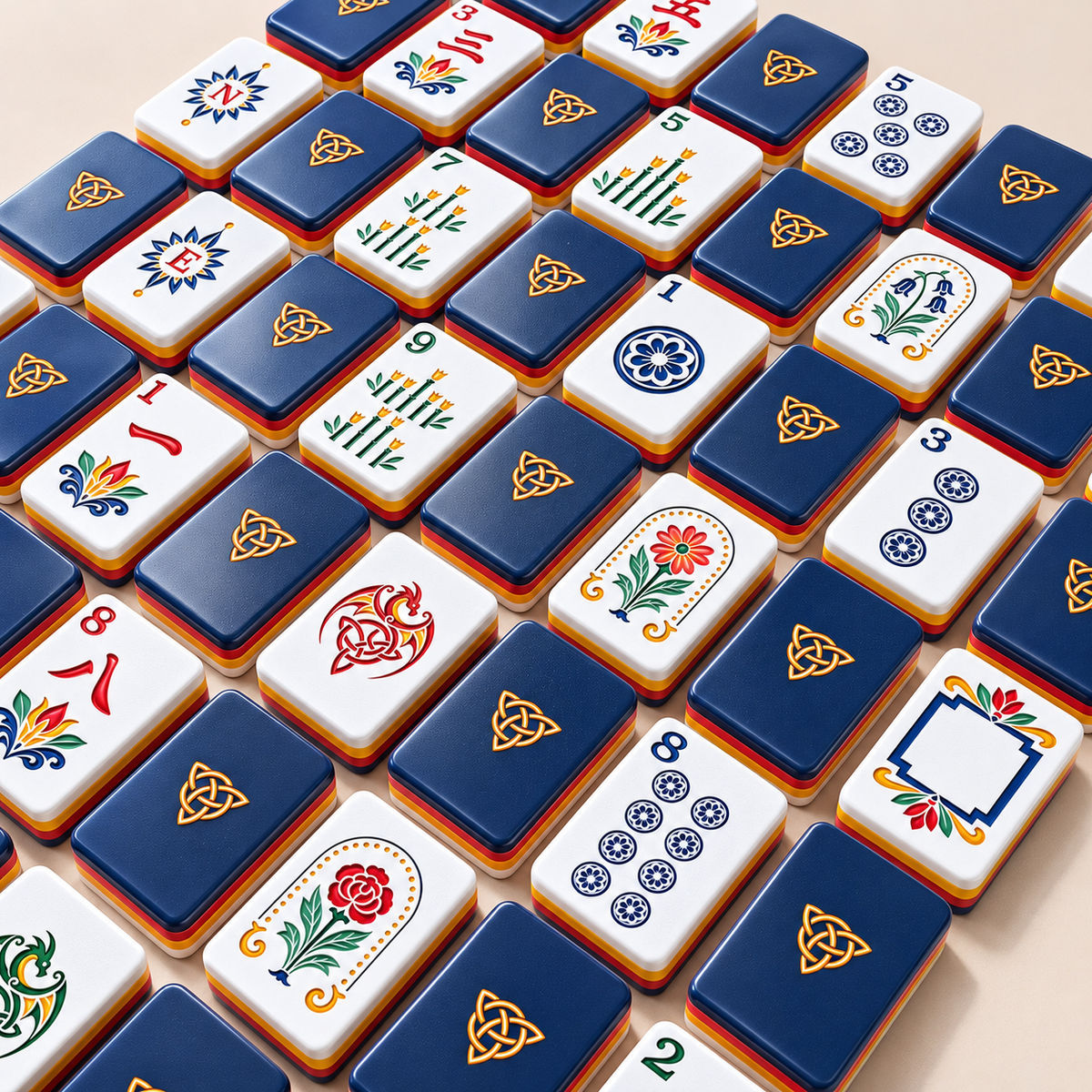
American mahjong with two players uses modified rules rather than standard four-player American mahjong. The most common approach: one player takes the role of Dealer and East Wind, the other is South; North and West positions are dead and never draw or discard. You still use all 152 tiles, but only two seats remain active. Each player draws and discards in turn. The hand must come from the current year's National Mah Jongg League card. A complete two-player setup needs one 152-tile American mahjong set, a scoreboard or paper for tracking points, and ideally a mat to keep tiles organized. Games last 30–90 minutes depending on pace and experience level. Two-player variants differ from four-player in wind rotation, scoring multipliers, and which walls you draw from—details vary by house rules, so agree on the ruleset before starting.
Two players can absolutely play American mahjong, though it requires rule adjustments because the standard game was designed for four seats. We've hosted dozens of two-player games and learned where newcomers stumble—and how to keep the pace brisk and fair.
What are the official American two-player rules?
American mahjong's official two-player rules depend on your governing body. The National Mah Jongg League does not publish a sanctioned two-player variant, but most home players adopt this structure: one player is East (Dealer), one is South; North and West seats remain empty and receive no tiles. Only the two active players draw, discard, and call. You still deal 13 tiles to each player plus one more to East, leaving the wall intact. Hands come from the current year's card. Play proceeds East-South-East-South for all turns. The main difference from four-player: fewer calling opportunities and faster pacing because no one covers positions that aren't there.

How do you deal tiles in a two-player game?
Dealing in two-player follows the standard American protocol but simplified. East (Dealer) sits, and both players agree which direction the wall runs. East picks a number 1–144 from the wall wall count to determine where the living wall begins—this is critical for fair randomization. Each player draws from that spot in the standard sequence: East takes one live tile, South takes one, East takes one, and so on, until each holds 13 tiles. East then draws the loose tile (tile 14), making 14 for the Dealer. South stays at 13. The wall structure remains the same as four-player; you're just not drawing from North or West positions. The remaining wall becomes dead only when fewer than 14 tiles remain. Set up a mahjong mat with a tile rack to keep hands visible and organized without accidentally revealing tiles.
What happens when you call a hand in two-player mahjong?
Calling "Mahjong" in two-player follows standard American rules but with different scoring assumptions because fewer players discarded tiles. If East calls Mahjong, South pays per the League card hand value listed. If South calls, East pays the listed value. Unlike four-player, there's no concealed hand payout option (since only two players exist), so all non-winning players pay the same rate. If a hand is claimed incorrectly, the typical penalty is one hand out (the player skips drawing and discarding for one full East-South cycle). Some groups score false Mahjong as loss of points or a doubled payment. Agree on penalties before play. Winning conditions and tile groups—pungs, kongs, quints, sextets, and pairs—remain identical to four-player American mahjong.
How do you manage scoring and dealer rotation?
Scoring in two-player works best with a simple ledger: track each player's cumulative points round-by-round. East typically stays Dealer for four hands (one per wind, North and West are skipped), then South becomes East for the next four hands. After eight hands, you've completed one round. Points are added or subtracted after each win; the player with the highest total after an agreed number of rounds (commonly four rounds = 32 hands, or six rounds = 48 hands) wins the session. Record the score clearly to avoid disputes. Some groups skip wind rotation entirely and simply play until one player reaches a target score (e.g., 5,000 points). Define your winning condition and scoring rate (e.g., "base hand value × 2 for two-player speed play") before dealing the first hand.

What equipment do you actually need for two-player mahjong?
A complete two-player setup requires:
Item | Why It Matters | Our Pick |
160-tile American set | 152 playing tiles + spares; no shortcuts | |
Mahjong mat | Defines play surface, keeps tiles flat and visible | |
Racks with pushers | Organizes hand neatly; pushers speed calls | |
Scoreboard or paper | Tracks points per hand and cumulative total | Pen and card, or digital log |
Current League card | Hands come from this year's card only | Issued each spring by the NMJL |
Dice (optional) | Randomizes wall position if desired | Included in many set bundles |
You do not need wind markers or seat labels for two-player, since roles are fixed. Many of our customers use mahjong bags or cases to transport sets between homes, especially when playing regularly.
🀄 Shop best-selling mahjong sets →
Common mistakes in two-player setup and how to avoid them
Mistake: Treating it like Chinese or Riichi mahjong. American mahjong has no chows (sequences of 1-2-3, 4-5-6, etc.). Only identical-tile groups—pungs (3), kongs (4), quints (5), sextets (6)—can be melded or called. If a two-player ruleset claims chows are allowed, it's a different variant entirely.
Mistake: Using jokers in single-tile or pair positions. In American mahjong, a joker can never replace a single tile or a pair, only a tile within a pung or larger group. This rule applies equally in two-player.
Mistake: Drawing from the wrong wall position. Use the standard East player wall count method and a mat with clear quadrants to avoid confusion about which section is "alive." A quality mahjong mat marks walls clearly.
Mistake: Forgetting to agree on house rules in advance. Two-player rules vary widely by region and group. Document your specific ruleset—dealer rotation, payout rates, wind-skipping, and false Mahjong penalties—before the first hand.
Mistake: Using last year's League card. Hands change annually. Always use the current year's card issued in spring; hands from previous years are no longer valid.
What to check before you buy a two-player mahjong set
Tile count: A 160-tile set includes 152 playing tiles (8 jokers and spare blanks are extras, never added to play). This is sufficient and standard.
Material and weight: Acrylic tiles are durable and easy to read. Bamboo and bone sets are heavier and more traditional but require more care.
Rack height and size: If both players will use racks, ensure they fit your table surface and accommodate 13–14 tiles comfortably.
Mat dimensions: Measure your table or playing surface. A smaller mat works for two-player but ensure the wall sections are large enough to identify clearly.
Storage: Confirm your bag or case can hold the set, mat, and any accessories you'll transport regularly.
🎁 See our most-loved mahjong sets & accessories →
Two-player American mahjong is a rewarding alternative to the traditional four-player game, especially for couples or when a fourth player isn't available. The key is agreeing on your ruleset beforehand and using a well-organized setup—a clear mat, good racks, and a current year's card. We recommend starting with a reliable 160-tile acrylic set and a mat designed to mark the wall clearly; these upgrades make the game faster and more enjoyable for regular play.
✨ Find your Mahstead set — free US shipping →

FAQ
Can you play American mahjong with just two players using the official League rules?
The National Mah Jongg League does not publish official two-player rules. Home players adopt house variants, typically leaving North and West seats empty and playing East–South only. Agree on your ruleset before starting to avoid disputes.
How long does a two-player game take?
A typical session lasts 30–90 minutes depending on player experience and pace. Each hand takes 5–15 minutes; most groups play 4–8 hands per session.
Do you use the same tiles and card as four-player American mahjong?
Yes. You use the same 152-tile set and the current year's National Mah Jongg League card. No tiles or rules change; only the number of active seats changes.
What's the main rule difference between two-player and four-player American mahjong?
In two-player, only East and South positions are active. North and West never draw, discard, or call. All other rules—hand composition, joker placement, calling, and scoring—remain the same.
How do you rotate the Dealer in two-player mahjong?
Most groups keep one player as East for four hands, then switch roles. This equals one round; you can play multiple rounds until reaching a target score or time limit.
Do jokers work differently in two-player mahjong?
No. Jokers follow standard American rules in two-player: they can never replace a single tile or pair, only a tile within a pung, kong, quint, or sextet. This rule does not change.


View More
View More
View More
