
Country Club Mahjong Tournament Format: Rules & Setup
Last updated: Nov 23, 2026

A country club mahjong tournament is a structured competition where four players rotate through tables after each round, with scores kept blind (players don't know running totals until the end). Most tournaments run four to eight rounds using American mahjong rules; each table plays one deal per round, and final rankings are determined by cumulative score. Tournaments typically last three to five hours depending on player count and format. Unlike casual games, there's no Charleston in most tournament play—players draw directly from the wall. Scoring follows the National Mah Jongg League card system (current year only), and all hands must be called and verified before payment. We see clubs run these year-round, and the format works equally well for eight players (two tables) or thirty (multiple flights). Setup requires four standard American mahjong sets per table, racks to organize tiles clearly, and printed score sheets; Mahstead's best-selling American mahjong sets pack cleanly and standardize the tile sizes across all tables, which matters when referees verify hands.
🀄 Shop best-selling mahjong sets →
How does table rotation work in a country club tournament?
In most country club tournaments, players rotate to a new table after each round—either as follows: all four players move together, or the tournament director applies a structured movement sheet that pairs players differently each round (called a "Mitchell" or "Swiss" movement in bridge, adapted here). If tables rotate together, North sits out and the other three shift (East becomes North, South becomes East, West becomes South). This ensures every player faces different opponents and no pair plays twice. The draw order—who draws first each round, typically marked by position cards—rotates so no player has the draw advantage twice. Track movement on a printed sheet posted at each table; referees verify players are seated correctly before tiles are drawn. The goal is fairness: each player competes under equal conditions across all rounds.

What's the difference between blind scoring and running totals?
In blind scoring, players track their own chips or record tiles won, but the tournament director holds all written scores and reveals only final rankings after the last round closes. This prevents players from steering toward a win when ahead or playing recklessly when behind—everyone plays every hand with equal intensity. Running totals (common in casual games) are announced aloud or posted after each round, which changes behavior: a leading player may play tighter, a trailing player may take bigger risks. Country clubs prefer blind scoring because it maintains integrity and keeps the game social rather than strategic about the scoreboard. Some tournaments post round scores immediately but hold cumulative totals; others wait until final hand is called. Clarify the scoring visibility rule before play starts; it affects how players approach each hand.
How many rounds and hands define a standard tournament format?
A typical country club tournament runs four to eight rounds, with one hand (deal) played per round per table. Four rounds = roughly one hour (with breaks); eight rounds = two to three hours. This differs from casual home games, where players might play twenty hands in an evening. The short round count forces every hand to matter: a single win or loss swings final placement. Most clubs schedule tournaments in one-session blocks (morning or afternoon) rather than multi-week events; players complete the entire tournament in a single day. The number of rounds depends on player count (more tables = fewer rounds so directors don't run past the scheduled end time) and club policy. A 32-player tournament might run four rounds across two flights (morning and afternoon), while a 12-player event might go six or eight rounds. Always confirm the round structure when you enter; it shapes your strategy and time commitment.
Which hands count in tournament play, and how do you verify a win?
Only hands on the current year's National Mah Jongg League card count as winning hands. When a player calls "mahjong," all four players and a referee verify the hand against the card: they check that the tiles match one of the listed 2024 patterns (or 2025, etc., depending on the season), that no jokers fill a single tile or pair, and that the count is accurate. If the hand is valid, the winner collects from all three opponents; if not, the player pays everyone (a penalty that keeps people honest about verification). Most clubs require a disinterested player or the tournament director to sign off on each win before chips exchange hands. One mistake we see often: a player calls mahjong but included a joker in a single tile or a pair—that's not legal in American mahjong. Slow down when you think you've won; walk through the hand out loud with the others. This thirty-second check prevents disputes and protects the tournament's credibility.
How do draws and wind assignments work in tournament play?
At the start of each round, players draw tiles to determine their seat position (North, East, South, West). The player who draws the highest tile becomes East (also called the "prevailing wind"); the next-highest is South, then West, then North. This rotation changes every round, so no player sits East more than once or twice across four to eight rounds. East is slightly advantageous because East wins on a tie and pays out one unit less when another player wins—over a full tournament, this difference evens out across rounds. The draw happens publicly at each table; write down each player's position on the score sheet so referees can audit and so players know where they sit. Wind assignments are not negotiated or swapped; the draw is the rule. This randomization ensures no collusion and keeps the format fair for all skill levels.
Tournament Element | What Happens | Why It Matters |
Table rotation | Players move to new tables each round | Prevents repeated pairings; keeps scores blind |
Blind scoring | Scores held by director; only final tally revealed | Reduces strategic play; maintains integrity |
Rounds | Usually 4–8, one hand per round per table | Compact format; every hand impacts placement |
Hand verification | Card check + referee sign-off before payment | Prevents disputes; enforces rule consistency |
Wind draw | High tile = East; rotates each round | Randomizes advantage; auditable and fair |
Card year | Current year's NMJL card only | Standardizes hands; ensures all players have same options |
What equipment and setup do you need to run a tournament?
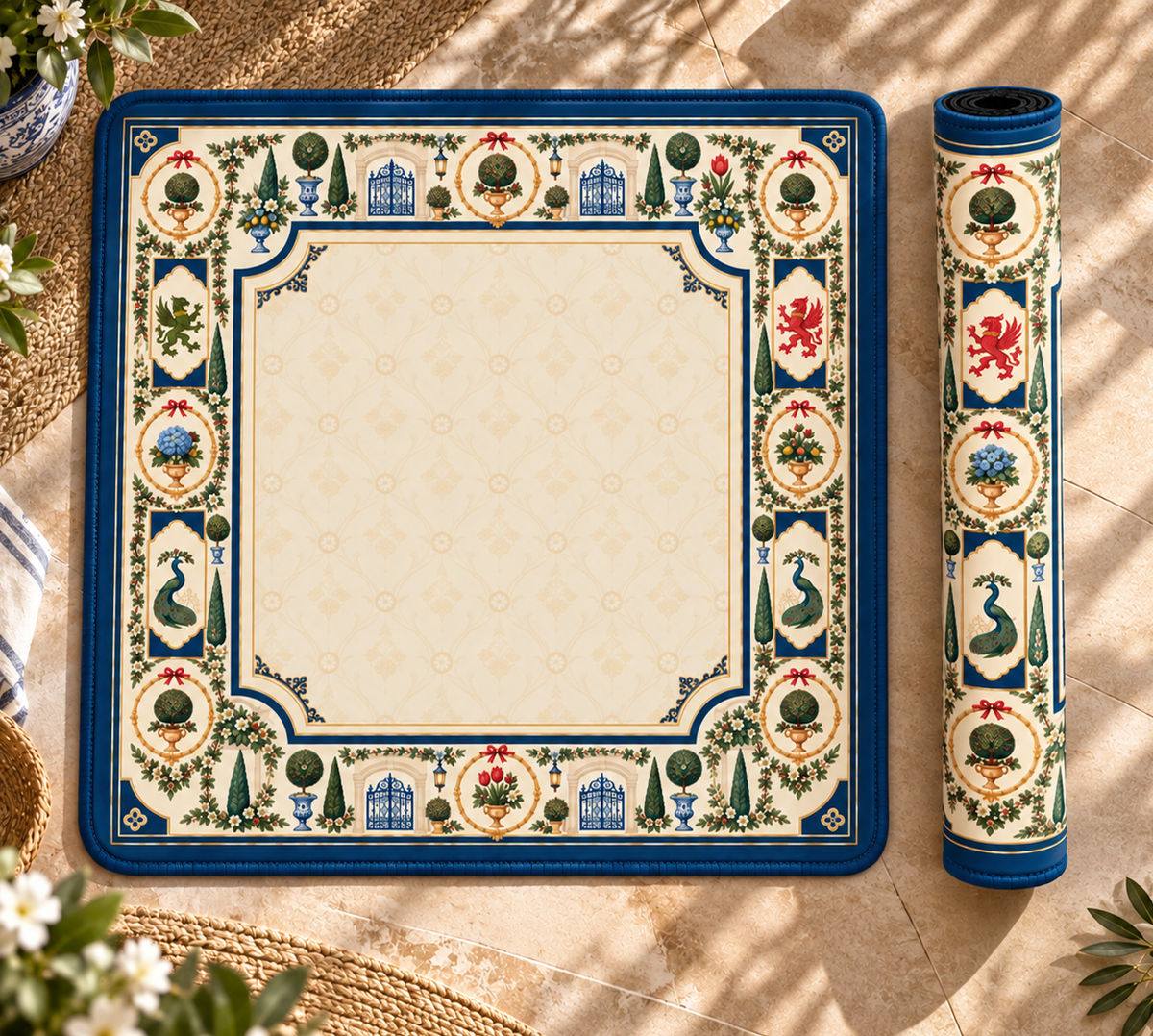
You need one standard 152-tile American mahjong set per table (so four sets for a four-table event). Each set includes wind tiles, dragons, flowers, and jokers. Beyond tiles, organized tournament play calls for racks with pushers at each table—they keep tiles vertical and visible, reduce accidents, and let referees verify hands quickly. You'll also want printed score sheets (one per table, plus extras), a master scorecard at the director's station, and seat cards to mark North, East, South, and West. A surface per table: some clubs use custom tournament mats to standardize the playing area; others use flat tables with chip trays. One detail: when you source mahjong sets from Mahstead, all tiles are uniform in size and weight, which matters if you're mixing sets across multiple tables—referees can verify a hand without suspecting a defective tile. Pack sets in labeled bags so volunteers can set up and break down quickly. For a sixteen-player tournament, budget forty-five minutes to set up and fifteen to break down if you're organized.
🎁 See our most-loved mahjong sets & accessories →
How do you calculate final placement and handle ties?
After the last round, the tournament director sums each player's total score (points won minus points paid). The highest cumulative score wins first place; second-highest is second place, and so on. If two players tie on points, most country clubs apply a tiebreaker: the player who won the most hands wins the tiebreaker; if still tied, the player with the highest single-hand score wins. Clarify tiebreaker rules before tournament play starts so there's no dispute at the end. Some clubs award prizes for first and second (or first, second, third); others run the tournament for the experience or social aspect with no cash payout. The director should post final rankings within thirty minutes of the last hand, sign the scorecard, and keep it for records. This protects the club if a player contests the result later and gives everyone proof of the final outcome.
What are the most common tournament mistakes and how do you avoid them?
Player errors:
Drawing tiles and calling mahjong before all four players have drawn (no one can call a dead hand). Fix: Announce aloud "All players have drawn, tiles are live."
Forgetting to rotate tables. Fix: Post a movement sheet at each table and announce rotations aloud after each round.
Mixing tiles from two different sets (sizes or weights vary slightly). Fix: Label and separate sets; assign one set to each table for the full tournament.
Director errors:
Starting a round before one player has arrived at the table. Fix: Do a head count and a voice confirmation ("All here?") before dealing.
Allowing play without the current year's card visible. Fix: Post the card at each table or have one copy with the director so referees can verify hands instantly.
Not tracking blind scores accurately. Fix: Have each table pass up score sheets (signed) after every round; director reconciles them against the master sheet.
What to check before you buy:
Confirm the tournament date, time, location, and expected player count so you order enough equipment.
Verify that all sets are identical (same brand, same tile design) so no one suspects bias in hand verification.
Test racks and pushers before tournament day; a wobbly rack slows hand verification and frustrates players.
Print movement sheets and score templates in advance; don't wing it the morning of the event.
✨ Find your Mahstead set — free US shipping →
FAQ
Can you run a tournament with fewer than four players at a table?
Yes, but format changes. With three players, each hand is shorter and draws from a reduced wall. Two-player mahjong exists but is rarely used in tournaments because hand odds shift dramatically. Most country clubs stick to four-player format for consistency; if you have an odd player count, have one person sit out each round and rotate in. See 2 and 3 player mahjong rules for specifics on adapting the draw and wall.
Do players use the Charleston in a tournament?
No. The Charleston (tile-passing ritual) slows down tournament play and adds complexity to tracking. Players draw directly from the wall after the winds are assigned. This keeps rounds tight and fair—everyone faces the same wall draw sequence each hand.
What happens if a player calls a false mahjong?
The player pays all three opponents (one full payment per player) as a penalty. In some clubs, the player sits out the next hand or receives a warning; rules vary. This penalty is severe enough to make players triple-check before calling, which protects tournament integrity.
How long does a four-round tournament typically take?
Plan for two to two-and-a-half hours of play. Add thirty minutes for setup, break time between rounds (typically ten minutes), and thirty minutes to tally scores and announce rankings. Total: three to three-and-a-half hours, start to finish.
Can you run a tournament with engraved or themed sets?
Yes. Mahstead offers engraved American mahjong sets with custom titles and themed sets, which add personality to a tournament without affecting play. Make sure all sets at a table are identical in tile size and weight so referees don't question hand verification.
What's the difference between a tournament movement and a casual game format?
Casual games are freeform—same four players, scores posted aloud each hand. Tournaments use structured rotations (players move to new tables), blind scoring (directors hold totals), and a fixed round count (typically four to eight). The structure ensures fairness and prevents collusion or score-chasing.


View More
View More
View More
