
Travel Size Mahjong Tiles: Portable Sets for On-the-Go Play
Last updated: Nov 23, 2026
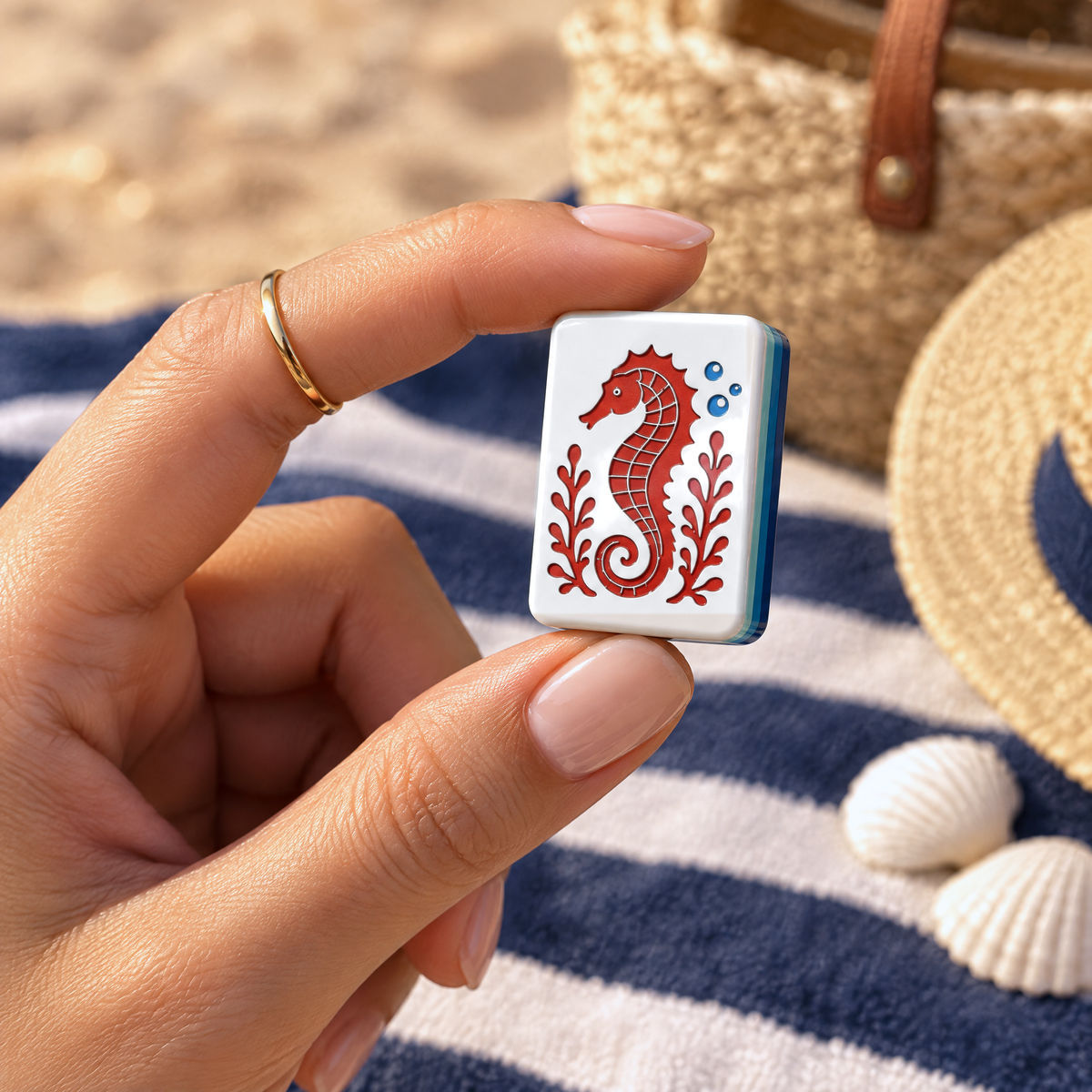
Travel-size mahjong tiles refer not to smaller individual tiles but to compact set configurations and protective cases that fit into cars, luggage, or apartment storage. The tiles in an American mahjong set remain standard size (about 1 inch long); what changes is the bag or case holding all 152 playing tiles plus 8 jokers. A travel set typically ships in a reinforced carrying bag or hard case designed to protect acrylic or bamboo tiles during transport and keep them organized during play. You'll pay more for a quality travel set than a loose set, but the protection against chipping and cracking—especially on flights or in vehicles—is worth the investment. The key to a good travel set is a sturdy bag with interior organization, secure closures, and shock-absorbent padding. Avoid thin nylon bags or sets without dedicated compartments; tiles shift during transit and edges crack.
🀄 Shop best-selling mahjong sets →
What makes a set truly portable?
A portable mahjong set needs three things: a reinforced bag, organized compartments, and weight you can actually carry. Standard acrylic or bamboo tiles don't shrink for travel—they stay the same size and weight—but a good travel bag distributes that weight evenly and protects each tile from impact. Look for bags with padded interiors, separate sections for tiles versus racks and dice, and handles rated for repeated lifting. Most travel bags from Mahstead are designed to hold a full 160-tile set with room for a mat, racks, and accessories without bulging or straining seams. The best travel bags also have a zippered closure and soft-touch fabric that resists staining during gameplay at a friend's house or hotel.

How do you pack tiles so they don't crack during travel?
The secret is layering and friction. Place heavier items (tiles) at the bottom of your bag, separated into groups by suit or by the original tile dividers if your set includes them. Wrap the tile racks in soft fabric or microfiber cloth—they'll keep tiles from sliding and shifting. Never throw loose tiles into a bag; they'll collide and chip edges. If your set comes with a travel bag from Mahstead, use its internal compartments; each section is sized to prevent tiles from jamming or overlapping. For flights, pack your mahjong set as checked baggage in a protective case rather than carry-on, where baggage handlers apply more pressure. Keep dice and pushers in a separate zippered pouch so they don't scratch tile faces. On car trips, secure the bag with a seatbelt or wedge it between seats so it doesn't slide during braking.
Which set size works best for small apartments or RVs?
A full American mahjong set (160 tiles) is the only legal set for play on the current National Mah Jongg League card, so there's no "mini" version that shortens the game. However, a compact travel set takes up less shelf space than a loose collection of boxes. In a small apartment, store your set in a dedicated travel bag or hard case under a bed or in a closet rather than spread across multiple shelves. An RV benefits from a hard case that locks or latches; it won't topple during rough roads and protects tiles from humidity and temperature swings. When choosing between soft and hard cases, consider your storage environment: RVs with temperature changes favor hard cases; apartments with stable climates can use either. A well-designed travel bag from our mahjong bags and cases collection keeps a full set compact, organized, and ready to pull out within 30 seconds.
What's the difference between a travel bag and a storage case?
Feature | Travel Bag | Hard Storage Case | Best For |
Weight | 1–2 lbs | 2–4 lbs | Bags: frequent moves; Cases: static storage |
Portability | Handles, shoulder strap | Handle only | Bags: car trips; Cases: home storage |
Durability | Water-resistant fabric | Rigid plastic/wood | Bags: regular handling; Cases: protection from stacking |
Organization | Zippered pockets | Padded compartments | Bags: quick setup; Cases: long-term organization |
Cost | Lower | Higher | Budget: bags; Premium: cases |
Shock Protection | Moderate | Excellent | Rough travel: cases; Gentle play: bags |
A travel bag prioritizes portability and ease of access; you pack it into your car or luggage, then unpack it at your destination in minutes. A hard case prioritizes protection and long-term storage; it sits in a closet or cabinet, shielding tiles from dust, light, and accidental impacts. Many serious players own both: a travel bag for weekly games at a friend's house, and a case for home storage. If you play weekly at the same location, a bag is sufficient. If you travel monthly or store your set in a shared space (guest room, closet shared with children or pets), a case provides better peace of mind.

How do travel sets compare to sets you leave at home?
The tiles, racks, pushers, and dice are identical whether your set travels or stays home. The only difference is the carrying solution. A home set might ship in a simple box or drawstring bag; a travel set typically includes a padded travel bag or hard case as part of the package. If you buy a loose set and later want to travel with it, you'll need to purchase a bag separately—adding cost and time. The advantage of buying a travel set upfront is that protective packaging is included; you don't retrofit protection after purchase. From a gameplay standpoint, there's no difference: a travel set uses the same 152 American mahjong tiles and follows the same rules whether it's played in a living room or at a beach house. What matters is that the tiles are protected during transit so they arrive uncracked and ready to play.
🎁 See our most-loved mahjong sets & accessories →
What should you check before buying a travel set?
Before purchasing, verify three things:
Bag construction: Examine seams, zippers, and handle attachment points. Zippers should glide smoothly without snagging fabric. Handles should be reinforced at stress points—the top corners where you grip the bag.
Compartment fit: Confirm that your tiles will fit snugly in the padded sections without force. Tiles that rattle are tiles at risk; compartments should cushion without compressing them.
Interior protection: Check for foam padding, microfiber lining, or fabric dividers. Bare plastic or cardboard interiors offer no shock absorption and allow tiles to slide and collide.
Weight and ergonomics: Lift the packed bag (simulate full tiles) to confirm the handle feels comfortable. A heavy bag with thin handles will leave marks on your hands after a 10-minute walk.
Closure type: Zippered bags seal better than drawstring bags and prevent tiles from spilling if the bag tips. Test the zipper mechanism before committing.
Warranty or guarantee: Ask whether the bag or case is guaranteed against defects in materials or workmanship. Mahstead stands behind the durability of its travel-ready sets.
Real-world scenarios: when a travel set makes sense
Scenario: Weekly game at a friend's house 15 minutes away A travel bag works perfectly. You throw the set in your car, carry it inside, unpack in 1 minute, play for 3 hours, repack, and leave. No risk of tiles sitting loose in your trunk.
Scenario: Monthly trips to a cabin or vacation rental A hard case or well-padded travel bag is essential. Your set will be packed and unpacked 12 times per year; protection prevents cumulative damage.
Scenario: Apartment with no dedicated game space A compact travel bag lets you store a full set under your bed or in a closet without taking up shelf space. When guests arrive, the bag is your setup and cleanup.
Scenario: Teaching mahjong to family or a new group A travel set with racks, mats, and dice all organized in one bag speeds up teaching time. New players see an organized, professional setup rather than scattered tiles in a box.
Scenario: Online or hybrid play (tiles at home, video call elsewhere) If you'll mostly play in one location, a travel set may be overkill. A simple storage box or loose bag at home is sufficient if you're not moving the set.
Our pick: what to look for in a Mahstead travel set
When choosing from our collection of mahjong titles, prioritize sets that ship with protective travel bags and come in acrylic or bamboo construction (both resist chipping better than ceramic on long journeys). Look for designs that appeal to you aesthetically—you'll be handling this set frequently, so a set you love to look at encourages play. Mahstead offers best-selling mahjong sets that balance durability, portability, and style; many include matching travel bags that keep tiles organized and protected.
✨ Find your Mahstead set — free US shipping →

FAQ
Are travel mahjong tiles smaller than regular tiles?
No. American mahjong tiles are standard size (approximately 1 inch long) whether your set travels or stays home. "Travel size" refers to the carrying bag or case, not the tile dimensions.
Can I fit a mat and racks in a travel bag?
Yes. Most travel bags from Mahstead are sized to hold a complete set—tiles, racks, mat, dice, and pushers. Verify compartment dimensions before purchase if you plan to carry a large mat.
Should I use a hard case or soft travel bag?
Use a soft bag for frequent car trips (easy to grab and move); use a hard case for storage in homes with multiple residents or for annual vacations where the set sits packed for weeks. Many players use both.
What's the weight of a full set in a travel bag?
A full 160-tile acrylic set weighs 3–4 pounds; the travel bag adds 1–2 pounds. Total is roughly 4–6 pounds—manageable for one hand over short distances, though a shoulder strap or wheeled case is better for longer carries.
Will tiles crack if I fly with a mahjong set?
Tiles are safe if packed in a protective travel bag or hard case as checked baggage. Avoid carry-on if possible (baggage handlers press harder on checked bags); wrap tiles in soft fabric and use padding to absorb vibrations.
Can I wash a fabric travel bag?
Most travel bags are spot-cleanable with mild soap and water. Check the care label from the manufacturer. Avoid machine washing or hot water, as these can weaken seams and zippers. Air-dry completely before storing tiles inside.
Do I need a special mat for a travel set?
No. Any American mahjong mat works with any set. However, if you travel frequently, consider a compact mat that folds or rolls smaller than a standard mat. A travel-ready mat pairs well with a travel bag for seamless setup at your destination.
How do I organize tiles inside a travel bag if there are no built-in compartments?
Use small zippered pouches or fabric organizers to separate tiles by suit. Keep racks, pushers, and dice in one pouch and the current year's mahjong card in another. Label pouches so you can quickly locate pieces during setup.


View More
View More
View More
