
Tianjin Mahjong Strategy: Winning Tactics from China's Fast Game
Last updated: Nov 23, 2026
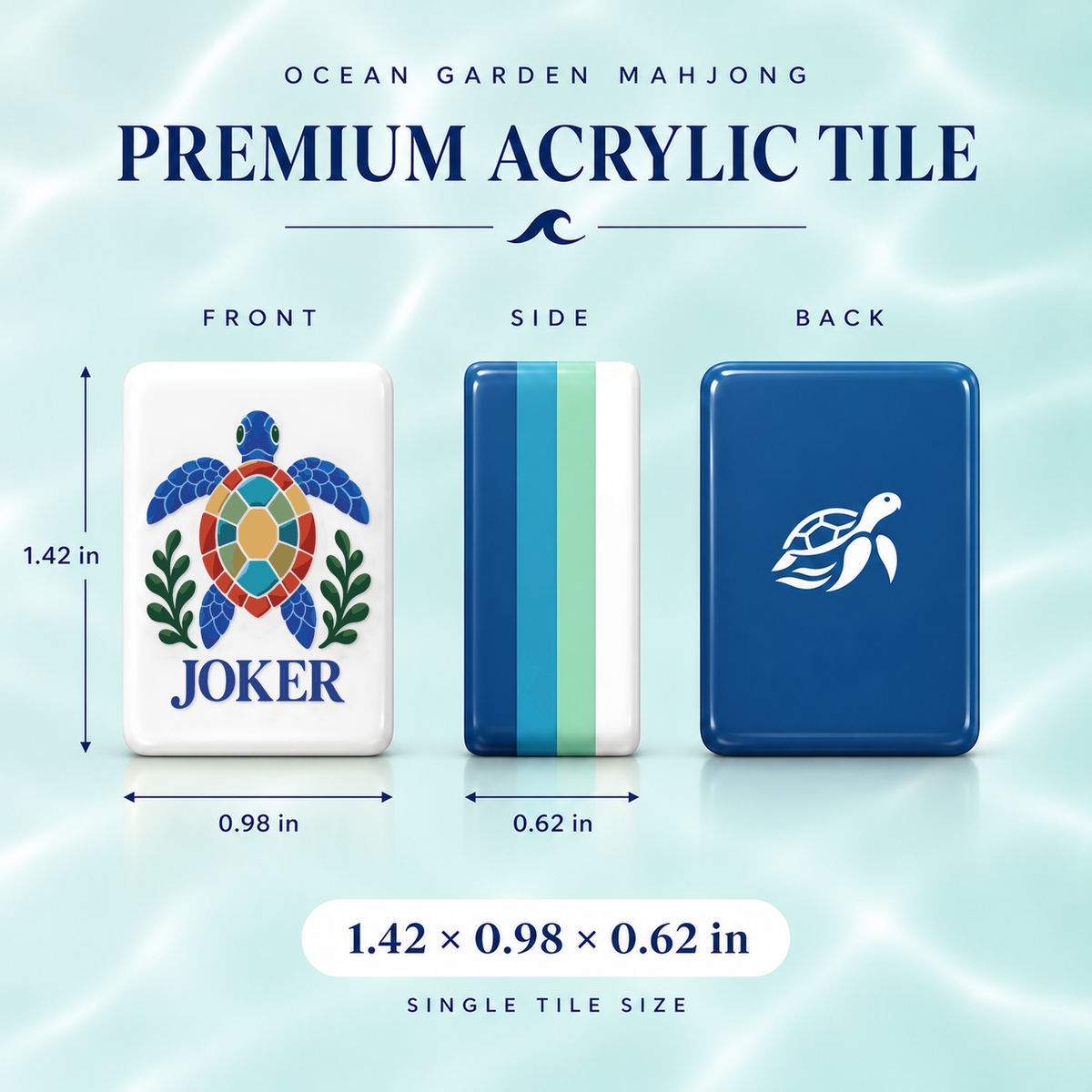
Tianjin mahjong (天津麻将) is a fast Chinese variant where players hold 13 tiles, draw one, and discard one each turn—no melds are exposed or called, so you read opponents' discards, dead tiles, and waits silently. The goal is to complete a winning hand (a self-drawn or claimed discard) while managing risk: a losing player typically pays all three opponents, and the settlement scales with hand complexity. Strategy hinges on three pillars: memorizing which tiles are "dead" (already discarded or held visibly by others), calculating your own wait probability against draw remaining, and timing aggressive plays versus defensive discarding. Unlike American mahjong's hand-matching to an annual card, Tianjin uses traditional Chinese hand types—pairs, triplets, sequences—and scoring rewards rare combos. Play is faster because no one stops to verify exposed melds; tension comes from incomplete information and pressure to read opponents' likely terminal tiles and danger signals. Beginners often lose because they chase winning odds without tracking dead tiles or they discard carelessly, telegraphing their own strength. A 160-tile acrylic set from our best-selling collection works fine if all players know the rules, but Tianjin players often prefer smaller sets and faster shuffles.
How do you track dead tiles in Tianjin without written records?
Tianjin relies on memory and table position awareness, not score sheets. Every discard is visible in the middle: suits arranged by number, stacked per player's turn order. You mentally map which Bams, Craks, and Dots are gone—if three 5 Craks are face-up, the fourth is either in an opponent's hand or the dead wall. Fast players memorize the discard line after 8–12 turns and extrapolate: if someone hasn't discarded 1–3 Bams yet, they may be hunting them. The wall is split into four quadrants, and the dead wall (typically the final 14 tiles) is rarely drawn; once your pool shrinks to 5–6 tiles, you're in endgame. Practice means drilling 15-minute rounds until tile tracking feels automatic—watch three discards and recall the full sequence without looking. Most players position the discard wall in a loose line so all four can see clearly; a clean acrylic mat with a centered layout zone helps, especially in groups new to speed play.

Should you ever discard a dangerous tile early to show safety?
No—it's a losing trap. In Tianjin, discarding a high-frequency tile (like 5 Dot or 5 Crak) early signals you're not hunting it, but opponents read this as weakness, not generosity. If you throw a 5 Dot on turn 3, they know you're not fishing a 4–5–6 or 5–6–7 sequence; they may then hunt that suit aggressively or discard it themselves. The correct play is: discard your weakest hand (lowest probability) first—often honor tiles (winds, dragons) or isolated numbers—then shape your waiting pattern silently. Once you're in a concrete position (e.g., "I need one more 3 Bam to win"), discard the opposite end of the tile spectrum. If you're close to a winning hand, your discards narrow; opponents who track this will assume you're one or two tiles away and may fold or speed-discard their risky suits. The paradox is that appearing safe early makes you a target later. Safety comes from unpredictability—vary your discard order, sometimes discard a 5 when you have many Dots, sometimes hold it. Experienced Tianjin players watch for this rhythm and punish hesitation.
What's the optimal betting strategy: aggressive early or cautious late?
Timing is split into three phases. Turns 1–6 (opening): play cautiously—discards are noisy, and you'll likely fold. Turns 7–13 (midgame): this is where most hands form. If you're still active and not in danger of a big loss, calculate your wait probability: if you need a specific tile and three copies are dead, your real odds are 1 in ~40 remaining draws (roughly 50 turns of play)—fold unless the payout (other players' losses) justifies the risk. Turns 14+ (endgame): only one or two players are truly waiting; betting intensifies because someone will win. The aggressive bet works late, not early. If the game has run 16 turns and you're close to winning (two-tile wait), betting or claiming a discard is justified—others assume you're fishing and will discard carelessly. Early aggression (turns 3–5) is a tell; cautious opponents fold, and you've wasted the advantage of hidden position. Late-game timing also depends on luck perception: if a player has claimed two or three discards (called wins) in a session, they're running hot, and challenging them is often foolish—they're reading the flow better. Set betting stakes at the start; never raise them mid-session to chase losses.
How do pushers and racks change strategy in Tianjin?
Racks and pushers are less common in Tianjin than in American mahjong, but they're useful for reducing hand telegraphing. A rack with pushers keeps your 13 tiles hidden and fanned uniformly, so opponents can't read your tile count or guesses about your hand shape. Without a rack, holding tiles in hand often creates micro-tells: you'll unconsciously cluster matching suits together, or pause before placing a discard, signaling your next move. With a rack, your discards come from the same pushing action every time—no hesitation, no reorganization visible. In fast Tianjin play, this matters. A teammate watching your body language loses information, neutral opponents can't profile your discards as fast, and you stay in the game longer. However, racks slow play slightly (you must slide the pusher to reveal each tile); purist Tianjin games skip them. If your group prefers hand-held tiles, practice placing discards with the same rhythm: one tile per 1–2 seconds, no pausing to reorganize. The deeper insight is that psychological consistency is strategy itself—make every turn look the same, whether you're in danger or close to winning.

Why do hand patterns matter more in Tianjin than tile luck?
Tianjin rewards hand shape over raw draw luck because you can fold at any moment and lose nothing—the only penalty is sitting out that round. This shifts strategy from "wait for the perfect 13 tiles" to "build high-probability hands fast." The strongest Tianjin hands are sequences and triplets (e.g., 1–2–3, 2–3–4, or three 5 Craks), not rare patterns. A hand like 2–3–4 Bam, 2–3–4 Crak, 2–3–4 Dot, 5–6–7 Bam, 8 Crak + one honor is nearly complete in 8 tiles—you can reach it from a random 13 in three draws 40% of the time. This is called a "flexible shape": no tile is wasted. Compare it to a rare pattern (e.g., 1–1–1, 2–2–2, 3–3–3, 4–4–4 + honor)—you need exact tiles, and the probability is 2% over the same 8 draws. Winners discard tiles that don't fit a flexible shape by turn 2, then hunt the few remaining tiles needed. Losers cling to a single rare pattern and give away too much information (every discard screams "I'm hunting this specific suit"). The meta-lesson: abandon perfect patterns early; pivot to fast, simple hands. A pair, three sequences, one honor—that's a winning hand and reachable in any session.
Decision Framework: When to Fold in Tianjin
Scenario | Hand State | Fold Risk | Decision |
Turn 5, two sequences formed, open wait | Moderate strength | Low (can still exit) | Stay—many draws remain, odds are favorable |
Turn 10, one sequence, chasing a specific 4 Crak, two copies dead | 1-in-40 odds | Medium (time is short) | Fold or play ultra-safe—one copy left, odds are poor |
Turn 12, opponent claims a discard, you have a pair + one sequence | Near winning | High (someone is close) | Fold unless your hand is 90% complete—opponent is likely two tiles from a win |
Turn 3, all honor tiles + scattered numbers | Weak shape | Very low (exit cheap) | Fold immediately—reshuffles happen; recoup later |
Turn 8, two triplets complete, hunting a pair | Strong hand | Low (triplets are rare) | Play cautiously, discard lowest frequency—triplet hands win often |
🀄 Shop best-selling mahjong sets →
How does Tianjin scoring differ from American mahjong?
American mahjong ties hand patterns to an annual card; winners match a specific line and earn fixed points. Tianjin uses continuous scoring, where base payment (set at game start, e.g., 1 unit per hand) multiplies by complexity. A simple winning hand (e.g., mixed triplets and a pair) pays 1×. A hand with four triplets pays 4×. Self-drawn wins (winning from the wall, not a discard) pay double. Concealed triplets—triplets you built without claiming any discard—multiply the payout further. Rarely, a hand like seven pairs or all identical suits might pay 8× or 16×. The loser pays all three opponents this multiplied amount; in American mahjong, only one player (East) scores, and others pay incrementally. This changes risk calculus: losing a round in Tianjin can cost 4–8× the stake, so folding early is often right even if odds favor you (because the ceiling on the loss is high). American players transitioning to Tianjin often misjudge this—they'll chase a 50% probability hand and lose big because they underestimated the downside. Know the multipliers your table uses before play starts; they should be written down or agreed verbally.
What's the best setup for a Tianjin game at home?
A clean table, four chairs equidistant, and visibility are more important than fancy equipment. You need 144 tiles (traditional Chinese sets) or 152 tiles if using American sets and removing 8 jokers—Tianjin doesn't use jokers. A mahjong mat with clearly marked quadrants helps first-timers organize the discard wall and keeps tiles from rolling. Many players use a simple cloth or bamboo mat; the key is a lip or raised edge so tiles don't scatter. Shuffle tiles face-down in a pool, then build a wall in two rows of 18 tiles (36 total), split among four players: each takes 9 tiles per row. You'll draw 13 tiles, then one more each turn. Shuffle quickly—Tianjin rounds last 10–18 minutes, so slow shuffles kill the pace. If your group is learning, a travel bag with compartments keeps Bams, Craks, Dots, and honors separate, speeding setup. Acrylic tiles (from a best-selling set) are louder and faster to shuffle than bone; if you're doing multiple rounds, acrylic durability and speed are wins.
🎁 See our most-loved mahjong sets & accessories →
What mistakes do beginners make, and how do you avoid them?
Mistake 1: Ignoring the dead wall. Beginners track individual discards but forget that the wall itself is a resource. Once 8–10 tiles are drawn from the wall, they're gone—never coming back. If you need a 4 Crak and two are discarded, one is in someone's hand, and the fourth has likely been drawn from the wall, it's truly dead. Check the wall size before deciding to hunt a tile.
Mistake 2: Discarding randomly. Every discard sends a signal. If you throw 1 Bam (bird tile) on turn 2, you're saying "I don't need Bams." If you're actually hunting Bams later, you've wasted this signal. Discard honor tiles or isolated low-value tiles first; hold high-frequency numbers (4, 5, 6) longer because they fit more hands.
Mistake 3: Chasing rare patterns. New players fall in love with seven pairs or all identical suit; they discard everything else and lose three rounds waiting. Flexible hands (sequences + one pair) win more often.
Mistake 4: Betting the same way every round. If you always fold after turn 10, opponents know. If you always chase one suit, they'll discard it safely. Vary your playstyle—sometimes fold early, sometimes late; sometimes hunt one suit, sometimes pivot fast.
Mistake 5: Not knowing the table's multipliers. Ask before play: does a self-drawn hand pay 2×? Does a concealed triplet pay 2× or 3×? Ambiguity causes disputes.
What to Check Before You Buy
Tile count: Tianjin uses 144 traditional Chinese tiles (or 152 American tiles minus jokers). Verify your set has all suits equally represented and no blanks.
Tile size and material: Acrylic tiles are faster to shuffle and easier to read in bright light; bone or bamboo tiles feel traditional but shuffle slower.
Mat quality: If you play weekly, a durable mat with raised edges prevents tile scatter and organizes the discard wall clearly.
Storage: A travel bag with compartments lets you sort and store tiles between games, reducing shuffle time.
House rules: Write down your table's scoring multipliers, dead wall handling, and claiming rules (some tables allow delayed claims; others don't).
✨ Find your Mahstead set — free US shipping →

FAQ
Is Tianjin mahjong faster than American mahjong?
Yes. Tianjin rounds last 10–18 minutes because no one stops to verify exposed melds; you fold or win in real-time. American games run 20–40 minutes per hand due to card-checking and commentary. Tianjin is silent, aggressive, and quick.
Can I use American mahjong tiles for Tianjin?
Yes. American sets have 152 tiles; remove the 8 jokers and use the remaining 144. American tiles include all suits and honors needed. Just tell players upfront that jokers aren't in play, and shuffle well.
What's the difference between Tianjin and Shanghai mahjong?
Tianjin is faster and doesn't allow picking from the wall mid-game; Shanghai allows strategic picks and is slightly slower. Tianjin emphasizes concealment; Shanghai rewards more exposed melds. Both use closed hands but different betting structures and multipliers.
How many rounds should a Tianjin session last?
A typical session is 12–16 rounds (2–3 hours). Set this before play starts. After 16 rounds, the player with the highest net score wins; settle once. This prevents endless escalation and keeps stakes manageable.
What happens if someone runs out of tiles from the wall before anyone wins?
The hand is a "dead hand" or tie. All players fold without paying. Shuffle and restart. Some tables reshuffle after 18 turns if no one is close to winning; others play to completion. Agree on the rule upfront.
Is Tianjin mahjong legal in China, or is it considered gambling?
In mainland China, mahjong for money is technically restricted, but casual play (even with stakes) in homes is rarely enforced. The legal status varies by region; Tianjin itself has cultural acceptance for leisure play. Always check local law if playing for money outside China.


View More
View More
View More
