
How to Teach Mahjong to Couples: A Beginner's Guide
Last updated: Nov 23, 2026
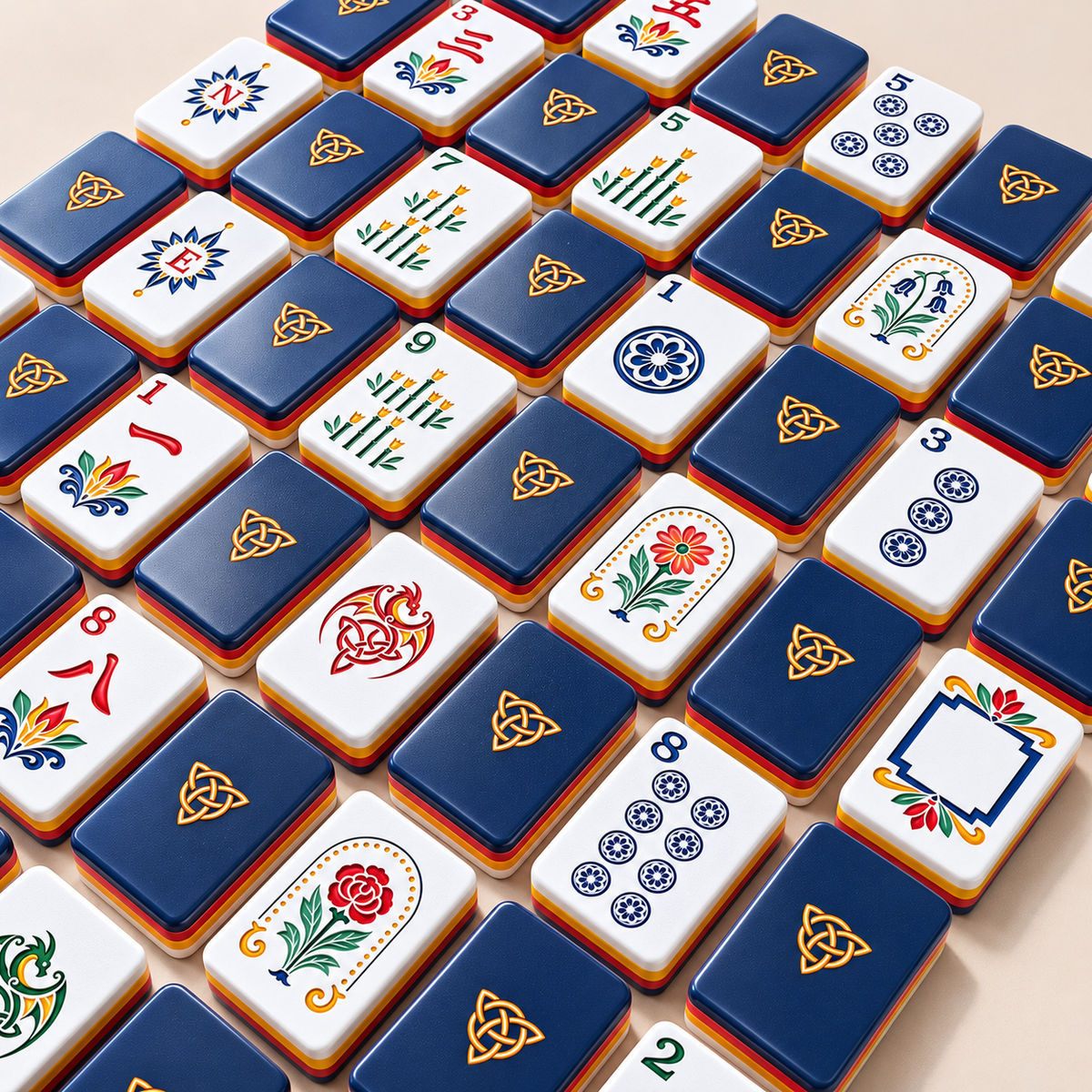
Teaching mahjong to couples works best when you start with the core rule: American mahjong uses 152 tiles across three numbered suits (Bams, Craks, Dots), four winds, three dragons, flowers, and jokers to build hands that match patterns on the official National Mah Jongg League card issued each spring. You'll need exactly four players (the two of you plus the couple), a sturdy set with clear tile faces, a mat to protect the table, and racks so everyone can hold tiles upright without showing them. Budget 45 minutes to teach rules before your first game; plan to play 8–12 hands in that session so they see three or four different pattern types. Avoid rushing the Charleston (the tile-passing ritual) or letting them memorize hands—instead, guide them to read the card and spot matching patterns themselves. Start with a printed or digital copy of the current year's League card so both partners see the same patterns you're calling.
Why couples struggle with mahjong (and how to prevent it)
Most couples hit the same wall: one partner picks it up quickly and gets frustrated waiting for the other to read the card; or one feels left out because the teacher pairs off during play. This gap widens if the rules feel too technical at the start. The fix is to teach together at the table—not separately—and make the first game collaborative rather than competitive. Have both partners sit across from you and your co-player so they face the same sight lines. Use a clear, well-lit mat that shows tile positions so they see the discard line and rack zones. When one partner struggles to read the card, don't jump in; ask the other partner to help them find the pattern. This builds confidence and turns confusion into teamwork. A couple that learns by supporting each other at the table stays engaged longer than one where a faster player dominates.

What the couple actually needs to understand before play starts
You don't need to teach every rule on day one—only the essentials. They must know: a hand is always 13 tiles plus one drawn on their turn (14 total); every hand matches a pattern on the card; you build that hand by taking discards from other players or drawing from the wall. Explain the four tile types you can expose: a pung (three identical tiles), a kong (four identical), a quint (five identical), or a sextet (six identical). Say clearly: chows (sequences like 1-2-3) don't exist in American mahjong, and jokers can't fill a pair or single tile. Show them one hand from the current card—for example, a row showing "Pung 3 Craks, Kong 5 Dots, Pung 1 Bam, pair 4 Dots"—and walk them through how they'd recognize it if they drew those tiles. The Charleston comes next: explain it's a ritual where each player passes three tiles to the right, then three to the center, then three to the left. Don't let a couple overthink it; they're just handing tiles to each other. Frame it as a reset that makes every game different.
The step-by-step teaching checklist
Use this order to avoid confusion:
Show the tiles. Lay all four suit numbers (1–9) on the mat so they see the visual pattern: Bams (usually with a number dot pattern), Craks (bamboo), Dots (circles). Point out that White dragon looks like a soap dish.
Explain the card. Hand them the current year's League card. Show one hand section—don't overwhelm them with all 88. Underline that the card is law: if it's on the card, it counts; if it's not, you can't build it.
Deal tiles face-down. Deal 13 tiles to each player, one at a time, rotating player position (East, South, West, North). East draws the 14th tile first; South never goes first in a teaching game.
Do the Charleston. Right pass, center pass, left pass—keep it light and brief.
Draw and discard. East draws from the wall (or takes a discard) and plays one tile face-up into the center. South goes next. This is where couples often freeze: "What do I play?" Answer: anything, but think about keeping numbers that can grow into a pattern.
Play three complete hands before scoring. Let them move tiles around, take discards, and see patterns form naturally. Don't call winning hands until hand three.
Introduce scoring only after they've built at least one winning hand together. Start with simple: low hand gets 2 points, mid hand 4, high hand 8. American mahjong scoring is complex; save that depth for session two.
How to handle the card together—not separately
The biggest mistake couples make is one partner getting "the card reader" role and the other feeling sidelined. Prevent this by printing or projecting the card so everyone sees it at all times—on a tablet or printout in the center of the table. When one partner asks "What hands can I build?", resist giving them the answer. Instead, point to the card and ask: "What tiles do you have? Now scan the card. Which hands use at least three of those tiles?" Make them find it. The other partner should do the same search in parallel. This turns card-reading into a skill both develop, not a secret one person owns. After two or three hands, couples naturally fall into sync—one will spot a pattern the other missed, and they'll call it out together. That moment of "Oh, I see it now!" is when they're truly learning.
Customizing the difficulty for each couple's pace
Not all couples learn at the same speed, and pushing too fast kills the fun. Watch for these signals during hand one:
Signal | What it means | Adjust by |
Both players ask the same question twice | Rules aren't sticking yet | Slow down. Use only two hand types for all three teaching hands. |
One partner is silent; the other leads | Confidence gap forming | Have the quieter partner draw first next hand; give them easy discard timing. |
Both smile and keep asking questions | They're engaged | Introduce a second suit suit or a new hand type in hand two. |
Someone says "I got it" and keeps playing alone | They want control | Gently remind them: "What would your partner play here?" Keep it collaborative. |

What to check before you buy a set and mat for teaching couples
Our best-selling mahjong sets come in acrylic with clear, readable tile faces—crucial for beginners learning to spot numbers quickly. An acrylic set is durable if couples become regular players; the tiles won't chip after one night. Check that the set includes the current year's card (or note you'll need to get one separately from the National Mah Jongg League). A mat is worth the investment if you're teaching at home: it defines the table into zones, protects your surface, and gives everyone a visual anchor for the wall and discard line. Look for a mat with printed positions so the couple doesn't have to ask "where does the wall go?" every hand. Include a pair of racks with pushers—they let players hold and organize tiles without showing them, and pushers prevent tile avalanches mid-play. If the couple is visiting, a bag with a handle makes setup portable.
🀄 Shop best-selling mahjong sets →
Common mistakes to avoid when teaching couples
Mistake 1: Teaching rules without playing. A 30-minute lecture kills interest. Get tiles in their hands in the first 10 minutes.
Mistake 2: Solving the card for them. Saying "Oh, that's a Pung 2 Dot hand" teaches nothing. Ask: "What pattern does that match?"
Mistake 3: Letting one partner disappear into the rules book. Keep the book closed for the first two hands. Teach by doing, not reading.
Mistake 4: Playing for points on night one. Scoring feels punitive to beginners. Play three hands for free. Points come in session two.
Mistake 5: Not explaining the Charleston. Couples often feel it's arbitrary or rigged. It's just a shuffle; say that plainly.
Mistake 6: Mixing American and other variants. If you play Riichi or Hong Kong at home, don't mention it. Teach one game deeply before they branch out.
Mistake 7: Sitting a couple in the same wind position every game. Rotate them so they see the table from different angles and learn all four roles.
Setting the couple up for the second game session
After the first night, text them the current year's card link so they can glance at it before session two. Ask what confused them—often it's something small, like how jokers work or what counts as a "pair." Prepare a printout of three hand patterns you'll likely see again. On round two, introduce scoring (start with the simple 2-4-8 system) and play eight hands. By hand five, one or both will spot patterns without prompting. By hand eight, they'll argue about who saw a hand first. That's when you know they're ready to join your regular group or play at home as a foursome.
🎁 See our most-loved mahjong sets & accessories →
Recommended setup: what you'll need
Start with a 160-tile acrylic set with pushed-in tiles so faces are easy to read from across the table. Add a padded mat to keep the table safe and define the play space. Include racks with pushers so both players can hold 13 tiles upright without peeking at the couple's hands. Print or display the current year's National Mah Jongg League card on a tablet or paper. Bring snacks—couples relax faster over food. If you're teaching in a couple's home and want to impress, a quality set in a protective bag shows respect for their time.
✨ Find your Mahstead set — free US shipping →
For a deeper dive into rules, see how to play American mahjong and how to read the mahjong card. Also explore our mahjong for beginners guide for general setup tips.

FAQ
How long does it usually take a couple to learn their first hand?
About 30–45 minutes for rules and one complete hand. Some couples get comfortable with a second hand in the same session; others prefer to sleep on it. Pacing matters more than speed.
What's the most common mistake couples make during the Charleston?
Overthinking which tiles to pass or second-guessing themselves mid-pass. The Charleston is low-stakes; remind them it's just a shuffle so every game starts fresh.
Should I teach both partners the same way, or adjust for their learning styles?
Teach the same rules the same way so you don't create confusion. Once they both know the basics, let them ask individual follow-up questions—one might want to know scoring; the other might want to know joker rules.
Can I teach a couple to play American mahjong if they've played another variant before?
Yes, but be explicit: American mahjong has no chows, jokers fill any tile in any position, and hands come only from the annual card. Tell them to forget what they learned elsewhere for the first two sessions.
What if one partner is much faster at spotting patterns than the other?
That's normal and doesn't mean they won't both enjoy the game. Prevent frustration by rotating who draws first each hand and giving the pattern-slower player easier hands early (like pairs and pungs, not kongs or sextets). Confidence catches speed.
Should we play for real money if the couple asks?
No, not on night one. Play for points or pennies. Real stakes come only when both partners are confident and both want them.


View More
View More
View More
