
Mahjong Clubs in Columbus: Where to Find and Join Players
Last updated: Nov 23, 2026
Columbus mahjong clubs operate through community centers, libraries, synagogues, and private groups that meet weekly or monthly. Most teach American mahjong using the National Mah Jongg League card, which updates every spring and dictates all valid hands for that year. Start by calling your local community recreation department, public library (especially branch libraries), synagogue offices, or checking neighborhood Meetup boards—these are the most consistent hubs. Clubs vary: some charge small membership fees or per-game fees, others are free; beginners are welcome nearly everywhere, and many provide loaner sets or teach the basics first. A standard game takes 60–90 minutes, players rotate wind positions, and the Charleston (a ritual tile-passing before play starts) is always first. Read our mahjong for beginners guide to learn rules before joining, and consider owning a set—many players bring their own, and Mahstead's best-selling sets are portable and built to last through years of regular play.
Where Do Columbus Mahjong Players Actually Meet?
Columbus has no single, centralized mahjong venue—the game thrives in scattered groups, not dedicated clubs. Check your neighborhood community center first: most run open game days or organized leagues with signup sheets. Public libraries, especially main branches, often host game groups in meeting rooms on weekday afternoons or weekend mornings; call ahead or ask at the desk. Synagogues are historically strong centers for American mahjong in Ohio; even if you're not a member, many welcome guests to their game nights—phone their front office. Finally, search Meetup.com for "mahjong Columbus" and read recent posts; active organizers post game times, locations, and whether beginners are accepted. Word-of-mouth matters too: once you find one group, ask for referrals to others. Local country clubs sometimes host mahjong leagues, though these may require membership.

What Should a Beginner Expect at a Columbus Game?
Your first night will likely feel chaotic but warm. Experienced players move fast; most won't mind if you ask what hand they're playing or watch quietly your first round. Someone will show you how to hold tiles upright (using a mahjong rack with pusher keeps them tidy), explain the Charleston shuffle ritual before the game, and review how to read the current year's National Mah Jongg League card. Games run in rounds; you'll rotate positions (East, South, West, North) to keep play fair. If you're nervous, arrive early, introduce yourself, and ask to sit out the first hand as an observer. Most players are happy to teach. Bring a notebook to jot down how hands are won, who discards what, and which tile combinations matter. After three or four games, the rhythm clicks.
🀄 Shop best-selling mahjong sets →
Do You Need Your Own Set to Join a Columbus Club?
Not on day one—many groups have loaner sets you can use. However, owning one has real advantages. A quality American mahjong set with engraved tiles or best-selling designs makes you a welcome regular (you'll be asked to host or lend your set). You'll play faster because you know your tiles intimately. Acrylic sets are durable through weekly use and easy to clean; they ship free across the US. A complete set includes 152 playing tiles, 8 jokers, dice, and wind indicator—everything needed for four players. You may also want a protective bag or travel case so you can transport your set without worry. Some Columbus players collect multiple sets with different themes or engravings for host duty or gifting.

How Do You Prepare to Join—Rules, Card, and Strategy?
Read the National Mah Jongg League card before your first game; it's free online. The card shows all 288 valid hands for 2026—your job in each hand is to match tiles exactly to one pattern on the card. Study how to read it: hands are organized by pung (three identical), kong (four identical), and quint (five identical) sections. Learn that the Charleston is non-negotiable: you'll pass 6 tiles right, 6 center, 6 left before play starts, and it's how the game begins fairly. Understand that jokers work in specific ways—they can substitute for any tile except single tiles or pairs—and that sequences (1-2-3 combos) don't exist in American mahjong, only groups of identical tiles. Watch a YouTube video of a full American mahjong game to see the rhythm. You don't need strategy yet; just learn to recognize three-of-a-kind and four-of-a-kind groups, and get comfortable discarding tiles others don't want. Most beginner mistakes come from not reading the card carefully or misunderstanding what "exposed" means (only pungs, kongs, and longer runs can be shown; singles and pairs are always hidden).
🎁 See our most-loved mahjong sets & accessories →
What Sets Columbus Players Favor, and Why?
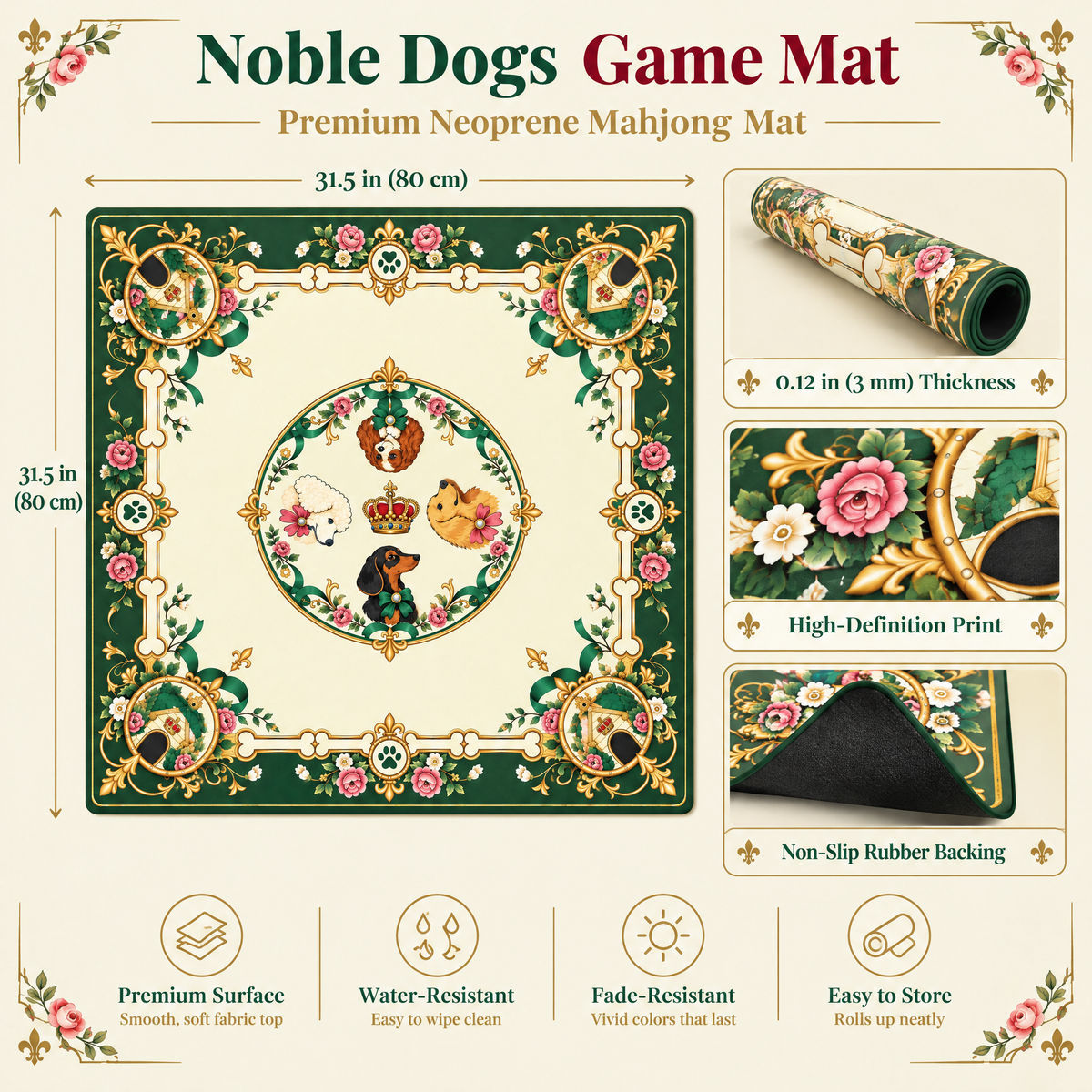
Columbus tables lean toward acrylic sets with clear tile faces and pushers—they're easy to read in poor light, hold up through five games a week, and don't crack if knocked. Many players prefer engraved or custom-titled designs so their sets don't get mixed up during multi-table events. A few collectors have vintage Bakelite sets, but those are fragile and slow. For hosting regular games, a durable 160-tile acrylic set with a matching mat and bag is the practical choice: the mat protects your table, the bag keeps tiles organized, and you'll use both every week.
Table: What Columbus Hosts Invest In
Item | Who Uses It | Why It Matters | When to Buy |
Acrylic 160-tile set | Weekly players / hosts | Clear tiles, durable, free US shipping | Before joining a regular group |
Mahjong mat | Hosts at home | Protects table, keeps tiles in place during shuffle | When you host your first game |
Racks with pushers (4-set bundle) | Casual players | Keeps tiles upright, speeds up play, easier hand reading | After your first three games |
Travel bag or case | Commuters / club hoppers | Transport without damage, portable for multiple locations | If you play at >1 venue |
Engraved set | Collectors / frequent hosts | Personal identity, a gift-worthy keepsake, easier to spot | After a season of regular play |

FAQ
Do Columbus clubs charge membership, or is it pay-per-game?
Fees vary widely. Community centers and libraries often charge nothing or a small per-game fee ($2–$5). Synagogue groups may ask for annual membership ($50–$150) or per-session fees. Call ahead and ask directly; most clubs welcome drop-ins at least once free.
What time of year do Columbus clubs start accepting new members?
There's no set season. Most groups accept beginners year-round; fall and January often see fresh starts when people make hobby goals. Call in advance—some schedule beginner-only teach-in sessions monthly.
If I don't know anyone, how do I find the actual address or meeting time?
Phone the community center or library and ask for the mahjong group contact person or schedule. If they can't help, check Meetup, NextDoor, or local Facebook groups. Many clubs post times in library bulletin boards or community newsletters.
What happens if I don't understand the National Mah Jongg League card during my first game?
Ask the player to your left to point out where on the card the hand lives. Every group expects this. You'll spot patterns faster after two or three hands—flowers with flowers, bams with bams, etc. Bring a printed card to the table your first night.
Should I buy a set before my first game, or wait?
Wait for one session first. Use a loaner, see if you enjoy it, and chat with veterans about which set design they'd recommend. Then buy. A best-selling acrylic set takes 2–3 weeks to arrive (free shipping), so order once you're hooked.
Are there American mahjong vs. Chinese mahjong clubs in Columbus?
Most Columbus clubs play American mahjong (using the National Mah Jongg League card). Chinese mahjong, Hong Kong, and Riichi variants are rare locally; start with American mahjong—it's the standard in Ohio. See how to play American mahjong to confirm it's your style.
Can I play mahjong online before joining a club in person?
Yes. Several websites simulate American mahjong. Play a few hands free online to learn the card and pace, then try a club. Online and in-person feel different (no shuffle sounds, no social rhythm, no tile texture), but online helps you feel less lost on night one. --- ## What to Check Before You Buy a Set for Club Play - Tile visibility: Can you read the suit symbols (bam, crak, dot) clearly from across a table? Acrylic with printed faces beats unclear ones. - Weight and balance: Pick up a demo set if possible. Tiles should feel solid, not hollow or flimsy. - Joker and flower count: A standard set has 8 jokers and 8 flowers. Any extras are spares; don't confuse them with playing tiles. - Bag or case included: Reduces damage in transit to club and back home. - Alignment of pushers: Pushers should slide smoothly and not jamb tiles. --- ✨ Find your Mahstead set — free US shipping → --- ## Final Steps to Join a Columbus Mahjong Club Today 1. This week: Call your nearest community center or library and ask, "Do you host a mahjong group?" 2. Next: Find a scheduled game time and ask if beginners can attend. 3. Day before: Read the National Mah Jongg League card online (free PDF available). Focus on recognizing pung and kong patterns. 4. Day of: Arrive 10–15 minutes early, introduce yourself as new, and sit quietly for the first hand. 5. After game 3: Decide if you want your own set. If yes, browse Mahstead's collection for a design that fits your style, order with free US shipping, and you'll be ready to host within weeks. Columbus has a welcoming mahjong community. The hardest step is walking in the door; after that, the shuffle, the hands, and the laughs will feel like home.


View More
View More
View More
